

Chinese Journal of Nursing ›› 2025, Vol. 60 ›› Issue (21): 2591-2598.DOI: 10.3761/j.issn.0254-1769.2025.21.005
• Specialist Nursing Practice and Research • Previous Articles Next Articles
YING Jiapei( ), PEI Hualian, ZHOU Lingling, FAN Xuelan, YANG Xi, YAO Yao, XU Qinhong()
Received:2025-05-10
Online:2025-11-10
Published:2025-11-05
Contact:
XU Qinhong
应家佩(), 裴华莲, 周玲玲, 范学兰, 杨茜, 姚瑶, 徐琴鸿()
通讯作者:
徐琴鸿
作者简介:应家佩:女,本科,主管护师,宁波市慢性肾病防治临床指导中心秘书,E-mail:184379806@qq.com
基金资助:YING Jiapei, PEI Hualian, ZHOU Lingling, FAN Xuelan, YANG Xi, YAO Yao, XU Qinhong. Development and application of a digital-intelligent proactive health management program for middle-aged and elderly patients with chronic kidney disease and comorbidities[J]. Chinese Journal of Nursing, 2025, 60(21): 2591-2598.
应家佩, 裴华莲, 周玲玲, 范学兰, 杨茜, 姚瑶, 徐琴鸿. 中老年慢性肾脏病共病患者数智化主动健康管理方案的构建及应用研究[J]. 中华护理杂志, 2025, 60(21): 2591-2598.
Add to citation manager EndNote|Ris|BibTeX
URL: https://zh.zhhlzzs.com/EN/10.3761/j.issn.0254-1769.2025.21.005
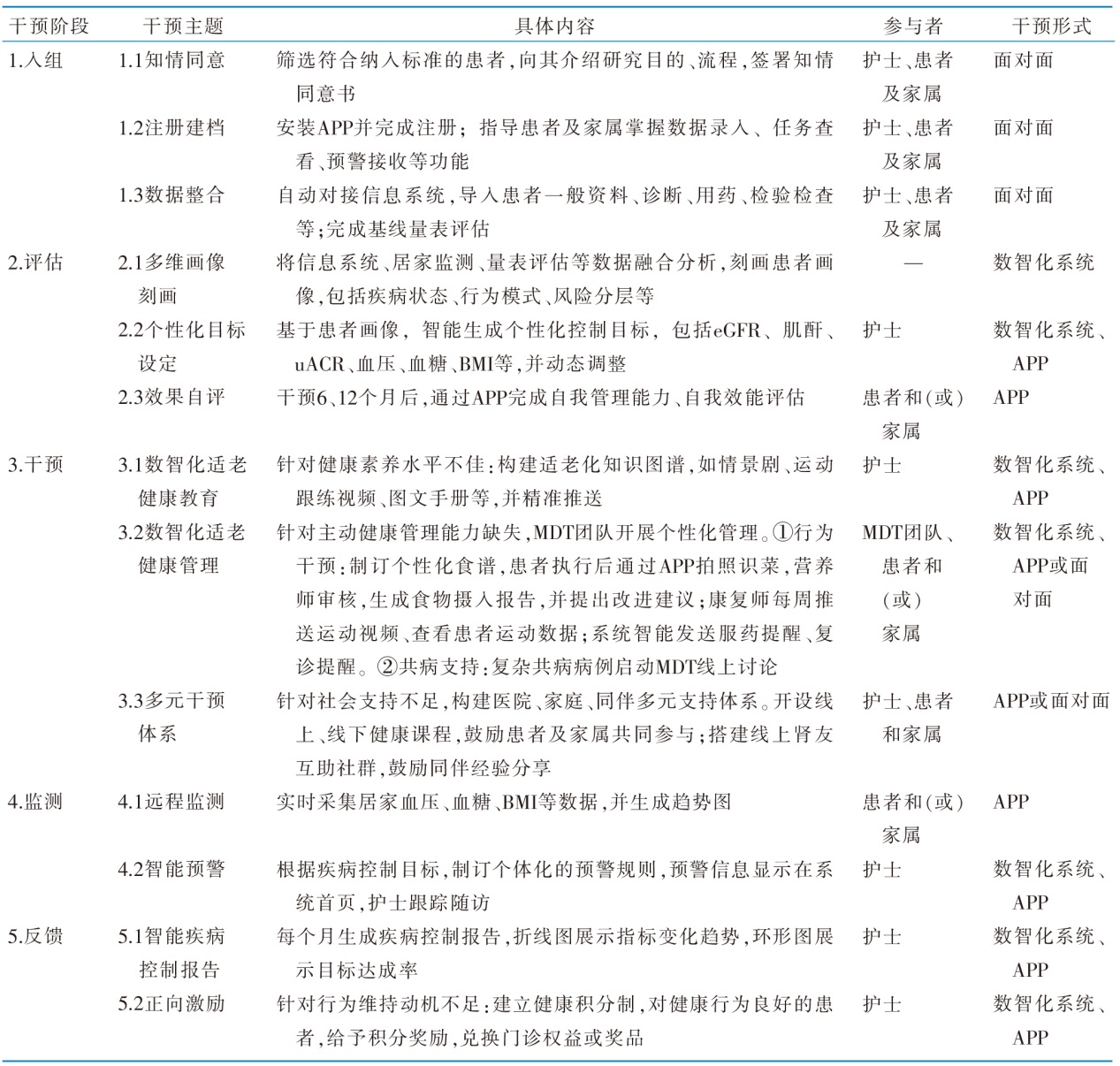 |
Table 1 The digital proactive health management plan for middle-aged and elderly CKD patients with comorbidities
| |
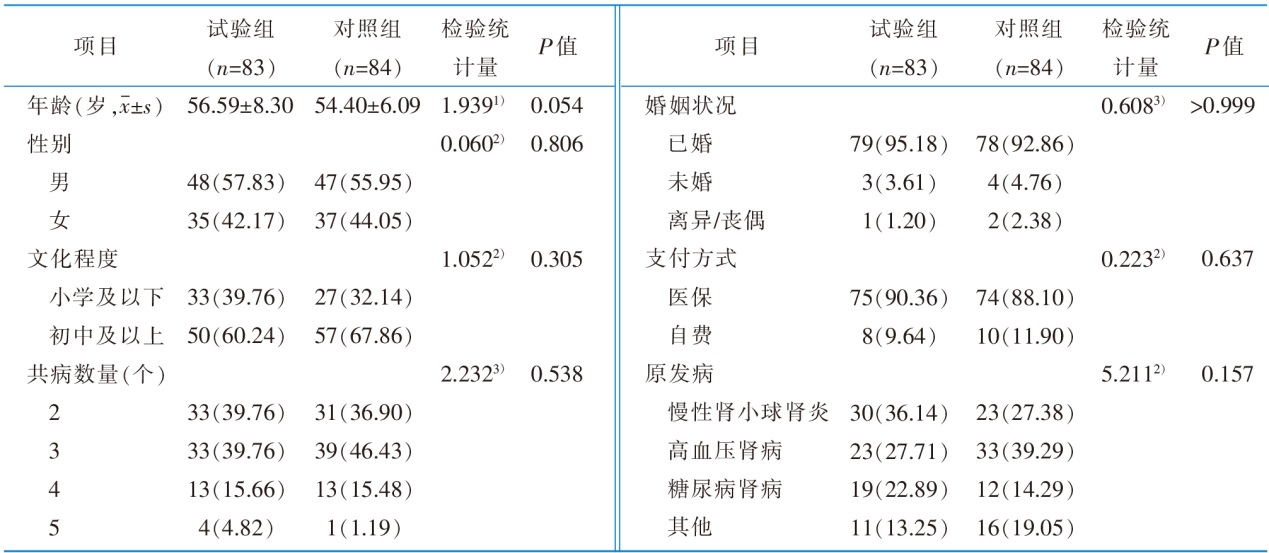 |
Table 2 Comparison of general data between 2 groups
| |
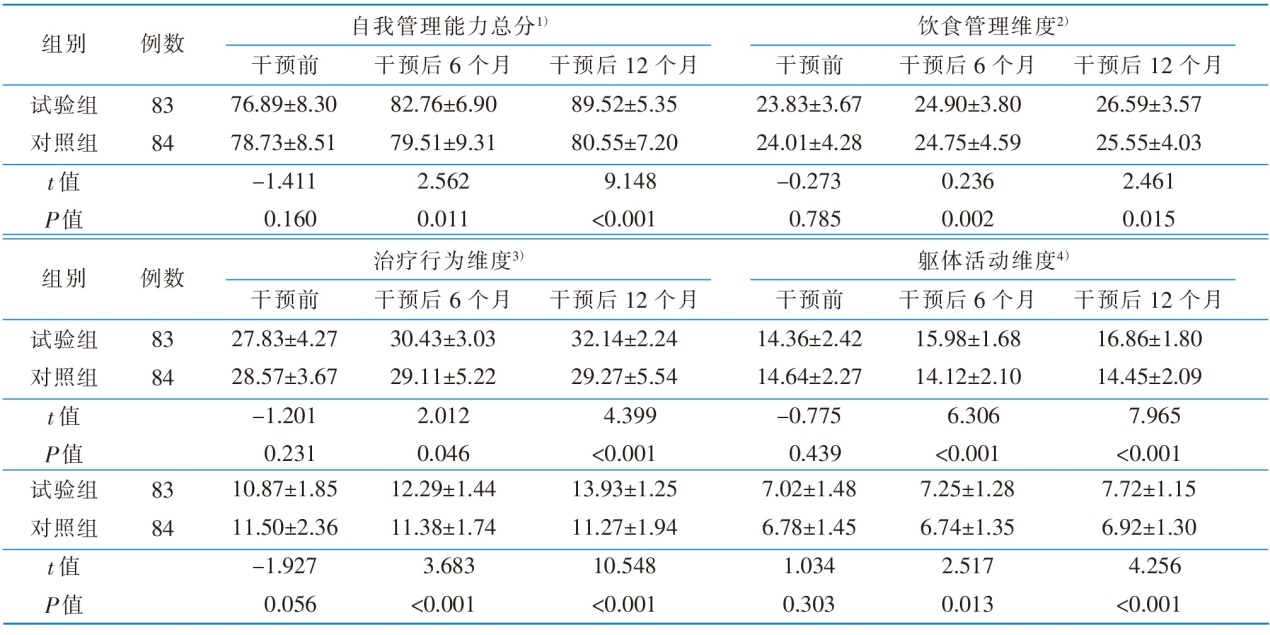 |
Table 3 Comparison of self-management ability and self-efficacy before and after intervention between 2 groups(分,$\bar{x} \pm s$)
| |
 |
Table 4 Comparison of physiological indicators before and after intervention between 2 groups($\bar{x} \pm s$)
| |
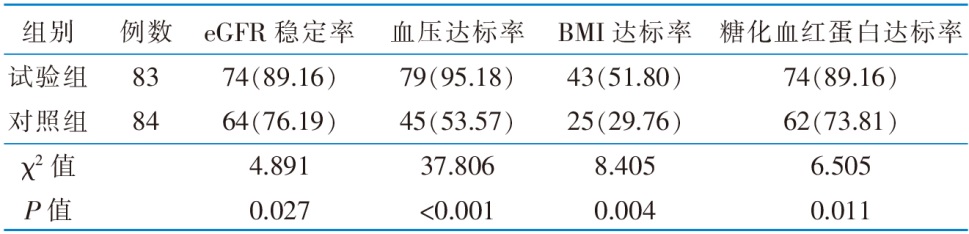 |
Table 5 Comparison of the rates of reaching physiological indicators standards after interventions between 2 groups[case(percentage,%)]
| |
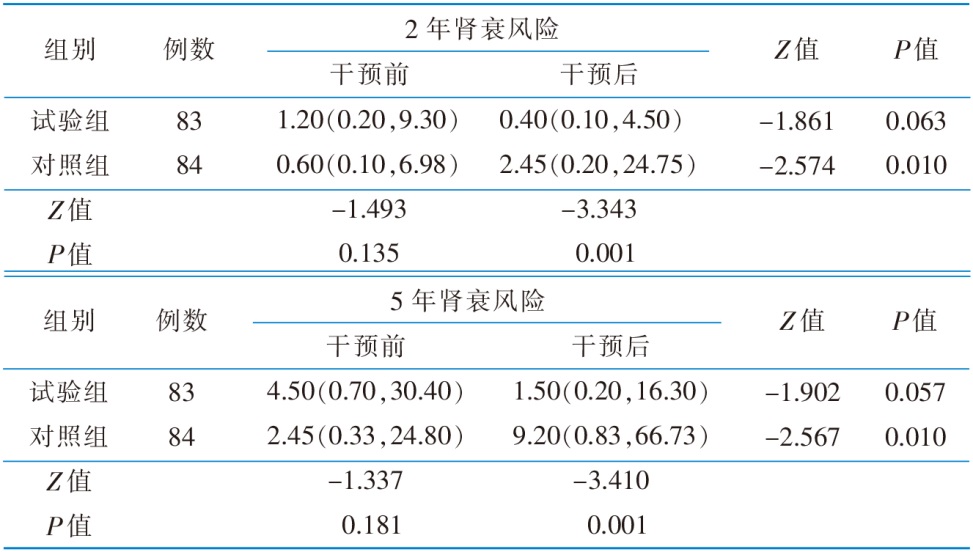 |
Table 6 Comparison of the risk of renal failure 2 and 5 years before and after intervention between 2 groups[%,M(P25,P75)]
| |
| [1] | Al-Chalabi S, Sinha S, Kalra PA. Enhancing clinical service design for mul-timorbidity management:a comprehen-sive approach to joined-up care for diabetes,chronic kidney disease,and heart failure[J]. Diabet Med, 2025, 42(2):e15403. |
| [2] | Chen XX, Giles J, Yao Y, et al. The path to healthy ageing in China:a Peking University-lancet commission[J]. Lancet, 2022, 400(10367):1967-2006. |
| [3] | Hawthorne G, Lightfoot CJ, Smith AC, et al. Multimorbidity prevalence and patterns in chronic kidney disease:findings from an observational multicentre UK cohort study[J]. Int Urol Nephrol, 2023, 55(8):2047-2057. |
| [4] | Lau DCW, Shaw E, McMullen S, et al. Acute and chronic complication profiles among patients with chronic kidney disease in Alberta,Canada:a retrospective observational study[J]. BMC Nephrol, 2024, 25(1):244. |
| [5] | 张天娇, 苏敏. 我国中老年人共病患病公平性分解分析[J]. 中国健康教育, 2025, 41(5):438-444. |
| Zhang TJ, Su M. Decomposition analysis on the equity of multi-morbidity for the middle aged and elderly people in China[J]. Chin J Health Educ, 2025, 41(5):438-444. | |
| [6] | Zhang N, Liu X, Wang LL, et al. Lifestyle factors and their relative contributions to longitudinal progression of cardio-renal-metabolic multimorbidity:a prospective cohort study[J]. Car-diovasc Diabetol, 2024, 23(1):265. |
| [7] | Beridze G, Dai L, Carrero JJ, et al. Associations between multimorbidity and kidney function decline in old age:a population-based cohort study[J]. J Am Geriatr Soc, 2025, 73(3):837-848. |
| [8] |
梁超, 王华, 汤立许. 智慧主动健康服务框架构建与应用策略研究[J]. 中国工程科学, 2023, 25(5):30-42.
DOI |
| Liang C, Wang H, Tang LX. Framework and application strategy of smart proactive health service[J]. Strateg Study CAE, 2023, 25(5):30-42. | |
| [9] |
王颖, 熊晓云, 刘梦蝶, 等. 数智化干预技术在冠心病患者心理障碍中的应用进展[J]. 中华护理杂志, 2024, 59(16):1956-1961.
DOI |
|
Wang Y, Xiong XY, Liu MD, et al. Application progress of digital and intelligent intervention technology in the mental disorders of patients with coronary heart disease[J]. Chin J Nurs, 2024, 59(16):1956-1961.
DOI |
|
| [10] | Zhou ZH, Jin DN, He JH, et al. Digital health platform for improving the effect of the active health management of chronic diseases in the community:mixed methods exploratory study[J]. J Med Internet Res, 2024, 26:e50959. |
| [11] | Kidney Disease:Improving Global Outcomes CKD Work Group. KDIGO 2024 clinical practice guideline for the evaluation and management of chronic kidney disease[J]. Kidney Int, 2024, 105(4S):S117-S314. |
| [12] |
汪燃, 黄菲. 中老年肺癌患者胸部放疗期间症状群的调查及护理对策[J]. 中华护理杂志, 2023, 58(13):1596-1602.
DOI |
|
Wang R, Huang F. Longitudinal study on symptom groups of middle-aged and elderly lung cancer patients during chest radiotherapy[J]. Chin J Nurs, 2023, 58(13):1596-1602.
DOI |
|
| [13] | 应家佩, 戴丽丽, 马建伟, 等. 慢性肾脏病患者智能健康随访管理系统的构建及应用[J]. 护理学杂志, 2024, 39(19):11-15,30. |
| Ying JP, Dai LL, Ma JW, et al. Construction and application of intelligent health follow-up management system for patients with chronic kidney disease[J]. J Nurs Sci, 2024, 39(19):11-15,30. | |
| [14] | 梁超, 宋振鹏, 汤立许. 数智赋能主动健康管理:实践样态、建构策略与驱动路径[J]. 武汉体育学院学报, 2024, 58(4):72-81. |
| Liang C, Song ZP, Tang LX. Digital intelligence enabled proactive health management:practice pattern,construction strategy and driving path[J]. J Wuhan Phys Univ, 2024, 58(4):72-81. | |
| [15] | 中华预防医学会肾脏病预防与控制专业委员会, 张路霞, 赵明辉. 中国慢性肾脏病早期评价与管理指南[J]. 中华内科杂志, 2023, 62(8):902-930. |
| Chinese Preventive Medicine Association Committee on Kidney Disease Prevention and Control Zhang LX, Zhao MH. Guidelines for the early evaluation and management of chronic kidney disease in China[J]. Chin J Intern Med, 2023, 62(8):902-930. | |
| [16] | 于萍, 刘纯艳. 慢性肾脏病患者自我管理状况与生活质量相关性分析[J]. 护士进修杂志, 2012, 27(6):507-509. |
| Yu P, Liu CY. Study for the relationship between chronic kidney disease self-management status and quality of life[J]. J Nurses Train, 2012, 27(6):507-509. | |
| [17] | Lorig K, Stewart A, Ritter P, et al. Outcome measure for health education and other health care intervention[M]. Thousand Osks: Sage Publication,1996:446-448. |
| [18] | 汤曦, 石运莹, 王俭勤, 等. 中国成人慢性肾脏病及其并发症早期筛查临床路径专家建议(2023版)[J]. 中国实用内科杂志, 2023, 43(3):198-205. |
| Tang X, Shi YY, Wang JQ, et al. Expert recommendations on the early screening path of adult chronic kidney disease and its complications in China(2023 edition)[J]. Chin J Pract Intern Med, 2023, 43(3):198-205. | |
| [19] |
上海市肾内科临床质量控制中心专家组. 慢性肾脏病早期筛查、诊断及防治指南(2022年版)[J]. 中华肾脏病杂志, 2022, 38(5):453-464.
DOI |
|
Expert Group on Kidney Clinical Quality Control Center in Shanghai. Guidelines for early screening,diagnosis,prevention and treatment of chronic kidney disease(2022 edition)[J]. Chin J Nephrol, 2022, 38(5):453-464.
DOI |
|
| [20] |
Patel DM, Churilla BM, Thiessen-Philbrook H, et al. Implementation of the kidney failure risk equation in a United States nephrology clinic[J]. Kidney Int Rep, 2023, 8(12):2665-2676.
DOI PMID |
| [21] |
雷丹, 卞薇, 王宗华, 等. 角膜溃疡患者互联网+精准症状管理方案的构建及应用研究[J]. 中华护理杂志, 2025, 60(6):688-695.
DOI |
|
Lei D, Bian W, Wang ZH, et al. Construction and application of precision symptom management based on Internet plus in patients with corneal ulcer[J]. Chin J Nurs, 2025, 60(6):688-695.
DOI |
|
| [22] | Ma JW, Wang JY, Ying JP, et al. Long-term efficacy of an AI-based health coaching mobile app in slowing the progression of nondialysis-dependent chronic kidney disease:retrospective cohort study[J]. J Med Internet Res, 2024, 26:e54206. |
| [1] | HUANG Panpan, LI Liling, HU Xiaojing. Research progress of early exercise rehabilitation in infants with congenital heart disease [J]. Chinese Journal of Nursing, 2025, 60(9): 1050-1055. |
| [2] | CHEN Liou, ZHANG Wenting, LIU Junqi, WANG Yuncong, WANG Zhenlin, QI Sai, YANG Na. Study on the effect of pulmonary lobes surface projection localization combined with pulmonary segment drainage and sputum expectoration technique on airway clearance in patients with aspiration pneumonia [J]. Chinese Journal of Nursing, 2025, 60(9): 1056-1061. |
| [3] | YANG Nana, CHENG Chuanli, ZENG Hui, FU Dandan, WANG Yan, CHEN Yue, RAN Hongmin, FAN Hongjing, LONG Xia. Evaluation of the effect of graded exercise rehabilitation on patients with acute exacerbation of chronic obstructive pulmonary disease [J]. Chinese Journal of Nursing, 2025, 60(9): 1062-1067. |
| [4] | CAO Yun, SUN Guozhen, CHEN Feng, JI Xueli, YAN Mengwan, JING Lei, QIAN Kun. A study of modified ankle pump exercise in stroke patients [J]. Chinese Journal of Nursing, 2025, 60(9): 1068-1074. |
| [5] | XIE Min, QI Wenkai, YIN Ling, ZHANG Xuan, ZHAO Ruqin. Potential profile analysis and influencing factors of kinesiophobia in patients with peritoneal dialysis [J]. Chinese Journal of Nursing, 2025, 60(9): 1080-1086. |
| [6] | CHEN Bingqian, ZHAO Bin, SUN Jiarong, HAO Sifang, HOU Xiaoli. Oral health management dilemmas of chronic periodontitis patients with implant dentures:a qualitative study [J]. Chinese Journal of Nursing, 2025, 60(9): 1087-1092. |
| [7] | QIN Chunlan, WU Zhenyun, QIAN Hongying, ZHAO Qian, SUN Jinting. Experiences of disease self-control among patients with chronic obstructive pulmonary disease:a qualitative study [J]. Chinese Journal of Nursing, 2025, 60(9): 1093-1098. |
| [8] | LI Ziwei, FENG Lijuan, CHEN Xusheng, HUANG Yi, YANG Jie. Development and application of a Fear of Movement Assessment Scale for patients with peripherally inserted central catheters [J]. Chinese Journal of Nursing, 2025, 60(9): 1099-1106. |
| [9] | CHENG Zhiqiang, ZHANG Baozhen, TANG Liping, LI Jing, XIA Jiaoyun, WEI Xueyan, GONG Zhixian, ZHANG Meizhen, LI Lusi. Reliability and validity test of the Chinese version of the Urinary Incontinence Awareness and Attitude Scale [J]. Chinese Journal of Nursing, 2025, 60(9): 1107-1112. |
| [10] | SHI Meiqin, WU Jianfang, ZHANG Duo, WU Chunping, CHEN Ling, TAO Lei. Nursing care for postoperative laryngeal function rehabilitation in a patient undergoing primary voice prosthesis implantation after total laryngectomy [J]. Chinese Journal of Nursing, 2025, 60(9): 1120-1123. |
| [11] | GU Qian, HUANG Xi, SHI Weixiong, WU Jing, TAN Ruoming, WANG Feng. Nursing care for a patient with cytokine release syndrome following T-cell immunotherapy [J]. Chinese Journal of Nursing, 2025, 60(9): 1124-1127. |
| [12] | ZHOU Miao, CHEN Xing, PENG Fei, SUN Shangxue, LI Yangyang. Systematic review of risk prediction instruments for central line associated bloodstream infections in ICU patients [J]. Chinese Journal of Nursing, 2025, 60(9): 1132-1139. |
| [13] | PENG Yingjie, LIU Aihong, ZHU Wenli, MEI Yuxin, ZHOU Meng, GUAN Wenjing. Systematic review of readiness assessment tools for advance care planning in older adults [J]. Chinese Journal of Nursing, 2025, 60(9): 1146-1153. |
| [14] | RAN Lingxiao, WANG Dongmin, XU Ke, WANG Cong, CAO Hua, CUN Wei, JIANG Yan. Application of biomechanical simulation based on three-dimensional human body model in preventing pressure ulcers:a scoping review [J]. Chinese Journal of Nursing, 2025, 60(8): 1012-1018. |
| [15] | JIN Yujia, JIANG Hu, WANG Xiaoxuan, YI Jingna, MEI Yongxia, GUO Zhiting, ZHANG Zhenxiang, LIN Beilei. Application of information-based risk communication in primary prevention of cardiovascular diseases:a scoping review [J]. Chinese Journal of Nursing, 2025, 60(8): 1019-1025. |
| Viewed | ||||||
|
Full text |
|
|||||
|
Abstract |
|
|||||
