
About the Journal
The Chinese Journal of Nursing, established in 1954, is a leading academic journal in China's nursing field. It is supervised by the China Association for Science and Technology, sponsored by the Chinese Nursing Association, and published by the Chinese Nursing Journals Publishing House. Issued semimonthly on the 10th and 20th in both print and online formats (ISSN: 0254-1769; eISSN: 2097-6038; CN: 11-2234/R), the journal publishes high-quality research, clinical practice reports, and theoretical studies aimed at advancing clinical nursing practice.
Rooted in China with a global outlook, the journal adheres to a "content-driven, quality-oriented" strategy, continually striving for excellence through innovation. Under the leadership of Professor Jiang Xiaoying—a prominent figure in Chinese nursing—the editorial team, composed of professionals with master's degrees or higher, demonstrates strong academic and professional competence. The editorial board brings together leading nursing experts from China and internationally renowned scholars from the United States, Australia, the United Kingdom, and Sweden, forming a multidisciplinary academic think tank. With a long-standing history and wide circulation, the journal reaches a broad readership across healthcare institutions and nursing schools in China, as well as internationally recognized nursing organizations and professionals.
Aim of the Journal
The aim of this journal is to implement health-related guidelines and policies, adhere to the principle of integrating theory with practice as well as popularization with enhancement, comprehensively reflect significant advancements in nursing research, promote academic exchange in nursing both domestically and internationally, and facilitate innovation and development in nursing theory, specialized clinical practice, and nursing policies.
Academic contributions and achievements
Since its inception, this journal has garnered numerous accolades for its outstanding academic and editorial quality. It has made significant contributions to advancing the nursing discipline, promoting academic exchange in nursing both domestically and internationally, and enhancing the research capacity of nursing professionals.
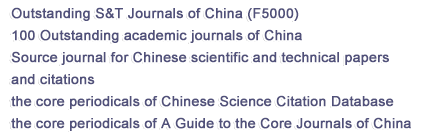
The journal consistently ranks first among Chinese nursing journals in comprehensive citation index evaluations. It is indexed in China's three major core journal databases: Statistical Source Journals of Chinese Scientific and Technical Papers, Core Journals of China, and the Chinese Science Citation Database. It has been repeatedly recognized as one of the "China Top 100 Academic Journals" and "China Premium Scientific Journals" and has been designated as a source journal for the "Leading 5000 (F5000) – Top Academic Papers of High-Quality Scientific and Technological Journals in China".
In 2018, it was selected for the Chinese Association for Science and Technology's Quality Development Program for Chinese Scientific Journals. In 2019, it was included in the "China's Excellence Action Plan for Scientific Journals" and featured in the "Exhibition of Distinguished Journals Celebrating the 70th Anniversary of the Founding of the People's Republic of China." In 2021, it received the 5th China Publication Government Award-Journal Nomination Award. In 2024, it was once again selected for the China's Excellence Action Plan for Scientific Journals.
Collected by
This journal has been collected by China Science Citation Database (CSCD), SinoMed, China National Knowledge Infrastructure (CNKI), Wanfang Data Knowledge Service Platform, VIP Journal Resource Integration Service Platform and other Chinese platforms. It carries out academic exchanges with China Science and Technology information - Outstanding S&T Journals of China (F5000), CNKI Journal Translation Project, et, al. This journal has been included in Dimensions, WHO COVID-19 database and other international databases, among which the articles published in 1982-1997 are included in PMC and PubMed databases.
Authorship and Contribution Details
All articles must include an Author Contributions Statement. This statement should specify the individual contributions each author made to the planning, execution, and reporting of the research. Examples include: direct involvement (e.g., conceptualizing and designing the study, conducting the research, data collection, data analysis/interpretation), manuscript preparation (e.g., drafting the manuscript, critical revision for intellectual content), supporting work (e.g., statistical analysis, securing research funding, administrative, technical or material support, supervision, supportive contributions), and others.
The Author Contributions Statement should follow the Conflict of Interest section. The heading "Author Contributions Statement" should be in size 6 boldface type, aligned to the left margin, with a one-character space between the heading and the content. The content itself should be in size 6 regular, aligned to the left margin with no punctuation at the end of sentences. This section should not be numbered in continuation with the main text.
Example:
Conflict of Interest All authors declare no conflicts of interest (or, e.g., XX has received funding from XX company; all other authors declare no conflicts of interest)
Acknowledgements This study received guidance and support from XX in the area of XX
Author Contributions Statement XXX: conducted the research, wrote the manuscript; XXX: data collation, statistical analysis; XXX: study supervision, manuscript revision, funding support
Report Specification
Accurate and complete reporting enables readers to fully appraise research, replicate it, and use it. For original articles, review articles and special issue submissions, we require authors to adhere to the relevant EQUATOR research reporting checklist(https://www.equator-network.org/reporting-guidelines/).
EQUATOR checklists include:
·CONSORT checklist for reports of randomised trials and cluster randomised trials
·TREND checklist for non-randomised controlled trials
·PRISMA guidelines for systematic reviews and meta-analyses
·STROBE checklist for observational research
·COREQ checklist for qualitative studies
·SQUIRE checklist for quality improvement
·TRIPOD checklist for prediction model development and/or validation
·AGREE checklist for clinical practice guidelines
Clinical Trial Registry
Chinese Journal of Nursing requires that all clinical trials, expert consensus statements, guidelines, and evidence-based research papers be registered on relevant authoritative platforms, with the corresponding registration number provided in the main text.
The recommended registration platforms include:
For clinical trials: http://www.clinicaltrials.gov/;
For expert consensus statements and guidelines: http://www.guidelines-registry.org;
For systematic reviews and evidence synthesis: https://www.crd.york.ac.uk/prospero/.
Retraction Policy
All authors are obliged to provide retractions or corrections of mistakes.
Chinese Journal of Nursing will consider retracting a publication if:
Editors have clear evidence that the findings are unreliable, either as a result of misconduct (e.g., data fabrication) or honest error (e.g., miscalculation or experimental error).
The findings have previously been published elsewhere without proper cross-referencing, permission or justification (i.e., cases of redundant publication).
It constitutes plagiarism.
It reports unethical research.
Chinese Journal of Nursing abides by COPE Retraction Guidelines. (http://publicationethics.org/files/retraction guidelines_0.pdf).
Manuscript Preparation
All manuscripts must be submitted online via the journal's website: http://www.zhhlzzs.com. First-time users are required to register before submission. Registration is free and mandatory. Once registered, authors can log in with their username and password to track the status of their submissions.
Manuscript Requirements
1. Scope of the Journal
The scope of this journal includes original research, standards and guidelines, specialized nursing practice, nursing with traditional Chinese medicine characteristics, emergency and outpatient care, nursing quality and safety, human resource management and career development, community nursing, critical and complex care, hospital infection control, academic discourse, theories and methodologies, reviews, and innovations in nursing tools.
2. Submission Guidelines
2.1 Manuscript Content
Manuscripts should demonstrate originality, scientific rigor, and practical value. They must present clear arguments, reliable data, concise language, logical structure, and accurate, standardized data presentation.
2.2 Title
Titles should be concise, informative, and reflect the core topic of the article. The Chinese title should not exceed 20 characters. The use of foreign abbreviations should be avoided, except for widely recognized terms.
2.3 Authors
The order of authors must be determined at the time of submission. Full name, affiliation, contact number, and email are mandatory fields. As the journal employs a double-blind peer review process, no author names or institutional information should appear in the main manuscript text.
2.4 Abstract
All manuscripts must include both Chinese and English abstracts. Abstracts for research articles should follow the structured format: Objective, Methods, Results (including key data), and Conclusion. Abstracts for prospective clinical trials must include the essential components outlined in the CONSORT statement (https://www.consort-spirit.org/) and should be written in third person.
2.5 Keywords
Each manuscript must include 3–8 keywords. Keywords should preferably be selected from the latest edition of Medical Subject Headings (MeSH) by the U.S. National Library of Medicine. If no suitable terms are available, authors may select the most direct broader terms from the MeSH tree structure, or use free terms when necessary.
2.6 Medical Terminology
Terminology should conform to the standards set by the National Committee for Terms in Sciences and Technology and published by Science Press. For disciplines without finalized terminology, refer to the Chinese-English Medical Vocabulary published by the People's Medical Publishing House. Drug names in Chinese should follow the latest edition of the Pharmacopoeia (for official drugs) or the Pharmaceutical Nomenclature edited by the former Ministry of Health (for non-official drugs). English drug names should use international nonproprietary names (INN), not brand names.
2.7 Figures and Tables
Each figure and table must have a concise bilingual caption. Tables should be logically organized with clearly defined rows and columns, and the meaning of the data should be explicit. The number of decimal places should be consistent for the same type of data. Figures should be of appropriate size (aspect ratio approximately 5:7) and match the nature of the data. Scale markings on axes must conform to mathematical conventions. Photographs must be of high clarity and contrast.
2.8 Units of Measurement
All units must comply with the relevant standards specified in GB 3100/3101/3102—1993 (International System of Units and Its Application / General Principles on Quantities, Units and Symbols / Quantities and Units by Discipline), and should be expressed using unit symbols.
2.9 Numerals
Numerical usage should follow the standards in GB/T 15835-2011 (Usage of Numerals in Publications).
2.10 Statistical Symbols
Statistical notation must conform to the standards in GB/T 3358.1-2009 and GB/T 3358.3-2009.
2.11 Abbreviations
Except for those abbreviations approved for direct use by the journal, others should be introduced with their full Chinese term on first mention, followed by the abbreviation in parentheses (either in Chinese or English as appropriate).
2.12 References
References must follow the sequential coding system outlined in GB/T 7714-2015 (Information and Documentation – Rules for Bibliographic References and Citations to Information Resources), and should be cited in the order in which they appear in the text using Arabic numerals in square brackets. Chinese references must be presented bilingually. Abbreviated journal titles in foreign references should conform to Index Medicus standards; full titles must be used for Chinese journals.
3. Special Notes
3.1 Submission
Please submit manuscripts via the official website of the Chinese Journal of Nursing: http://www.zhhlzzs.com. When submitting, authors must also upload institutional recommendation letters, proof of funding projects, and other relevant documents.
3.2 Fees
A manuscript processing fee of 100 RMB must be paid at the time of submission. Manuscripts for which the processing fee has not been paid will not enter the review process. Upon acceptance, a publication fee will be charged according to standard rates, and an electronic invoice will be issued. If an author requests withdrawal after the publication fee has been paid, the fee will not be refunded. Authors will receive a complimentary copy of the issue upon publication. All accepted manuscripts are published in print, and online formats, and the remuneration includes compensation for all these formats.
3.3 Medical Ethics and Informed Consent
Manuscripts must adhere to fundamental principles of medical ethics. For studies involving human subjects, authors must state whether the study procedures conformed to the ethical standards set by relevant ethics committees (institutional, regional, or national), and provide approval documentation (approval number must be included in the manuscript), along with informed consent from the participants or their legal guardians. If a formal ethics committee is not available, authors must indicate whether the study adhered to the principles of the Declaration of Helsinki (https://www.wma.net/policies-post/wma-declaration-of-helsinki/).
3.4 Clinical Trial Registration
Clinical trial studies must include a globally unique registration number and the name of the registration authority obtained from a WHO-accredited primary clinical trial registry (e.g., the Chinese Clinical Trial Registry).
3.5 Conflict of Interest and Author Contributions Statement
If no conflicts of interest exist, please state "All authors declare no conflicts of interest." If any conflict exists (e.g., financial support from a third party other than the affiliated institution, commercial interests, or non-financial relationships), it must be disclosed accurately. Original research articles must include an Author Contributions Statement, clearly specifying the roles each author played in the planning, execution, and reporting of the study.
3.6 Copyright Transfer Agreement
For manuscripts accepted for publication, authors must sign the Chinese Journal of Nursing Copyright Transfer Agreement, affix their institutional seal, scan the signed document, and submit the electronic version to the editorial office. The institution named must match the affiliation of the first author. Authors must confirm that the manuscript is not under consideration elsewhere, does not involve confidentiality issues, and has no authorship disputes. If the manuscript involves confidential information, authors must provide documentation of review and publication approval from relevant authorities.
3.7 Peer Review
If no editorial decision has been received within three months of the acknowledgment notice, the manuscript is still under review. Authors may raise objections regarding rejected manuscripts. If the author wishes to submit the manuscript elsewhere, they must contact the editorial office first. Simultaneous submission to multiple journals is strictly prohibited.
3.8 Priority Publication
The journal offers a "Fast Track" for publication of research findings with international significance or originality. Authors requesting priority publication must provide a statement on the novelty of the work, a novelty search report, and two expert evaluations from different institutions.
3.9 Contact
Do not send manuscripts or payments to individual editors. All editorial correspondence, including honoraria and complimentary copies, will be handled through the first author.