

Chinese Journal of Nursing ›› 2025, Vol. 60 ›› Issue (11): 1373-1379.DOI: 10.3761/j.issn.0254-1769.2025.11.014
• Enteral and Parenteral Nutrition • Previous Articles Next Articles
ZHANG Li( ), WU Yixue, CHEN Fangfang, ZHANG Yiqing, ZHENG Shi, XU Huina()
Received:2024-11-13
Online:2025-06-10
Published:2025-06-03
Contact:
XU Huina
张黎(), 吴怡雪, 陈芳芳, 张一清, 郑施, 徐慧娜()
通讯作者:
徐慧娜
作者简介:张黎:女,本科,副主任护师,科护士长,E-mail:3488504@qq.com
基金资助:ZHANG Li, WU Yixue, CHEN Fangfang, ZHANG Yiqing, ZHENG Shi, XU Huina. Construction and application of an enteral nutrition management system for critically ill patients[J]. Chinese Journal of Nursing, 2025, 60(11): 1373-1379.
张黎, 吴怡雪, 陈芳芳, 张一清, 郑施, 徐慧娜. 重症患者肠内营养管理系统的构建与应用研究[J]. 中华护理杂志, 2025, 60(11): 1373-1379.
Add to citation manager EndNote|Ris|BibTeX
URL: https://zh.zhhlzzs.com/EN/10.3761/j.issn.0254-1769.2025.11.014
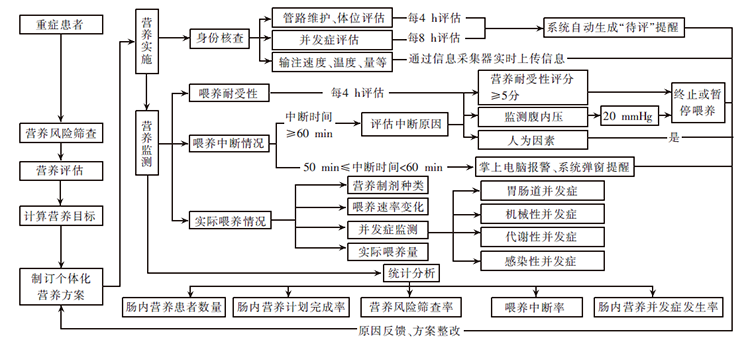
Figure 1 Implementation process diagram of enteral feeding for critically ill patients 注:1 mmHg=0.133 kPa。
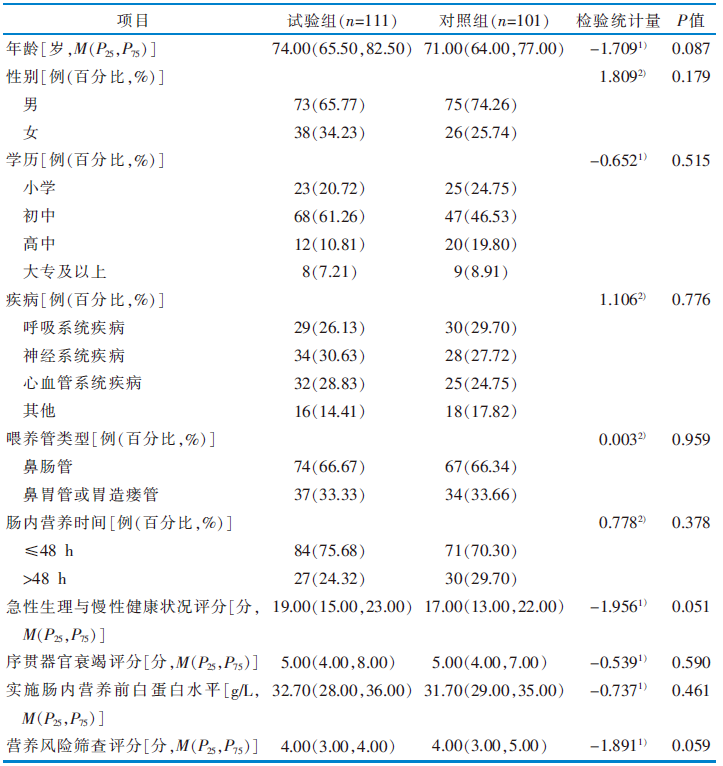 |
Table 1 Baseline information of participants in 2 groups
| |
| [1] |
中华医学会重症医学分会. 中国成人ICU患者营养评估与监测临床实践指南[J]. 中华危重病急救医学, 2023, 35(11):1121-1146.
PMID |
|
Chinese Society of Critical Care Medicine. Clinical practice guidelines for nutritional assessment and monitoring of adult ICU patients in China[J]. Chin Crit Care Med, 2023, 35(11):1121-1146.
DOI PMID |
|
| [2] | 中华医学会肠外肠内营养学分会. 中国成人患者肠外肠内营养临床应用指南(2023版)[J]. 中华医学杂志, 2023, 103(13):946-974. |
| Chinese Society of Parenteral and Enteral Nutrition. Guideline for clinical application of parenteral and enteral nutrition in adults patients in China(2023 edition)[J]. Natl Med J China, 2023, 103(13):946-974. | |
| [3] | Mehta NM, Skillman HE, Irving SY, et al. Guidelines for the provision and assessment of nutrition support therapy in the pediatric critically ill patient:society of critical care medicine and American society for parenteral and enteral nutrition[J]. Pediatr Crit Care Med, 2017, 18(7):675-715. |
| [4] | 姜悦, 皇海萍, 潘慧斌. 信息化动态管理方案在肠内营养相关性腹泻患者中的应用研究[J]. 护理与康复, 2024, 23(11):54-57. |
| Jiang Y, Huang HP, Pan HB. Study on the application of information dynamic management scheme in patients with ente-ral nutrition-related diarrhea[J]. J Nurs Rehabil, 2024, 23(11):54-57. | |
| [5] | 蔡益虹, 颜小玲, 柯晓晖, 等. 基于循证护理的信息化动态管理在ICU患者肠内营养支持中的应用[J]. 中国医药指南, 2024, 22(28):37-40. |
| Cai YH, Yan XL, Ke XH, et al. Application of dynamic infor-mation management based on evidence nursing in enteral nu-trition support of ICU patients[J]. Guide China Med, 2024, 22(28):37-40. | |
| [6] | 诸小飞, 王娇, 潘慧斌, 等. 信息化引导下肠内营养相关性腹泻处置流程在慢性阻塞性肺疾病持续无创辅助通气患者中的应用效果分析[J]. 中华危重病急救医学, 2024, 36(1):62-66. |
| Zhu XF, Wang J, Pan HB, et al. Effect analysis of information-guided enteral nutrition-associated diarrhea treatment process in patients with chronic obstructive pulmonary disease under-going continuous non-invasive assisted ventilation:a mixed cohort study of pre- and post-control[J]. Chin Crit Care Med, 2024, 36(1):62-66. | |
| [7] | 张献娜, 叶向红, 高岚, 等. 肠内营养护理示范单位(病房)指标体系及评价细则构建[J]. 中华临床营养杂志, 2024, 32(3):129-137. |
| Zhang XN, Ye XH, Gao L, et al. Construction of an evaluation framework with detailed indices for enteral nutrition nursing demonstration units(wards)[J]. Chin J Clin Nutr, 2024, 32(3):129-137. | |
| [8] | 叶向红, 朱冬梅, 邵小平, 等. 重症患者肠内营养护理[M]. 南京: 东南大学出版社, 2021:86. |
| Ye XH, Zhu DM, Shao XP, et al. Enteral nutrition care of critically ill patients[M]. Nanjing: Southeast University Press, 2021:86. | |
| [9] | 中华护理学会. 成人肠内营养支持的护理[EB/OL].(2021-02-01)[2024-12-30]. http://hltb.kxj.org.cn/index/tuanti/standard.html?team_standard_id=26. |
| Chinese Nursing Society. Nursing care of adult enteral nutri-tion support[EB/OL].(2021-02-01)[2024-12-30]. http://hltb.kxj.org.cn/index/tuanti/standard.html?team_standard_id=26. | |
| [10] | Kim H, Stotts NA, Froelicher ES, et al. Adequacy of early en-teral nutrition in adult patients in the intensive care unit[J]. J Clin Nurs, 2012, 21(19/20):2860-2869. |
| [11] | 赵永信, 顾莺, 张晓波, 等. 基于新D&M模型的《临床护理信息系统有效性评价量表》的编制及信效度评价[J]. 中国实用护理杂志, 2020, 36(7):544-550. |
| Zhao YX, Gu Y, Zhang XB, et al. The development of the Clinical Nursing Information System Effectiveness Evaluation Scale based on the new D & M model and the conduction of reliability and validity evaluation[J]. Chin J Pract Nurs, 2020, 36(7):544-550. | |
| [12] | Lew CCH, Yandell R, Fraser RJL, et al. Association between malnutrition and clinical outcomes in the intensive care unit:a systematic review[J]. JPEN J Parenter Enteral Nutr, 2017, 41(5):744-758. |
| [13] | 米元元, 卢洁. 重症患者肠内营养中断影响因素及干预策略的研究进展[J]. 护士进修杂志, 2022, 37(10):886-891. |
| Mi YY, Lu J. Research progress in influence factors and intervention strategies of enteral nutrition interruption in critically ill patients[J]. J Nurses Train, 2022, 37(10):886-891. | |
| [14] |
刘欢, 杜爱平, 张耀丹, 等. 重症患者气道操作相关肠内营养喂养中断的研究进展[J]. 中华护理杂志, 2024, 59(12):1525-1530.
DOI |
|
Liu H, Du AP, Zhang YD, et al. Research progress of feeding interruption during airway procedures in critically ill patients with enteral nutrition[J]. Chin J Nurs, 2024, 59(12):1525-1530.
DOI |
|
| [15] | 米元元, 黄海燕, 尚游, 等. 中国危重症患者肠内营养治疗常见并发症预防管理专家共识(2021版)[J]. 中华危重病急救医学, 2021, 33(8):903-918. |
| Mi YY, Huang HY, Shang Y, et al. Expert consensus on prevention and management of enteral nutrition therapy complications for critically ill patients in China(2021 edi-tion)[J]. Chin Crit Care Med, 2021, 33(8):903-918. | |
| [16] | 张志焕, 张献娜, 叶向红, 等. 287家肠内营养“示范病房”建设单位临床护士营养护理能力现状及影响因素分析[J]. 中华临床营养杂志, 2024, 32(4):198-206. |
| Zhang ZH, Zhang XN, Ye XH, et al. Analysis on the status quo and influencing factors of nutrition nursing competence of clinical nurses in 287 enteral nutrition demonstration wards[J]. Chin J Clin Nutr, 2024, 32(4):198-206. | |
| [17] |
全殷殷, 张帅, 陈娟红, 等. ICU患者早期肠内营养耐受性监测系统的构建与应用[J]. 中华护理杂志, 2022, 57(7):773-778.
DOI |
| Quan YY, Zhang S, Chen JH, et al. Construction and appli-cation of early enteral nutrition tolerance monitoring system for ICU patients[J]. Chin J Nurs, 2022, 57(7):773-778. | |
| [18] |
陈利, 杨又. 区块链技术在临床护理中的应用进展[J]. 中华护理杂志, 2024, 59(2):250-256.
DOI |
|
Chen L, Yang Y. Research progress of blockchain technology in clinical nursing[J]. Chin J Nurs, 2024, 59(2):250-256.
DOI |
| [1] | HUANG Panpan, LI Liling, HU Xiaojing. Research progress of early exercise rehabilitation in infants with congenital heart disease [J]. Chinese Journal of Nursing, 2025, 60(9): 1050-1055. |
| [2] | CHEN Liou, ZHANG Wenting, LIU Junqi, WANG Yuncong, WANG Zhenlin, QI Sai, YANG Na. Study on the effect of pulmonary lobes surface projection localization combined with pulmonary segment drainage and sputum expectoration technique on airway clearance in patients with aspiration pneumonia [J]. Chinese Journal of Nursing, 2025, 60(9): 1056-1061. |
| [3] | YANG Nana, CHENG Chuanli, ZENG Hui, FU Dandan, WANG Yan, CHEN Yue, RAN Hongmin, FAN Hongjing, LONG Xia. Evaluation of the effect of graded exercise rehabilitation on patients with acute exacerbation of chronic obstructive pulmonary disease [J]. Chinese Journal of Nursing, 2025, 60(9): 1062-1067. |
| [4] | CAO Yun, SUN Guozhen, CHEN Feng, JI Xueli, YAN Mengwan, JING Lei, QIAN Kun. A study of modified ankle pump exercise in stroke patients [J]. Chinese Journal of Nursing, 2025, 60(9): 1068-1074. |
| [5] | XIE Min, QI Wenkai, YIN Ling, ZHANG Xuan, ZHAO Ruqin. Potential profile analysis and influencing factors of kinesiophobia in patients with peritoneal dialysis [J]. Chinese Journal of Nursing, 2025, 60(9): 1080-1086. |
| [6] | CHEN Bingqian, ZHAO Bin, SUN Jiarong, HAO Sifang, HOU Xiaoli. Oral health management dilemmas of chronic periodontitis patients with implant dentures:a qualitative study [J]. Chinese Journal of Nursing, 2025, 60(9): 1087-1092. |
| [7] | QIN Chunlan, WU Zhenyun, QIAN Hongying, ZHAO Qian, SUN Jinting. Experiences of disease self-control among patients with chronic obstructive pulmonary disease:a qualitative study [J]. Chinese Journal of Nursing, 2025, 60(9): 1093-1098. |
| [8] | LI Ziwei, FENG Lijuan, CHEN Xusheng, HUANG Yi, YANG Jie. Development and application of a Fear of Movement Assessment Scale for patients with peripherally inserted central catheters [J]. Chinese Journal of Nursing, 2025, 60(9): 1099-1106. |
| [9] | CHENG Zhiqiang, ZHANG Baozhen, TANG Liping, LI Jing, XIA Jiaoyun, WEI Xueyan, GONG Zhixian, ZHANG Meizhen, LI Lusi. Reliability and validity test of the Chinese version of the Urinary Incontinence Awareness and Attitude Scale [J]. Chinese Journal of Nursing, 2025, 60(9): 1107-1112. |
| [10] | SHI Meiqin, WU Jianfang, ZHANG Duo, WU Chunping, CHEN Ling, TAO Lei. Nursing care for postoperative laryngeal function rehabilitation in a patient undergoing primary voice prosthesis implantation after total laryngectomy [J]. Chinese Journal of Nursing, 2025, 60(9): 1120-1123. |
| [11] | GU Qian, HUANG Xi, SHI Weixiong, WU Jing, TAN Ruoming, WANG Feng. Nursing care for a patient with cytokine release syndrome following T-cell immunotherapy [J]. Chinese Journal of Nursing, 2025, 60(9): 1124-1127. |
| [12] | ZHOU Miao, CHEN Xing, PENG Fei, SUN Shangxue, LI Yangyang. Systematic review of risk prediction instruments for central line associated bloodstream infections in ICU patients [J]. Chinese Journal of Nursing, 2025, 60(9): 1132-1139. |
| [13] | PENG Yingjie, LIU Aihong, ZHU Wenli, MEI Yuxin, ZHOU Meng, GUAN Wenjing. Systematic review of readiness assessment tools for advance care planning in older adults [J]. Chinese Journal of Nursing, 2025, 60(9): 1146-1153. |
| [14] | RAN Lingxiao, WANG Dongmin, XU Ke, WANG Cong, CAO Hua, CUN Wei, JIANG Yan. Application of biomechanical simulation based on three-dimensional human body model in preventing pressure ulcers:a scoping review [J]. Chinese Journal of Nursing, 2025, 60(8): 1012-1018. |
| [15] | JIN Yujia, JIANG Hu, WANG Xiaoxuan, YI Jingna, MEI Yongxia, GUO Zhiting, ZHANG Zhenxiang, LIN Beilei. Application of information-based risk communication in primary prevention of cardiovascular diseases:a scoping review [J]. Chinese Journal of Nursing, 2025, 60(8): 1019-1025. |
| Viewed | ||||||
|
Full text |
|
|||||
|
Abstract |
|
|||||
