

Chinese Journal of Nursing ›› 2025, Vol. 60 ›› Issue (8): 940-946.DOI: 10.3761/j.issn.0254-1769.2025.08.007
• Specialist Nursing Practice and Research • Previous Articles Next Articles
TANG Ruijin( ), HAN Jing(), LI Xiaoxu, WANG Dan
Received:2024-08-19
Online:2025-04-20
Published:2025-04-22
Contact:
HAN Jing
汤瑞金(), 韩静(), 李晓旭, 王丹
通讯作者:
韩静
作者简介:汤瑞金:女,硕士,助教,E-mail:839014771@qq.com
基金资助:TANG Ruijin, HAN Jing, LI Xiaoxu, WANG Dan. A qualitative study on family fusion experience of breast cancer patients and inspiration for nursing care[J]. Chinese Journal of Nursing, 2025, 60(8): 940-946.
汤瑞金, 韩静, 李晓旭, 王丹. 乳腺癌患者家庭融合调适体验的质性研究及护理启示[J]. 中华护理杂志, 2025, 60(8): 940-946.
Add to citation manager EndNote|Ris|BibTeX
URL: https://zh.zhhlzzs.com/EN/10.3761/j.issn.0254-1769.2025.08.007
 |
Table 1 General information of respondents(n=20)
| |
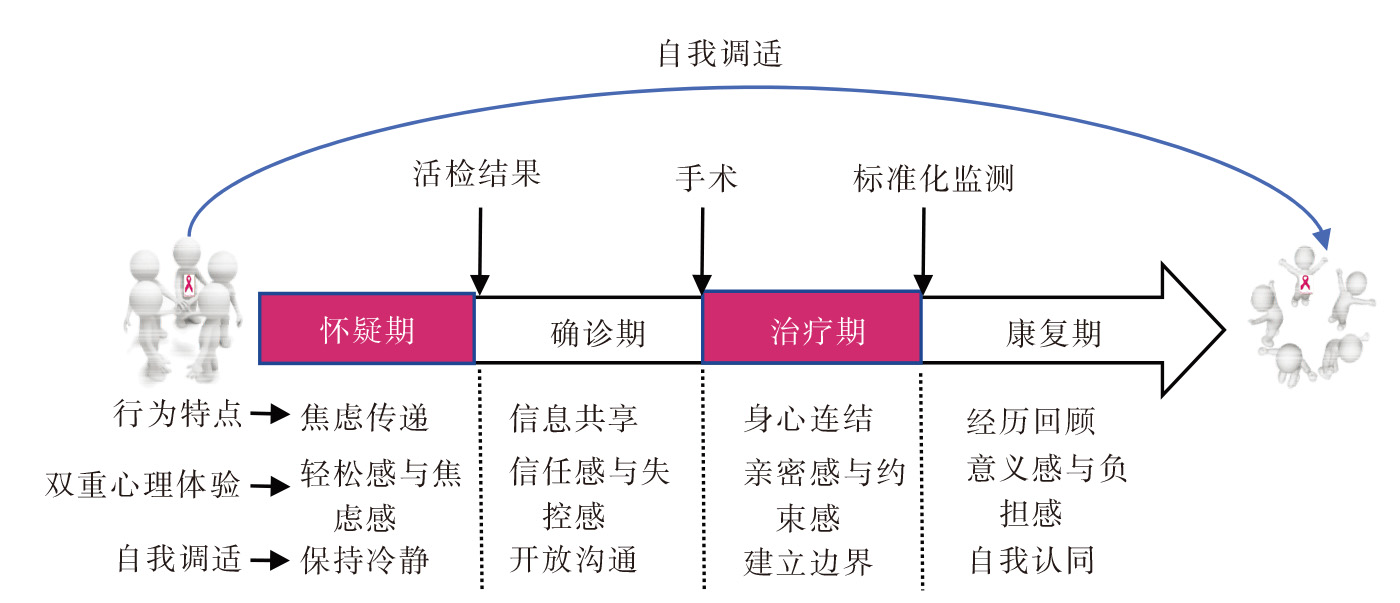
Figure 1 The adjustment model of breast cancer patients and family fusion
| [1] | Bray F, Laversanne M, Sung H, et al. Global cancer statistics 2022:GLOBOCAN estimates of incidence and mortality worldwide for 36 cancers in 185 countries[J]. CA Cancer J Clin, 2024, 74(3):229-263. |
| [2] | Tsai W, Nusrath S, Zhu R. Systematic review of depressive,anxiety and post-traumatic stress symptoms among Asian American breast cancer survivors[J]. BMJ Open, 2020, 10(9):e037078. |
| [3] | Gao J, Li JX, Chen WY, et al. A randomized controlled trial of a coping-focused family resilience intervention program for breast cancer patients:study protocol[J]. Front Psycho, 2022, 10(13):968154. |
| [4] |
宋鹏娟, 刘均娥, 陈少华, 等. 回归家庭干预对乳腺癌术后患者康复效果的影响[J]. 中华护理杂志, 2022, 57(2):133-139.
DOI URL |
| Song PJ, Liu JE, Chen SH, et al. Effect of family intervention on rehabilitation of patients with breast cancer after surgery[J]. Chin J Nurs, 2022, 57(2):133-139. | |
| [5] | Austin J, Drossaert CHC, Sanderman R, et al. Experiences of self-criticism and self-compassion in people diagnosed with cancer:a multimethod qualitative study[J]. Front Psychol, 2021, 12(1):725-737. |
| [6] |
Sobhani S, Jamilian H, Paknejad I. Prediction of resilience based on parenting and coping strategies in patients with psychosomatic disorders[J]. BMC Psychol, 2024, 12(1):280-289.
DOI PMID |
| [7] | Bowen M. Family therapy in clinical practice[M]. New York: Jason Aronson,1978. |
| [8] | Burke K, Post A. Intimate partner violence and Bowen family systems theory:promoting safety and expanding capacity of families[J]. Aust Nz J Fam Ther, 2024, 45(2):190-208. |
| [9] |
梁嘉贵, 王朕玉, 刘均娥, 等. 用心陪伴干预对治疗期乳腺癌患者配偶自我效能的影响[J]. 中华护理杂志, 2020, 55(8):1185-1188.
DOI URL |
| Liang JG, Wang ZY, Liu JE, et al. Effect of mindful companionship intervention on spousal self-efficacy of breast cancer patients during treatment[J]. Chin J Nurs, 2020, 55(8):1185-1188. | |
| [10] | Gradishar WJ, Anderson BO, Abraham J, et al. Breast cancer,version 3.2020,NCCN clinical practice guidelines in oncology[J]. J Natl Compr Canc Netw, 2020, 18(4):452-478. |
| [11] |
Park KH, Loibl S, Sohn J, et al. Pan-Asian adapted ESMO clinical practice guidelines for the management of patients with early breast cancer:a KSMO-ESMO initiative endorsed by CSCO,ISMPO,JSMO,MOS,SSO and TOS[J]. Ann Oncol, 2020, 31(4):451-469.
DOI PMID |
| [12] |
Plichta JK, Ren Y, Thomas SM, et al. Implications for breast cancer restaging based on the 8th edition AJCC staging manual[J]. Ann Surg, 2020, 271(1):169-176.
DOI PMID |
| [13] | Charmaz K. Constructing grounded theory[M]. 2nd ed. Los Angeles, CA:Sage, 2014. |
| [14] | Metelski FK, Santos JLGD, Cechinel-Peiter C, et al. Constructivist grounded theory:characteristics and operational aspects for nursing research[J]. Rev Esc Enferm USP, 2021, 55(4):e03776. |
| [15] |
Marcus D, King A, Yazbek J, et al. Anxiety and stress in women with suspected endometrial cancer:survey and paired obser-vational study[J]. Psycho-Oncology, 2021, 30(8):1393-1400.
DOI PMID |
| [16] | Ormel I, Magalhaes M, Josephson D, et al. How to know what to know:information challenges for women in the diagnostic phase of breast cancer[J]. Patient Educ Couns, 2020, 104(1):179-185. |
| [17] | 韩娜娜, 焦见芬, 高伟. 宫颈癌根治术后患者不同时期支持性照顾需求的现象学研究[J]. 中国护理管理, 2024, 24(2):192-197. |
| Han NN, Jiao JF, Gao W. Phenomenological study on supportive care needs of patients after radical cervical cancer surgery at different periods[J]. Chin J Nurs Manag, 2024, 24(2):192-197. | |
| [18] |
李珍, 周梦, 陈露娜, 等. 癌症患者工作生活质量量表的汉化及信效度检验[J]. 中华护理杂志, 2023, 58(6):695-700.
DOI URL |
| Li Z, Zhou M, Chen LN, et al. Sinicization and validation of Work-Life Quality Scale for Cancer Patients[J]. Chin J Nurs, 2023, 58(6):695-700. | |
| [19] | Jadidi A, Ameri F. Social support and meaning of life in women with breast cancer[J]. Ethiop J Health, 2022, 32(4):709-714. |
| [20] | Titelman P. Clinical applications of Bowen family systems theory(1st ed)[M]. New York: Routledge,1988. |
| [21] |
Yenmez NN, Lyons KS. Perceived body image and perceived control are associated with physical and mental health in individuals with cancer[J]. Oncol Nurs Forum, 2022, 50(1):19-23.
DOI PMID |
| [22] |
Cousineau N, McDowell I. Measuring chronic patients feelings of being a burden to their caregivers:development and preliminary validation of a scale[J]. Med Care, 2003, 41(1):110-118.
DOI PMID |
| [23] | Moral MA, Chimpén-López CA, Lyon TR, et al. The relationship between differentiation of self and psychological adjustment to separation[J]. Healthcare(Basel), 2021, 9(6):738-753. |
| [24] | Song YY, Liu H, Wang S, et al. Dyadic effects of rumination and self-disclosure on posttraumatic growth in newly diagnosed gynecological cancer couples:an actor-partner interde-pendence modeling approach[J]. Support Care Cancer, 2022, 30(6):5167-5174. |
| [25] |
高文娟, 张倩, 韩静. 乳腺癌患者夫妻亲密关系质性研究的Meta整合[J]. 中华护理杂志, 2024, 59(5):618-625.
DOI URL |
|
Gao WJ, Zhang Q, Han J. Meta-integration of qualitative research on couple intimacy in breast cancer patients[J]. Chin J Nurs, 2024, 59(5):618-625.
DOI URL |
|
| [26] |
Carreno DF, Eisenbeck N, Uclés-Juárez R, et al. Reappraising personal values in cancer:meaning-in-life adaptation,meaningfulness,and quality of life[J]. Psycho-Oncology, 2023, 32(12):1905-1917.
DOI PMID |
| [1] | HUANG Panpan, LI Liling, HU Xiaojing. Research progress of early exercise rehabilitation in infants with congenital heart disease [J]. Chinese Journal of Nursing, 2025, 60(9): 1050-1055. |
| [2] | CHEN Liou, ZHANG Wenting, LIU Junqi, WANG Yuncong, WANG Zhenlin, QI Sai, YANG Na. Study on the effect of pulmonary lobes surface projection localization combined with pulmonary segment drainage and sputum expectoration technique on airway clearance in patients with aspiration pneumonia [J]. Chinese Journal of Nursing, 2025, 60(9): 1056-1061. |
| [3] | YANG Nana, CHENG Chuanli, ZENG Hui, FU Dandan, WANG Yan, CHEN Yue, RAN Hongmin, FAN Hongjing, LONG Xia. Evaluation of the effect of graded exercise rehabilitation on patients with acute exacerbation of chronic obstructive pulmonary disease [J]. Chinese Journal of Nursing, 2025, 60(9): 1062-1067. |
| [4] | CAO Yun, SUN Guozhen, CHEN Feng, JI Xueli, YAN Mengwan, JING Lei, QIAN Kun. A study of modified ankle pump exercise in stroke patients [J]. Chinese Journal of Nursing, 2025, 60(9): 1068-1074. |
| [5] | XIE Min, QI Wenkai, YIN Ling, ZHANG Xuan, ZHAO Ruqin. Potential profile analysis and influencing factors of kinesiophobia in patients with peritoneal dialysis [J]. Chinese Journal of Nursing, 2025, 60(9): 1080-1086. |
| [6] | CHEN Bingqian, ZHAO Bin, SUN Jiarong, HAO Sifang, HOU Xiaoli. Oral health management dilemmas of chronic periodontitis patients with implant dentures:a qualitative study [J]. Chinese Journal of Nursing, 2025, 60(9): 1087-1092. |
| [7] | QIN Chunlan, WU Zhenyun, QIAN Hongying, ZHAO Qian, SUN Jinting. Experiences of disease self-control among patients with chronic obstructive pulmonary disease:a qualitative study [J]. Chinese Journal of Nursing, 2025, 60(9): 1093-1098. |
| [8] | LI Ziwei, FENG Lijuan, CHEN Xusheng, HUANG Yi, YANG Jie. Development and application of a Fear of Movement Assessment Scale for patients with peripherally inserted central catheters [J]. Chinese Journal of Nursing, 2025, 60(9): 1099-1106. |
| [9] | CHENG Zhiqiang, ZHANG Baozhen, TANG Liping, LI Jing, XIA Jiaoyun, WEI Xueyan, GONG Zhixian, ZHANG Meizhen, LI Lusi. Reliability and validity test of the Chinese version of the Urinary Incontinence Awareness and Attitude Scale [J]. Chinese Journal of Nursing, 2025, 60(9): 1107-1112. |
| [10] | SHI Meiqin, WU Jianfang, ZHANG Duo, WU Chunping, CHEN Ling, TAO Lei. Nursing care for postoperative laryngeal function rehabilitation in a patient undergoing primary voice prosthesis implantation after total laryngectomy [J]. Chinese Journal of Nursing, 2025, 60(9): 1120-1123. |
| [11] | GU Qian, HUANG Xi, SHI Weixiong, WU Jing, TAN Ruoming, WANG Feng. Nursing care for a patient with cytokine release syndrome following T-cell immunotherapy [J]. Chinese Journal of Nursing, 2025, 60(9): 1124-1127. |
| [12] | ZHOU Miao, CHEN Xing, PENG Fei, SUN Shangxue, LI Yangyang. Systematic review of risk prediction instruments for central line associated bloodstream infections in ICU patients [J]. Chinese Journal of Nursing, 2025, 60(9): 1132-1139. |
| [13] | PENG Yingjie, LIU Aihong, ZHU Wenli, MEI Yuxin, ZHOU Meng, GUAN Wenjing. Systematic review of readiness assessment tools for advance care planning in older adults [J]. Chinese Journal of Nursing, 2025, 60(9): 1146-1153. |
| [14] | RAN Lingxiao, WANG Dongmin, XU Ke, WANG Cong, CAO Hua, CUN Wei, JIANG Yan. Application of biomechanical simulation based on three-dimensional human body model in preventing pressure ulcers:a scoping review [J]. Chinese Journal of Nursing, 2025, 60(8): 1012-1018. |
| [15] | JIN Yujia, JIANG Hu, WANG Xiaoxuan, YI Jingna, MEI Yongxia, GUO Zhiting, ZHANG Zhenxiang, LIN Beilei. Application of information-based risk communication in primary prevention of cardiovascular diseases:a scoping review [J]. Chinese Journal of Nursing, 2025, 60(8): 1019-1025. |
| Viewed | ||||||
|
Full text |
|
|||||
|
Abstract |
|
|||||
