

中华护理杂志 ›› 2025, Vol. 60 ›› Issue (8): 960-967.DOI: 10.3761/j.issn.0254-1769.2025.08.010
明爱红( ), 龙秀红(), 梁志金, 李砺, 黎凤民, 林思慧, 杨云帆, 王智慧, 冯甜
收稿日期:2024-07-29
出版日期:2025-04-20
发布日期:2025-04-22
*通讯作者:
龙秀红,E-mail:13788406562@163.com作者简介:明爱红:女,本科(硕士在读),主管护师,E-mail:641575378@qq.com
基金资助:
MING Aihong(), LONG Xiuhong(), LIANG Zhijin, LI Li, LI Fengmin, LIN Sihui, YANG Yunfan, WANG Zhihui, FENG Tian
Received:2024-07-29
Online:2025-04-20
Published:2025-04-22
摘要:
目的 分析医疗护理员培训和管理省级政策中政策工具的使用情况及利益相关者的分布情况,为管理者更好地落实医疗护理员培训和管理政策提供参考。 方法 系统检索并收集各省(区、市)行政部门网站、中国知网、北大法宝信息检索系统中关于医疗护理员培训和管理的省级政策文本。构建“政策工具-利益相关者”二维分析框架,采用内容分析法,将政策条款进行归类编码和量化分析。结果 共纳入20篇医疗护理员培训和管理省级政策文本,提取出359个有效编码。政策工具维度中,环境型、供给型、需求型政策工具的使用占比分别为66.30%、28.97%、4.74%。利益相关者维度中,管理方占比为56.55%,供给方和培训方占比均为18.11%,合作方占比为5.01%,需求方占比为2.23%。管理方和培训方均使用3种政策工具,供给方使用2种政策工具,合作方和需求方仅使用1种政策工具。结论 在医疗护理员培训和管理省级政策中,不同类型政策工具的使用频率存在差异,利益相关者分布不均衡。管理者应重视宣传导向、平台搭建,完善激励机制、培养方案,并优化与利益相关者的合作模式、加强沟通交流。
明爱红, 龙秀红, 梁志金, 李砺, 黎凤民, 林思慧, 杨云帆, 王智慧, 冯甜. 国内医疗护理员培训和管理省级政策的文本分析[J]. 中华护理杂志, 2025, 60(8): 960-967.
MING Aihong, LONG Xiuhong, LIANG Zhijin, LI Li, LI Fengmin, LIN Sihui, YANG Yunfan, WANG Zhihui, FENG Tian. Textual analysis of provincial policy on nursing assistant training and management in China[J]. Chinese Journal of Nursing, 2025, 60(8): 960-967.
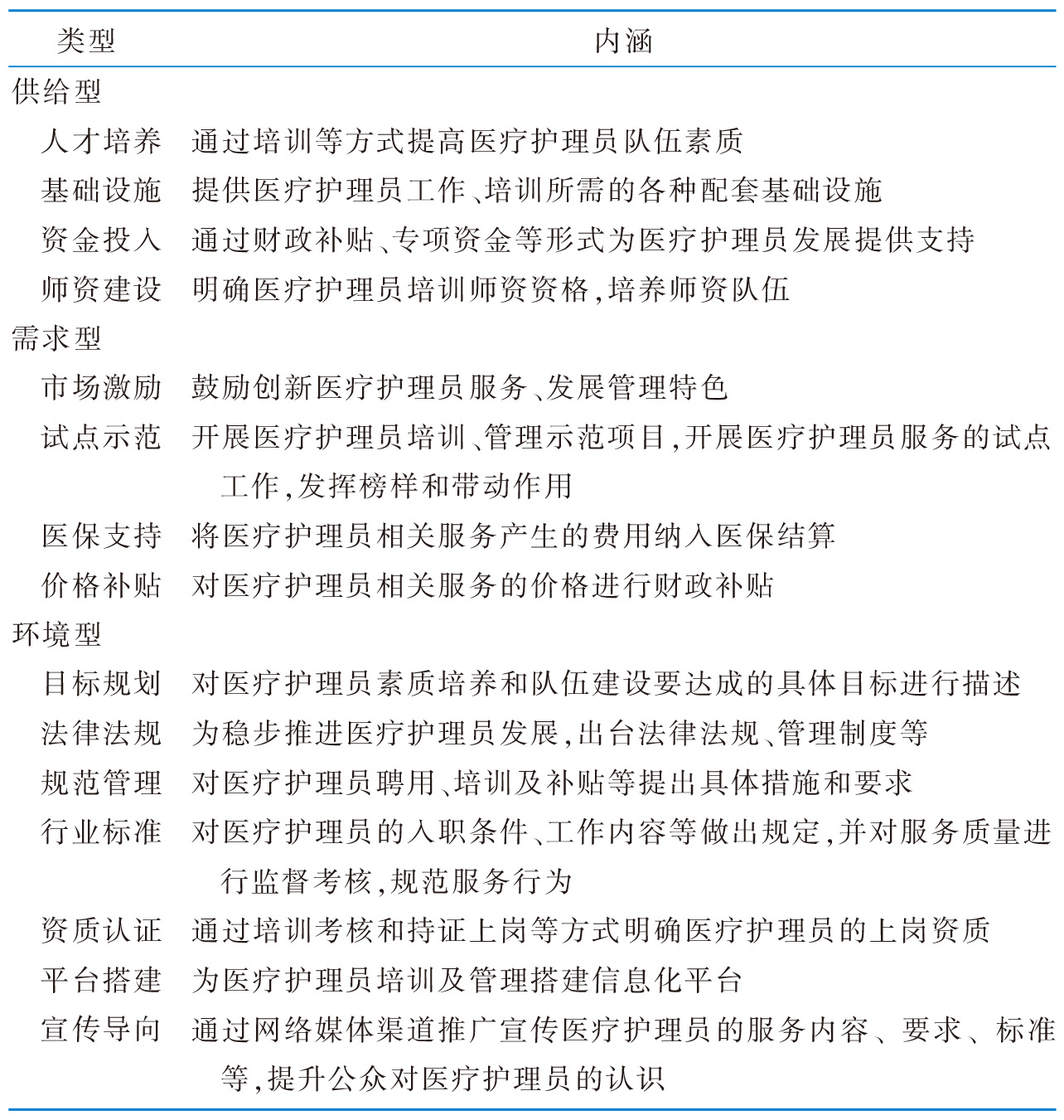 |
表1 政策工具的分类及内涵
Table 1 Classification and connotation of policy instruments
| |
 |
表2 纳入政策文本的基本特征(n=20)
Table 2 Basic characteristics of the included policies(n=20)
| |
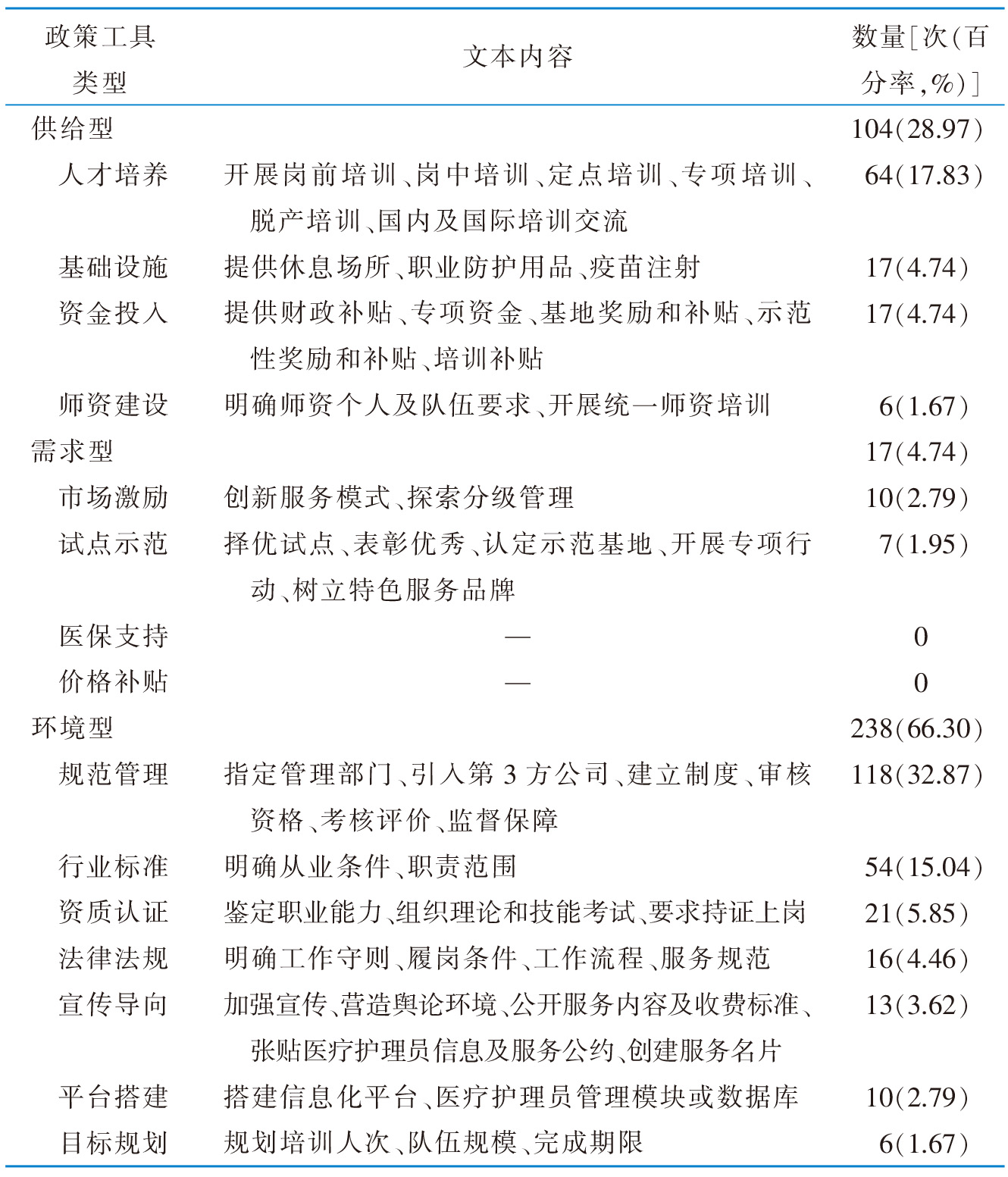 |
表3 政策工具的使用情况(n=359)
Table 3 Distribution of policy instruments(n=359)
| |
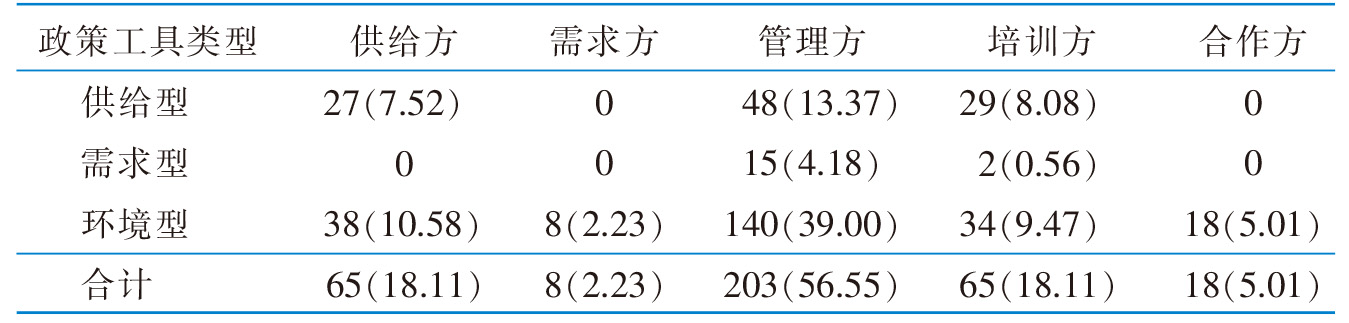 |
表4 政策工具与利益相关者交互分析结果[n=359,次(百分率,%)]
Table 4 Statistics on the interaction between policy instruments and stakeholders[n=359,cases(percentage,%)]
| |
| [1] | 鲜国炜, 柴钰霖, 宫云娜, 等. 基于集聚度和秩和比法的我国护理人力资源研究[J]. 护理学杂志, 2024, 39(5):42-47. |
| Xian GW, Chai YL, Gong YN, et al. A study of nursing human resources in China based on clustering and rank sum ratio methods[J]. J Nurs Sci, 2024, 39(5):42-47. | |
| [2] | 陈潇, 张玉侠. 英国医疗护理员的发展概况及启示[J]. 中国护理管理, 2022, 22(4):636-640. |
| Chen X, Zhang YX. The development of health care assistant in the UK and its implications for the Chinese practice[J]. Chin Nurs Manag, 2022, 22(4):636-640. | |
| [3] | 国家职业分类大典修订工作委员会. 中华人民共和国职业分类大典2015年版[M]. 北京: 中国劳动社会保障出版社, 2015. |
| National Occupational Classification Revision Committee. People’s Republic of China occupational classification dictionary 2015 edition[M]. Beijing: China Labor and Social Security Publishing House, 2015. | |
| [4] | 国家卫生健康委员会, 财政部, 人力资源和社会保障部, 等. 关于加强医疗护理员培训和规范管理工作的通知[EB/OL]. (2019-07-26)[2024-06-27]. http://www.nhc.gov.cn/yzygj/s7653/201908/f239ab4290f94d3cb6b36d1705e29f34.shtml. |
| National Health Commission, Ministry of Finance, Ministry of Human Resources and Social Security, et al. Notice on strengthening the training and standardized management of medical nursing assistants[EB/OL]. (2019-07-26)[2024-06-27]. http://www.nhc.gov.cn/yzygj/s7653/201908/f239ab4290f94d3cb6b36d1705e29f34.shtml. | |
| [5] |
范维英, 陈媛, 林媛媛. 无陪护医院护理员管理方案的构建及应用[J]. 中华护理杂志, 2024, 59(1):85-92.
DOI URL |
|
Fan WY, Chen Y, Lin YY. Construction and application of a management scheme for nursing assistants in unaccompanied hospitals[J]. Chin J Nurs, 2024, 59(1):85-92.
DOI URL |
|
| [6] | 李尤, 刘伟, 孔琳姝. 以老年病医院为依托的医疗护理员培训实践[J]. 护理学杂志, 2022, 37(13):67-69. |
| Li Y, Liu W, Kong LS. Training of nurse assistants based on geriatric hospital[J]. J Nurs Sci, 2022, 37(13):67-69. | |
| [7] |
徐雪, 王幼芳, 李海燕, 等. 基层护理管理者对医疗护理员角色期望的质性研究[J]. 中国临床护理, 2024, 16(1):6-10.
DOI |
| Xu X, Wang YF, Li HY, et al. Qualitative research on the role expectation of primary nursing managers to medical care worker[J]. Chin Clin Nurs, 2024, 16(1):6-10. | |
| [8] | 吴瑞琴. 县域医院护工职业认同研究[D]. 成都: 四川省社会科学院, 2023. |
| Wu RQ. The research on professional identity of county hospital nursing assistant[D]. Chengdu: Sichuan Academy of Social Sciences, 2023. | |
| [9] | 李凤丹, 丁炎明, 都继微. 44所三级医院医疗护理员使用与管理现状调查[J]. 中华护理杂志, 2022, 57(21):2629-2634. |
| Li FD, Ding YM, Du JW. Investigation on the current situation of the use and management of medical nursing assistants in 44 tertiary hospitals[J]. Chin J Nurs, 2022, 57(21):2629-2634. | |
| [10] | Hood C. The tools of government[M]. London:Macmilan,1983. |
| [11] |
韩振燕, 江妤铭, 许爱明, 等. 两批试点城市长期护理保险政策比较[J]. 卫生软科学, 2024, 38(1):8-12.
DOI |
| Han ZY, Jiang YM, Xu AM, et al. Comparison of long-term care insurance policies in two pilot cities-based on the two-dimensional framework of policy tools and welfare factors[J]. Soft Sci Health, 2024, 38(1):8-12. | |
| [12] | Rothwell R, Zegveld W. Reindustrialization and technology[M]. London: Longman Group Limited,1985. |
| [13] | 张珺茹, 沈玉玲, 王军永, 等. 政策工具视角下我国“互联网+护理服务”政策文本量化分析[J]. 医学与社会, 2022, 35(10):18-22,34. |
| Zhang JR, Shen YL, Wang JY, et al. Quantitative analysis of China’s “internet +Nursing service” policy texts from the pers-pective of policy tools[J]. Med Soc, 2022, 35(10):18-22,34. | |
| [14] |
余舒欣, 林荣, 祝雪花. 政策工具视角下国内护理卫生政策的文本分析[J]. 中华护理杂志, 2023, 58(7):843-849.
DOI URL |
|
Yu SX, Lin R, Zhu XH. Textual analysis of China’s nursing and health policies from the perspective of policy instruments[J]. Chin J Nurs, 2023, 58(7):843-849.
DOI URL |
|
| [15] | 刘羽佳, 陆方, 刘瑞韫. 政策工具视角下的国家医养结合试点城市养老护理员政策研究[J]. 护理学报, 2023, 30(17):24-28. |
| Liu YJ, Lu F, Liu RY. Policy research on elderly care workers in national pilot cities with integrated medical and elderly care services:a policy tool perspective[J]. J Nurs(China), 2023, 30(17):24-28. | |
| [16] | Clarke T. The stakeholder corporation:a business philosophy for the information age[J]. Long Range Plan, 1998, 31(2):182-194. |
| [17] |
汤少梁, 斯颖航. 政策工具视角下我国医联体相关政策量化研究[J]. 卫生软科学, 2020, 34(1):32-36.
DOI |
| Tang SL, Si YH. Quantitative research on relevant policies of China’s medical alliance from the perspective of policy tools[J]. Soft Sci Health, 2020, 34(1):32-36. | |
| [18] | 唐瑶, 陈天然. 政策工具视角下我国长期护理保险政策研究:基于2012—2022年试点地区政策文本的量化分析[J]. 社会保障研究, 2023(4):71-84. |
| Tang Y, Chen TR. Research on long-term care insurance policy in China from the perspective of policy tools:quantitative analysis based on the policy texts of the pilot areas from 2012 to 2022[J]. Soc Secur Stud, 2023(4):71-84. | |
| [19] | 林媛媛, 范维英, 陈媛, 等. 基于岗位胜任力构建医疗护理员分层培训课程体系[J]. 循证护理, 2023, 9(2):271-278. |
| Lin YY, Fan WY, Chen Y, et al. Construction of stratified training curriculum system for nursing assistants based on post competency[J]. Chin Evid-Based Nurs, 2023, 9(2):271-278. | |
| [20] | 于文超, 孙华君, 陈营, 等. 天津市三级医院医疗护理员队伍建设及管理实践研究[J]. 卫生经济研究, 2023, 40(1):65-67. |
| Yu WC, Sun HJ, Chen Y, et al. A study on the construction and management of medical nursing staff team in tertiary hospitals in Tianjin[J]. Health Econ Res, 2023, 40(1):65-67. | |
| [21] | 杨文红, 季江, 王星欣, 等. 长护险试点背景下的医疗护理员市场需求与职业现状调查分析[J]. 中华临床医师杂志(电子版), 2023, 17(3):326-329. |
| Yang WH, Ji J, Wang XX, et al. Investigation and analysis of market demand and occupational status of nursing assistants under the background of long-term care insurance pilot[J]. Chin J Clin(Electron Ed), 2023, 17(3):326-329. | |
| [22] | 陈亚敏, 陈佳, 周胜娥, 等. “互联网+护工”平台体系构建与实践探索[J]. 医院管理论坛, 2023, 40(7):93-96,69. |
| Chen YM, Chen J, Zhou SE, et al. Construction and practice exploration of “Internet plus Nursing Workers” platform system[J]. Hosp Manag Forum, 2023, 40(7):93-96,69. | |
| [23] | 李其铿. “三位一体”医疗护理员信息平台建设研究[J]. 教育评论, 2021(9):86-89. |
| Li QK. Research on the construction of a “three-in-one” nursing assistant information platform[J]. Educ Rev, 2021(9):86-89. | |
| [24] | 胡慧芳, 都继微. 医疗护理员培训现状的质性研究与思考[J]. 中华现代护理杂志, 2023, 29(33):4596-4600. |
| Hu HF, Du JW. Qualitative research and reflection on the training status of medical nursing assistants[J]. Chin J Mod Nurs, 2023, 29(33):4596-4600. | |
| [25] | 国家人力资源社会保障部办公厅, 国家卫生健康委办公厅. 关于颁布医疗护理员国家职业标准的通知[EB/OL]. (2024-03-08)[2024-06-06]. http://www.mohrss.gov.cn/xxgk2020/fdzdgknr/rcrs_4225/jnrc/202403/t20240308_514614.html. |
| Office of the Ministry of Human Resources and Social Secu-rity,Office of the National Health Commission. Announcement on the issuance of the national occupational standards for medical nursing assistants[EB/OL]. (2024-03-08)[2024-06-06]. http://www.mohrss.gov.cn/xxgk2020/fdzdgknr/rcrs_4225/jnrc/202403/t20240308_514614.html. | |
| [26] | 潘多拉. 加强医疗护理员培训和管理一举三得[J]. 中国卫生人才, 2020(2):8-9. |
| Pan DL. Enhancing the training and management of nursing assistants:a multifaceted approach[J]. China Health Hum Re-sour, 2020(2):8-9. | |
| [27] | 王佳林. 长期护理保险制度构建:国际经验及对我国的启示[J]. 南方金融, 2019(11):3-10. |
| Wang JL. Construction of long-term care insurance system:international experience and enlightenment for China[J]. South China Finance, 2019(11):3-10. | |
| [28] | 张志远, 刘万芳, 张利岩, 等. 基于冰山模型及双螺旋模型构建医疗护理员培训师胜任力评价指标体系[J]. 护理研究, 2023, 37(4):691-696. |
| Zhang ZY, Liu WF, Zhang LY, et al. Construction of medical nurse assistant trainers’ competency evaluation index system based on the iceberg model and double helix model[J]. Chin Nurs Res, 2023, 37(4):691-696. | |
| [29] | Sun CX, Xing YR, Wen YT, et al. Association between career adaptability and turnover intention among nursing assistants:the mediating role of psychological capital[J]. BMC Nurs, 2023, 22(1):29. |
| [30] | Isono H, Suzuki S, Ogura J, et al. Improving the workflow of nursing assistants at a general hospital in Japan[J]. BMJ Open Qual, 2017, 6(2):e000106. |
| [31] |
吴欣娟, 王钰. 践行改善护理服务行动计划:新时期的思考与行动[J]. 中华护理杂志, 2024, 59(13):1541-1547.
DOI |
| Wu XJ, Wang Y. Implementing the Action Plan for Improving Nursing Services:reflections and actions for a new era[J]. Chin J Nurs, 2024, 59(13):1541-1547. |
| [1] | 梁和静, 许鹊, 史云霞, 祖金美, 黄文静, 杨春旭, 郭明华, 王磊. 颈动脉内膜剥脱术围手术期护理质量评价指标的构建[J]. 中华护理杂志, 2026, 61(9): 1237-1244. |
| [2] | 王丹丹, 吕会力, 李付华, 李慧, 张侠, 史小艳, 张苇. 三级医院硕士学历护士工作重塑的影响因素及路径分析[J]. 中华护理杂志, 2026, 61(7): 973-978. |
| [3] | 中华护理学会人文护理专业委员会, 中华护理学会急诊护理专业委员会, (执笔:刘义兰, 汪唯, 甘秀妮, 朱陈萍, 杨霞, 熊莉娟, 朱丽辉, 徐翠荣, 郭舒婕, 张洁, 金晓燕, 李君, 李丽, 黄素芳, 王晓洁, 周晨曦, 李映兰. 对急诊科护士的人文关怀策略专家共识[J]. 中华护理杂志, 2026, 61(5): 612-615. |
| [4] | 关锐, 赵亚莎, 张士变, 李巧丽, 郭清洁, 李亚楠, 韩箫笛. 姿势调节训练在ICU肌肉骨骼损伤护士中的应用研究[J]. 中华护理杂志, 2026, 61(4): 543-548. |
| [5] | 盛旭, 丛胜楠, 张娟, 凌秀凤, 朱珠, 陈声容, 赵静. 辅助生殖专科护理质量评价指标体系的构建及验证[J]. 中华护理杂志, 2026, 61(3): 293-301. |
| [6] | 陈元元, 刘扣英, 汤婷, 屈明叶, 杨澜, 蔡昊, 王晨, 汪璐璐, 李祥硕. 国内提升患者就医体验相关政策的文本分析及护理启示[J]. 中华护理杂志, 2026, 61(3): 385-393. |
| [7] | 连蕊, 郑福雪, 田君叶, 谭艳芬, 宋亚静, 韩宁, 李妍, 蒙景雯, 曾镇罡. 供应-加工-配送模式下低值医用耗材智能管理的研究[J]. 中华护理杂志, 2026, 61(3): 394-400. |
| [8] | 曾晗月, 彭寅森, 陈腾霞, 李韵, 朱守淋, 黄乐娇, 王彩莲, 毛世芳. 《成人有创机械通气气道内吸引技术操作》团体标准临床实践现状及影响因素分析[J]. 中华护理杂志, 2026, 61(2): 198-204. |
| [9] | 兰星, 刘婷, 李勍, 柯稳, 李鑫, 张转运, 翟洁, 刘佳佳. 700所医疗机构麻醉科专科护士工作及管理现状的调查研究[J]. 中华护理杂志, 2026, 61(2): 237-243. |
| [10] | 李丽, 曹英娟, 翟永华, 颜艳, 孙一诺, 李悦, 张玲玲. 机器人辅助手术多维协同护理管理方案的构建及应用研究[J]. 中华护理杂志, 2026, 61(12): 1688-1694. |
| [11] | 尚文涵, 李思雨, 刘艳存, 姜桐桐, 么莉. 国内护理人力资源配置现状及分析[J]. 中华护理杂志, 2026, 61(11): 1520-1526. |
| [12] | 吴觅之, 魏惠燕, 潘红英, 张燕, 姚单芳, 王佳璐, 李琼琼. 专科护士协调下超重或肥胖患者多学科管理门诊的建设及评价[J]. 中华护理杂志, 2026, 61(11): 1527-1534. |
| [13] | 姜珊, 郭彩霞, 郭立华, 赵媛媛, 肖蒙, 杨依玲, 魏春艳, 李硕, 刘殿媛, 尚志丽. 外周静脉留置针并发症风险管理系统的开发与应用[J]. 中华护理杂志, 2025, 60(8): 908-913. |
| [14] | 任彦宏, 刘义兰, 韩影, 李朝巧, 张有愆, 何笑笑, 汪唯, 杨赛. 医疗护理员人文关怀知信行问卷的编制及信效度检验[J]. 中华护理杂志, 2025, 60(8): 953-959. |
| [15] | 黄婵, 池艳宇, 闵玉娣, 曹培叶, 刘君, 郑镕昕, 张海燕. 基于信息交互需求的护理会诊信息系统的开发及应用[J]. 中华护理杂志, 2025, 60(6): 645-651. |
| 阅读次数 | ||||||
|
全文 |
|
|||||
|
摘要 |
|
|||||
