

Chinese Journal of Nursing ›› 2025, Vol. 60 ›› Issue (18): 2216-2222.DOI: 10.3761/j.issn.0254-1769.2025.18.007
• Specialist Nursing Practice and Research • Previous Articles Next Articles
WEN Huimin( ), XIAO Shuqin, ZHU Xiaorong
Received:2025-03-28
Online:2025-09-20
Published:2025-09-12
温慧敏(), 肖树芹, 朱晓蓉
作者简介:温慧敏:女,硕士,主管护师,护士长,E-mail:wenhuimin0@163.com
基金资助:WEN Huimin, XIAO Shuqin, ZHU Xiaorong. Decision tree analysis of the trajectories in cognitive function in elderly hemodialysis patients and the core influencing factors[J]. Chinese Journal of Nursing, 2025, 60(18): 2216-2222.
温慧敏, 肖树芹, 朱晓蓉. 老年血液透析患者认知功能变化轨迹及核心影响因素的决策树分析[J]. 中华护理杂志, 2025, 60(18): 2216-2222.
Add to citation manager EndNote|Ris|BibTeX
URL: https://zh.zhhlzzs.com/EN/10.3761/j.issn.0254-1769.2025.18.007
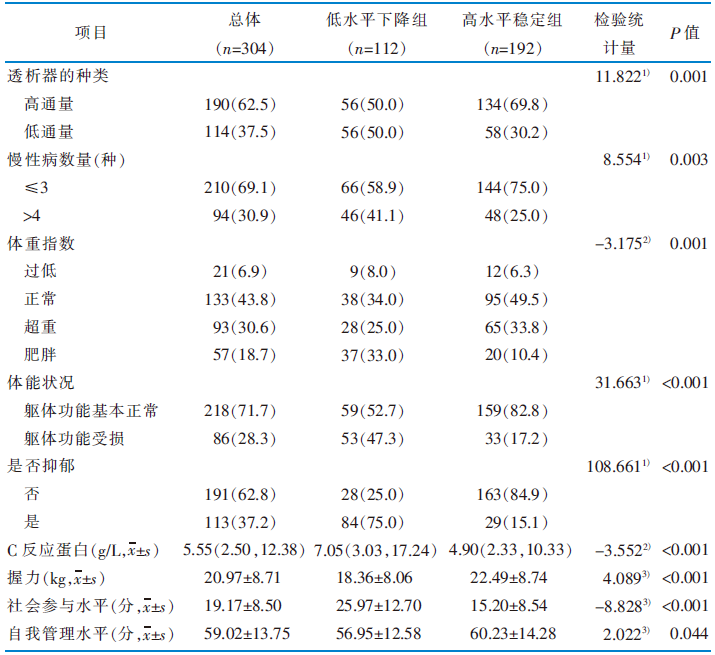 |
Table 1 General information and results of a univariate analysis of potential categories of cognitive function trajectories(n=304)
| |
 |
Table 2 Results of model fitting for analysis of potential categories of cognitive function in elderly hemodialysis patients
| |
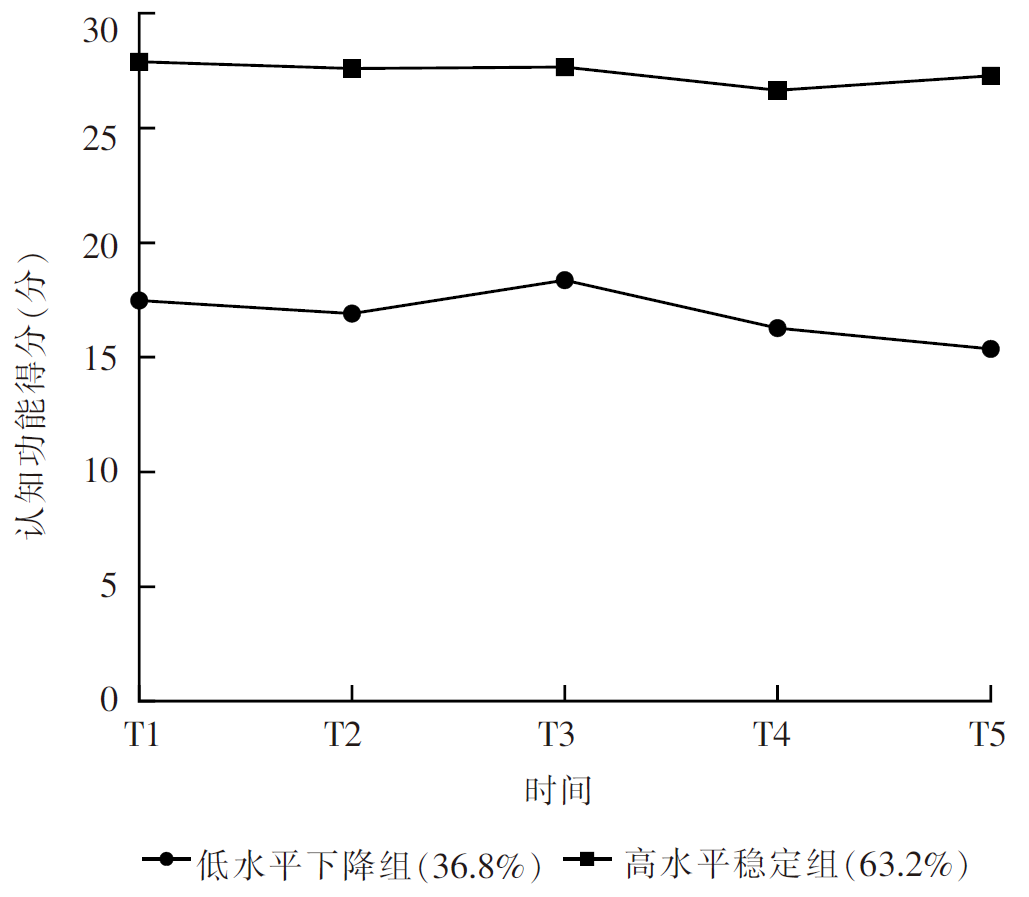
Figure 1 Trajectory of the development of potential categories of cognitive function in elderly hemodialysis patients
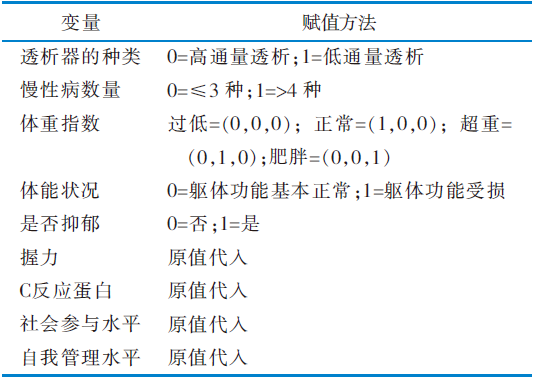 |
Table 3 Independent variables assignment method
| |
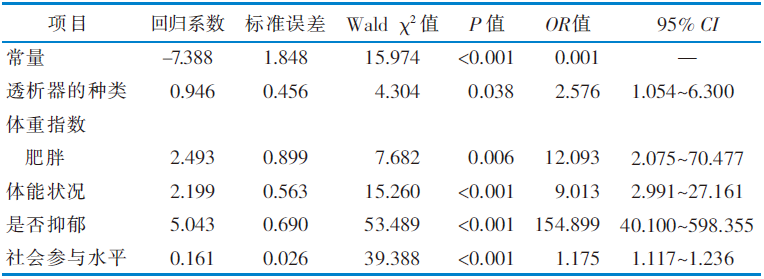 |
Table 4 Results of logistic regression analysis of potential categories of cognitive function in elderly hemodialysis patients(n=304)
| |
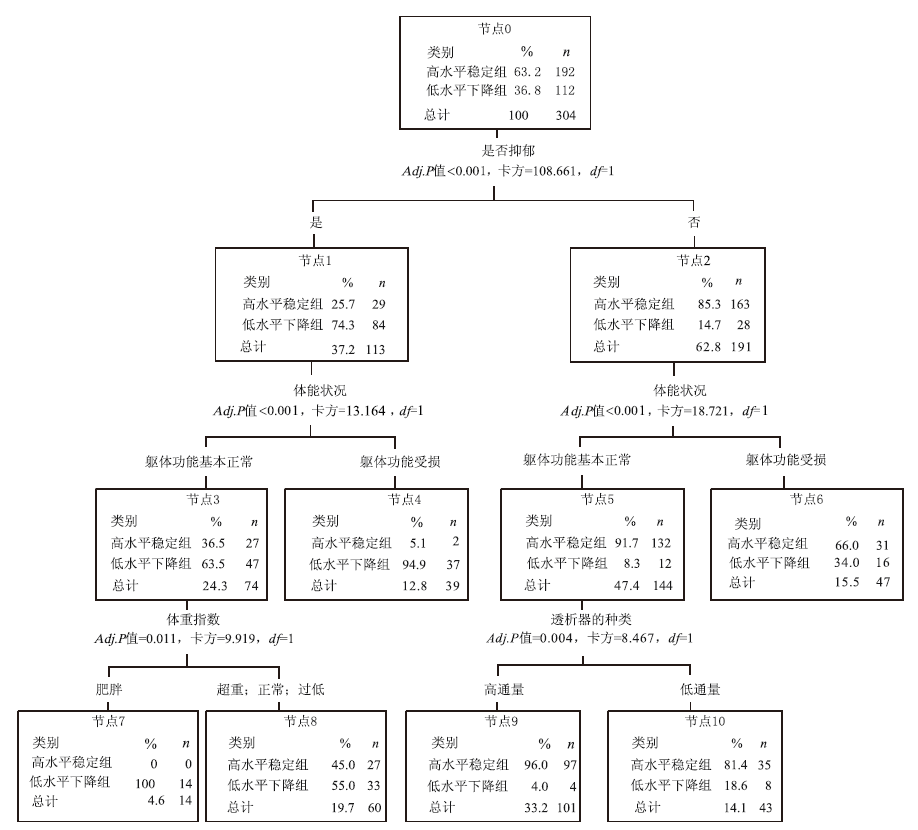
Figure 2 Decision tree model of potential categories of cognitive function in elderly hemodialysis patients(n=304)
 |
Table 5 Comparison of prediction performance between 2 models
| |
| [1] | Yu WY, Chen R, Zhang MQ, et al. Cognitive decline trajectories and influencing factors in China:a non-normal growth mixture model analysis[J]. Arch Gerontol Geriatr, 2021,95:104381. |
| [2] |
胡慧秀, 孙超, 赵雅洁, 等. 我国9个省份老年人身体及认知功能状况的调查研究[J]. 中华护理杂志, 2023, 58(1):68-73.
DOI |
|
Hu HX, Sun C, Zhao YJ, et al. Investigestion and character analysis of function of 12 141 older people in 9 provinces[J]. Chin J Nurs, 2023, 58(1):68-73.
DOI |
|
| [3] | 苑影影, 汪红英, 刘静, 等. 老年维持性血液透析患者躯体衰弱合并认知障碍的影响因素分析[J]. 老年医学与保健, 2024, 30(1):95-101. |
| Yuan YY, Wang HY, Liu J, et al. Analysis of influencing factors of physical frailty complicated with cognitive impairment in elderly patients with maintenance hemodialysis[J]. Geriatr Health Care, 2024, 30(1):95-101. | |
| [4] | Rebok GW, Huang A, Smail E, et al. Long-term effects of cognitive training on all-cause mortality in US older adults[J]. J Aging Health, 2022, 34(6/7/8):1135-1143. |
| [5] | Wang XC, Qiao YC, Zhang YD, et al. Cognitive trajectories and their relationships with education and diets among older adults:a network-based 10-year cohort study[J]. Front Aging Neurosci, 2025,16:1498454. |
| [6] | Zang E, Zhang YX, Wang Y, et al. Association between cognitive trajectories and subsequent health status,depressive symptoms,and mortality among older adults in the United States:findings from a nationally representative study[J]. J Gerontol A Biol Sci Med Sci, 2024, 79(8):glae143. |
| [7] | 刘源, 骆方, 刘红云. 多阶段混合增长模型的影响因素:距离与形态[J]. 心理学报, 2014, 46(9):1400-1412. |
| Liu Y, Luo F, Liu HY. Factors of piecewise growth mixture model:distance and pattern[J]. Acta Psychol Sin, 2014, 46(9):1400-1412. | |
| [8] | Guralnik JM, Simonsick EM, Ferrucci L, et al. A short physical performance battery assessing lower extremity function:association with self-reported disability and prediction of mortality and nursing home admission[J]. J Gerontol, 1994, 49(2):M85-M94. |
| [9] | Spitzer RL, Kroenke K, Williams JB. Validation and utility of a self-report version of PRIME-MD:the PHQ primary care study. primary care evaluation of mental disorders. patient health questionnaire[J]. JAMA, 1999, 282(18):1737-1744. |
| [10] | 卞崔冬, 何筱衍, 钱洁, 等. 患者健康问卷抑郁症状群量表在综合性医院中的应用研究[J]. 同济大学学报(医学版), 2009, 30(5):136-140. |
| Bian CD, He XY, Qian J, et al. The reliability and validity of a modified Patient Health Questionnaire for Screening Depressive Syndrome in general hospital outpatients[J]. J Tongji Univ Med Sci, 2009, 30(5):136-140. | |
| [11] |
Cardol M, de Haan RJ, van den Bos GA, et al. The development of a handicap assessment questionnaire:the Impact on Participation and Autonomy(IPA)[J]. Clin Rehabil, 1999, 13(5):411-419.
DOI PMID |
| [12] | 李红. 中文版自主参与测评问卷的修订及脑卒中人群的初步应用[D]. 上海: 第二军医大学, 2013. |
| Li H. Revise of Chinese version of impact on participation and autonomy questionnaire and application in stroke patients[D]. Shanghai: Second Military Medical University, 2013. | |
| [13] | 宋藝君, 林秋菊. 血液透析病患自我管理量表之建构与测试[J]. 護理暨健康照護研究, 2009, 5(1):51-59. |
| Song YJ, Lin QJ. Developing and testing of the hemodialysis self-management instrument[J]. J Nurs Health Care Res, 2009, 5(1):51-59. | |
| [14] | 李慧, 曹迎东, 姜亚芳, 等. 血液透析患者自我管理量表的引进及信效度检测[J]. 中华护理杂志, 2015, 50(11):1392-1395. |
| Li H, Cao YD, Jiang YF, et al. Reliability and validity tests of hemodialysis self-management instrument[J]. Chin J Nurs, 2015, 50(11):1392-1395. | |
| [15] |
Folstein MF, Folstein SE, McHugh PR. “Mini-mental state”. A practical method for grading the cognitive state of patients for the clinician[J]. J Psychiatr Res, 1975, 12(3):189-198.
DOI PMID |
| [16] | 王征宇, 张明园, 翟光亚, 等. 中文版简易智能状态检查(MMSE)的应用[J]. 上海精神医学, 1989, 7(3):108-111. |
| Wang ZY, Zhang MY, Zhai GY, et al. Application of Chinese version of Mini-Mental State Examination(MMSE)[J]. Shanghai Arch Psychiatry, 1989, 7(3):108-111. | |
| [17] | 秦慧, 陈娜, 卓力. 认知轨迹与全因死亡风险的关系研究:日常生活活动能力的中介作用[J]. 现代预防医学, 2024, 51(18):3393-3397,3409. |
| Qin H, Chen N, Zhuo L. Cognitive trajectories and risk of all-cause mortality:the mediating role of activities of daily living[J]. Mod Prev Med, 2024, 51(18):3393-3397,3409. | |
| [18] | Han S, Lee JY, Cho SI, et al. Risk factors for various cognitive function decline trajectories in adults over 40 years of age:a retrospective cohort study[J]. Psychiatry Investig, 2023, 20(4):293-300. |
| [19] | Le Thuc O, García-Cáceres C. Obesity-induced inflammation:connecting the periphery to the brain[J]. Nat Metab, 2024, 6(7):1237-1252. |
| [20] | Lee D, Tak SH. Trajectories of cognitive function and predictors among older adults in Korea for 8 years:a national panel data analysis[J]. J Appl Gerontol,2025:7334648251314281. |
| [21] | Huang YY, Gan YH, Yang L, et al. Depression in Alzheimer’s disease:epidemiology,mechanisms,and treatment[J]. Biol Psychiatry, 2024, 95(11):992-1005. |
| [22] | Son YJ, Kim DY, Choi YG, et al. Eight-year trajectories and predictors of cognitive function in community-dwelling Korean older adults with cardiovascular diseases[J]. J Nurs Scholarsh, 2024, 56(1):153-163. |
| [23] | Zhai BY, Liu XM, Fu JN, et al. More cognitive gains from social activity in the oldest-old:evidence from a 10-year longitudinal study[J]. Front Psychol, 2024,15:1382141. |
| [24] | Suo JD, Shen XL, He JY, et al. Exploring cognitive trajectories and their association with physical performance:evidence from the China Health and Retirement Longitudinal Study[J]. Epidemiol Health, 2023,45:e2023064. |
| [25] |
Legdeur N, Badissi M, Venkatraghavan V, et al. The temporal relation of physical function with cognition and the influence of brain health in the oldest-old[J]. Gerontology, 2025, 71(1):13-27.
DOI PMID |
| [26] | 赵蕊, 范文琪, 刘晓夏, 等. 基于机器学习的3种妇产科护士共情疲劳风险预测模型的构建与比较[J]. 中华护理杂志, 2025, 60(3):347-354. |
| Zhao R, Fan WQ, Liu XX, et al. Establishment and comparison of 3 compassion fatigue risk prediction models for obstetrics and gynaecology nurses based on machine learning[J]. Chin J Nurs, 2025, 60(3):347-354. |
| [1] | HUANG Panpan, LI Liling, HU Xiaojing. Research progress of early exercise rehabilitation in infants with congenital heart disease [J]. Chinese Journal of Nursing, 2025, 60(9): 1050-1055. |
| [2] | CHEN Liou, ZHANG Wenting, LIU Junqi, WANG Yuncong, WANG Zhenlin, QI Sai, YANG Na. Study on the effect of pulmonary lobes surface projection localization combined with pulmonary segment drainage and sputum expectoration technique on airway clearance in patients with aspiration pneumonia [J]. Chinese Journal of Nursing, 2025, 60(9): 1056-1061. |
| [3] | YANG Nana, CHENG Chuanli, ZENG Hui, FU Dandan, WANG Yan, CHEN Yue, RAN Hongmin, FAN Hongjing, LONG Xia. Evaluation of the effect of graded exercise rehabilitation on patients with acute exacerbation of chronic obstructive pulmonary disease [J]. Chinese Journal of Nursing, 2025, 60(9): 1062-1067. |
| [4] | CAO Yun, SUN Guozhen, CHEN Feng, JI Xueli, YAN Mengwan, JING Lei, QIAN Kun. A study of modified ankle pump exercise in stroke patients [J]. Chinese Journal of Nursing, 2025, 60(9): 1068-1074. |
| [5] | XIE Min, QI Wenkai, YIN Ling, ZHANG Xuan, ZHAO Ruqin. Potential profile analysis and influencing factors of kinesiophobia in patients with peritoneal dialysis [J]. Chinese Journal of Nursing, 2025, 60(9): 1080-1086. |
| [6] | CHEN Bingqian, ZHAO Bin, SUN Jiarong, HAO Sifang, HOU Xiaoli. Oral health management dilemmas of chronic periodontitis patients with implant dentures:a qualitative study [J]. Chinese Journal of Nursing, 2025, 60(9): 1087-1092. |
| [7] | QIN Chunlan, WU Zhenyun, QIAN Hongying, ZHAO Qian, SUN Jinting. Experiences of disease self-control among patients with chronic obstructive pulmonary disease:a qualitative study [J]. Chinese Journal of Nursing, 2025, 60(9): 1093-1098. |
| [8] | LI Ziwei, FENG Lijuan, CHEN Xusheng, HUANG Yi, YANG Jie. Development and application of a Fear of Movement Assessment Scale for patients with peripherally inserted central catheters [J]. Chinese Journal of Nursing, 2025, 60(9): 1099-1106. |
| [9] | CHENG Zhiqiang, ZHANG Baozhen, TANG Liping, LI Jing, XIA Jiaoyun, WEI Xueyan, GONG Zhixian, ZHANG Meizhen, LI Lusi. Reliability and validity test of the Chinese version of the Urinary Incontinence Awareness and Attitude Scale [J]. Chinese Journal of Nursing, 2025, 60(9): 1107-1112. |
| [10] | SHI Meiqin, WU Jianfang, ZHANG Duo, WU Chunping, CHEN Ling, TAO Lei. Nursing care for postoperative laryngeal function rehabilitation in a patient undergoing primary voice prosthesis implantation after total laryngectomy [J]. Chinese Journal of Nursing, 2025, 60(9): 1120-1123. |
| [11] | GU Qian, HUANG Xi, SHI Weixiong, WU Jing, TAN Ruoming, WANG Feng. Nursing care for a patient with cytokine release syndrome following T-cell immunotherapy [J]. Chinese Journal of Nursing, 2025, 60(9): 1124-1127. |
| [12] | ZHOU Miao, CHEN Xing, PENG Fei, SUN Shangxue, LI Yangyang. Systematic review of risk prediction instruments for central line associated bloodstream infections in ICU patients [J]. Chinese Journal of Nursing, 2025, 60(9): 1132-1139. |
| [13] | PENG Yingjie, LIU Aihong, ZHU Wenli, MEI Yuxin, ZHOU Meng, GUAN Wenjing. Systematic review of readiness assessment tools for advance care planning in older adults [J]. Chinese Journal of Nursing, 2025, 60(9): 1146-1153. |
| [14] | RAN Lingxiao, WANG Dongmin, XU Ke, WANG Cong, CAO Hua, CUN Wei, JIANG Yan. Application of biomechanical simulation based on three-dimensional human body model in preventing pressure ulcers:a scoping review [J]. Chinese Journal of Nursing, 2025, 60(8): 1012-1018. |
| [15] | JIN Yujia, JIANG Hu, WANG Xiaoxuan, YI Jingna, MEI Yongxia, GUO Zhiting, ZHANG Zhenxiang, LIN Beilei. Application of information-based risk communication in primary prevention of cardiovascular diseases:a scoping review [J]. Chinese Journal of Nursing, 2025, 60(8): 1019-1025. |
| Viewed | ||||||
|
Full text |
|
|||||
|
Abstract |
|
|||||
