
Chinese Journal of Nursing ›› 2026, Vol. 61 ›› Issue (4): 475-482.DOI: 10.3761/j.issn.0254-1769.2026.04.006
• Specialist Nursing Practice and Research • Previous Articles Next Articles
PAN Yuanyuan( ), WANG Donghui, FU Huilin*()
Received:2025-07-08
Online:2026-02-20
Published:2026-02-06
* Corresponding author:
FU Huilin,E-mail:2928517499@qq.comFunding program:
潘圆圆(), 王董慧, 傅慧琳*()
通讯作者:
傅慧琳,E-mail:2928517499@qq.com作者简介:潘圆圆,女,本科,副主任护师,E-mail:tuantuan0723@126.com
基金资助:PAN Yuanyuan, WANG Donghui, FU Huilin. Applied research on an intervention program based on the information framing effect for self-management behaviors in pituitary adenoma patients[J]. Chinese Journal of Nursing, 2026, 61(4): 475-482.
潘圆圆, 王董慧, 傅慧琳. 基于信息框架效应的垂体瘤患者自我管理行为干预方案的应用研究[J]. 中华护理杂志, 2026, 61(4): 475-482.
Add to citation manager EndNote|Ris|BibTeX
URL: https://zh.zhhlzzs.com/EN/10.3761/j.issn.0254-1769.2026.04.006
 |
Table 1 The information intervention program for self-management behaviors in postoperative pituitary adenoma patients using the framing effect
| |
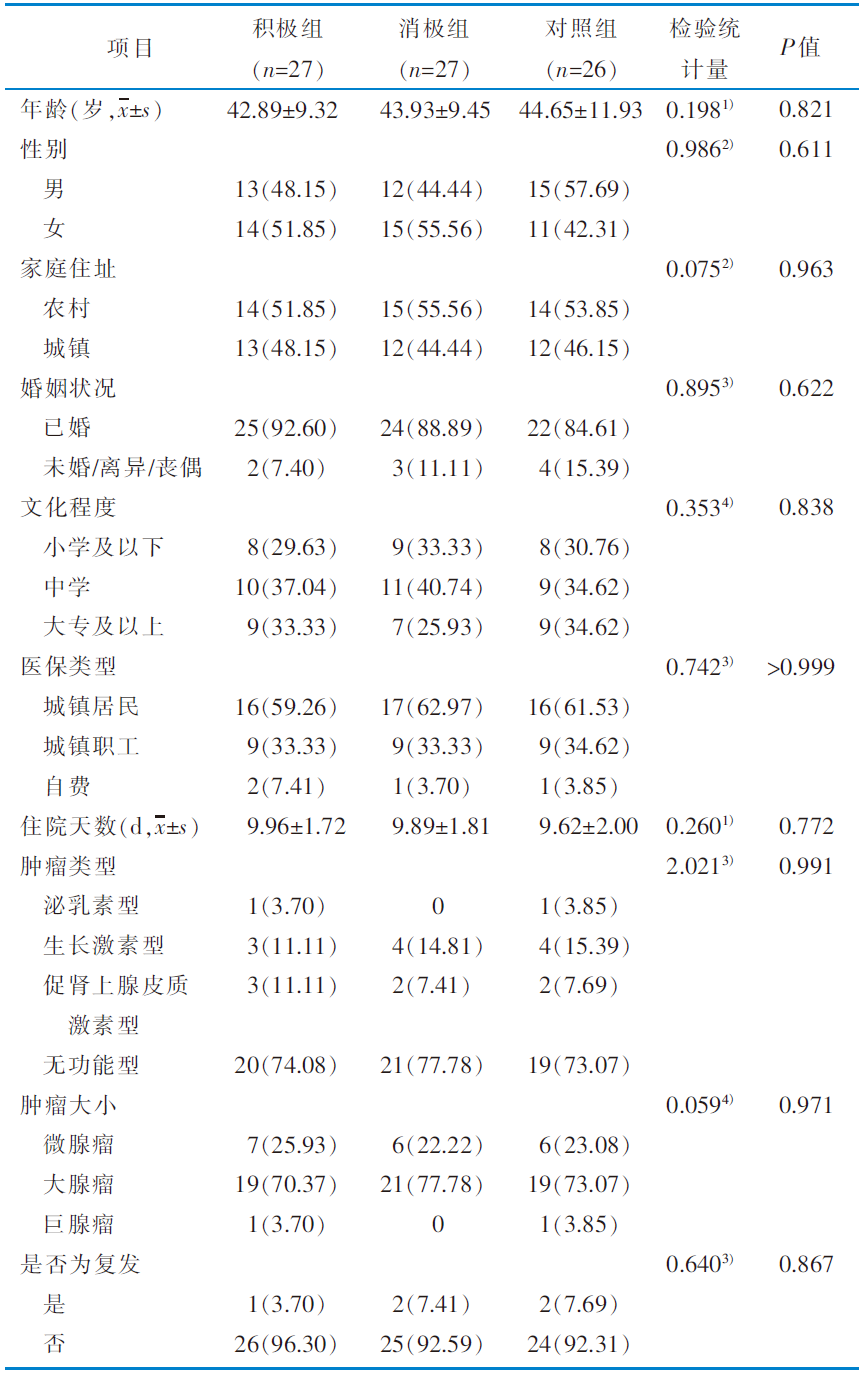 |
Table 2 Comparison of general information of 3 groups
| |
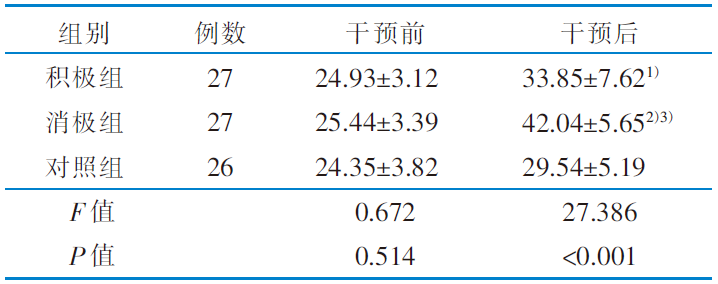 |
Table 3 Comparison of scores of self-management before and after intervention in 3 groups(scores,$\bar{x}\pm s$)
| |
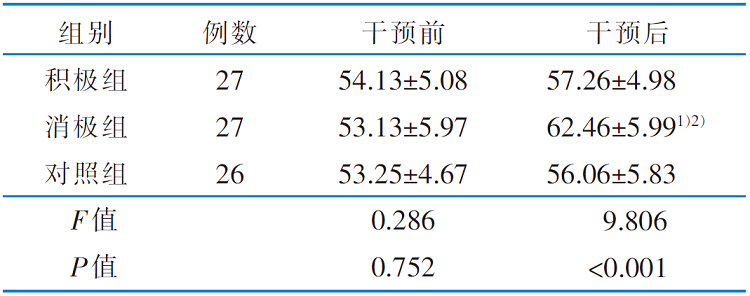 |
Table 4 Comparison of scores of patient activation before and after intervention in 3 groups(scores,$\bar{x}\pm s$)
| |
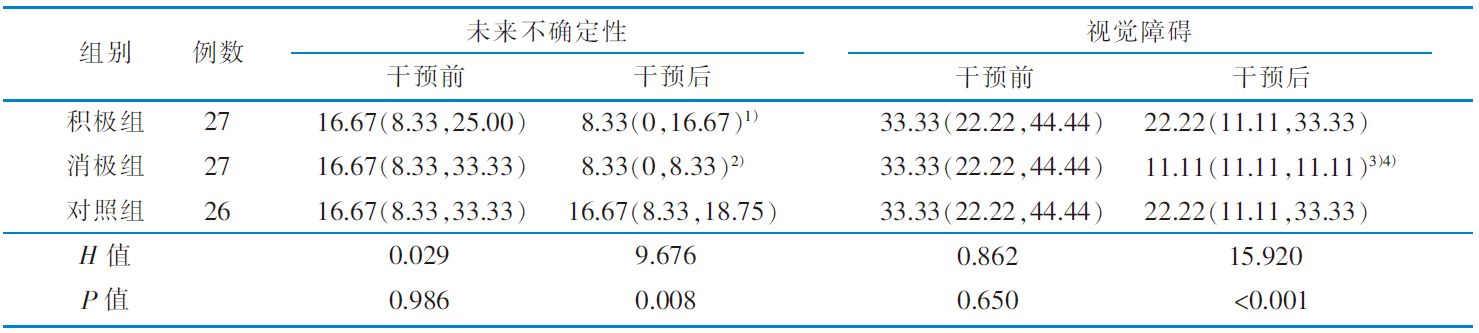 |
Table 5 Comparison of scores of patients quality of life before and after intervention in 3 groups [scores,M(P25,P75)]
| |
| [1] | Price M, Ballard C, Benedetti J, et al. CBTRUS statistical report:primary brain and other central nervous system tumors diagnosed in the United States in 2017-2021[J]. Neuro Oncol, 2024, 26(Suppl 6):vi1-vi85. |
| [2] | 中国垂体腺瘤协作组. 中国垂体腺瘤外科治疗专家共识[J]. 中华医学杂志, 2015, 95(5):324-329. |
| China Pituitary Adenoma Cooperative Group. Chinese expert consensus on surgical management of pituitary adenomas[J]. Nat Med J Chin, 2015, 95(5):324-329. | |
| [3] |
Fleseriu M, Hashim IA, Karavitaki N, et al. Hormonal replacement in hypopituitarism in adults:an endocrine society clinical practice guideline[J]. J Clin Endocrinol Metab, 2016, 101(11):3888-3921.
DOI PMID |
| [4] |
张妍欣, 杨丽, 李家燕, 等. 鼻咽癌患者同步放化疗后自我管理积极度现状及影响因素分析[J]. 中华护理杂志, 2022, 57(15):1853-1859.
DOI |
|
Zhang YX, Yang L, Li JY, et al. Analysis on the current situation and influencing factors of the self-management positivity of patients in the recovery period after simultaneous radiotherapy for nasopharyngeal carcinoma[J]. Chin J Nurs, 2022, 57(15):1853-1859.
DOI |
|
| [5] |
王董慧, 傅慧琳, 潘圆圆. 垂体瘤术后患者自我管理行为障碍因素的质性研究[J]. 中华护理杂志, 2025, 60(14):1730-1735.
DOI |
|
Wang DH, Fu HL, Pan YY. A qualitative study on barriers to self-management behaviors in postoperative pituitary adenoma patients[J]. Chin J Nurs, 2025, 60(14):1730-1735.
DOI |
|
| [6] | 杨靖云, 谢冠玲, 姚顺. 垂体神经内分泌肿瘤患者并发认知障碍及情绪异常研究进展[J]. 中国神经精神疾病杂志, 2025, 51(4):246-251. |
| Yang JY, Xie GL, Yao S. Research progress on cognitive impairments and emotional disorders in patients with pituitary neuroendocrine tumors[J]. Chin J Nerv Ment Dis, 2025, 51(4):246-251. | |
| [7] |
Rothman AJ, Salovey P. Shaping perceptions to motivate healthy behavior:the role of message framing[J]. Psychol Bull, 1997, 121(1):3-19.
DOI PMID |
| [8] | Gao RT, Guo H, Li F, et al. The effects of health behaviours and beliefs based on message framing among patients with chronic diseases:a systematic review[J]. BMJ Open, 2022, 12(1):e055329. |
| [9] | Park J, Kim SH, Kim JG. Effects of message framing and health literacy on intention to perform diabetes self-care:a randomized controlled trial[J]. Diabetes Res Clin Pract, 2020,161:108043. |
| [10] |
Lorig KR, Sobel DS, Ritter PL, et al. Effect of a self-management program on patients with chronic disease[J]. Eff Clin Pract, 2001, 4(6):256-262.
PMID |
| [11] | 傅东波, 沈贻谔, 丁永明, 等. 上海慢性病自我管理项目对自我效能的影响评价[J]. 中国健康教育, 2003, 19(10):740-742. |
| Fu DB, Shen YE, Ding YM, et al. The impact of Shanghai chronic disease self-management program on self efficacy[J]. Chin J Health Educ, 2003, 19(10):740-742. | |
| [12] |
Hibbard JH, Mahoney ER, Stockard J, et al. Development and testing of a short form of the Patient Activation Measure[J]. Health Serv Res, 2005, 40(6p1):1918-1930.
DOI URL |
| [13] | 洪洋, 邹叶芳, 吴娟. 中文版患者积极度量表的信效度研究[J]. 中华现代护理杂志, 2018, 24(25):3009-3015. |
| Hong Y, Zou YF, Wu J. Reliability and validity of the Chinese version of Patient Activation Measure[J]. Chin J Mod Nurs, 2018, 24(25):3009-3015. | |
| [14] |
Leung A, Lien KR, Zeng L, et al. The EORTC QLQ-BN 20 for assessment of quality of life in patients receiving treatment or prophylaxis for brain metastases:a literature review[J]. Expert Rev Pharmacoecon Outcomes Res, 2011, 11(6):693-700.
DOI URL |
| [15] | 龚钰, 田婧汝, 陈盼, 等. 脑瘤患者生活质量测定量表EORTCQLQ-C30、QLQ-BN20的中文版评价[J]. 护士进修杂志, 2020, 35(6):490-494,500. |
| Gong Y, Tian JR, Chen P, et al. Evaluation of the Chinese version of EORTCQLQ-C30,QLQ-BN20 for brain tumor patients[J]. J Nurses Train, 2020, 35(6):490-494,500. | |
| [16] | European Organisation for Research and Treatment of Cancer (EORTC). EORTC quality of life group:study coordinator manual 2023[EB/OL]. (2023-07)[2024-09-05]. https://www.eortc.org/app/uploads/sites/2/2023/07/SCmanual2023.pdf. |
| [17] |
谢玉生, 黄蓉蓉, 刘昭晴, 等. 基于收益与损失信息框架的健康教育在糖尿病高危足患者中的应用研究[J]. 中华护理杂志, 2025, 60(11):1336-1343.
DOI |
|
Xie YS, Huang RR, Liu ZQ, et al. Application of health education based on gain and loss message framework in patients with high-risk diabetic foot[J]. Chin J Nurs, 2025, 60(11):1336-1343.
DOI |
|
| [18] | Minich M, Chang CT, Kriss LA, et al. Gain/loss framing moderates the VMPFC’s response to persuasive messages when behaviors have personal outcomes[J]. Soc Cogn Affect Neurosci, 2023, 18(1):nsad069. |
| [19] |
Murayama H, Sasaki S, Takahashi Y, et al. Message framing effects on attitude and intention toward social participation in old age[J]. BMC Public Health, 2023, 23(1):1713.
DOI PMID |
| [20] |
常雅舒, 李可意, 倪志宏. 新疆南疆地区代谢综合征患者健康管理行为的潜在剖面分析[J]. 中华护理杂志, 2024, 59(12):1475-1483.
DOI |
|
Chang YS, Li KY, Ni ZH. Potential profile analysis of health management behaviors of patients with metabolic syndrome in Southern Xinjiang[J]. Chin J Nurs, 2024, 59(12):1475-1483.
DOI |
|
| [21] | Malezieux M, Klein AS, Gogolla N. Neural circuits for emotion[J]. Annu Rev Neurosci, 2023,46:211-231. |
| [22] |
Ort A, Reinhardt A, Koch L, et al. The emotional effects of gain-loss frames in persuasive messages about sun protection on health promotional outcomes:evidence from an experimental study[J]. Health Commun, 2023, 38(3):512-521.
DOI URL |
| [1] | DU Shushu, CAO Yaqin, MIN Jikang, FENG Yue, WU Qi, JIANG Fengxian. Construction and application of a postoperative self-management program for patients with osteoporotic vertebral compression fractures [J]. Chinese Journal of Nursing, 2026, 61(4): 442-451. |
| [2] | ZHANG Ying, LÜ Shuoyang, ZHAO Guichun, JIANG Yingqing, HUANG Liqun, ZHANG Hongbing, YANG Huilin, NI Li, SUI Wenjie. A quantitative study on the dilemma of exercise in patients with osteoporotic vertebral compression fractures after surgery [J]. Chinese Journal of Nursing, 2026, 61(4): 452-459. |
| [3] | WANG Xin, XU Huiping, HUANG Qian, SUN Yifang, GUO Zixin, ZHANG Xinyu. Analysis of latent classes and influencing factors for physical function trajectories in hip arthroplasty patients [J]. Chinese Journal of Nursing, 2026, 61(4): 460-466. |
| [4] | WANG Fangying, CHEN Xuefeng, JIA Yan, WU Wanying. Subgroups and transition patterns of symptom burden among nasopharyngeal carcinoma patients during the peri-radiotherapy period:a latent transition analysis [J]. Chinese Journal of Nursing, 2026, 61(4): 490-497. |
| [5] | JING Feng, JIANG Lingyun, CAO Yuling, TIAN Maoting, QIU Jiajia, TANG Lichen, HU Yan. Development and preliminary validation of a risk prediction model for musculoskeletal symptoms among breast cancer patients with endocrine therapy [J]. Chinese Journal of Nursing, 2026, 61(4): 498-505. |
| [6] | JIN Guanzhen, LIU Yanjin, JIN Bo, WANG Yanyan, ZHANG Ling, LIU Fangfang. Current situation and influencing factors of self-awareness of falls in elderly patients with primary glaucoma [J]. Chinese Journal of Nursing, 2026, 61(4): 506-512. |
| [7] | KONG Juan, LIU Xueyan, YUAN Xiaodong, CAO Yingjuan. A study on the symptom management journey map of adult patients with generalized myasthenia gravis [J]. Chinese Journal of Nursing, 2026, 61(4): 513-520. |
| [8] | SHI Ziyue, JIANG Enshe, QU Jiayuan, YU Yaqian, ZHANG Daxue, FU Mingzhu, DENG Xiaomei. Norm construction of a Negative Emotion Screening Scale for Inpatients in General Hospitals:a Guangdong provincial norm [J]. Chinese Journal of Nursing, 2026, 61(4): 521-529. |
| [9] | QIN Yushuang, YU Lili, CHENG Lili, HUANG Juan, XI Xin, WANG Liyan, TIAN En, LIN Lirong, FAN Yao, YANG Jurong, ZHOU Mingfang. Experience of pregnant women with end-stage renal disease under multidisciplinary management:a qualitative study [J]. Chinese Journal of Nursing, 2026, 61(4): 530-535. |
| [10] | LU Fengjuan, XIE Zihui, GUAN Yinyin, PEI Xiaoli, FANG Yuxia. Latent profile analysis of empathy for pain and its associated factors among orthopedic nurses [J]. Chinese Journal of Nursing, 2026, 61(4): 549-556. |
| [11] | LIU Chunli, TENG Xue, ZHANG Liuliu, YANG Bo, ZHANG Maomao, LI Xiaoxu, YU Rong, SHI Ruchun. Research progress on identification and management of malpositioned central venous access device tip into the azygos vein [J]. Chinese Journal of Nursing, 2026, 61(4): 566-570. |
| [12] | ZHOU Xinying, XU Yihong, ZHOU Liping, GONG Xiaoyan, YE Huan, LIU Xiaona, ZHUANG Yiyu. A scoping review on the relationship between gender differences and health related quality of life among stroke patients [J]. Chinese Journal of Nursing, 2026, 61(4): 571-577. |
| [13] | XUE Jing, WANG Zhe, CHENG Fangqun, CHEN Siyu, HE Cong, XU Qiang, PENG Peng, CHENG Peiyu. Resilience developmental trajectories and influencing factors in infertile women undergoing in vitro fertilization and embryo transfer treatment [J]. Chinese Journal of Nursing, 2026, 61(3): 302-309. |
| [14] | HUANG Huihong, LIU Jinlian, WANG Zirui, LI Jinlu, SHI Li, YANG Rui. Analysis of the influencing factors and pathways of pain levels in patients undergoing in vitro fertilization and embryo transfer after oocyte retrieval surgery [J]. Chinese Journal of Nursing, 2026, 61(3): 310-317. |
| [15] | WU Meiliyang, YANG Liu, YANG Juan, QU Jia, MIN Min. Mapping the assisted reproductive treatment journey for infertility patients and implications for care [J]. Chinese Journal of Nursing, 2026, 61(3): 318-325. |
| Viewed | ||||||
|
Full text |
|
|||||
|
Abstract |
|
|||||
