

中华护理杂志 ›› 2026, Vol. 61 ›› Issue (6): 733-740.DOI: 10.3761/j.issn.0254-1769.2026.06.002
李春秀1( ), 修红1, 刘敏2, 邹晓君2, 王晴2, 丁书凡2, 赵志平2, 李晓娟2,*()
收稿日期:2025-09-18
出版日期:2026-03-20
发布日期:2026-03-23
*通讯作者:
李晓娟,E-mail:lixiaojuan@qdu.edu.cn作者简介:李春秀:女,硕士,护士,E-mail:1393663126@qq.com
LI Chunxiu1(), XIU Hong1, LIU Min2, ZOU Xiaojun2, WANG Qing2, DING Shufan2, ZHAO Zhiping2, LI Xiaojuan2,*()
Received:2025-09-18
Online:2026-03-20
Published:2026-03-23
摘要:
目的 构建并验证血液肿瘤患者营养不良风险预测模型,为早期识别高风险患者提供参考。 方法 采用便利抽样法,选取2025年1—3月青岛市某三级甲等医院血液内科收治的292例血液肿瘤患者作为建模组,并以同期青岛市另1所同级医院收治的126例患者作为验证组。通过LASSO回归、Logistic回归筛选影响因素,并绘制列线图。采用Bootstrap法进行内部验证,采用受试者操作特征曲线下面积和Hosmer-Lemeshow检验评估模型的预测性能。 结果 建模组和验证组的营养不良发生率分别为27.40%和25.40%。Logistic回归分析结果显示,年龄、BMI、有无胃肠道反应、血清白蛋白、C反应蛋白、抑郁得分、体能状态得分是血液肿瘤患者营养不良的影响因素。建模组的受试者操作特征曲线下面积为0.924(95%CI:0.888~0.960),灵敏度为81.3%,特异度为90.6%;Hosmer-Lemeshow检验结果显示,χ2=6.349,P=0.608。验证组的受试者操作特征曲线下面积为0.895(95%CI:0.838~0.952),灵敏度为81.3%,特异度为85.1%,Hosmer-Lemeshow检验结果显示,χ2=5.456,P=0.708。 结论 该研究构建的风险预测模型具有良好的预测性能,有助于早期识别血液肿瘤患者营养不良高风险人群,为医护人员实施个体化营养干预提供依据。
李春秀, 修红, 刘敏, 邹晓君, 王晴, 丁书凡, 赵志平, 李晓娟. 血液肿瘤患者营养不良风险预测模型的构建及验证[J]. 中华护理杂志, 2026, 61(6): 733-740.
LI Chunxiu, XIU Hong, LIU Min, ZOU Xiaojun, WANG Qing, DING Shufan, ZHAO Zhiping, LI Xiaojuan. Development and validation of a malnutrition risk prediction model in patients with hematologic neoplasms[J]. Chinese Journal of Nursing, 2026, 61(6): 733-740.
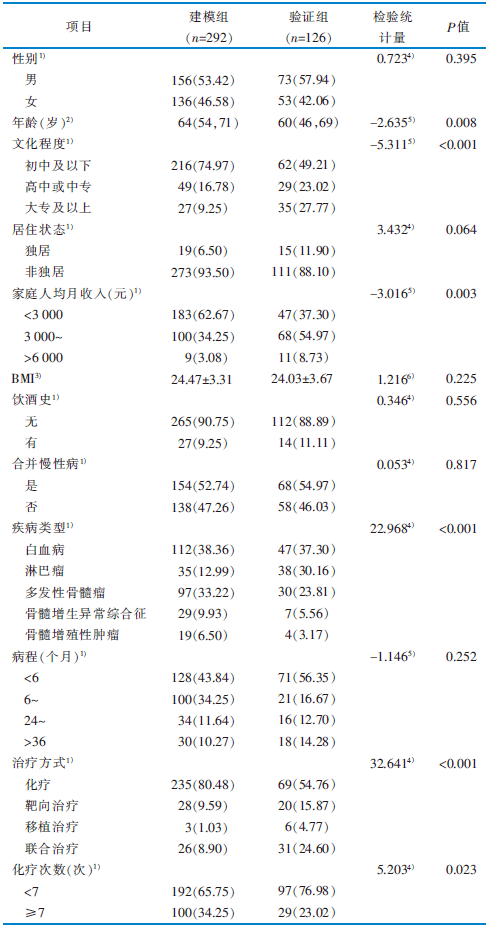 |
表1 建模组与验证组的一般资料比较
Table 1 Comparison of baseline characteristics between the modeling and validation cohorts
| |
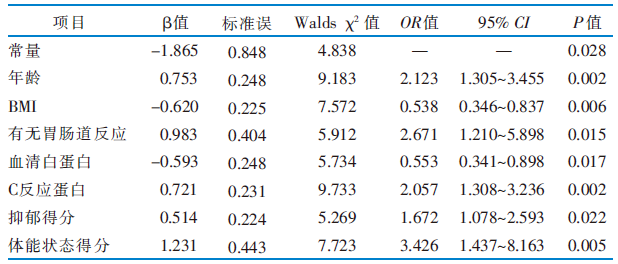 |
表2 血液肿瘤患者营养不良影响因素的Logistic回归分析结果(n=292)
Table 2 Results of Logistic regression analysis for factors influencing malnutrition in patients with hematologic neoplasms(n=292)
| |
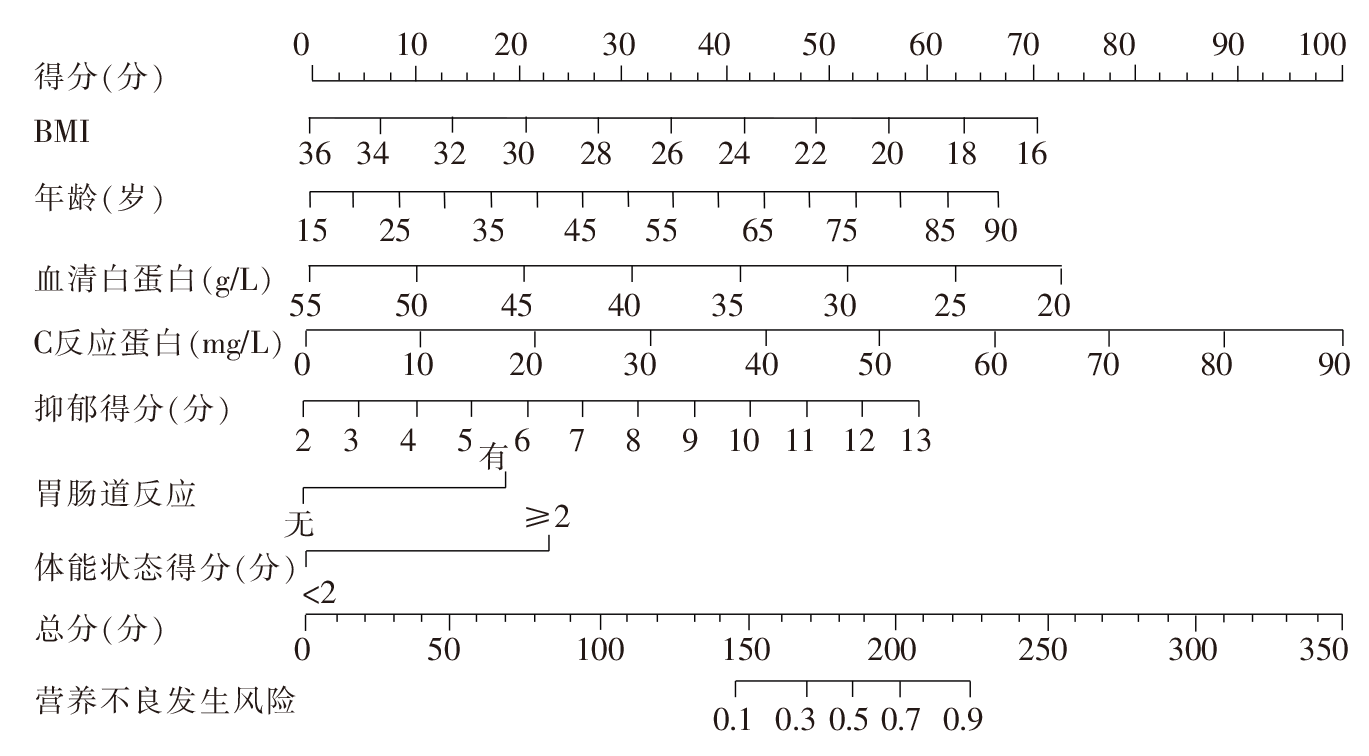
图1 血液肿瘤患者营养不良风险预测模型列线图
Figure 1 Nomogram of the malnutrition risk prediction model for patients with hematologic neoplasms
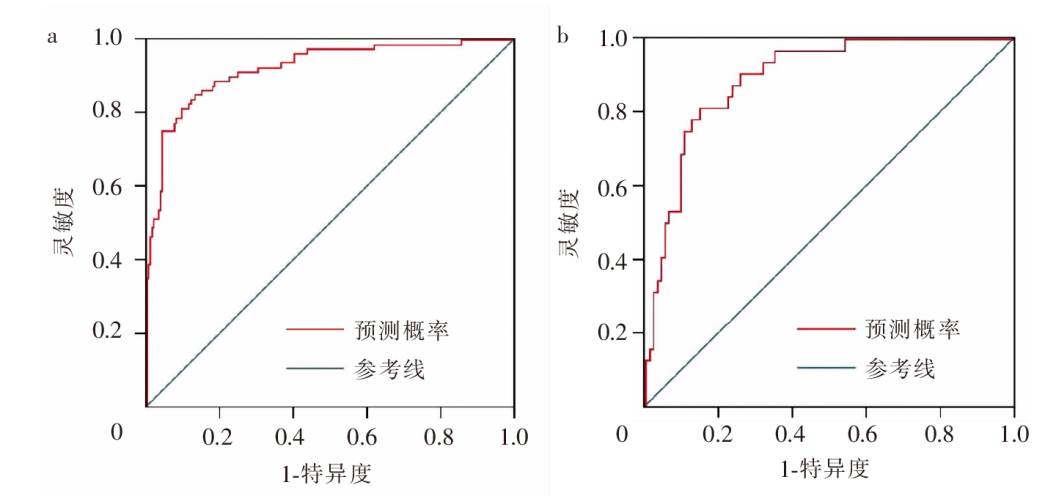
图2 受试者操作特征曲线
Figure 2 Receiver operating characteristic curve
| [1] | 陈茹, 魏文强. 《2022年中国癌症发病和死亡报告》解读[J]. 中国实用外科杂志, 2025, 45(2):174-180. |
| Chen R, Wei WQ. Interpretation of cancer incidence and mortality in China,2022[J]. Chin J Pract Surg, 2025, 45(2):174-180. | |
| [2] |
毛琴, 毛孝容, 李鑫, 等. 专科护士主导的营养管理方案在诱导缓解化疗期白血病患儿中的应用研究[J]. 中华护理杂志, 2024, 59(23):2900-2907.
DOI |
|
Mao Q, Mao XR, Li X, et al. Application of a specialist nurse-led nutrition management program in children with leukemia during induction remission chemotherapy[J]. Chin J Nurs, 2024, 59(23):2900-2907.
DOI |
|
| [3] |
Yilmaz M, Atilla FD, Sahin F, et al. The effect of malnutrition on mortality in hospitalized patients with hematologic malignancy[J]. Support Care Cancer, 2020, 28(3):1441-1448.
DOI PMID |
| [4] |
Kondrup J, Rasmussen HH, Hamberg O, et al. Nutritional Risk Screening(NRS 2002):a new method based on an analysis of controlled clinical trials[J]. Clin Nutr, 2003, 22(3):321-336.
DOI PMID |
| [5] | Duan R, Li QY, Yuan QX, et al. Predictive model for assessing malnutrition in elderly hospitalized cancer patients:a machine learning approach[J]. Geriatr Nurs, 2024,58:388-398. |
| [6] | 程婷, 卢佳美, 黄婷婷, 等. 鼻咽癌同步放化疗病人营养不良风险预测模型的构建及验证[J]. 肠外与肠内营养, 2024, 31(2):73-82. |
| Cheng T, Lu JM, Huang TT, et al. Building and validating a risk prediction model for malnutrition during concurrent chemoradiotherapy in patients with nasopharyngeal carcinoma[J]. Parenter Enteral Nutr, 2024, 31(2):73-82. | |
| [7] | Sánchez-Torralvo FJ, Contreras-Bolívar V, Ruiz-Vico M, et al. Relationship between malnutrition and the presence of symptoms of anxiety and depression in hospitalized cancer patients[J]. Support Care Cancer, 2022, 30(2):1607-1613. |
| [8] |
Chen CX, Chen XF, Wang TL, et al. Development and evaluation of a nutritional risk prediction model for patients with hepatocellular carcinoma undergoing transarterial chemoembolisation[J]. Clin Exp Med, 2025, 25(1):337.
DOI |
| [9] | 沈悌, 赵永强. 血液病诊断及疗效标准[M]. 4版. 北京: 科学出版社,2018:87-156. |
| Shen T, Zhao YQ. Diagnostic criteria and efficacy standards for hematologic diseases[M]. 4th ed. Beijing: Science Press,2018:87-156. | |
| [10] |
周晓芸, 何敏芝, 周宁宁, 等. 胸腔镜肺癌根治术患者苏醒期躁动风险预测模型的构建与验证[J]. 中华护理杂志, 2025, 60(16):1989-1995.
DOI |
|
Zhou XY, He MZ, Zhou NN, et al. Construction and validation of a risk prediction model for emergence agitation in patients undergoing thoracoscopic radical resection of lung cancer[J]. Chin J Nurs, 2025, 60(16):1989-1995.
DOI |
|
| [11] | Zou YL, Xu HX, Lyu QJ, et al. Malnutrition diagnosed by GLIM criteria better predicts long-term outcomes for patients with non-Hodgkin’s lymphoma:a prospective multicenter cohort study[J]. Hematol Oncol, 2023, 41(3):371-379. |
| [12] |
Jensen GL, Cederholm T, Correia MITD, et al. GLIM consensus approach to diagnosis of malnutrition:a 5-year update[J]. JPEN J Parenter Enteral Nutr, 2025, 49(4):414-427.
DOI URL |
| [13] |
Oken MM, Creech RH, Tormey DC, et al. Toxicity and response criteria of the eastern cooperative oncology group[J]. Am J Clin Oncol, 1982, 5(6):649-655.
DOI URL |
| [14] |
Nakamura N, Kanemura N, Matsumoto T, et al. Comparison of the prognostic impact of IPI and PIT in peripheral T-cell lymphoma in real-world practice with a large elderly population[J]. Sci Rep, 2023, 13(1):19060.
DOI |
| [15] |
Zigmond AS, Snaith RP. The Hospital Anxiety and Depression Scale[J]. Acta Psychiatr Scand, 1983, 67(6):361-370.
DOI URL |
| [16] | 叶维菲, 徐俊冕. “综合性医院焦虑抑郁量表”在综合性医院病人中的应用与评价[J]. 中国行为医学杂志, 1993, 2(3):17-19. |
| Ye WF, Xu JM. The application and evaluation of General Hospital Anxiety and Depression Scale in general hospital patients[J]. Chin J Behav Med, 1993, 2(3):17-19. | |
| [17] |
冯雯, 何细飞, 周华璐, 等. 血液系统恶性肿瘤患者化疗相关性口腔黏膜炎风险预测模型的构建与验证[J]. 中华护理杂志, 2024, 59(11):1301-1309.
DOI |
| Feng W, He XF, Zhou HL, et al. Development and validation of a risk prediction model for chemotherapy-induced oral mucositis in patients with hematologic malignancies[J]. Chin J Nur, 2024, 59(11):1301-1309. | |
| [18] |
Niscola P, Romani C, Cupelli L, et al. Mucositis in patients with hematologic malignancies:an overview[J]. Haematologica, 2007, 92(2):222-231.
DOI URL |
| [19] |
Wardley AM, Jayson GC, Swindell R, et al. Prospective evaluation of oral mucositis in patients receiving myeloablative conditioning regimens and haemopoietic progenitor rescue[J]. Br J Haematol, 2000, 110(2):292-299.
DOI URL |
| [20] |
刘雨骅, 韩梦雅, 徐琰, 等. 住院老年患者认知衰弱列线图模型的构建与验证[J]. 中华护理杂志, 2025, 60(15):1811-1817.
DOI |
|
Liu YH, Han MY, Xu Y, et al. Construction and validation of a nomogram model for predicting cognitive frailty in hospitalized older adults[J]. Chin J Nurs, 2025, 60(15):1811-1817.
DOI |
|
| [21] |
Stauder R, Augschoell J, Hamaker ME, et al. Malnutrition in older patients with hematological malignancies at initial diagnosis:association with impairments in health status,systemic inflammation and adverse outcome[J]. Hemasphere, 2020, 4(1):e332.
DOI URL |
| [22] |
Muscaritoli M, Arends J, Bachmann P, et al. ESPEN practical guideline:clinical Nutrition in cancer[J]. Clin Nutr, 2021, 40(5):2898-2913.
DOI PMID |
| [23] | Xu YZ, He C, Xi Y, et al. Gut microbiota and immunosenescence in cancer[J]. Semin Cancer Biol, 2024,104/105:32-45. |
| [24] |
Kiss N, Prado CM, Daly RM, et al. Low muscle mass,malnutrition,sarcopenia,and associations with survival in adults with cancer in the UK Biobank cohort[J]. J Cachexia Sarcopenia Muscle, 2023, 14(4):1775-1788.
DOI URL |
| [25] | 中华医学会肠外肠内营养学分会,中国营养学会临床营养分会,中国医疗保健国际交流促进会临床营养健康学分会. 成人患者营养不良诊断与应用指南(2025版)[J]. 中华医学杂志, 2025, 105(13):953-980. |
| Chinese Society for Parenteral and Enteral Nutrition,Clinical Nutrition Branch of Chinese Nutrition Society,China International Exchange and Promotive Association for Medical and Health Care Clinical Nutrition Health Branch. Diagnostic and application guidelines for malnutrition in adult patients (2025 edition)[J]. Natl Med J China, 2025, 105(13):953-980. | |
| [26] | 王文佳, 张建辉, 王瑞娜, 等. 肺癌根治术后老年患者营养不良的影响因素及Nomogram预测模型的构建与评价[J]. 中华老年多器官疾病杂志, 2025, 24(9):686-691. |
| Wang WJ, Zhang JH, Wang RN, et al. Influencing factors of malnutrition in elderly patients after radical surgery for lung cancer and construction and evaluation of a nomogram prediction model[J]. Chin J Mult Organ Dis Elderly, 2025, 24(9):686-691. | |
| [27] |
Pourhassan M, Cederholm T, Trampisch U, et al. Inflammation as a diagnostic criterion in the GLIM definition of malnutrition:what CRP-threshold relates to reduced food intake in older patients with acute disease?[J]. Eur J Clin Nutr, 2022, 76(3):397-400.
DOI |
| [28] | 周郑, 魏坤建, 许群, 等. 含ω-3鱼油脂肪乳肠外营养制剂对早期肠瘘炎症状态的影响[J]. 肠外与肠内营养, 2025, 32(1):15-22. |
| Zhou Z, Wei KJ, Xu Q, et al. Effects of parenteral nutrition containing ω-3 fish oil fat emulsion on the inflammatory status of patients with intestinal fistula at the early stage[J]. Parenter Enteral Nutr, 2025, 32(1):15-22. | |
| [29] | Hartung TJ, Brähler E, Faller H, et al. The risk of being depressed is significantly higher in cancer patients than in the general population:prevalence and severity of depressive symptoms across major cancer types[J]. Eur J Cancer, 2017,72:46-53. |
| [30] |
de Kruif JTCM, Visser M, van den Berg MMGA, et al. A longitudinal mixed methods study on changes in body weight,body composition,and lifestyle in breast cancer patients during chemotherapy and in a comparison group of women without cancer:study protocol[J]. BMC Cancer, 2019, 19(1):7.
DOI PMID |
| [1] | 中华护理学会静脉输液治疗专业委员会, 北京护理学会, (执笔:李佳, 李旭英, 覃惠英, 陈利芬, 吴珍明, 胡泽吟, 罗梦娜, 范育英, 吴嘉慧, 林宇萍, 王蕾, 孙文彦, 冯毕龙, 高伟, 李亚南, 侯罗娅, 李春燕. 中心静脉通路装置拔除护理专家共识[J]. 中华护理杂志, 2026, 61(9): 1157-1162. |
| [2] | 周霞, 马艳艳, 师正坤, 于海霞, 周艳, 胡红玲, 李莜, 陈思思, 张京慧. 隧道式经股静脉PICC置入术在困难静脉通路婴幼儿中的应用研究[J]. 中华护理杂志, 2026, 61(9): 1163-1170. |
| [3] | 黄萍, 李黎, 郭骊莉, 徐莹, 叶赟, 江淑芳. 与无针输液接头相关的导管相关性血流感染风险评估工具的构建与初步应用[J]. 中华护理杂志, 2026, 61(9): 1171-1179. |
| [4] | 李佳, 张玉玲, 邢乐, 张利峰, 牛秀峰, 许莉. 早产儿经上肢置入PICC尖端继发性异位风险预测模型的建立与验证[J]. 中华护理杂志, 2026, 61(9): 1180-1186. |
| [5] | 何娟, 赵蕾蕾, 叶冠军, 余艳芬, 傅晓君, 周琴. 1例双侧无名静脉及上腔静脉人工血管置换术后患者经上肢置入PICC的护理[J]. 中华护理杂志, 2026, 61(9): 1187-1191. |
| [6] | 梁江淑渊, 曾妃, 何鹏, 谢梦珊, 江悦, 蒋宗恒, 王建茗. 静脉-静脉体外膜肺氧合患者早期活动风险等级评估系统的构建及应用研究[J]. 中华护理杂志, 2026, 61(9): 1192-1199. |
| [7] | 陈晨, 顾肖, 郭凡, 王敏, 倪兴梅, 黄琴, 程念开. 3种衰弱评估工具对急诊老年创伤患者不良结局的预测价值[J]. 中华护理杂志, 2026, 61(9): 1200-1207. |
| [8] | 郑煜琳, 刘晋宁, 张静, 郭会敏, 谷艳梅, 张莉莉. 酒精性肝病患者肝移植术后再饮酒现状及其影响因素分析[J]. 中华护理杂志, 2026, 61(9): 1208-1214. |
| [9] | 叶俊霜, 沈丽佳, 孟霞靓, 张玉姣, 蔡根莲, 邵碧云, 周亚辉, 张柳倩, 应金萍. 维持性血液透析患者对口腔衰弱认知和体验的质性研究[J]. 中华护理杂志, 2026, 61(9): 1215-1220. |
| [10] | 王芸姣, 杨玉金, 郑春艳, 彭菲津, 王淑贞, 蒋喜露, 周为民, 王薇, 张娜. 糖尿病下肢动脉硬化闭塞症患者介入术后康复护理方案的构建及应用研究[J]. 中华护理杂志, 2026, 61(9): 1221-1229. |
| [11] | 杨明霞, 安冉, 臧金凤, 李春梅. 老年慢性病共病患者及照护者老老照护能力与自我忽视的相关性分析[J]. 中华护理杂志, 2026, 61(9): 1230-1236. |
| [12] | 梁和静, 许鹊, 史云霞, 祖金美, 黄文静, 杨春旭, 郭明华, 王磊. 颈动脉内膜剥脱术围手术期护理质量评价指标的构建[J]. 中华护理杂志, 2026, 61(9): 1237-1244. |
| [13] | 韩媛媛, 石玉竹, 尚文涵, 么莉. 870所三级甲等医院老年住院患者跌倒伤害发生现状与影响因素分析[J]. 中华护理杂志, 2026, 61(9): 1245-1252. |
| [14] | 夏云芳, 王洪, 崔岱, 付真真, 朱敏. 1例弥漫性毒性甲状腺肿合并超敏反应综合征青少年患者的护理[J]. 中华护理杂志, 2026, 61(9): 1253-1256. |
| [15] | 周益飞, 王海苹, 胡益环, 应莉, 罗松娜. 1例氢氟酸中毒并发呼吸心搏骤停患者的急救护理[J]. 中华护理杂志, 2026, 61(9): 1257-1260. |
| 阅读次数 | ||||||
|
全文 |
|
|||||
|
摘要 |
|
|||||
