

中华护理杂志 ›› 2026, Vol. 61 ›› Issue (6): 836-843.DOI: 10.3761/j.issn.0254-1769.2026.06.016
张勇1( ), 郑炜慧1, 邓倩倩1, 周晓颖1, 刘丹2,*(), 谷嘉怡2, 常红娟2
收稿日期:2025-06-25
出版日期:2026-03-20
发布日期:2026-03-23
*通讯作者:
刘丹,E-mail:musictherapy@126.com作者简介:张勇:男,硕士,教授,E-mail:musictherapy@163.com
ZHANG Yong1(), ZHENG Weihui1, DENG Qianqian1, ZHOU Xiaoying1, LIU Dan2,*(), GU Jiayi2, CHANG Hongjuan2
Received:2025-06-25
Online:2026-03-20
Published:2026-03-23
摘要:
目的 探究团体音乐治疗对社区精神障碍患者社会功能与复元的影响,为提升精神障碍患者自我康复管理能力,提高其社会功能,促进精神复元提供参考。 方法 采用类实验研究设计,于2024年9—12月便利选取武汉市处于康复期的80例精神障碍患者作为研究对象,随机分为试验组与对照组(各40例)。试验组在常规护理基础上接受为期16周的团体音乐治疗,对照组接受常规护理。比较两组基线、干预8周和16周后的社会功能与精神复元情况。 结果 无患者退出研究。重复测量方差分析显示,两组社会功能、精神复元水平比较,时间与组间存在交互效应(P<0.05),简单效应分析显示,试验组干预8、16周后的社会功能、精神复元水平均优于对照组(P<0.05)。两组均未发生不良事件。 结论 团体音乐治疗有助于提升社区精神障碍患者的社会功能,促进患者精神复元。
张勇, 郑炜慧, 邓倩倩, 周晓颖, 刘丹, 谷嘉怡, 常红娟. 团体音乐治疗在社区精神障碍患者中的应用效果评价[J]. 中华护理杂志, 2026, 61(6): 836-843.
ZHANG Yong, ZHENG Weihui, DENG Qianqian, ZHOU Xiaoying, LIU Dan, GU Jiayi, CHANG Hongjuan. Evaluation of the application effect of group music therapy in community mental disorders patients[J]. Chinese Journal of Nursing, 2026, 61(6): 836-843.
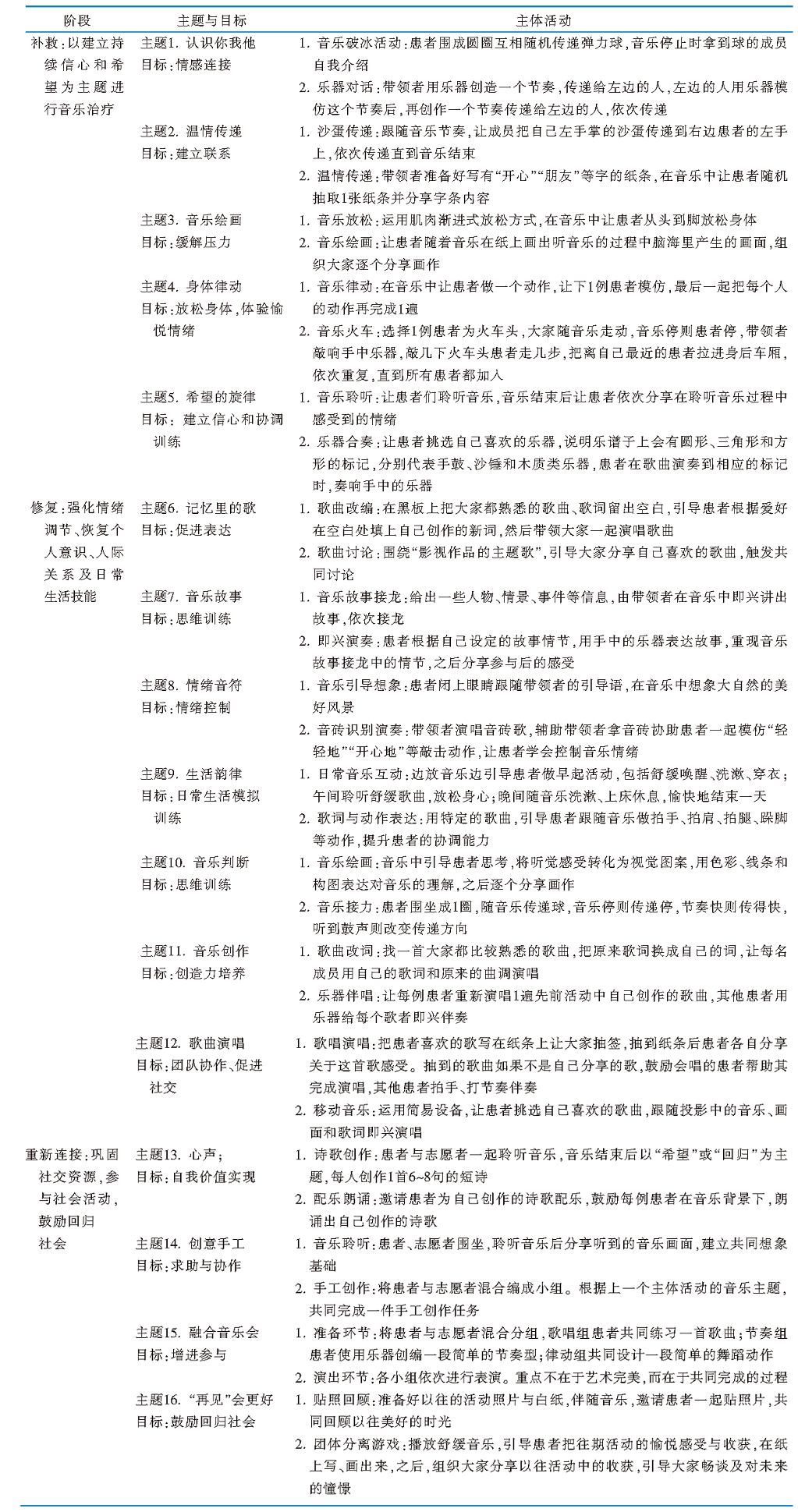 |
表1 团体音乐治疗干预方案
Table 1 Music therapy intervention protocol
| |
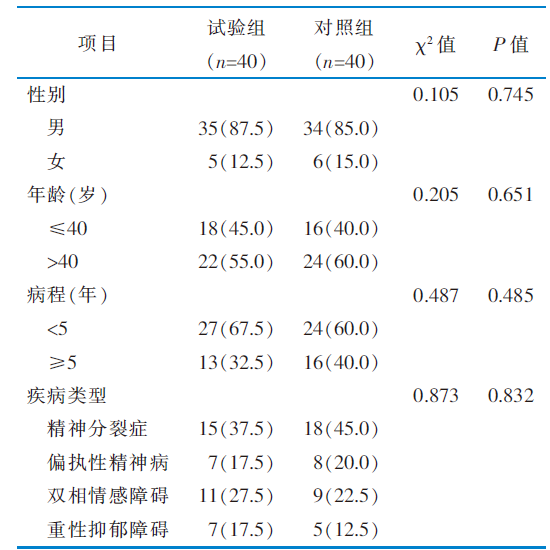 |
表2 两组一般资料的比较[例(百分比,%)]
Table 2 Comparison of basic information between 2 groups of patients[case(percentage, %)]
| |
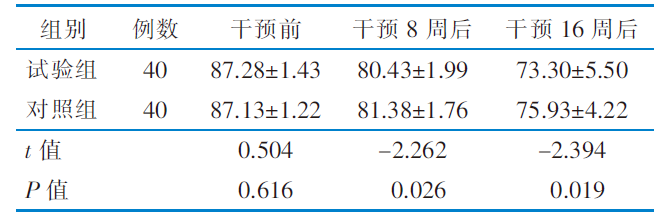 |
表3 两组干预前、干预8周和16周后社会功能缺损量表得分比较(分,$\bar{x} \pm s$)
Table 3 Comparison of scores on the Social Function Deficit for Mental Disorders Scale between 2 groups before intervention,8 weeks after intervention,and 16 weeks after intervention (scores,$\bar{x} \pm s$)
| |
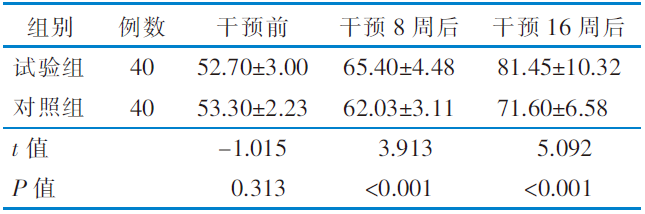 |
表4 两组干预前、干预8周和16周后复元评定量表得分比较 (分,$\bar{x} \pm s$)
Table 4 Comparison of Recovery Assessment Scale Scores between 2 groups before intervention,8 weeks after intervention,and 16 weeks after intervention(scores,$\bar{x} \pm s$)
| |
| [1] |
朱晋七, 陆维, 辛禹, 等. 基于离散选择实验的北京市社区严重精神障碍患者照护服务偏好分析[J]. 中国医学科学院学报, 2025, 47(3):425-433.
DOI |
| Zhu JQ, Lu W, Xin Y, et al. Analysis on care service preferen-ces of community patients with severe mental disorders in Beijing based on discrete choice experiment[J]. Acta AcadMed Sin, 2025, 47(3):425-433. | |
| [2] |
苗莹莹, 李娟, 徐晖, 等. 意象重塑在精神障碍患者中应用的范围综述[J]. 中华护理杂志, 2025, 60(13):1651-1657.
DOI |
|
Miao YY, Li J, Xu H, et al. Overview of the application scope of image reshaping technology in patients with mental disorders[J]. Chin J Nurs, 2025, 60(13):1651-1657.
DOI |
|
| [3] | 王强. 入院精神障碍者健康权保护的实证检视及其优化路径[J]. 残疾人研究, 2025(4):3-14. |
| Wang Q. The right to health protection of hospitalized indivi-duals with mental disorders:an empirical review and optimiza-tion paths[J]. Disabil Res, 2025(4):3-14. | |
| [4] | Anthony WA. Recovery from mental illness:the guiding vision of the mental health service system in the 1990s[J]. Psychosoc Rehabil J, 1993, 16(4):11-23. |
| [5] |
Menzel-Begemann A, Gissendanner S, Knoop T, et al. Consensus imperative for research-to-practice-transfer in rehabilitation[J]. Rehabilitation, 2025, 64(2):111-115.
DOI URL |
| [6] | 杨菊丽, 李玉华, 李从红. 同伴支持在精神障碍患者复元中的研究进展[J]. 军事护理, 2024, 41(7):90-92,96. |
| Yang JL, Li YH, Li CH. Review on progress on peer support for recovery of patients with mental illness[J]. Mil Nurs, 2024, 41(7):90-92,96. | |
| [7] |
Moreu-Valls A, Puig-Davi A, Martinez-Horta S, et al. A rando-mized clinical trial to evaluate the efficacy of cognitive reha-bilitation and music therapy in mild cognitive impairment in Huntington’s disease[J]. J Neurol, 2025, 272(3):202.
DOI PMID |
| [8] | 姚灏. 美国精神健康复元运动的社会历史脉络[J]. 医学与哲学, 2025, 46(3):1-6. |
| Yao H. The social and historical context of the mental health recovery movement in the United States[J]. Med Philos, 2025, 46(3):1-6. | |
| [9] | 付杰, 朱建雯, 王思哲, 等. 国内外严重精神障碍康复服务模式的比较研究[J]. 医学与哲学, 2023, 44(7):60-63. |
| Fu J, Zhu JW, Wang SZ, et al. A comparative study on rehabi-litation service models of severe mental disorders at home and abroad[J]. Med Philos, 2023, 44(7):60-63. | |
| [10] |
李海娇, 魏栋帅, 王锐炎, 等. 音乐干预在精神疾病患者康复护理中的应用进展[J]. 中华护理杂志, 2025, 60(6):764-768.
DOI |
|
Li HJ, Wei DS, Wang RY, et al. The application progress of music intervention in nursing of patients with psychiatric disorders[J]. Chin J Nurs, 2025, 60(6):764-768.
DOI |
|
| [11] | Xu XP, Zhong ZL, Yi Y. Global research trends in music the-rapy for surgery:a bibliometric analysis(2009-2023)[J]. Perio-per Med, 2025, 14(1):12. |
| [12] |
Frost BG, Tirupati S, Johnston S, et al. An integrated recovery-oriented model(IRM) for mental health services:evolution and challenges[J]. BMC Psychiatry, 2017, 17(1):22.
DOI URL |
| [13] | American Psychiatric Association. Diagnostic and statistical manual of mental disorders[M]. 5th ed. Washington DC: Ameri-can Psychiatric Association,2013:803. |
| [14] |
Biringer E, Tjoflåt M. Validation of the 24-item Recovery Asse-ssment Scale-Revised(RAS-R) in the Norwegian language and context:a multi-centre study[J]. Health Qual Life Outcomes, 2018, 16(1):23.
DOI |
| [15] | 卢春萍, 江华, 林玉玲. 基于时间观念的综合护理在精神分裂症患者中的应用效果[J]. 中国民康医学, 2022, 34(12):77-80. |
| Lu CP, Jiang H, Lin YL. Application effects of time concept-based comprehensive nursing on patients with schizophrenia[J]. Med J Chin People’s Health, 2022, 34(12):77-80. | |
| [16] | 李学武, 胡拾妮, 高欢, 等. 精神障碍患者社会功能缺损评定量表的初步编制[J]. 中国临床心理学杂志, 2011, 19(3):299-302. |
| Li XW, Hu SN, Gao H, et al. Development of a scale of Social Function Deficit due to Mental Disorders[J]. Chin J Clin Psychol, 2011, 19(3):299-302. | |
| [17] | 李毅, 胡拾妮, 高欢, 等. 精神障碍患者社会功能缺损评定量表的信效度分析[J]. 中华行为医学与脑科学杂志, 2011(5):468-470. |
| Li Y, Hu SN, Gao H, et al. Reliability and validity analysis of Social Disability Rating Scale for Patients with Mental Disor-ders[J]. Chin J Behav Med Brain Sci, 2011(5):468-470. | |
| [18] |
Salzer MS, Brusilovskiy E. Advancing recovery science:relia-bility and validity properties of the Recovery Assessment Scale[J]. Psychiatr Serv, 2014, 65(4):442-453.
DOI URL |
| [19] |
Mak WWS, Chan RCH, Yau SSW. Validation of the Recovery Assessment Scale for Chinese in Recovery of Mental Illness in Hong Kong[J]. Qual Life Res, 2016, 25(5):1303-1311.
DOI PMID |
| [20] | 王天乐, 李日照, 黄啟洋, 等. 奥尔夫音乐疗法对精神分裂症长期住院患者干预研究[J]. 中国神经精神疾病杂志, 2024, 50(3):135-139. |
| Wang TL, Li RZ, Huang QY, et al. An intervention study of Orff-music therapy for long-term hospitalized patients with schizophrenia[J]. Chin J Nerv Ment Dis, 2024, 50(3):135-139. | |
| [21] |
Alemu WG, Due C, Muir-Cochrane E, et al. Quality of life among people living with mental illness and predictors in Africa:a systematic review and meta-analysis[J]. Qual Life Res, 2024, 33(5):1191-1209.
DOI |
| [22] |
华山, 姜欣桐, 高扬震宇, 等. 音乐训练与音乐素养对共情能力的影响[J]. 心理学报, 2025, 57(4):544-558.
DOI |
|
Hua S, Jiang XT, Gao YZY, et al. The impacts of music train-ing and music sophistication on empathy[J]. Acta Psychol Sin, 2025, 57(4):544-558.
DOI URL |
|
| [23] | 胡俊. 认知、共情和审美意象:论镜像神经元对审美意象生成的作用[J]. 上海大学学报(社会科学版), 2021, 38(5):131-140. |
| Hu J. Cognition,empathy and aesthetic imagery:on the role of mirror neurons in the generation of aesthetic imagery[J]. J Shanghai Univ Soc Sci Ed, 2021, 38(5):131-140. | |
| [24] | 孛学平, 陈苏徽, 汪澄, 等. 经颅直流电刺激联合音乐治疗对卒中后认知障碍影响的临床研究[J]. 中国脑血管病杂志, 2025, 22(4):217-224. |
| Bo XP, Chen SH, Wang C, et al. Clinical research on the impact of transcranial direct current stimulation combined with music therapy on cognitive impairment after stroke[J]. Chin J Cerebrovasc Dis, 2025, 22(4):217-224. | |
| [25] | 黄一, 陈旭. 音乐疗法治疗酒精使用障碍的研究进展[J]. 中国药物依赖性杂志, 2021, 30(1):5-10. |
| Huang Y, Chen X. Research progress of music therapy for alcohol use disorder[J]. Chin J Drug Depend, 2021, 30(1):5-10. | |
| [26] |
Chan KKS, Tsui JKC. Longitudinal impact of peer support on self-compassion,self-stigma,and mental health among indivi-duals with mental disorders[J]. Mindfulness, 2025, 16(5):1352-1363.
DOI |
| [27] |
Lasalvia A, Bodini L, Cristofalo D, et al. Assessing the effecti-veness and the feasibility of a group-based treatment for self-stigma in people with mental disorders in routine mental health services in North-East Italy:study protocol for a prag-matic multisite randomized controlled trial[J]. Trials, 2025, 26(1):35.
DOI PMID |
| [28] | Hansen NC, Keller PE. Oxytocin as an allostatic agent in the social bonding effects of music[J]. Behav Brain Sci, 2021, 44:e75. |
| [29] |
Cassola EG, dos Santos LC, de Castro Ferreira MS, et al. Sys-tematic review of music therapy and musical interventions for patients with moderate and severe mental disorders[J]. J Integr Complementary Med, 2024, 30(9):819-831.
DOI URL |
| [30] | Dan YQ, Xiong Y, Xu DH, et al. Potential common targets of music therapy intervention in neuropsychiatric disorders:the prefrontal cortex-hippocampus-amygdala circuit(a review)[J]. Front Hum Neurosci, 2025,19:1471433. |
| [31] | Damm L, Varoqui D, De Cock VC, et al. Why do we move to the beat? A multiscale approach,from physical principles to brain dynamics[J]. Neurosci Biobehav Rev, 2020,112:553-584. |
| [32] | Mi L. Study on the role of music therapy in promoting students’ emotional management ability in primary and secondary educa-tion[J]. Educ J, 2025, 3(3):1-4. |
| [33] | 尹宁, 王海力, 徐桂芝. 意识障碍诊断评估及无创精准治疗[J]. 生物化学与生物物理进展, 2023, 50(10):2466-2477. |
| Yin N, Wang HL, Xu GZ. Diagnosis and evaluation and non-invasive precision treatment of disorders of consciousness[J]. Prog Biochem Biophys, 2023, 50(10):2466-2477. | |
| [34] | 姚舜, 唐雅彬, 李水艳, 等. 音乐治疗辅助意识障碍患者康复的研究进展[J]. 中国康复医学杂志, 2023, 38(3):427-431. |
| Yao S, Tang YB, Li SY, et al. Research progress on music therapy assisted rehabilitation for patients with disorders of consciousness[J]. Chin J Rehabil Med, 2023, 38(3):427-431. | |
| [35] |
赵伟, 王玉玲, 刘志华, 等. 认知适应训练在严重精神障碍患者中的应用进展[J]. 中华护理杂志, 2023, 58(7):885-890.
DOI |
| Zhao W, Wang YL, Liu ZH, et al. Research progress on cogni-tive adaptation training for patients with severe mental ill-ness[J]. Chin J Nurs, 2023, 58(7):885-890. |
| [1] | 陈淑萍, 谢宝缘, 陈绵绵, 李美玲, 林翠芬. 淋巴瘤患者化疗随访方案的构建及应用研究[J]. 中华护理杂志, 2026, 61(6): 725-732. |
| [2] | 李春秀, 修红, 刘敏, 邹晓君, 王晴, 丁书凡, 赵志平, 李晓娟. 血液肿瘤患者营养不良风险预测模型的构建及验证[J]. 中华护理杂志, 2026, 61(6): 733-740. |
| [3] | 朱静, 孙艳, 司惠芳, 李秀娟, 加米娜·瓦合甫, 常海霞. 成人急性白血病患者化疗期间心理弹性的变化轨迹及影响因素研究[J]. 中华护理杂志, 2026, 61(6): 741-748. |
| [4] | 张莹, 杜若飞, 杨惠敏, 徐晓霞, 李黎明, 杜亚婷. 初诊血液肿瘤老年患者的衰弱现状及影响因素研究[J]. 中华护理杂志, 2026, 61(6): 749-756. |
| [5] | 孙丹萍, 黄莺, 唐丹婷, 邵丽芳. 1例HIV感染者并发血栓性血小板减少性紫癜的护理[J]. 中华护理杂志, 2026, 61(6): 757-760. |
| [6] | 王敏, 纪亚楠, 曹芳, 聂臣聪, 陈瑶, 张继权, 陈志美, 杜金磊. 危重症患者管饲依赖症状变化轨迹及影响因素研究[J]. 中华护理杂志, 2026, 61(6): 761-767. |
| [7] | 郑燕, 曾永珂, 陈静, 罗小琴, 夏良香, 郑思琳. 心脏术后患者谵妄风险预测模型的应用研究[J]. 中华护理杂志, 2026, 61(6): 768-774. |
| [8] | 赵浩, 赵颖, 杨艳珍. 慢性心力衰竭患者家庭照顾者照护技能干预方案的构建及应用研究[J]. 中华护理杂志, 2026, 61(6): 775-782. |
| [9] | 付海炜, 朱晓菊, 毕建静, 黎美娴, 张小迪, 王宗华. 肺癌患者癌症相关认知障碍核心症状与生活质量的相关性研究[J]. 中华护理杂志, 2026, 61(6): 783-789. |
| [10] | 顾培培, 王衍蝶, 曾妃, 梁江淑渊, 蔡凌云, 朱岩, 赵淑华. 肺移植等候期患者肌少症影响因素分析及护理对策[J]. 中华护理杂志, 2026, 61(6): 790-796. |
| [11] | 覃文婷, 杨连招, 龙秀红, 陈玲, 高慧, 桑树林. 老年HIV感染者心理社会适应的潜在剖面分析及影响因素研究[J]. 中华护理杂志, 2026, 61(6): 797-805. |
| [12] | 王雪娇, 蒋玲, 马倩, 李现文, 张彦, 吕亚, 施晓芸. 育龄期宫颈癌患者家庭支持方案的构建及应用研究[J]. 中华护理杂志, 2026, 61(6): 806-813. |
| [13] | 刘晓, 李丽, 施忠英. 青少年神经性厌食患者及其父母出院准备体验及需求的质性研究[J]. 中华护理杂志, 2026, 61(6): 814-821. |
| [14] | 张柔, 贺方园, 杨晓宇, 陈冬笋, 李根霞, 孙可盈, 赵晶, 郭晓丽. 双胎孕妇营养素养的影响因素分析及护理启示[J]. 中华护理杂志, 2026, 61(6): 822-828. |
| [15] | 韩朝颖, 赵雅宁, 刘瑶, 李雪梅, 常学优, 李建民. 社区慢性病老年人内在能力与社会衰弱的相关性研究[J]. 中华护理杂志, 2026, 61(6): 829-835. |
| 阅读次数 | ||||||
|
全文 |
|
|||||
|
摘要 |
|
|||||
