

中华护理杂志 ›› 2026, Vol. 61 ›› Issue (6): 775-782.DOI: 10.3761/j.issn.0254-1769.2026.06.008
赵浩( ), 赵颖, 杨艳珍*()
收稿日期:2025-07-07
出版日期:2026-03-20
发布日期:2026-03-23
*通讯作者:
杨艳珍,E-mail:1105891114@qq.com作者简介:赵浩:男,本科,主管护师,E-mail:zhaohao88882025@163.com
基金资助:
ZHAO Hao(), ZHAO Ying, YANG Yanzhen*()
Received:2025-07-07
Online:2026-03-20
Published:2026-03-23
Funding program:摘要:
目的 构建基于赋权理论的医院-社区-家庭三元联动慢性心力衰竭患者家庭照顾者照护技能干预方案并验证其应用效果。 方法 通过文献检索、专家函询、预试验等形成该方案。选择2023年8月至2024年2月在徐州市某三级甲等医院心内科住院且居住在与医院有合作关系的3个社区卫生服务中心服务范围内的90对慢性心力衰竭患者及其家庭照顾者作为研究对象。为防止组间沾染,选择有空间距离的2个病区,采用抛硬币方法,将2个病区随机分为试验组和对照组,每组各45对。试验组在常规健康指导基础上实施该方案,对照组给予常规健康指导,两组均干预12个月。比较两组干预前后家庭照顾者在照顾能力、照顾负担及患者生活质量方面的差异。 结果 共84对患者及其家庭照顾者完成干预,试验组和对照组各42对。重复测量方差分析显示,两组家庭照顾者照顾能力、照顾负担和患者生活质量均存在组间和时间的交互效应(P<0.001)。简单效应分析结果表明,干预3、6、9、12个月后,试验组家庭照顾者照顾能力、照顾负担评分低于对照组,试验组患者生活质量评分高于对照组(P<0.05)。 结论 实施该方案不仅能增强照顾者的照顾能力,减轻其照顾负担,还能提升患者的生活质量。
赵浩, 赵颖, 杨艳珍. 慢性心力衰竭患者家庭照顾者照护技能干预方案的构建及应用研究[J]. 中华护理杂志, 2026, 61(6): 775-782.
ZHAO Hao, ZHAO Ying, YANG Yanzhen. A study on creating and implementing a caregiving skills program for family caregivers of chronic heart failure patients[J]. Chinese Journal of Nursing, 2026, 61(6): 775-782.
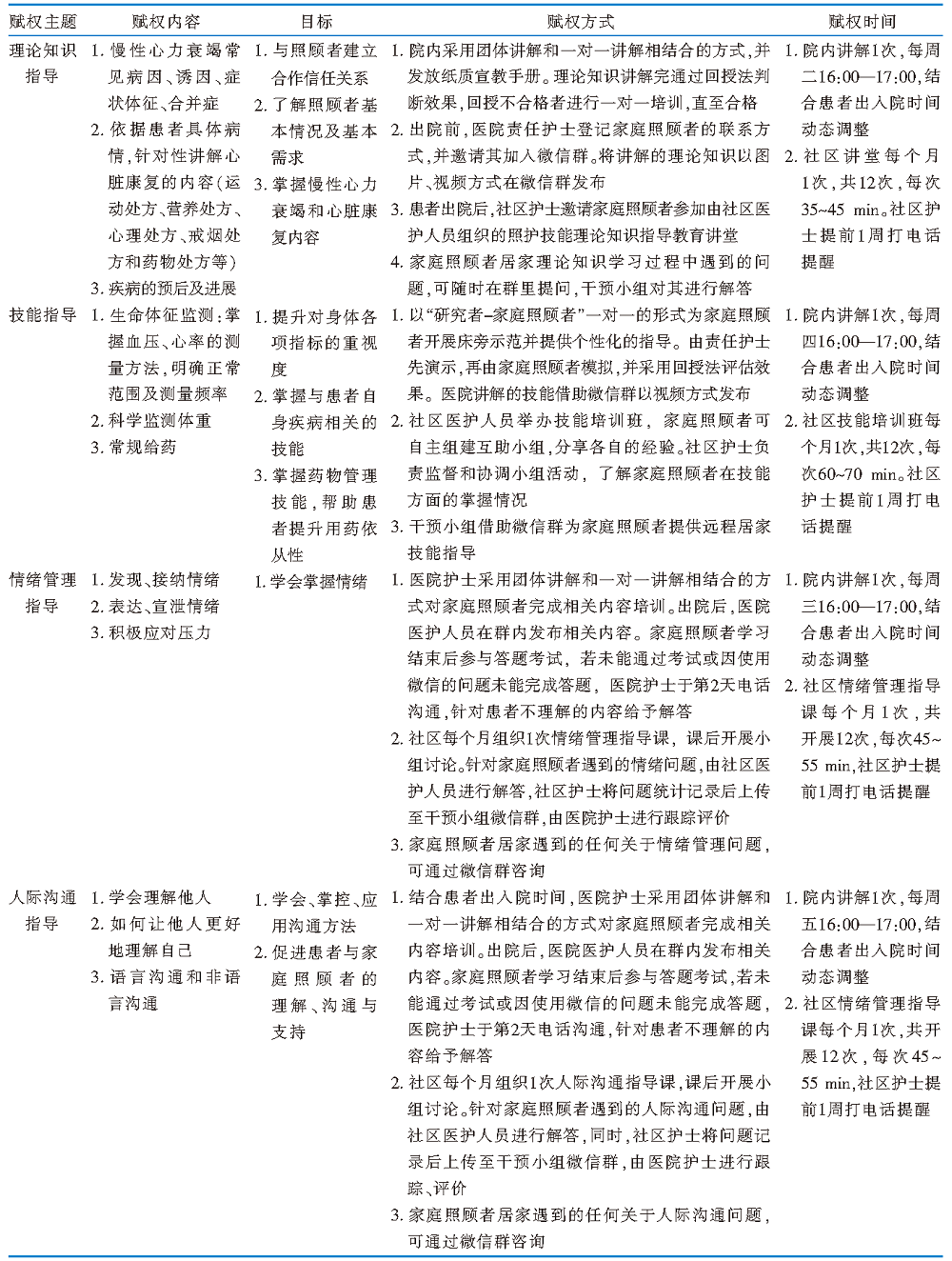 |
表1 慢性心力衰竭患者家庭照顾者照护技能干预方案
Table 1 Care skills intervention program for family caregivers of patients with chronic heart failure
| |
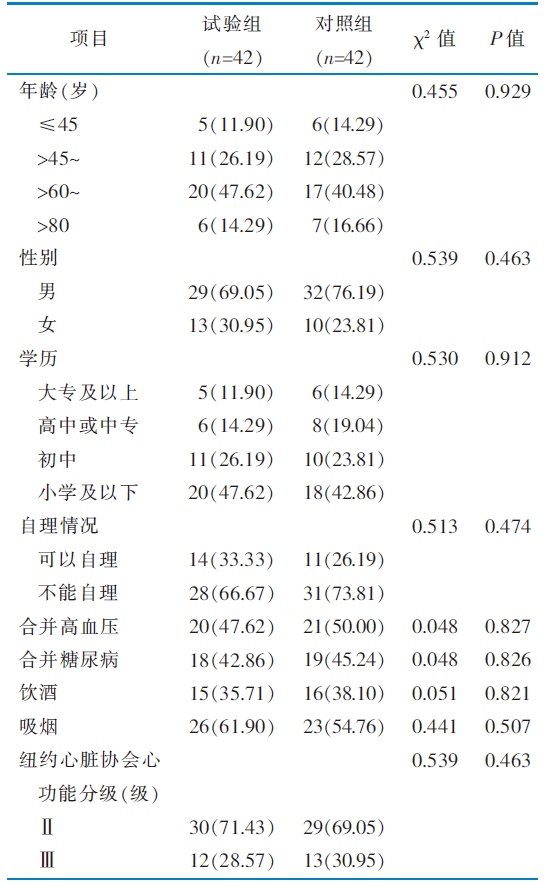 |
表2 两组患者一般资料的比较[例(百分比,%)]
Table 2 Comparison of general characteristics between 2 groups of patients[cases(percentage,%)]
| |
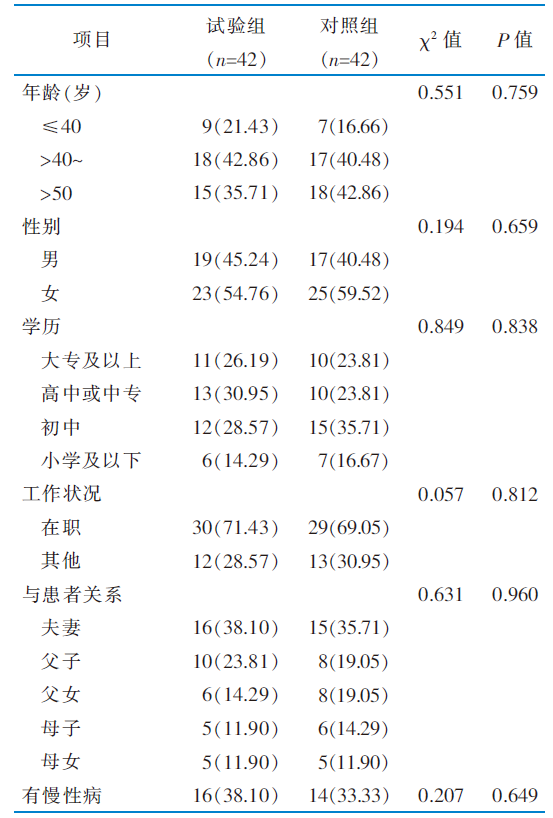 |
表3 两组家庭照顾者一般资料的比较[名(百分比,%)]
Table 3 Comparison of general characteristics between 2 groups of family caregivers[cases(percentage,%)]
| |
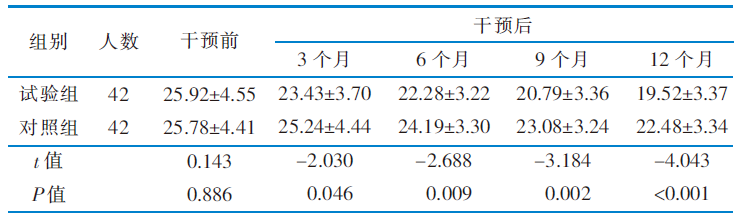 |
表4 两组家庭照顾者照顾能力量表评分的比较(分,$\bar{x} \pm s$)
Table 4 Comparison of caregiver competency scale scores between 2 groups of family caregivers(score,$\bar{x} \pm s$)
| |
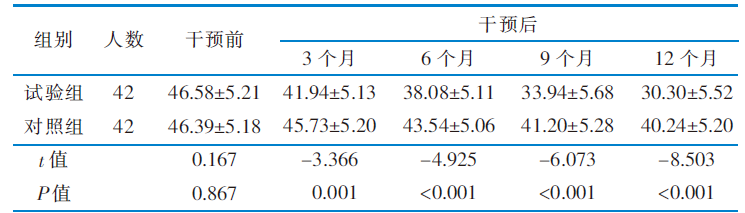 |
表5 两组家庭照顾者负担量表评分的比较 (分, $\bar{x} \pm s$)
Table 5 Comparison of family caregiver burden scale scores between 2 groups (score, $\bar{x} \pm s$)
| |
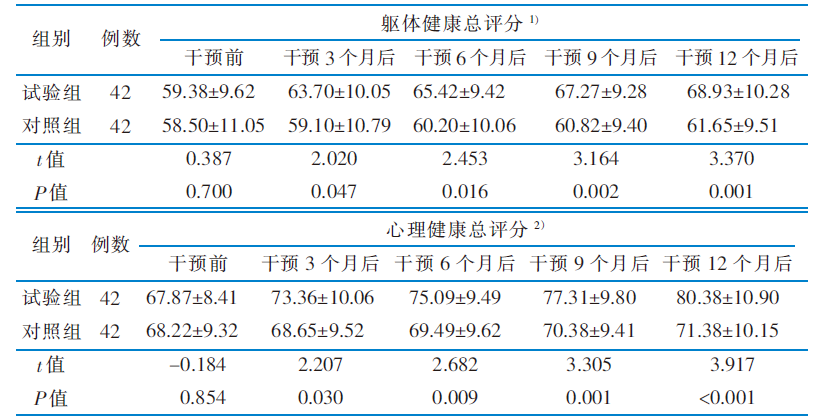 |
表6 两组患者生活质量量表评分的比较 (分, $\bar{x} \pm s$)
Table 6 Comparison of Quality of Life Scale Scores between 2 patient groups(score,$\bar{x} \pm s$)
| |
| [1] |
王宇, 何梦雨, 祁明昊, 等. 慢性心力衰竭患者照顾者家庭护理准备方案的构建及应用研究[J]. 中华护理杂志, 2025, 60(16):1925-1932.
DOI |
| Wang Y, He MY, Qi MH, et al. Construetion and application of a home care readiness program for caregivers of patients with chronic heart failure[J]. Chin J Nurs, 2025, 60(16):1925-1932. | |
| [2] | 杨盼盼, 范燕燕, 马梦真, 等. 慢性心力衰竭病人家庭照护者照护体验及需求研究现状[J]. 护理研究, 2021, 35(19):3469-3473. |
| Yang PP, Fan YY, Ma MZ, et al. Research status quo of nursing experience and needs of family caregivers in patients with chronic heart failure[J]. Chin Nurs Res, 2021, 35(19):3469-3473. | |
| [3] |
Vellone E, Biagioli V, Durante A, et al. The influence of caregiver preparedness on caregiver contributions to self-care in heart failure and the mediating role of caregiver confidence[J]. J Cardiovasc Nurs, 2020, 35(3):243-252.
DOI PMID |
| [4] |
Petruzzo A, Biagioli V, Durante A, et al. Influence of preparedness on anxiety,depression,and quality of life in caregivers of heart failure patients:testing a model of path analysis[J]. Patient Educ Couns, 2019, 102(5):1021-1028.
DOI PMID |
| [5] |
王雨晴, 张慧超, 孙绪晗, 等. 家庭系统理论视角下慢性心力衰竭患者家庭照护的研究进展[J]. 中华护理杂志, 2023, 58(13):1659-1664.
DOI |
|
Wang YQ, Zhang HC, Sun XH, et al. Research progress on family care in patients with chronic heart failure from the perspective of family system theory[J]. Chin J Nurs, 2023, 58(13):1659-1664.
DOI |
|
| [6] | 贺田, 沈鸣雁, 贾欣宇. 赋权理论在肾移植受者健康促进中的应用研究进展[J]. 护理研究, 2023, 37(19):3533-3537. |
| He T, Shen MY, Jia XY. Research progress on the application of empowerment theory in the health promotion of kidney transplant recipients[J]. Chin Nurs Res, 2023, 37(19):3533-3537. | |
| [7] | 赵卿, 党丹, 骆建, 等. 以家庭为中心的赋权模式在PICC化疗患者中的应用[J]. 护理学杂志, 2021, 36(2):80-83. |
| Zhao Q, Dang D, Luo J, et al. Application of family-centered empowerment model in cancer patients carrying PICC catheter for chemotherapy[J]. J Nurs Sci, 2021, 36(2):80-83. | |
| [8] | Zhao Y, Yang YZ, Chen LN, et al. Effects of the hospital-commu-nity-family trinity cardiac rehabilitation on patients with acute myocardial infarction after percutaneous coronary intervention:a randomized trial[J]. Int J Nurs Sci, 2025, 12(2):161-168. |
| [9] | 中华医学会心血管病学分会, 中国医师协会心血管内科医师分会, 中国医师协会心力衰竭专业委员会, 等. 中国心力衰竭诊断和治疗指南2024[J]. 中华心血管病杂志, 2024, 52(3):235-275. |
| Cardiovascular Branch of Chinese Medical Association,Cardiovascular Physicians Branch of Chinese Medical Doctor Association, Heart Failure Professional Committee of Chinese Medical Doctor Association, et al. Chinese guidelines for the diagnosis and treatment of heart failure 2024[J]. Chin J Cardiol, 2024, 52(3):235-275. | |
| [10] | 吴玲玲, 高静, 顾静, 等. 家庭干预对肺癌患者照顾者照顾负担及生活质量的影响[J]. 上海护理, 2020, 20(9):42-45. |
| Wu LL, Gao J, Gu J, et al. Effect of family intervention on caregiver burden and quality of life of lung cancer patients[J]. Shanghai Nurs, 2020, 20(9):42-45. | |
| [11] |
Clark NM, Rakowski W. Family caregivers of older adults:improving helping skills[J]. Gerontologist, 1983, 23(6):637-642.
PMID |
| [12] |
Lee RLT, Mok ESB. Evaluation of the psychometric properties of a modified Chinese version of the Caregiver Task Inventory:refinement and psychometric testing of the Chinese Caregiver Task Inventory:a confirmatory factor analysis[J]. J Clin Nurs, 2011, 20(23/24):3452-3462.
DOI URL |
| [13] | 梁培荣, 沈闵, 马金玲, 等. 中文版家属照顾能力普适量表在白血病患儿照顾者应用中的信效度分析[J]. 全科护理, 2019, 17(32):4070-4073. |
| Liang PR, Shen M, Ma JL, et al. Reliability and validity analysis of Chinese version of the General Scale of Family Care Ability in the application of caregivers of leukemia children[J]. Chin Gen Pract Nurs, 2019, 17(32):4070-4073. | |
| [14] |
Zarit SH, Todd PA, Zarit JM. Subjective burden of husbands and wives as caregivers:a longitudinal study[J]. Gerontologist, 1986, 26(3):260-266.
DOI PMID |
| [15] | 王烈, 杨小湜, 侯哲, 等. 护理者负担量表中文版的应用与评价[J]. 中国公共卫生, 2006, 22(8):970-972. |
| Wang L, Yang XS, Hou Z, et al. Application and evaluation of Chinese version of Zarit Caregiver Burden Interview[J]. Chin J Public Health, 2006, 22(8):970-972. | |
| [16] |
Ware JJr, Kosinski M, Keller SD. A 12-Item Short-Form Health Survey:construction of scales and preliminary tests of reliability and validity[J]. Med Care, 1996, 34(3):220-233.
DOI PMID |
| [17] |
Shou J, Ren LM, Wang HT, et al. Reliability and validity of 12-Item Short-Form Health Survey(SF-12) for the health status of Chinese community elderly population in Xujiahui district of Shanghai[J]. Aging Clin Exp Res, 2016, 28(2):339-346.
DOI URL |
| [18] | Secinti E, Fischer IC, Brennan EA, et al. The efficacy of psychosocial interventions for cancer caregiver burden:a systematic review and meta-analysis of randomized controlled trials[J]. Clin Psychol Rev, 2023,99:102237. |
| [19] | Yang WL, Sun L, Hao LL, et al. Effects of the family customised online FOCUS programme on patients with heart failure and their informal caregivers:a multicentre,single-blind,randomised clinical trial[J]. EClinicalMedicine, 2024,69:102481. |
| [20] | 张瑜, 李利华. 慢性心力衰竭患者及主要照顾者的照护能力现状及影响因素[J]. 大理大学学报, 2021, 6(4):71-79. |
| Zhang Y, Li LH. The current status and influencing factors of the care abilities of patients with chronic heart failure and their primary caregivers[J]. J Dali Univ, 2021, 6(4):71-79. | |
| [21] |
Alaei A, Babaei S, Farzi S, et al. Effect of a supportive-educational program,based on COPE model,on quality of life and caregiver burden of family caregivers of heart failure patients:a randomized clinical trial study[J]. BMC Nurs, 2024, 23(1):72.
DOI |
| [22] | Zhang Y, Li JJ, Zhang YL, et al. Mediating effect of social support between caregiver burden and quality of life among family caregivers of cancer patients in palliative care units[J]. Eur J Oncol Nurs, 2024,68:102509. |
| [23] |
邱小芩, 黄彩献, 傅桂芬, 等. 慢性心力衰竭患者院外健康管理程序的构建及应用[J]. 中华护理杂志, 2022, 57(4):401-407.
DOI |
|
Qiu XQ, Huang CX, Fu GF, et al. Construction and application of APP in out-of-hospital health management for patients with chronic heart failure[J]. Chin J Nurs, 2022, 57(4):401-407.
DOI |
|
| [24] |
Choi EY, Park JS, Min D, et al. Association between self-management behaviour and quality of life in people with heart failure:a retrospective study[J]. BMC Cardiovasc Disord, 2022, 22(1):90.
DOI |
| [25] |
刘梦蝶, 熊晓云, 孙兴兰, 等. 慢性心力衰竭患者自我管理的最佳证据总结[J]. 中华护理杂志, 2022, 57(23):2937-2944.
DOI |
|
Liu MD, Xiong XY, Sun XL, et al. Summary of the best evidence for self-management in patients with chronic heart failure[J]. Chin J Nurs, 2022, 57(23):2937-2944.
DOI |
| [1] | 陈淑萍, 谢宝缘, 陈绵绵, 李美玲, 林翠芬. 淋巴瘤患者化疗随访方案的构建及应用研究[J]. 中华护理杂志, 2026, 61(6): 725-732. |
| [2] | 李春秀, 修红, 刘敏, 邹晓君, 王晴, 丁书凡, 赵志平, 李晓娟. 血液肿瘤患者营养不良风险预测模型的构建及验证[J]. 中华护理杂志, 2026, 61(6): 733-740. |
| [3] | 朱静, 孙艳, 司惠芳, 李秀娟, 加米娜·瓦合甫, 常海霞. 成人急性白血病患者化疗期间心理弹性的变化轨迹及影响因素研究[J]. 中华护理杂志, 2026, 61(6): 741-748. |
| [4] | 张莹, 杜若飞, 杨惠敏, 徐晓霞, 李黎明, 杜亚婷. 初诊血液肿瘤老年患者的衰弱现状及影响因素研究[J]. 中华护理杂志, 2026, 61(6): 749-756. |
| [5] | 孙丹萍, 黄莺, 唐丹婷, 邵丽芳. 1例HIV感染者并发血栓性血小板减少性紫癜的护理[J]. 中华护理杂志, 2026, 61(6): 757-760. |
| [6] | 王敏, 纪亚楠, 曹芳, 聂臣聪, 陈瑶, 张继权, 陈志美, 杜金磊. 危重症患者管饲依赖症状变化轨迹及影响因素研究[J]. 中华护理杂志, 2026, 61(6): 761-767. |
| [7] | 郑燕, 曾永珂, 陈静, 罗小琴, 夏良香, 郑思琳. 心脏术后患者谵妄风险预测模型的应用研究[J]. 中华护理杂志, 2026, 61(6): 768-774. |
| [8] | 付海炜, 朱晓菊, 毕建静, 黎美娴, 张小迪, 王宗华. 肺癌患者癌症相关认知障碍核心症状与生活质量的相关性研究[J]. 中华护理杂志, 2026, 61(6): 783-789. |
| [9] | 顾培培, 王衍蝶, 曾妃, 梁江淑渊, 蔡凌云, 朱岩, 赵淑华. 肺移植等候期患者肌少症影响因素分析及护理对策[J]. 中华护理杂志, 2026, 61(6): 790-796. |
| [10] | 覃文婷, 杨连招, 龙秀红, 陈玲, 高慧, 桑树林. 老年HIV感染者心理社会适应的潜在剖面分析及影响因素研究[J]. 中华护理杂志, 2026, 61(6): 797-805. |
| [11] | 王雪娇, 蒋玲, 马倩, 李现文, 张彦, 吕亚, 施晓芸. 育龄期宫颈癌患者家庭支持方案的构建及应用研究[J]. 中华护理杂志, 2026, 61(6): 806-813. |
| [12] | 刘晓, 李丽, 施忠英. 青少年神经性厌食患者及其父母出院准备体验及需求的质性研究[J]. 中华护理杂志, 2026, 61(6): 814-821. |
| [13] | 张柔, 贺方园, 杨晓宇, 陈冬笋, 李根霞, 孙可盈, 赵晶, 郭晓丽. 双胎孕妇营养素养的影响因素分析及护理启示[J]. 中华护理杂志, 2026, 61(6): 822-828. |
| [14] | 韩朝颖, 赵雅宁, 刘瑶, 李雪梅, 常学优, 李建民. 社区慢性病老年人内在能力与社会衰弱的相关性研究[J]. 中华护理杂志, 2026, 61(6): 829-835. |
| [15] | 张勇, 郑炜慧, 邓倩倩, 周晓颖, 刘丹, 谷嘉怡, 常红娟. 团体音乐治疗在社区精神障碍患者中的应用效果评价[J]. 中华护理杂志, 2026, 61(6): 836-843. |
| 阅读次数 | ||||||
|
全文 |
|
|||||
|
摘要 |
|
|||||
