

Chinese Journal of Nursing ›› 2025, Vol. 60 ›› Issue (22): 2702-2708.DOI: 10.3761/j.issn.0254-1769.2025.22.003
• Specialist Nursing Practice and Research • Previous Articles Next Articles
SHENG Lile( ), ZHAO Zhenghua, LAN Xing, WANG Yu, ZHANG Tao, YANG Yiyi(), YAO Shanglong
Received:2025-03-11
Online:2025-11-20
Published:2025-11-13
Contact:
YANG Yiyi
盛丽乐(), 赵征华, 兰星, 王宇, 张涛, 杨依依(), 姚尚龙
通讯作者:
杨依依
作者简介:盛丽乐:女,本科,主管护师,E-mail:2697774293@qq.com
基金资助:SHENG Lile, ZHAO Zhenghua, LAN Xing, WANG Yu, ZHANG Tao, YANG Yiyi, YAO Shanglong. Establishment and validation of a risk prediction model for hyperoxemia in patients after general anesthesia in the post-anesthesia care unit[J]. Chinese Journal of Nursing, 2025, 60(22): 2702-2708.
盛丽乐, 赵征华, 兰星, 王宇, 张涛, 杨依依, 姚尚龙. 麻醉复苏室全麻术后患者高氧血症风险预测模型的构建与验证[J]. 中华护理杂志, 2025, 60(22): 2702-2708.
Add to citation manager EndNote|Ris|BibTeX
URL: https://zh.zhhlzzs.com/EN/10.3761/j.issn.0254-1769.2025.22.003
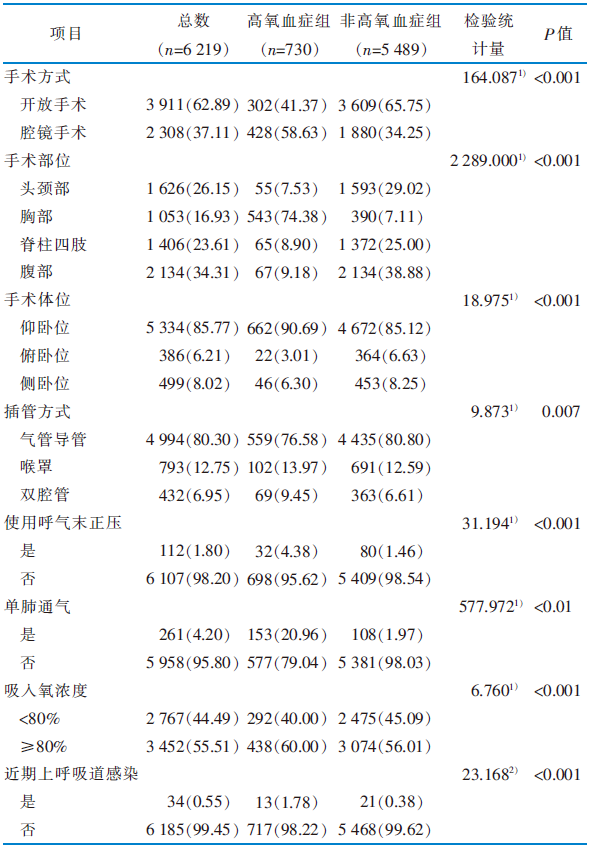 |
Table 1 Univariate analysis results of general data of study subjects and risk factors for hyperoxemia[cases(percentage,%)]
| |
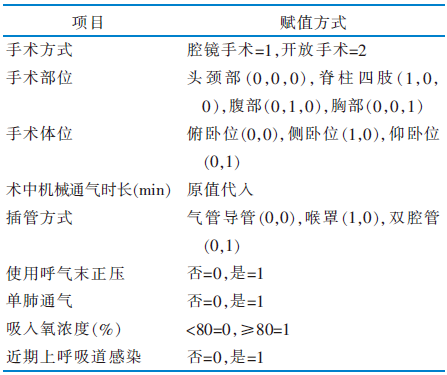 |
Table 2 The assignment of the independent variables
| |
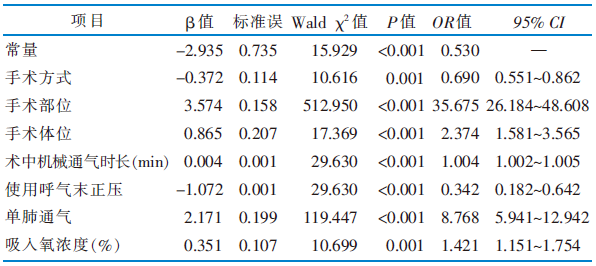 |
Table 3 Logistic regression analysis results of hyperoxemia(n=6 219)
| |
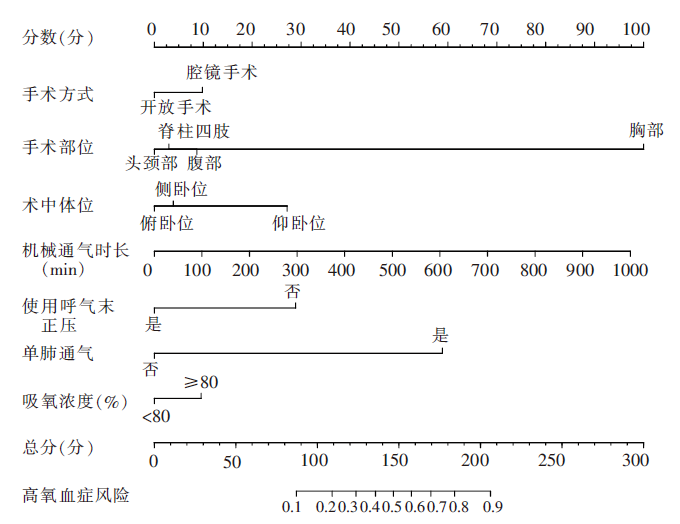
Figure 1 Nomogram for predicting hyperoxemia risk in patients after general anesthesia in the post-anesthesia care unit
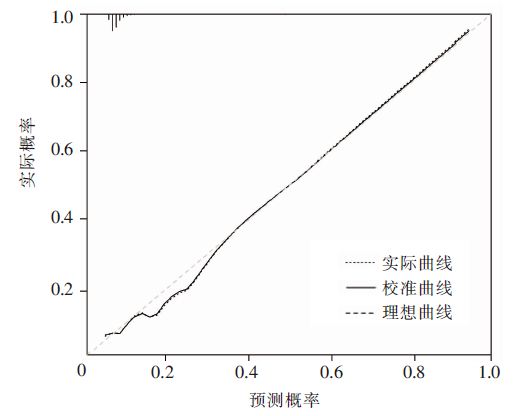
Figure 2 Calibration curve of the risk prediction model for hyperoxemia in patients after general anesthesia in the post-anesthesia care unit
| [1] |
Sarıtaş PU, Sarıtaş A, Poyraz MÇ, et al. Assessing the incidence of hyperoxia and the effectiveness of oxygen reserve index-guided FiO2 titration in hyperoxia prevention[J]. Perioper Med, 2024, 13(1):99.
DOI |
| [2] |
Tyagi S, Brown CA, Dickson RP, et al. Outcomes and predictors of severe hyperoxemia in patients receiving mechanical ventilation:a single-center cohort study[J]. Ann Am Thorac Soc, 2022, 19(8):1338-1345.
DOI URL |
| [3] |
van Wijk JJ, Musaj A, Hoeks SE, et al. Oxygenation during general anesthesia in pediatric patients:a retrospective observational study[J]. J Clin Anesth, 2024, 94:111406.
DOI URL |
| [4] |
Piraino T, Madden M, Roberts KJ, et al. AARC clinical practice guideline:management of adult patients with oxygen in the acute care setting[J]. Respir Care, 2022, 67(1):115-128.
DOI URL |
| [5] |
Brat K, Chovanec Z, Mitas L, et al. Hyperoxemia post thoracic surgery-does it matter?[J]. Heliyon, 2023, 9(6):e17606.
DOI URL |
| [6] |
Wang HX, Wang Z, Wu Q, et al. Perioperative oxygen administration for adults undergoing major noncardiac surgery:a narrative review[J]. Med Gas Res, 2025, 15(1):73-84.
DOI URL |
| [7] |
Wilson MG, Adams CN, Turnbull MD, et al. Improving certified registered nurse anesthetists’ adherence to a standardized intraoperative lung protective ventilation protocol[J]. J Perianesth Nurs, 2023, 38(6):845-850.
DOI PMID |
| [8] | 梁俊丽, 黄红芳, 陈秀珍, 等. CT增强检查中碘对比剂外渗病人皮肤损伤风险预测模型的构建[J]. 护理研究, 2024, 38(18):3344-3348. |
| Liang JL, Huang HF, Chen XZ, et al. Construction of risk pre-diction model of skin injury of patients with extravasation of iodine contrast medium in contrast enhanced CT scan[J]. Chin Nurs Res, 2024, 38(18):3344-3348. | |
| [9] |
乔梦圆, 王海燕, 秦梦真. 急诊重症监护室患者低血糖风险预测模型的构建及验证[J]. 中华护理杂志, 2023, 58(23):2835-2842.
DOI |
|
Qiao MY, Wang HY, Qin MZ. Construction and evaluation of a risk prediction model of hypoglycemia risk in emergency intensive care unit patients[J]. Chin J Nurs, 2023, 58(23):2835-2842.
DOI |
|
| [10] |
Singer M, Young PJ, Laffey JG, et al. Dangers of hyperoxia[J]. Crit Care, 2021, 25(1):440.
DOI |
| [11] |
刘婷, 王林, 郝艳丽, 等. 不停跳冠状动脉旁路移植患者术中低体温风险预测模型的构建[J]. 中华护理杂志, 2023, 58(20):2481-2487.
DOI |
|
Liu T, Wang L, Hao YL, et al. Construction of a preoperative risk prediction nomogram model for hypothermia during off-pump coronary artery bypass grafting[J]. Chin J Nurs, 2023, 58(20):2481-2487.
DOI |
|
| [12] |
Karalapillai D, Weinberg L, Peyton PJ, et al. Frequency of hyperoxaemia during and after major surgery[J]. Anaesth Intensive Care, 2020, 48(3):213-220.
DOI URL |
| [13] |
Diop S, Mounier R. Partial pressure of oxygen,hyperoxemia and hyperoxia in the intensive care or anesthesia setting[J]. Med Gas Res, 2026, 16(1):53-58.
DOI URL |
| [14] | 王天佑, 李单青, 崔永, 等. 胸外科围手术期肺保护中国专家共识(2019版)[J]. 中国胸心血管外科临床杂志, 2019, 26(9):835-842. |
| Wang TY, Li DQ, Cui Y, et al. Chinese experts consensus on perioperative lung protection(version 2019)[J]. Chin J Clin Thorac Cardiovasc Surg, 2019, 26(9):835-842. | |
| [15] |
Ahn JH, Shim JG, Park J, et al. Oxygen reserve index guided fraction of inspired oxygen titration to reduce hyperoxemia during laparoscopic gastrectomy:a randomized controlled trial[J]. Medicine, 2022, 101(46):e31592.
DOI URL |
| [16] | Zou TH, Sun SJ, Wu YF, et al. Lung protection of mechanical ventilation during laparoscopic surgery:a systematic review[J]. J Anesth Transl Med, 2022, 1(1):1-5. |
| [17] |
Li XF, Jiang D, Jiang YL, et al. Comparison of low and high inspiratory oxygen fraction added to lung-protective ventilation on postoperative pulmonary complications after abdominal surgery:a randomized controlled trial[J]. J Clin Anesth, 2020, 67:110009.
DOI URL |
| [18] |
Young CC, Harris EM, Vacchiano C, et al. Lung-protective ventilation for the surgical patient:international expert panel-based consensus recommendations[J]. Br J Anaesth, 2019, 123(6):898-913.
DOI URL |
| [19] |
Nguyen TK, Nguyen VL, Nguyen TG, et al. Lung-protective mechanical ventilation for patients undergoing abdominal laparoscopic surgeries:a randomized controlled trial[J]. BMC Anesthesiol, 2021, 21(1):95.
DOI PMID |
| [20] |
Baekgaard JS, Abback PS, Boubaya M, et al. Early hyperoxemia is associated with lower adjusted mortality after severe trauma:results from a French registry[J]. Crit Care, 2020, 24(1):604.
DOI |
| [21] | 叶婷, 肖华平. 肺保护性通气策略及膈肌保护的关键问题[J]. 解放军医学杂志, 2023, 48(11):1276-1286. |
| Ye T, Xiao HP. Lung protective ventilation strategy and key issues of diaphragm protection[J]. China Ind Econ, 2023, 48(11):1276-1286. | |
| [22] |
陈天超, 冯悦颖, 兰元梅, 等. 机械通气患者膈肌功能对临床结局影响的研究进展及护理启示[J]. 中华护理杂志, 2025, 60(11):1394-1399.
DOI |
|
Chen TC, Feng YY, Lan YM, et al. Research progress on the impact of diaphragmatic function on clinical outcomes in mechanically ventilated patients and nursing implications[J]. Chin J Nurs, 2025, 60(11):1394-1399.
DOI |
|
| [23] |
Nagrebetsky A, Zhu M, Deng H, et al. Impaired oxygenation after lung resection:incidence and perioperative risk factors[J]. J Clin Anesth, 2024, 96:111485.
DOI URL |
| [24] |
Zhang YT, Han Y, Zhuang HJ, et al. Effect of inspiratory oxygen fraction during driving pressure-guided ventilation strategy on pulmonary complications following open abdominal surgery:a randomized controlled trial[J]. J Clin Anesth, 2024, 99:111676.
DOI URL |
| [25] |
Shu B, Zhang Y, Ren Q, et al. Optimal positive end-expiratory pressure titration of intraoperative mechanical ventilation in different operative positions of female patients under general anesthesia[J]. Heliyon, 2023, 9(10):e20552.
DOI URL |
| [26] | Daghmouri MA, Chaouch MA, Depret F, et al. Two-lung ventilation in video-assisted thoracoscopic esophagectomy in prone position:a systematic review[J]. Anaesth Crit Care Pain Med, 2022, 41(5):101134. |
| [1] | HUANG Panpan, LI Liling, HU Xiaojing. Research progress of early exercise rehabilitation in infants with congenital heart disease [J]. Chinese Journal of Nursing, 2025, 60(9): 1050-1055. |
| [2] | CHEN Liou, ZHANG Wenting, LIU Junqi, WANG Yuncong, WANG Zhenlin, QI Sai, YANG Na. Study on the effect of pulmonary lobes surface projection localization combined with pulmonary segment drainage and sputum expectoration technique on airway clearance in patients with aspiration pneumonia [J]. Chinese Journal of Nursing, 2025, 60(9): 1056-1061. |
| [3] | YANG Nana, CHENG Chuanli, ZENG Hui, FU Dandan, WANG Yan, CHEN Yue, RAN Hongmin, FAN Hongjing, LONG Xia. Evaluation of the effect of graded exercise rehabilitation on patients with acute exacerbation of chronic obstructive pulmonary disease [J]. Chinese Journal of Nursing, 2025, 60(9): 1062-1067. |
| [4] | CAO Yun, SUN Guozhen, CHEN Feng, JI Xueli, YAN Mengwan, JING Lei, QIAN Kun. A study of modified ankle pump exercise in stroke patients [J]. Chinese Journal of Nursing, 2025, 60(9): 1068-1074. |
| [5] | XIE Min, QI Wenkai, YIN Ling, ZHANG Xuan, ZHAO Ruqin. Potential profile analysis and influencing factors of kinesiophobia in patients with peritoneal dialysis [J]. Chinese Journal of Nursing, 2025, 60(9): 1080-1086. |
| [6] | CHEN Bingqian, ZHAO Bin, SUN Jiarong, HAO Sifang, HOU Xiaoli. Oral health management dilemmas of chronic periodontitis patients with implant dentures:a qualitative study [J]. Chinese Journal of Nursing, 2025, 60(9): 1087-1092. |
| [7] | QIN Chunlan, WU Zhenyun, QIAN Hongying, ZHAO Qian, SUN Jinting. Experiences of disease self-control among patients with chronic obstructive pulmonary disease:a qualitative study [J]. Chinese Journal of Nursing, 2025, 60(9): 1093-1098. |
| [8] | LI Ziwei, FENG Lijuan, CHEN Xusheng, HUANG Yi, YANG Jie. Development and application of a Fear of Movement Assessment Scale for patients with peripherally inserted central catheters [J]. Chinese Journal of Nursing, 2025, 60(9): 1099-1106. |
| [9] | CHENG Zhiqiang, ZHANG Baozhen, TANG Liping, LI Jing, XIA Jiaoyun, WEI Xueyan, GONG Zhixian, ZHANG Meizhen, LI Lusi. Reliability and validity test of the Chinese version of the Urinary Incontinence Awareness and Attitude Scale [J]. Chinese Journal of Nursing, 2025, 60(9): 1107-1112. |
| [10] | SHI Meiqin, WU Jianfang, ZHANG Duo, WU Chunping, CHEN Ling, TAO Lei. Nursing care for postoperative laryngeal function rehabilitation in a patient undergoing primary voice prosthesis implantation after total laryngectomy [J]. Chinese Journal of Nursing, 2025, 60(9): 1120-1123. |
| [11] | GU Qian, HUANG Xi, SHI Weixiong, WU Jing, TAN Ruoming, WANG Feng. Nursing care for a patient with cytokine release syndrome following T-cell immunotherapy [J]. Chinese Journal of Nursing, 2025, 60(9): 1124-1127. |
| [12] | ZHOU Miao, CHEN Xing, PENG Fei, SUN Shangxue, LI Yangyang. Systematic review of risk prediction instruments for central line associated bloodstream infections in ICU patients [J]. Chinese Journal of Nursing, 2025, 60(9): 1132-1139. |
| [13] | PENG Yingjie, LIU Aihong, ZHU Wenli, MEI Yuxin, ZHOU Meng, GUAN Wenjing. Systematic review of readiness assessment tools for advance care planning in older adults [J]. Chinese Journal of Nursing, 2025, 60(9): 1146-1153. |
| [14] | RAN Lingxiao, WANG Dongmin, XU Ke, WANG Cong, CAO Hua, CUN Wei, JIANG Yan. Application of biomechanical simulation based on three-dimensional human body model in preventing pressure ulcers:a scoping review [J]. Chinese Journal of Nursing, 2025, 60(8): 1012-1018. |
| [15] | JIN Yujia, JIANG Hu, WANG Xiaoxuan, YI Jingna, MEI Yongxia, GUO Zhiting, ZHANG Zhenxiang, LIN Beilei. Application of information-based risk communication in primary prevention of cardiovascular diseases:a scoping review [J]. Chinese Journal of Nursing, 2025, 60(8): 1019-1025. |
| Viewed | ||||||
|
Full text |
|
|||||
|
Abstract |
|
|||||
