

Chinese Journal of Nursing ›› 2026, Vol. 61 ›› Issue (4): 467-474.DOI: 10.3761/j.issn.0254-1769.2026.04.005
• Perioperative Safety and Management for Orthopedic Patients • Previous Articles Next Articles
CHEN Danlu1( ), CHEN Ru1, SHAN Yawei2, SHI Chunxiang1, SHEN Zhongming1,*()
Received:2025-08-19
Online:2026-02-20
Published:2026-02-06
* Corresponding author:
SHEN Zhongming,E-mail:2585527314@qq.comFunding program:
陈丹露1(), 陈茹1, 单亚维2, 施春香1, 沈中鸣1,*()
通讯作者:
沈中鸣,E-mail:2585527314@qq.com作者简介:陈丹露:女,硕士,护师,E-mail:1579983625@qq.com
基金资助:CHEN Danlu, CHEN Ru, SHAN Yawei, SHI Chunxiang, SHEN Zhongming. Telemedicine in exercise rehabilitation for patients after total knee arthroplasty:a scoping review[J]. Chinese Journal of Nursing, 2026, 61(4): 467-474.
陈丹露, 陈茹, 单亚维, 施春香, 沈中鸣. 远程医疗技术在全膝关节置换患者术后运动康复中应用的范围综述[J]. 中华护理杂志, 2026, 61(4): 467-474.
Add to citation manager EndNote|Ris|BibTeX
URL: https://zh.zhhlzzs.com/EN/10.3761/j.issn.0254-1769.2026.04.005
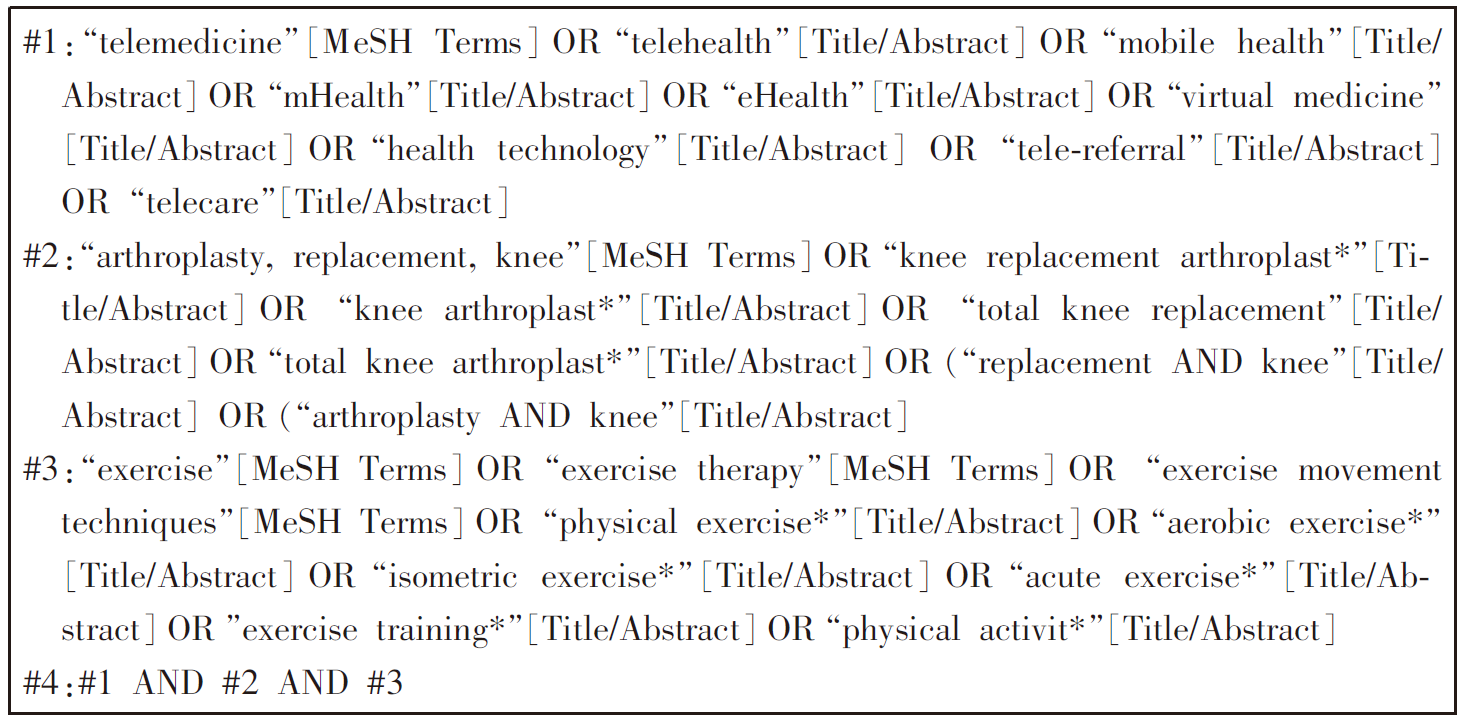
Figure 1 Search strategy of PubMed database
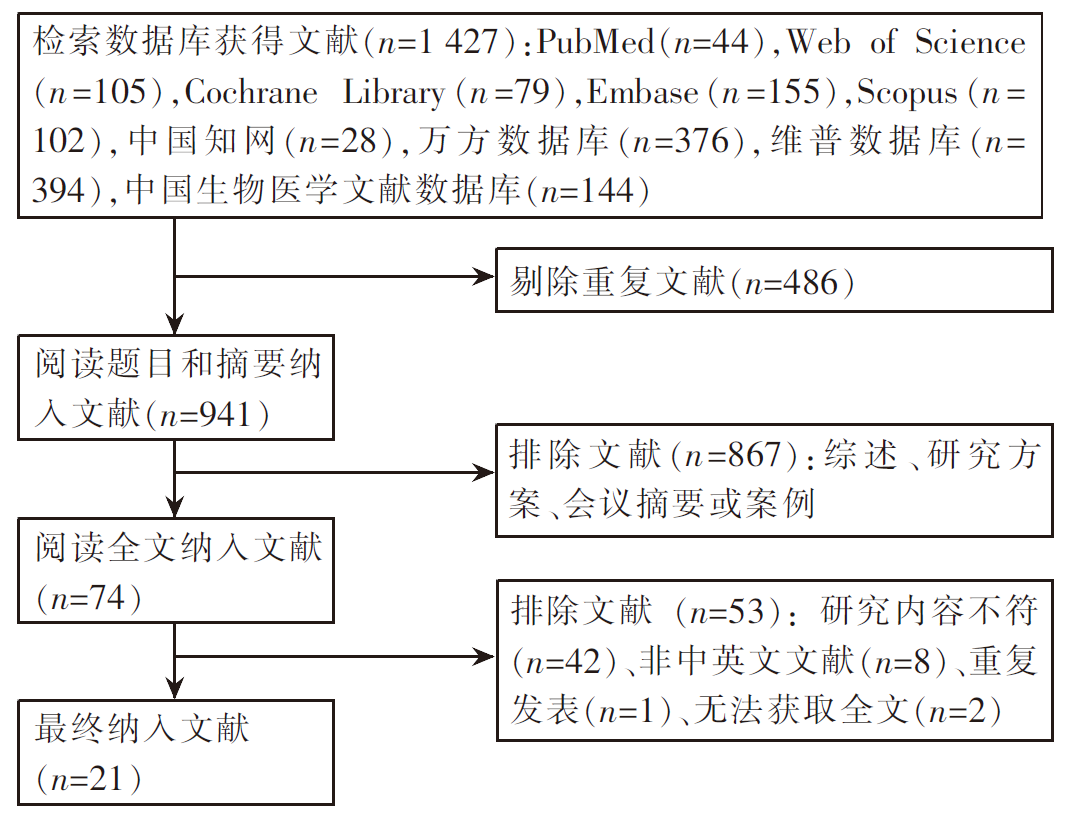
Figure 2 Flow chart of literature screening
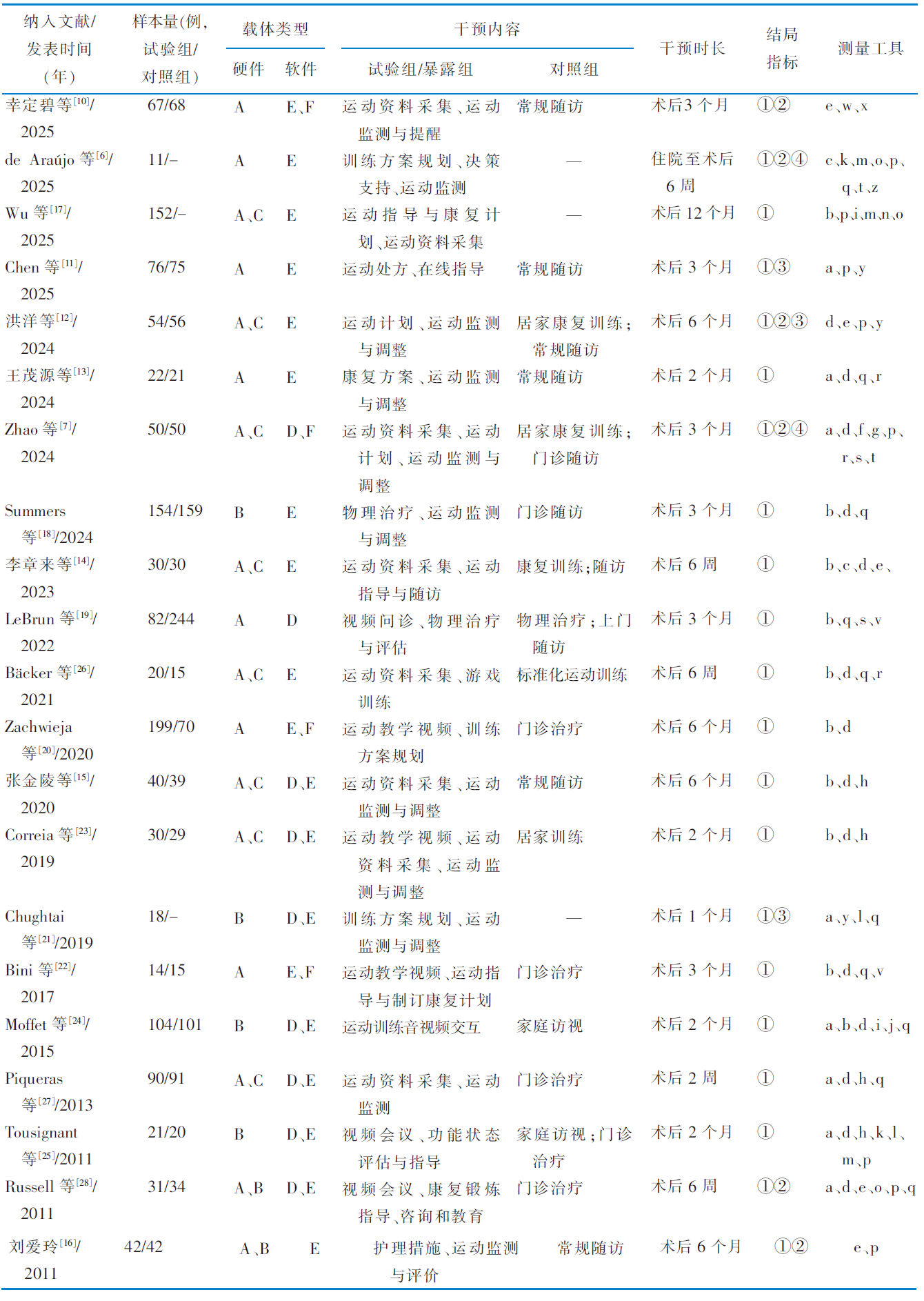 |
Table 1 Basic characteristics of included studies(n=21)
| |
| [1] | Riddle DL, Henderson N. Six-month pain and function outcome expectations were established for total knee arthroplasty using the smallest worthwhile effect[J]. PLoS One, 2024, 19(4):e0300439. |
| [2] |
Sloan M, Premkumar A, Sheth NP. Projected volume of primary total joint arthroplasty in the U.S.,2014 to 2030[J]. J Bone Joint Surg Am, 2018, 100(17):1455-1460.
DOI URL |
| [3] | 陈茹, 施春香, 单亚维, 等. 全膝关节置换术后患者居家自主康复锻炼的最佳证据总结[J]. 上海护理, 2023, 23(11):19-25. |
| Chen R, Shi CX, Shan YW, et al. Summary of best evidence for home-based independent rehabilitation exercise after total knee arthroplasty[J]. Shanghai Nurs, 2023, 23(11):19-25. | |
| [4] |
黄娅若, 李彦林, 杨琼君, 等. 膝关节置换术患者运动干预的最佳证据总结[J]. 中华护理杂志, 2023, 58(18):2265-2272.
DOI URL |
|
Huang YR, Li YL, Yang QJ, et al. Evidence summary of exercise intervention in patients undergoing knee arthroplasty[J]. Chin J Nurs, 2023, 58(18):2265-2272.
DOI URL |
|
| [5] | 房亚楠. 远程医疗技术应用模式发展现状及政策建议[J]. 科技中国, 2024(7):47-50. |
| Fang YN. Development status and policy suggestions of telemedi-cine technology application mode[J]. Chin Sci-Tech Think Tank, 2024(7):47-50. | |
| [6] |
de Araújo TES, Santos Rodrigues EP, Files ARV, et al. Implementation of +PERTOR in rehabilitation for total knee arthroplasty:a pilot study[J]. Healthcare, 2025, 13(6):605.
DOI URL |
| [7] |
Zhao RK, Cheng L, Zheng QY, et al. A smartphone application-based remote rehabilitation system for post-total knee arthroplasty rehabilitation:a randomized controlled trial[J]. J Arthroplasty, 2024, 39(3):575-581.e8.
DOI URL |
| [8] |
Li KY, Chan PK, Yeung SS, et al. The role of telemedicine in joint replacement surgery? An updated review[J]. Arthroplasty, 2023, 5(1):39.
DOI |
| [9] |
Lockwood C, Dos Santos KB, Pap R. Practical guidance for knowledge synthesis:scoping review methods[J]. Asian Nurs Res, 2019, 13(5):287-294.
DOI PMID |
| [10] | 幸定碧, 秦意, 朱捷, 等. 网络化认知行为干预对全膝关节置换术后患者运动恐惧及康复的影响[J]. 中国康复医学杂志, 2025, 40(3):404-409. |
| Xing DB, Qin Y, Zhu J, et al. Effects of Internet-based cognitive-behavioral intervention on kinesiophobla and rehabilitation in patients after total knee arthroplasty[J]. Chin J Rehabil Med, 2025, 40(3):404-409. | |
| [11] |
Chen WQ, Qin XL, Yang HZ, et al. Impact of cloud-based follow-up exercise prescription on knee function and quality of life in homebound patients post-total knee arthroplasty:a randomized controlled trial[J]. J Orthop Surg Res, 2025, 20(1):809.
DOI |
| [12] | 洪洋, 王洁, 张霞芬, 等. 智能可穿戴设备BPMpathway在全膝关节置换术后患者居家康复中的应用效果[J]. 上海交通大学学报(医学版), 2024, 44(3):342-349. |
| Hong Y, Wang J, Zhang XF, et al. Efficacy of smart wearable device BPMpathway in home rehabilitation of patients after total knee arthroplasty[J]. J Shanghai Jiao Tong Univ Med Sci, 2024, 44(3):342-349. | |
| [13] | 王茂源, 邹美萱, 肖丽, 等. 移动康复APP对膝关节置换术后患者居家康复疗效影响的研究[J]. 保健医学研究与实践, 2024, 21(4):95-100. |
| Wang MY, Zou MX, Xiao L, et al. Effectiveness of mobile rehabilitation APP on home rehabilitation in patients after knee replacement surgery[J]. Health Med Res Pract, 2024, 21(4):95-100. | |
| [14] | 李章来, 吴立忠, 祝福贵, 等. 便携式膝关节智能康复训练系统在全膝关节置换术后患者康复训练中的应用[J]. 中国骨与关节损伤杂志, 2023, 38(2):144-148. |
| Li ZL, Wu LZ, Zhu FG, et al. Application of portable knee intelligent training rehabilitation system for rehabilitation training of patients following total knee arthroplasty[J]. Chin J Bone Jt Inj, 2023, 38(2):144-148. | |
| [15] | 张金陵, 荣根祥, 唐智, 等. 智能可穿戴方案应用于全膝关节置换术后康复的前瞻性研究[J]. 中华老年骨科与康复电子杂志, 2020, 6(3):153-158. |
| Zhang JL, Rong GX, Tang Z, et al. A prospective study on the application of intelligent wearable program in rehabilitation after total knee arthroplasty[J]. Chin J Geriatr Orthop Rehabil Electron Ed, 2020, 6(3):153-158. | |
| [16] | 刘爱玲. 远程网络系统在全膝关节置换术患者居家护理中的应用[J]. 齐鲁护理杂志, 2011, 17(23):5-7. |
| Liu AL. Application of the remote network system to the home nursing care of the patients with total knee arthroplasty[J]. J Qilu Nurs, 2011, 17(23):5-7. | |
| [17] |
Wu KA, Kugelman DN, Goel RK, et al. Wearable health technology finds improvements in daily physical activity levels following total knee arthroplasty:a prospective study[J]. Knee Surg Sports Traumatol Arthrosc, 2025, 33(9):3218-3227.
DOI URL |
| [18] |
Summers SH, Gnecco T, Slotkin EM, et al. Significant cost savings and improved early clinical outcomes in medicare patients utilizing a clinician-controlled telerehabilitation system following total knee arthroplasty[J]. J Arthroplasty, 2024, 39(8S1):S137-S142.
DOI PMID |
| [19] |
LeBrun DG, Martino B, Biehl E, et al. Telerehabilitation has similar clinical and patient-reported outcomes compared to traditional rehabilitation following total knee arthroplasty[J]. Knee Surg Sports Traumatol Arthrosc, 2022, 30(12):4098-4103.
DOI URL |
| [20] |
Zachwieja E, Theosmy EG, Yacovelli SJ, et al. Web-based self-directed exercise program is cost-effective compared to formal physical therapy after primary total knee arthroplasty[J]. J Arthroplasty, 2020, 35(9):2335-2341.
DOI PMID |
| [21] |
Chughtai M, Kelly JJ, Newman JM, et al. The role of virtual rehabilitation in total and unicompartmental knee arthroplasty[J]. J Knee Surg, 2019, 32(1):105-110.
DOI PMID |
| [22] |
Bini SA, Mahajan J. Clinical outcomes of remote asynchronous telerehabilitation are equivalent to traditional therapy following total knee arthroplasty:a randomized control study[J]. J Telemed Telecare, 2017, 23(2):239-247.
DOI PMID |
| [23] | Correia FD, Nogueira A, Magalhães I, et al. Medium-term outcomes of digital versus conventional home-based rehabilitation after total knee arthroplasty:prospective,parallel-group feasibility study[J]. JMIR Rehabil Assist Technol, 2019, 6(1):e13111. |
| [24] |
Moffet H, Tousignant M, Nadeau S, et al. In-home telerehabilitation compared with face-to-face rehabilitation after total knee arthroplasty:a noninferiority randomized controlled trial[J]. J Bone Joint Surg Am, 2015, 97(14):1129-1141.
DOI URL |
| [25] |
Tousignant M, Moffet H, Boissy P, et al. A randomized controlled trial of home telerehabilitation for post-knee arthroplasty[J]. J Telemed Telecare, 2011, 17(4):195-198.
DOI PMID |
| [26] |
Bäcker HC, Wu CH, Schulz MRG, et al. App-based rehabilita-tion program after total knee arthroplasty:a randomized controlled trial[J]. Arch Orthop Trauma Surg, 2021, 141(9):1575-1582.
DOI |
| [27] |
Piqueras M, Marco E, Coll M, et al. Effectiveness of an interactive virtual telerehabilitation system in patients after total knee arthoplasty:a randomized controlled trial[J]. J Rehabil Med, 2013, 45(4):392-396.
DOI PMID |
| [28] |
Russell TG, Buttrum P, Wootton R, et al. Internet-based outpatient telerehabilitation for patients following total knee arthroplasty:a randomized controlled trial[J]. J Bone Joint Surg Am, 2011, 93(2):113-120.
DOI PMID |
| [29] | Lenguerrand E, Ben-Shlomo Y, Rangan A, et al. Inequalities in provision of hip and knee replacement surgery for osteoarthritis by age,sex,and social deprivation in England between 2007-2017:a population-based cohort study of the National Joint Registry[J]. PLoS Med, 2023, 20(4):e1004210. |
| [30] |
闫楚楚, 李雅雯, 刘梦楠, 等. 认知负荷在老年人数字化健康教育中的研究进展[J]. 中华护理杂志, 2025, 60(16):2044-2049.
DOI URL |
|
Yan CC, Li YW, Liu MN, et al. Research progress on cognitive load theory in digital health education for the elderly[J]. Chin J Nurs, 2025, 60(16):2044-2049.
DOI URL |
|
| [31] | 李晨菲, 刘艳, 张会敏, 等. 中老年全膝关节置换术后患者延续性护理需求及影响因素研究[J]. 中华护理教育, 2020, 17(10):924-927. |
| Li CF, Liu Y, Zhang HM, et al. Investigation on the continuous nursing needs and influencing factors of middle aged and older patients after total knee arthroplasty[J]. Chin J Nurs Educ, 2020, 17(10):924-927. | |
| [32] |
Hussain MS, Li J, Brindal E, et al. Supporting the delivery of total knee replacements care for both patients and their clini-cians with a mobile app and web-based tool:randomized controlled trial protocol[J]. JMIR Res Protoc, 2017, 6(3):e32.
DOI URL |
| [33] |
张文忠, 季红, 王宁, 等. 全膝关节置换术后患者康复治疗体验质性研究的Meta整合[J]. 中华护理杂志, 2023, 58(24):3028-3036.
DOI URL |
| Zhang WZ, Ji H, Wang N, et al. Rehabilitation experience of patients after total knee arthroplasty:a qualitative meta-synthesis[J]. Chin J Nurs, 2023, 58(24):3028-3036. | |
| [34] | 杨琳, 王萱, 李慧武, 等. 全膝关节置换老年患者术后居家康复体验的现象学研究[J]. 军事护理, 2023, 40(2):67-70. |
| Yang L, Wang X, Li HW, et al. Experience of home-based rehabilitation of elderly patients with total knee arthroplasty:a phenomenological study[J]. Mil Nurs, 2023, 40(2):67-70. |
| [1] | ZHOU Xinying, XU Yihong, ZHOU Liping, GONG Xiaoyan, YE Huan, LIU Xiaona, ZHUANG Yiyu. A scoping review on the relationship between gender differences and health related quality of life among stroke patients [J]. Chinese Journal of Nursing, 2026, 61(4): 571-577. |
| [2] | NAN Xue, KONG Jiaqi, LI Genyu, QI Qingqing, LIU Ziqi, WU Yani, YIN Min. A scoping review of research on theory evaluation criteria in nursing [J]. Chinese Journal of Nursing, 2026, 61(3): 412-418. |
| [3] | WANG Jingying, LUO Yating, JIA Sipei, GAN Gang, LIU Min, ZHANG Qiuxiang, XIE Jianfei. A scoping review of digital health interventions for depression management among older adults in rural areas [J]. Chinese Journal of Nursing, 2026, 61(1): 38-45. |
| [4] | Respiratory Professional Committee of the Chinese Nursing Association(Writing Committee:ZENG Fei, LAN Meijuan, CAI Lingyun, GU Peipei, ZHU Yan, WANG Yandie, LIANG Jiangshuyuan). Expert consensus on pulmonary rehabilitation care for pediatric lung transplant recipients [J]. Chinese Journal of Nursing, 2026, 61(1): 46-52. |
| [5] | LIAO Rongrong, XU Wang, ZHENG Zhouxue, QIN Huimin, WU Wen, TANG Danzhe. Nursing practice of brain-computer interface-guided active rehabilitation in a patient with post-stroke hemiplegia during the recovery phase [J]. Chinese Journal of Nursing, 2026, 61(1): 121-124. |
| [6] | REN Zhenhui, DU Jie, LIU Yiting, LI Yamin. Psychological intervention strategies for compassion fatigue in nurses:a scoping review [J]. Chinese Journal of Nursing, 2026, 61(1): 137-144. |
| [7] | YAN Yinzhi, WEN Fang, WANG Min, ZHOU Xuemei, MA Jinling, WU Huifang, YAO Wenying. Construction and application of a graded nursing program for exercise rehabilitation in children with hematopoietic stem cell transplantation [J]. Chinese Journal of Nursing, 2025, 60(9): 1036-1042. |
| [8] | RAN Lingxiao, WANG Dongmin, XU Ke, WANG Cong, CAO Hua, CUN Wei, JIANG Yan. Application of biomechanical simulation based on three-dimensional human body model in preventing pressure ulcers:a scoping review [J]. Chinese Journal of Nursing, 2025, 60(8): 1012-1018. |
| [9] | JIN Yujia, JIANG Hu, WANG Xiaoxuan, YI Jingna, MEI Yongxia, GUO Zhiting, ZHANG Zhenxiang, LIN Beilei. Application of information-based risk communication in primary prevention of cardiovascular diseases:a scoping review [J]. Chinese Journal of Nursing, 2025, 60(8): 1019-1025. |
| [10] | YAN Xueqin, CAO Songmei, ZHOU Fangfang, ZHU Liqun, CHEN Cheng, ZHU Mengxue, ZHANG Yanhong, LIANG Yiqing, BAI Suping. Summary of best evidence for early rehabilitation management of hand function in patients with hand burns [J]. Chinese Journal of Nursing, 2025, 60(8): 998-1004. |
| [11] | FENG Weiqing, CHEN Yanbo, CAI Huan, RUAN Jiahui, HE Xiuxian, LI Kun. A scoping review of the longitudinal studies on post stroke fatigue [J]. Chinese Journal of Nursing, 2025, 60(7): 799-805. |
| [12] | ZHOU Nan, ZHI Shihan, WANG Meng, ZHANG Hui, ZHANG Lihong, LUO Maoyu, HE Ying, GU Wei. The scope of application of sexual dysfunction intervention in cervical cancer patients and nursing inspira-tion [J]. Chinese Journal of Nursing, 2025, 60(7): 890-897. |
| [13] | HUANG Zhenzhen, SUI Weijing, DONG Jing, ZHANG Junru, ZHANG Chuchu, ZHOU Hongting, ZHANG Jiayu, ZHANG Na, ZHUANG Yiyu. Application of eye tracking techniques in ICU patients with aphasia:a scoping review [J]. Chinese Journal of Nursing, 2025, 60(6): 757-763. |
| [14] | REN Yayu, GAO Chunhua, LU Fangyan, ZHENG Li, WANG Huafen. Virtual reality technology-based psychological intervention for patients with cancer:a scoping review [J]. Chinese Journal of Nursing, 2025, 60(4): 486-492. |
| [15] | ZHUO Hongxia, LEI Yujie, OUYANG Bin, XU Jingcan, PENG Shuyi, HAN Huiwu. A scoping review of latent class trajectory analysis of glucose metabolism indicators in patients with diabetes mellitus [J]. Chinese Journal of Nursing, 2025, 60(4): 499-506. |
| Viewed | ||||||
|
Full text |
|
|||||
|
Abstract |
|
|||||
