
Chinese Journal of Nursing ›› 2025, Vol. 60 ›› Issue (16): 1959-1965.DOI: 10.3761/j.issn.0254-1769.2025.16.006
• Specialist Nursing Practice and Research • Previous Articles Next Articles
YE Lixia( ), XU Ye, LI Qin, JI Kexin, ZHOU Hong()
Received:2025-03-06
Online:2025-08-20
Published:2025-08-22
Contact:
ZHOU Hong
叶丽霞(), 许烨, 李琴, 计可欣, 周虹()
通讯作者:
周虹
作者简介:叶丽霞:女,本科,主管护师,E-mail:943761951@qq.com
YE Lixia, XU Ye, LI Qin, JI Kexin, ZHOU Hong. Effect of a nurse-led fluid responsiveness monitoring protocol in preventing fluid accumulation syndrome in patients with septic shock[J]. Chinese Journal of Nursing, 2025, 60(16): 1959-1965.
叶丽霞, 许烨, 李琴, 计可欣, 周虹. 护士主导的液体反应性监测方案对预防脓毒性休克患者液体积聚综合征的效果研究[J]. 中华护理杂志, 2025, 60(16): 1959-1965.
Add to citation manager EndNote|Ris|BibTeX
URL: https://zh.zhhlzzs.com/EN/10.3761/j.issn.0254-1769.2025.16.006
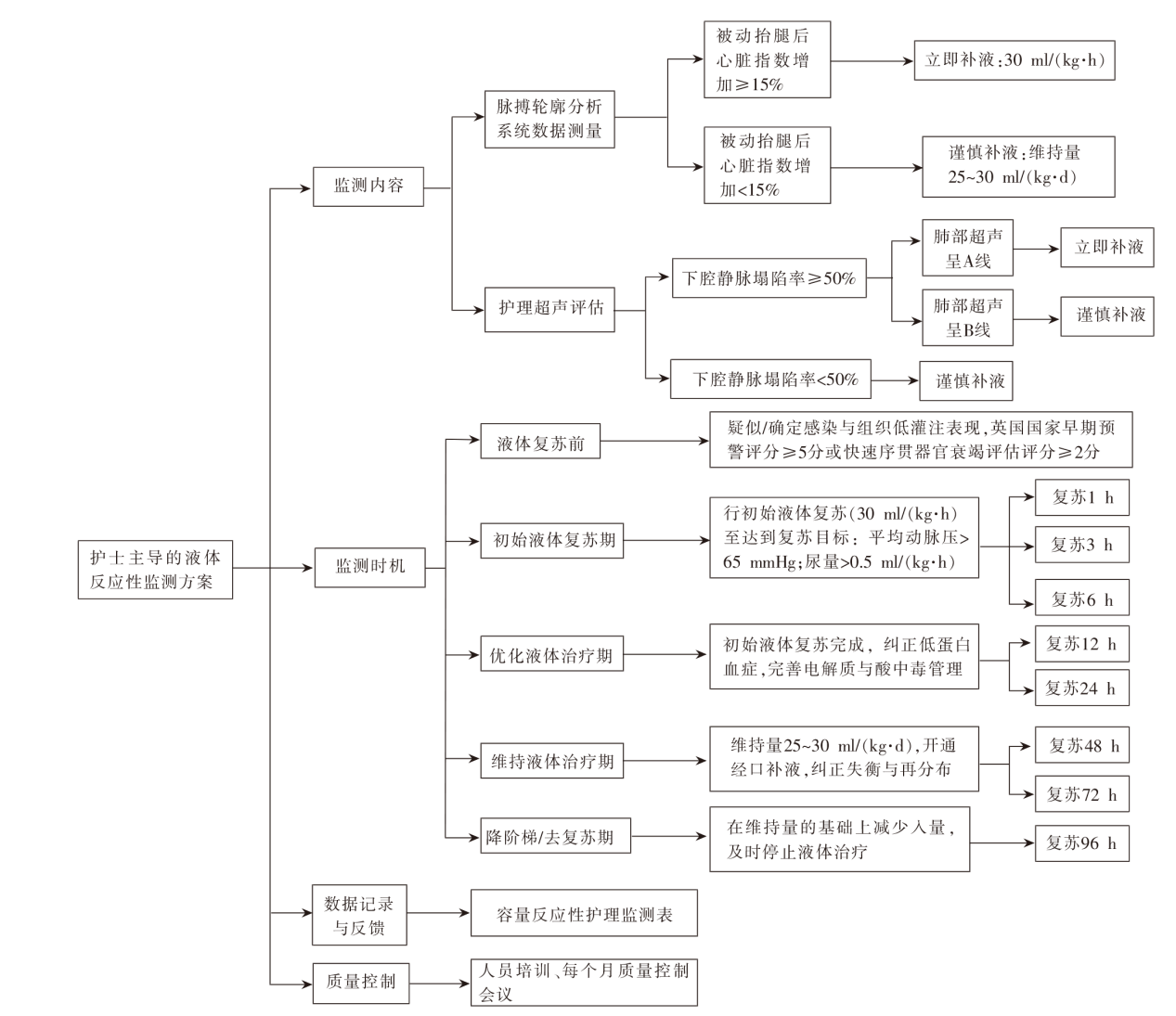
Figure 1 Nurse-led dynamic fluid responsiveness monitoring protocol 注:1 mmHg=0.133 kPa。
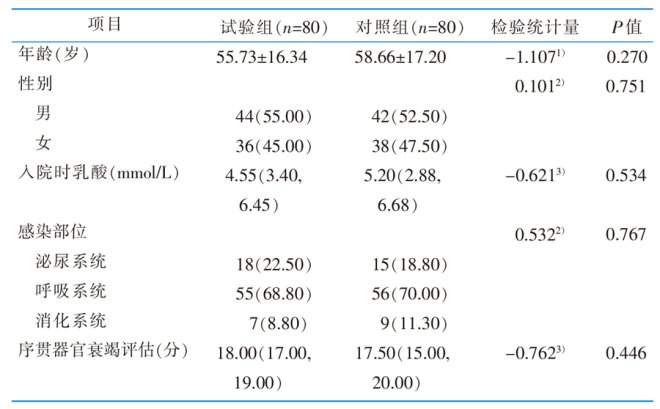 |
Table 1 Comparison of baseline characteristics between the 2 groups
| |
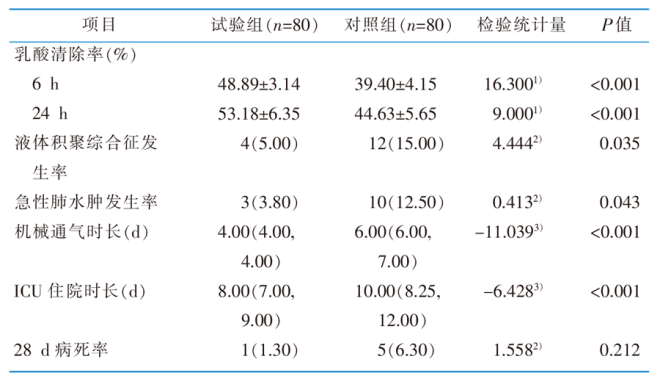 |
Table 2 Comparison of intervention effects between the 2 groups
| |
| [1] |
Malbrain M, Martin G, Ostermann M. Everything you need to know about deresuscitation[J]. Intensive Care Med, 2022, 48(12):1781-1786.
DOI PMID |
| [2] |
Pfortmueller CA, Dabrowski W, Wise R, et al. Fluid accumulation syndrome in sepsis and septic shock:pathophysiology,relevance and treatment-a comprehensive review[J]. Ann Intensive Care, 2024, 14(1):115.
DOI PMID |
| [3] |
Douglas IS, Alapat PM, Corl KA, et al. Fluid response evalua-tion in sepsis hypotension and shock:a randomized clinical trial[J]. Chest, 2020, 158(4):1431-1445.
DOI PMID |
| [4] | 宁中兴. 重症超声与PiCCO指导脓毒症液体复苏效果对比研究[D]. 百色: 右江民族医学院, 2021. |
| Ning ZX. Comparative study of critical care ultrasound and PiCCO in guiding fluid resuscitation of sepsis[D]. Baise: Youjiang Medical University for Nationalities, 2021. | |
| [5] | 曹岚, 张丽娜, 王小亭, 等. 重症护理超声专家共识[J]. 中华现代护理杂志, 2020, 26(33):4577-4590. |
| Cao L, Zhang LN, Wang XT, et al. Expert consensus on intensive care ultrasound[J]. Chin J Mod Nurs, 2020, 26(33):4577-4590. | |
| [6] |
Zhao Z, Zhang Z, Liu J, et al. Supine transfer test-induced changes in cardiac index predict fluid responsiveness in patients without intra-abdominal hypertension[J]. BMC Anesthesiol, 2023, 23(1):318.
DOI PMID |
| [7] |
周晓瑜, 潘政雯, 方珍珍, 等. 1例Ⅳ度骨髓抑制患者并发脓毒症性休克的护理[J]. 中华护理杂志, 2023, 58(13):1635-1639.
DOI |
| Zhou XY, Pan ZW, Fang ZZ, et al. Nursing care of a patient with grade IV myelosuppression complicated with septic shock[J]. Chin J Nurs, 2023, 58(13):1635-1639. | |
| [8] |
周润奭, 崔娜, 隆云, 等. 2种心排量监测方法在重症感染性休克患者中的应用[J]. 中华护理杂志, 2020, 55(8):1181-1184.
DOI |
|
Zhou RS, Cui N, Long Y, et al. Application of 2 cardiac output monitoring in patients with severe septic shock[J]. Chin J Nurs, 2020, 55(8):1181-1184.
DOI |
|
| [9] | Singer M, Deutschman CS, Seymour CW, et al. The third international consensus definitions for sepsis and septic shock(Sepsis-3)[J]. JAMA, 2016, 315(8):801-810. |
| [10] | 姚岚, 蒋沁娟, 熊文芳, 等. 脓毒症休克患者液体复苏中ICON和重症超声的应用效果:一项前瞻性随机对照研究[J]. 检验医学与临床, 2025, 22(2):210-215,222. |
| Yao L, Jiang QJ, Xiong WF, et al. Application effect of ICON and critical ultrasound in fluid resuscitation for patients with septic shock:a prospective randomized controlled study[J]. Lab Med Clin, 2025, 22(2):210-215,222. | |
| [11] | Rehn M, Chew MS, Olkkola KT, et al. Surviving sepsis campaign:international guidelines for management of sepsis and septic shock in adults 2021-endorsement by the Scandinavian society of anaesthesiology and intensive care medicine[J]. Acta Anaesthesiol Scand, 2022, 66(5):634-635. |
| [12] | 中国医师协会急诊医师分会, 中国研究型医院学会休克与脓毒症专业委员会. 中国脓毒症/脓毒性休克急诊治疗指南(2018)[J]. 中国急救医学, 2018, 38(9):741-756. |
| Chinese Society of Emergency Physicians, Shock and Sepsis Committee of Chinese Research Hospital Association. Chinese guidelines for emergency treatment of sepsis/septic shock (2018)[J]. Chin J Crit Care, 2018, 38(9):741-756. | |
| [13] | 张青, 刘丽霞, 霍焱, 等. 重症超声在重症相关操作中应用专家共识[J]. 中华内科杂志, 2024, 63(5):439-461. |
|
Zhang Q, Liu LX, Huo Y, et al. Expert consensus on the appli-cation of critical care ultrasonography in invasive procedures[J]. Chin J Intern Med, 2024, 63(5):439-461.
DOI PMID |
|
| [14] | 中华医学会急诊医学分会, 中国医师协会急诊医师分会, 中国人民解放军急救医学专业委员会, 等. 脓毒症液体治疗急诊专家共识[J]. 中华急诊医学杂志, 2018, 27(1):30-38. |
| Emergency Medicine Branch of Chinese Medical Association, Emergency Physicians Branch of Chinese Medical Doctor Association, Emergency Medicine Professional Committee of PLA, et al. Expert consensus on emergency fluid therapy for sepsis[J]. Chin J Emerg Med, 2018, 27(1):30-38. | |
| [15] |
Elwan MH, Roshdy A, Elsharkawy EM, et al. Can passive leg raise predict the response to fluid resuscitation in ED?[J]. BMC Emerg Med, 2022, 22(1):172.
DOI PMID |
| [16] | 张琳, 朱永胜. 肺部超声的临床应用及进展[J]. 临床超声医学杂志, 2021, 23(2):142-144. |
| Zhang L, Zhu YS. Clinical application and advances in lung ultrasound[J]. J Clin Ultrasound Med, 2021, 23(2):142-144. | |
| [17] | Di Nicolò P, Tavazzi G, Nannoni L, et al. Inferior vena cava ultrasonography for volume status evaluation:an intriguing promise never fulfilled[J]. J Clin Med, 2023, 12(6):2217. |
| [18] | 金艳鸿, 孙红, 李春燕, 等. 《成人动脉血气分析临床操作实践标准(第二版)》解读[J]. 中国护理管理, 2022, 22(11):1601-1606. |
| Jin YH, Sun H, Li CY, et al. Interpretation of clinical practice standards for arterial blood gas analysis in adults,second edi-tion[J]. Chin Nurs Manag, 2022, 22(11):1601-1606. | |
| [19] | 何方凯, 管小俊, 朱晔涵. 急性肺水肿的临床研究和诊疗策略[J]. 国际呼吸杂志, 2021, 41(15):1190-1194. |
| He FK, Guan XJ, Zhu YH. Clinical research and treatment strategy of acute pulmonary edema[J]. Int J Respir, 2021, 41(15):1190-1194. | |
| [20] | 赵昭. 脓毒性休克患者SOFA评分、APACHEⅡ评分、血乳酸水平变化及临床意义[J]. 中国卫生工程学, 2024, 23(6):851-853. |
| Zhao Z. Changes and clinical significance of SOFA score,APACHE II score,and blood lactate level in patients with septic shock[J]. Chin J of Public Health Eng, 2024, 23(6):851-853. | |
| [21] | Espinosa-Almanza CJ, Sanabria-Rodríguez O, Riaño-Forero I, et al. Fluid overload in patients with septic shock and lactate clearance as a therapeutic goal:a retrospective cohort study[J]. Rev Bras Ter Intensiva, 2020, 32(1):99-107. |
| [22] | Lee SG, Song J, Park DW, et al. Prognostic value of lactate levels and lactate clearance in sepsis and septic shock with initial hyperlactatemia:a retrospective cohort study according to the Sepsis-3 definitions[J]. Medicine(Baltimore), 2021, 100(7):e24835. |
| [23] | 元文琪, 杨文倩, 严莉娟. 床旁超声及PiCCO引导下液体复苏治疗脓毒性休克的效果及安全性研究[J]. 海南医学, 2024, 35(8):1076-1080. |
| Yuan WQ, Yang WQ, Yan LJ. Efficacy and safety of bedside ultrasound-and PiCCO-guided fluid resuscitation in the treatment of septic shock[J]. Hainan Med J, 2024, 35(8):1076-1080. | |
| [24] | 汪晖, 黄素芳, 熊杰, 等. ICU护士对危重症患者液体复苏管理的知信行现状调查[J]. 中华急危重症护理杂志, 2021, 2(5):405-411. |
| Wang H, Huang SF, Xiong J, et al. Investigation on ICU nurses’ knowledge,attitude and practice of fluid resuscitation management in critically ill patients[J]. Chin J Crit Care Nurs, 2021, 2(5):405-411. |
| [1] | HE Mei, XIONG Jie, HUANG Sufang, LI Fangfang, LI Jin, REN Lanlan, CHEN Min. Analysis of symptoms network in patients with acute type A aortic dissection and its implications in emergency triage [J]. Chinese Journal of Nursing, 2025, 60(9): 1075-1079. |
| [2] | WANG Yan, PAN Wenyan, CHENG Lihong, ZHOU Zilin, HU Yancheng, ZHANG Xiaoyun. Nursing care of a patient undergoing an abandoned liver transplantation combined with ALPPS [J]. Chinese Journal of Nursing, 2025, 60(9): 1128-1131. |
| [3] | TIAN Junye, ZHANG Xia, SU Li, SUN Lulu, ZHAO Jin, DING Yanming. Research on the construction and application of an information management platform for specialized nurse training [J]. Chinese Journal of Nursing, 2025, 60(6): 652-658. |
| [4] | LI Yan, WU Xue, PANG Jianmei, QIANG Wanmin, YANG Chuanchuan, SUN Shengnan, LI Jing. Current status of knowledge,attitude and practice of perioperative lung rehabilitation among thoracic surgery on n in 24 provinces and autonomous regions of China:a multicenter investigation [J]. Chinese Journal of Nursing, 2025, 60(5): 569-574. |
| [5] | CHEN Qianhe, CHEN Jun, JIANG Kaiyao, WU Xiaonan, HONG Wanting, ZHANG Chunmei. Qualitative study on the facilitating and obstacle factors of the pediatric medical fear intervention by pediatric nurses [J]. Chinese Journal of Nursing, 2025, 60(5): 575-580. |
| [6] | DU Jie, YU Qiang, LI Yamin. Research progress of non-pharmacological interventions for sleep quality among shift work nurses [J]. Chinese Journal of Nursing, 2025, 60(5): 629-634. |
| [7] | PU Jiangfeng, WANG Waner, LI Gege, XIE Zhanghao, XU Yixuan, ZHAN Ningjing, HUANG Huigen. Study on the current situation and latent profile analysis of nurses’ perceived organizational support [J]. Chinese Journal of Nursing, 2025, 60(3): 340-346. |
| [8] | ZHAO Rui, FAN Wenqi, LIU Xiaoxia, GE Lina. Establishment and comparison of 3 compassion fatigue risk prediction models for obstetrics and gynaecology nurses based on machine learning [J]. Chinese Journal of Nursing, 2025, 60(3): 347-354. |
| [9] | GUAN Yanmeng, TIAN Junye, WANG Yanling, DING Yanming. A survey on retraining desire and demand of specialist nurses in 4 563 medical institutions in China [J]. Chinese Journal of Nursing, 2025, 60(2): 223-227. |
| [10] | YAN Lin, ZHANG Chen, LIU Zhouzhou, YOU Guiying. Analysis of current practice status and influencing factors of intake and output recording in patients with heart failure [J]. Chinese Journal of Nursing, 2025, 60(16): 1941-1947. |
| [11] | GUO Yuanzhi, KOU Jie, WANG Junjie, QIN Hongli, ZHAO Pei, ZHANG Yifan, WANG Qi, ZHANG Hongmei. Construction and application of a hierarchical dynamic management intelligent system for nurses [J]. Chinese Journal of Nursing, 2025, 60(15): 1879-1883. |
| [12] | LU Mengxin, XU Xiaowei, CHENG Lijie, HAO Xiaochen, LIU Qingqing, XU Qingguo, ZHANG Bingliang. Construction and preliminary application of a self-management question prompt list in adult liver transplant recipients [J]. Chinese Journal of Nursing, 2025, 60(14): 1709-1715. |
| [13] | GUO Yuanzhi, YAO Zhuoya, WANG Junjie, ZHAO Pei, ZHAN Meng, WANG Junfeng, LI Manchun. Construction and validation of a digital and intelligent competence training program for specialized nurses in Central Sterile Supply Departments [J]. Chinese Journal of Nursing, 2025, 60(13): 1624-1630. |
| [14] | HAN Bing, LI Chunmin, GUO Chenming, YU Mingming. Influencing factors and path analysis of compassion fatigue symptoms in orthopedic nurses [J]. Chinese Journal of Nursing, 2025, 60(12): 1479-1485. |
| [15] | CHEN Chen, WANG Zheyun, JIN Hua, GUAN Yan, XIE Xiaoli, HU Yuexiu, SU Yunyan. Construction and usability evaluation of an evaluation index system of training effect of cardiac surgery nurses [J]. Chinese Journal of Nursing, 2025, 60(12): 1493-1499. |
| Viewed | ||||||
|
Full text |
|
|||||
|
Abstract |
|
|||||
