
Chinese Journal of Nursing ›› 2026, Vol. 61 ›› Issue (21): 2939-2945.DOI: 10.3761/j.issn.0254-1769.2026.21.008
• Specialist Nursing Practice and Research • Previous Articles Next Articles
ZHENG Yi( ), LU Xian'e*(), YUE Xiao, WANG Mei
Received:2026-06-08
Online:2026-11-10
Published:2026-11-13
* Corresponding author:
LU Xian'e,E-mail:751552365@qq.com
郑轶(), 鲁先娥*(), 乐霄, 王玫
通讯作者:
鲁先娥,E-mail:751552365@qq.com作者简介:郑轶:女,本科,护师,E-mail:zhengyiztt@163.com郑轶:研究设计、数据收集与分析、论文撰写及修改;鲁先娥:研究设计与指导、论文修改、数据分析;乐霄:数据分析与研究指导;王玫:研究指导
ZHENG Yi, LU Xian'e, YUE Xiao, WANG Mei. Medication management challenges during the discharge transition among elderly patients with polypharmacy:a qualitative study[J]. Chinese Journal of Nursing, 2026, 61(21): 2939-2945.
郑轶, 鲁先娥, 乐霄, 王玫. 老年多重用药患者出院过渡期用药管理困境的质性研究[J]. 中华护理杂志, 2026, 61(21): 2939-2945.
Add to citation manager EndNote|Ris|BibTeX
URL: https://zh.zhhlzzs.com/EN/10.3761/j.issn.0254-1769.2026.21.008
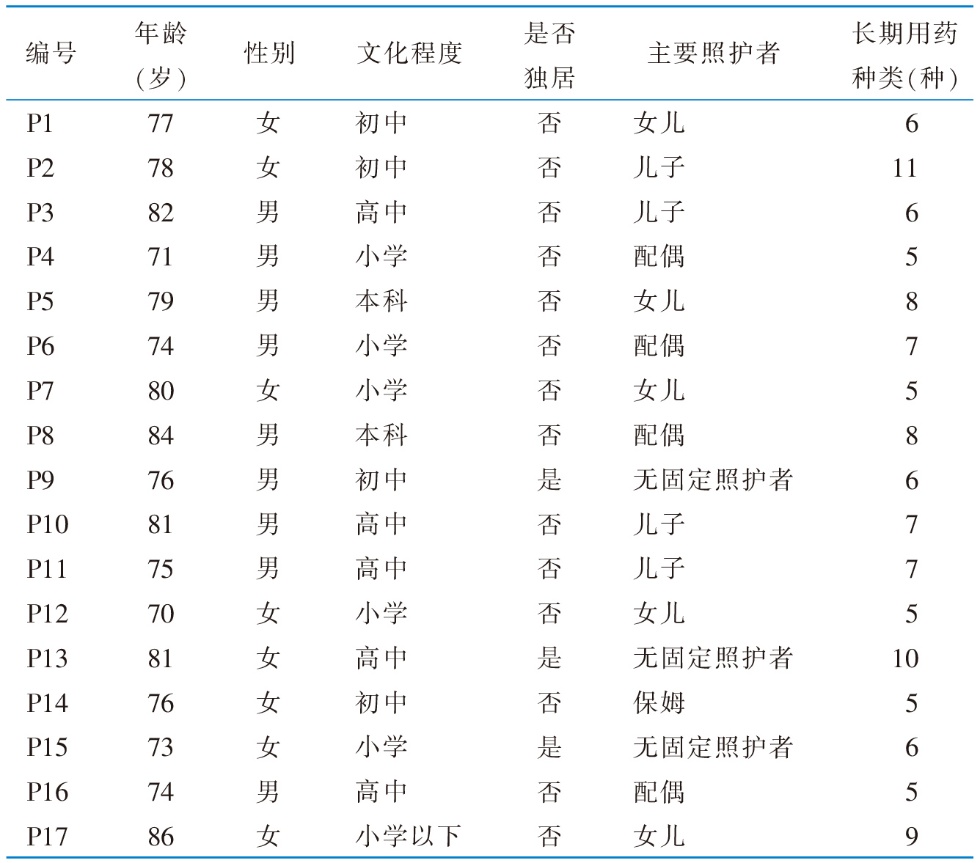 |
Table 1 General characteristics of interviewed patients(n=17)
| |
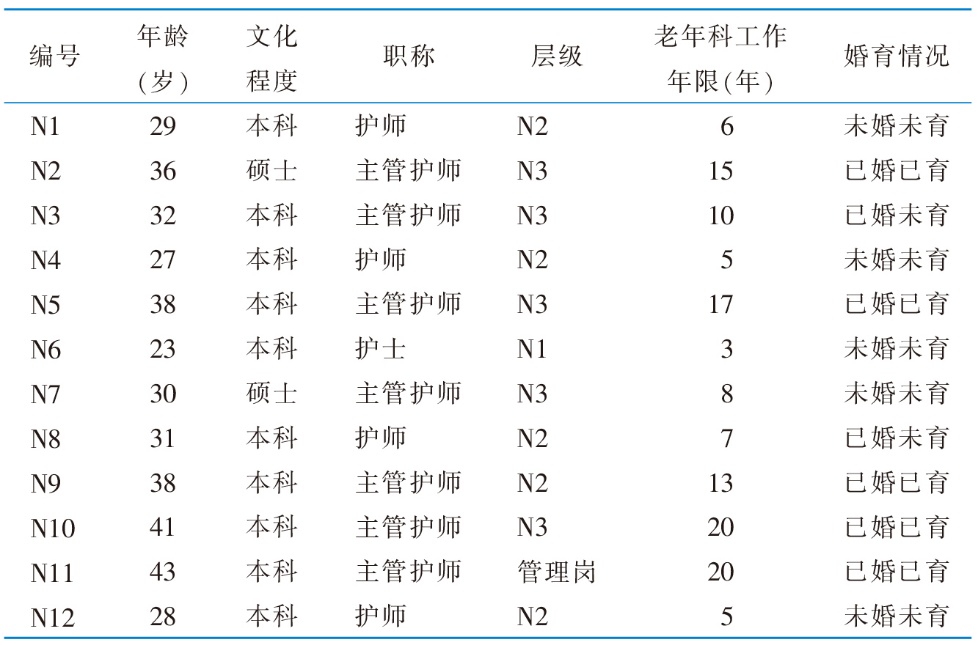 |
Table 2 General characteristics of the interviewed nurses(n=12)
| |
| [1] |
季涧琳, 陆群峰, 杨利灵, 等. 过渡期护理的概念分析[J]. 中华护理杂志, 2022, 57(3):374-379.
DOI |
|
Ji JL, Lu QF, Yang LL, et al. Concept analysis of transitional care[J]. Chin J Nurs, 2022, 57(3):374-379.
DOI |
|
| [2] |
Finlayson K, Chang AM, Courtney MD, et al. Transitional care interventions reduce unplanned hospital readmissions in high-risk older adults[J]. BMC Health Serv Res, 2018, 18(1):956.
DOI PMID |
| [3] | 慈莉娅, 杨长春, 郑鹏远, 等. 医养结合机构衰弱老年人多重用药安全管理中国专家共识(2022版)[J]. 中国心血管杂志, 2022, 27(5):355-362. |
| Ci LY, Yang CC, Zheng PY, et al. Chinese expert consensus on safety management of polypharmacy for frail elderly people in the institutions of combination of medical and senior health care(2022 version)[J]. Chin J Cardiovasc Med, 2022, 27(5):355-362. | |
| [4] |
Anderson TS, Wilson LM, Wang BX, et al. Medication errors and gaps in medication discharge planning for hospitalized older adults:a prospective cohort study[J]. J Gen Intern Med, 2026, 41(3):697-706.
DOI |
| [5] |
Gray SL, Hart LA, Perera S, et al. Meta-analysis of interventions to reduce adverse drug reactions in older adults[J]. J Am Geriatr Soc, 2018, 66(2):282-288.
DOI PMID |
| [6] |
Han YT, Chen J, Xu YL, et al. Nurse-led medication management as a critical component of transitional care for preventing drug-related problems[J]. Aging Clin Exp Res, 2024, 36(1):151.
DOI PMID |
| [7] | Hughes RG. Patient Safety and quality:an evidence-based hand-book for nurses[M]. Rockville(MD): Agency for Healthcare Re-search and Quality(US), 2008. |
| [8] |
Mardani A, Griffiths P, Vaismoradi M. The role of the nurse in the management of medicines during transitional care:a systematic review[J]. J Multidiscip Healthc, 2020, 13:1347-1361.
DOI PMID |
| [9] |
Cawthon C, Walia S, Osborn CY, et al. Improving care transitions:the patient perspective[J]. J Health Commun, 2012, 17(S3):312-324.
DOI URL |
| [10] |
Ozavci G, Bucknall T, Woodward-Kron R, et al. A systematic review of older patients' experiences and perceptions of communication about managing medication across transitions of care[J]. Res Soc Adm Pharm, 2021, 17(2):273-291.
DOI URL |
| [11] |
Lin XY, Xu WX, Lin T. Participation in medication safety of older-adult patients with chronic disease during the transition from hospital to home:a descriptive qualitative study[J]. BMC Geriatr, 2024, 24(1):877.
DOI |
| [12] |
孙梦杰, 刘腊梅, 王佳南, 等. 老年慢性病患者医院-家庭过渡期真实经历与护理体验质性研究的Meta整合[J]. 中国全科医学, 2023, 26(28):3565-3572.
DOI |
| Sun MJ, Liu LM, Wang JN, et al. A meta-synthesis of qualitative studies on the real experiences and care experience during hospital-to-home transition for elderly patients with chronic diseases[J]. Chin Gen Pract, 2023, 26(28):3565-3572. | |
| [13] |
Holden RJ, Carayon P. SEIPS 101 and seven simple SEIPS tools[J]. BMJ Qual Saf, 2021, 30(11):901-910.
DOI PMID |
| [14] |
Engelen EMC, Knol W, Wuyts SCM, et al. Older patients' experiences and needs regarding pharmacotherapeutic care in-hospital and after discharge[J]. Patient Educ Couns, 2025, 136:108754.
DOI URL |
| [15] | Nice MAPC. Medicines optimisation:the safe and effective use of medicines to enable the best possible outcomes[M]. Manchester: National Institute for Health and Care Excellence (NICE), 2015. |
| [16] |
孙超, 奚桓, 李峥, 等. 老年患者出院准备服务专家共识(2019版)[J]. 中华护理杂志, 2020, 55(2):220-227.
DOI |
| Sun C, Xi H, Li Z, et al. Expert consensus on the discharge planning for hospitalized elderly patients(version 2019)[J]. Chin J Nurs, 2020, 55(2):220-227. | |
| [17] |
Dickens C, Lambert BL, Cromwell T, et al. Nurse overestimation of patients' health literacy[J]. J Health Commun, 2013, 18(S1):62-69.
DOI URL |
| [18] |
Richter R, Jansen J, Bongaerts I, et al. Communication of benefits and harms in shared decision making with patients with limited health literacy:a systematic review of risk communication strategies[J]. Patient Educ Couns, 2023, 116:107944.
DOI URL |
| [19] |
王春蕾, 韩姗姗, 张文忠, 等. 老年多病共存患者药物自我管理体验的Meta整合[J]. 中华护理杂志, 2024, 59(12):1505-1511.
DOI |
| Wang CL, Han SS, Zhang WZ, et al. Experiences of drug self-management in elderly patients with multimorbidities:a quali-tative Meta-synthesis[J]. Chin J Nurs, 2024, 59(12):1505-1511. | |
| [20] |
Deery C, Marconi G, Ottosen K, et al. Family engagement in the medication management of older adults during transitions of care:a mixed methods systematic review[J]. Int J Nurs Stud, 2026, 174:105305.
DOI URL |
| [21] |
Manias E, Bucknall T, Hughes C, et al. Family involvement in managing medications of older patients across transitions of care:a systematic review[J]. BMC Geriatr, 2019, 19(1):95.
DOI |
| [1] | Intravenous Infusion Therapy Committee of Chinese Nursing Association, Beijing Nursing Association, (Writing Committee:LI Jia, LI Xuying, QIN Huiying, CHEN Lifen, WU Zhenming, HU Zeyin, LUO Mengna, FAN Yuying, WU Jiahui, LIN Yuping, WANG Lei, SUN Wenyan, FENG Bilong, GAO Wei, LI Yanan, HOU Luoya, LI Chunyan, ). Expert consensus on nursing care of central venous access device removal [J]. Chinese Journal of Nursing, 2026, 61(9): 1157-1162. |
| [2] | HUANG Ping, LI Li, GUO Lili, XU Ying, YE Yun, JIANG Shufang. Construction and preliminary application of a risk assessment tool for central line associated bloodstream infections with needle-free connectors [J]. Chinese Journal of Nursing, 2026, 61(9): 1171-1179. |
| [3] | HE Juan, ZHAO Leilei, YE Guanjun, YU Yanfen, FU Xiaojun, ZHOU Qin. Nursing care of a patient with peripherally inserted central catheterization via the upper limb after bilateral innominate vein and superior vena cava artificial vascular replacement [J]. Chinese Journal of Nursing, 2026, 61(9): 1187-1191. |
| [4] | CHEN Chen, GU Xiao, GUO Fan, WANG Min, NI Xingmei, HUANG Qin, CHENG Niankai. Predictive value of 3 frailty assessment tools for adverse outcomes in elderly trauma patients in an emergency department [J]. Chinese Journal of Nursing, 2026, 61(9): 1200-1207. |
| [5] | ZHENG Yulin, LIU Jinning, ZHANG Jing, GUO Huimin, GU Yanmei, ZHANG Lili. Analysis of relapse to alcohol drinking and its influencing factors in patients with alcoholic liver disease after liver transplantation [J]. Chinese Journal of Nursing, 2026, 61(9): 1208-1214. |
| [6] | YE Junshuang, SHEN Lijia, MENG Xialiang, ZHANG Yujiao, CAI Genlian, SHAO Biyun, ZHOU Yahui, ZHANG Liuqian, YING Jinping. A qualitative study on the cognition and experience of oral frailty in maintenance hemodialysis patients [J]. Chinese Journal of Nursing, 2026, 61(9): 1215-1220. |
| [7] | YANG Mingxia, AN Ran, ZANG Jinfeng, LI Chunmei. Correlation analysis between elderly-to-elder care capacity and self-neglect among older adults with chronic comorbidities and their caregivers [J]. Chinese Journal of Nursing, 2026, 61(9): 1230-1236. |
| [8] | HAN Yuanyuan, SHI Yuzhu, SHANG Wenhan, YAO Li. Analysis of incidence and influencing factors of fall injuries among elderly inpatients across 870 hospitals [J]. Chinese Journal of Nursing, 2026, 61(9): 1245-1252. |
| [9] | XIA Yunfang, WANG Hong, CUI Dai, FU Zhenzhen, ZHU Min. Nursing care of an adolescent patient with Graves’ disease complicated by drug-induced hypersensitivity syndrome [J]. Chinese Journal of Nursing, 2026, 61(9): 1253-1256. |
| [10] | LI Yantao, YANG Lianzhao, LONG Xiuhong, CHEN Ling, GAO Hui, QIN Wenting, ZHU Fanghui, LUO Xueer. Meta-synthesis of post-traumatic growth experiences in people living with HIV/AIDS [J]. Chinese Journal of Nursing, 2026, 61(9): 1261-1268. |
| [11] | LI Yan, XU Cuiping. Application progress of chatbots in alleviating social isolation among the elderly and nursing implications [J]. Chinese Journal of Nursing, 2026, 61(9): 1291-1296. |
| [12] | LIU Xing, FAN Wenxiang, ZHOU Tingxu, SHANG Linping. Facilitators and barriers of smoking cessation in patients with chronic obstructive pulmonary disease:a qualitative study [J]. Chinese Journal of Nursing, 2026, 61(8): 1021-1027. |
| [13] | YU Yunlong, LI Shuang, LUO Yao, ZHANG Suile, PENG Yueming. A study on the correlation between symptom burden and illness perception in patients with acute exacerbation of chronic obstructive pulmonary disease [J]. Chinese Journal of Nursing, 2026, 61(8): 1036-1042. |
| [14] | LI Ying, MIN Yudi, LUO Wei, GAO Xuan, ZHAO Shengnan. Development and application study of a structured health education program for elderly patients with dentition defects [J]. Chinese Journal of Nursing, 2026, 61(8): 1043-1050. |
| [15] | ZHANG Ying, DU Ruofei, YANG Huimin, DU Yating. Analysis of latent classes and influencing factors of frailty in patients with non-Hodgkin’s lymphoma during chemotherapy [J]. Chinese Journal of Nursing, 2026, 61(8): 1051-1058. |
| Viewed | ||||||
|
Full text |
|
|||||
|
Abstract |
|
|||||
