

中华护理杂志 ›› 2025, Vol. 60 ›› Issue (23): 2835-2842.DOI: 10.3761/j.issn.0254-1769.2025.23.003
黄婵( ), 张海燕(), 徐银环, 池艳宇, 王琳楠, 刘岩, 闵玉娣
收稿日期:2025-07-31
出版日期:2025-12-10
发布日期:2025-12-15
*通讯作者:
张海燕:E-mail:zhanghaiyan@pkuph.edu.cn作者简介:黄婵:女,硕士,副主任护师,护理部副主任,E-mail:huangchan_0@163.com
基金资助:
HUANG Chan(), ZHANG Haiyan(), XU Yinhuan, CHI Yanyu, WANG Linnan, LIU Yan, MIN Yudi
Received:2025-07-31
Online:2025-12-10
Published:2025-12-15
摘要:
目的 通过质量改进行动提升住院患者静脉采血质量,评价质量改进行动的成本与效果,为高频护理操作流程的质量改进提供参考。方法 2023年1月18日—2024年10月13日,在北京市某三级甲等综合医院74个住院护理单元中,采用计划-实施-分析与研究-处理循环开展静脉采血质量改进行动。应用成本效果分析法,将静脉采血相关差错发生率、每千出院患者因重复采血延长的诊疗时长作为效果指标,将因重复采血增加的年化医疗成本、质量改进行动实施成本作为成本指标,评价静脉采血质量改进行动的成本与效果。结果 通过质量改进,全院住院患者静脉采血相关差错发生率从0.18%降低至0.03%(P<0.001);每千出院患者因重复采血延长的诊疗时长由1 853.89 min缩短至377.04 min;因重复采血增加的年化医疗成本由26 433.89元降低至4 160.30元;质量改进行动实施成本总计18.36万元。结论 通过质量改进行动能够降低静脉采血相关差错发生率,缩短因重复采血延长的诊疗时长,减少因重复采血增加的医疗成本,总体可提高护理质量、提升诊疗效率、减少医疗资源浪费。
黄婵, 张海燕, 徐银环, 池艳宇, 王琳楠, 刘岩, 闵玉娣. 静脉采血质量改进行动的成本效果分析[J]. 中华护理杂志, 2025, 60(23): 2835-2842.
HUANG Chan, ZHANG Haiyan, XU Yinhuan, CHI Yanyu, WANG Linnan, LIU Yan, MIN Yudi. Cost-effectiveness analysis of quality improvement action for venous blood sampling[J]. Chinese Journal of Nursing, 2025, 60(23): 2835-2842.
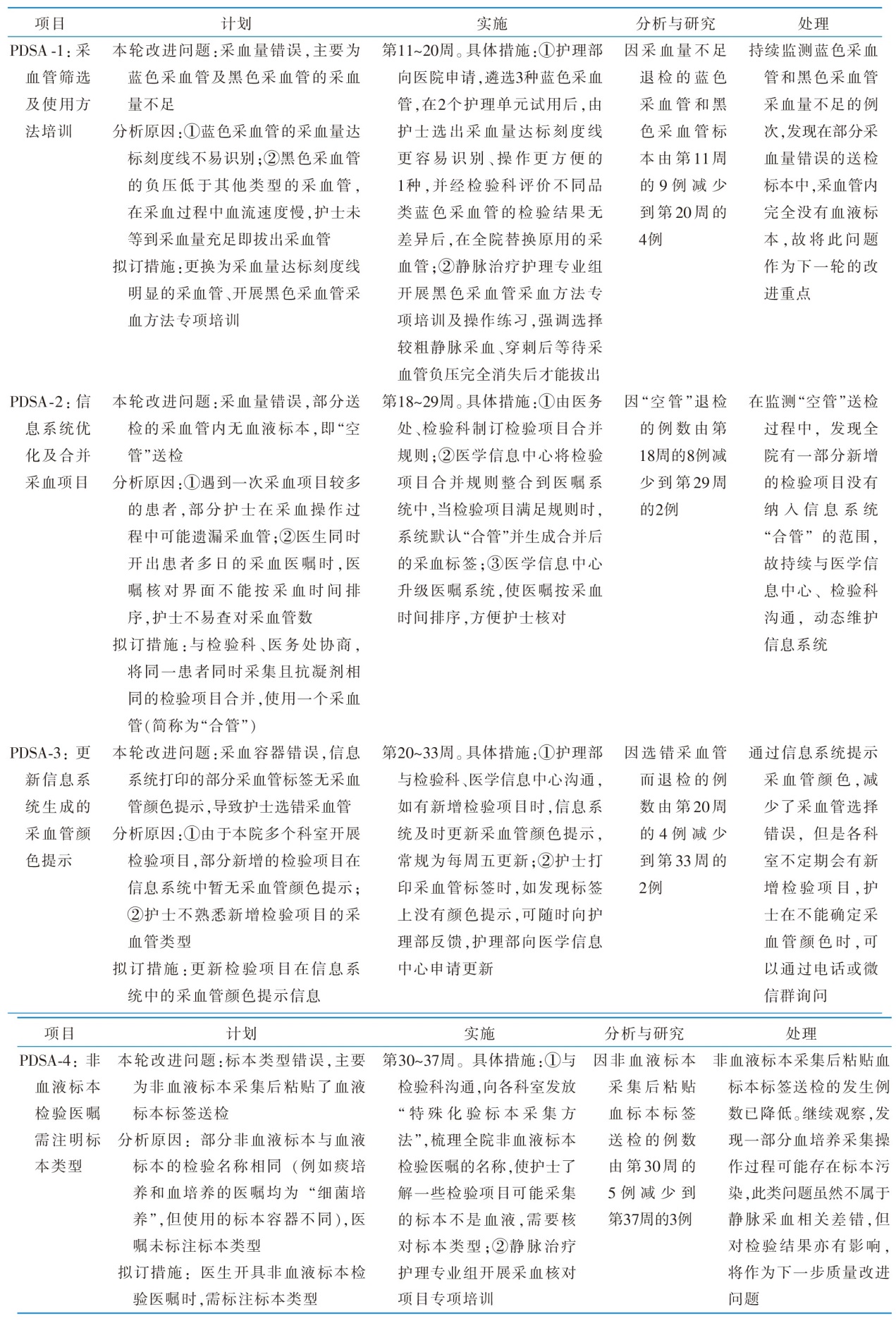 |
表1 静脉采血质量改进行动的4轮PDSA循环
Table 1 Implementation details of the 4-round PDSA cycles for venous blood sampling quality improvement
| |
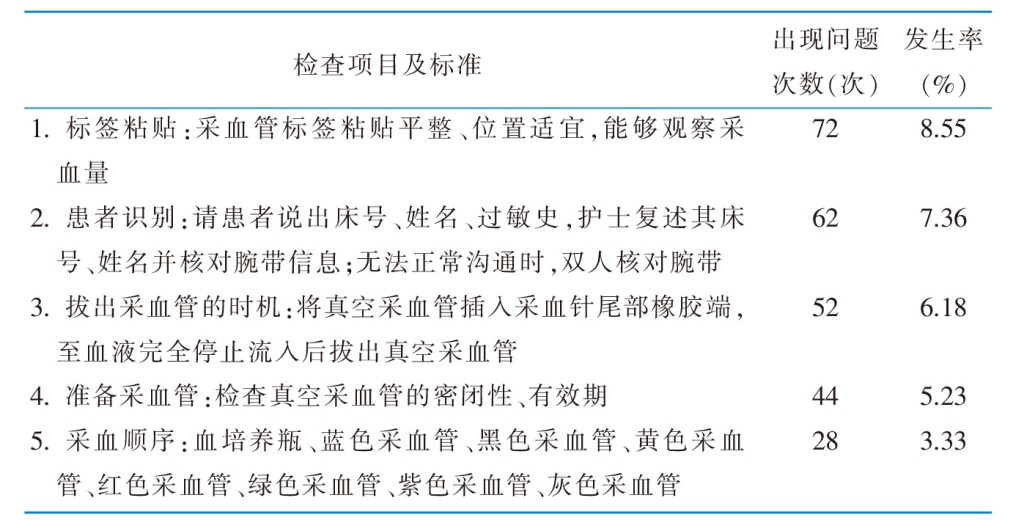 |
表2 维持阶段静脉采血操作流程查检发现的质量问题(n=842)
Table 2 Inspection results of quality issues in venous blood sampling procedures during the sustainability phase(n=842)
| |
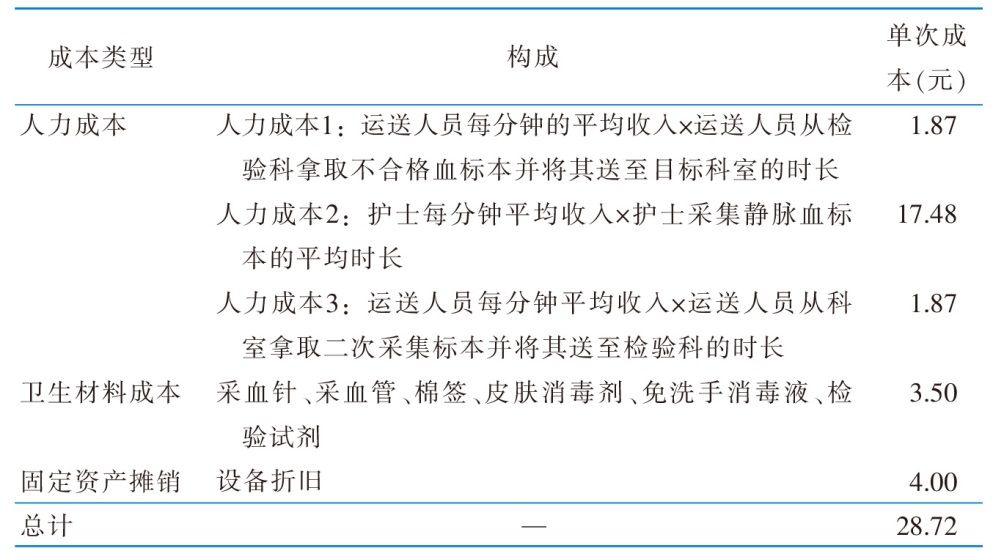 |
表3 单次重复静脉采血成本估算
Table 3 Cost estimation for a single repeated venous blood sampling procedure
| |
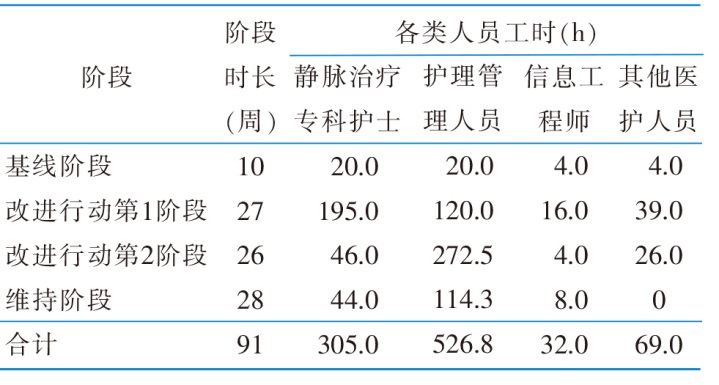 |
表4 质量改进行动不同阶段各类人员的工时
Table 4 Personnel working hours at each phase of the quality improvement action
| |
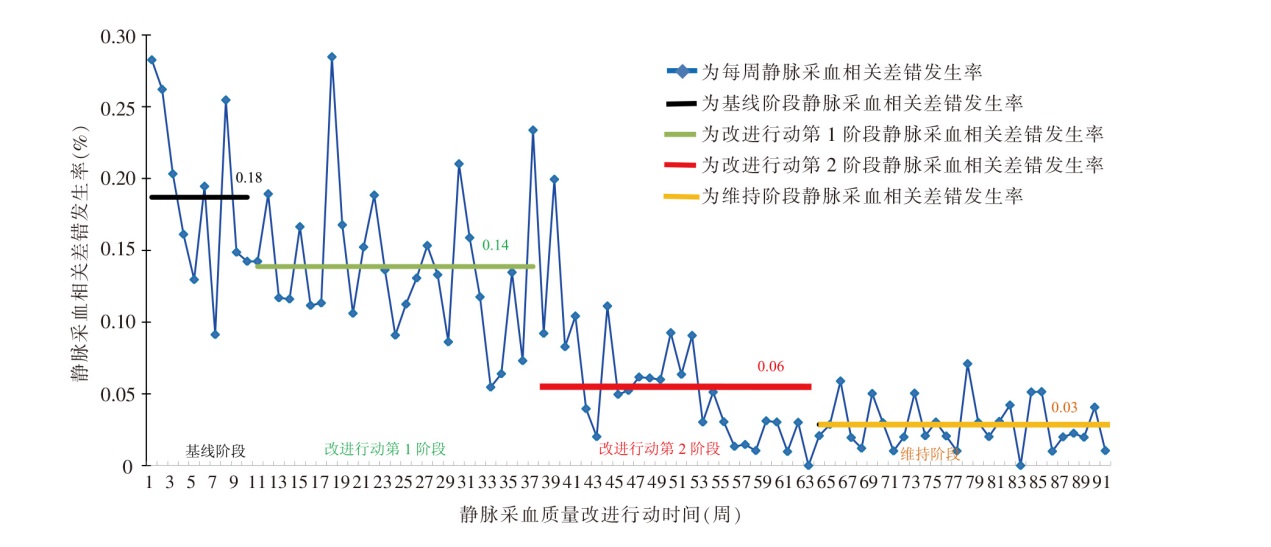
图1 静脉采血质量改进行动各阶段静脉采血相关差错发生率变化趋势
Figure 1 Trends in the incidence of venous blood sampling-related errors across different phases of quality improvement action
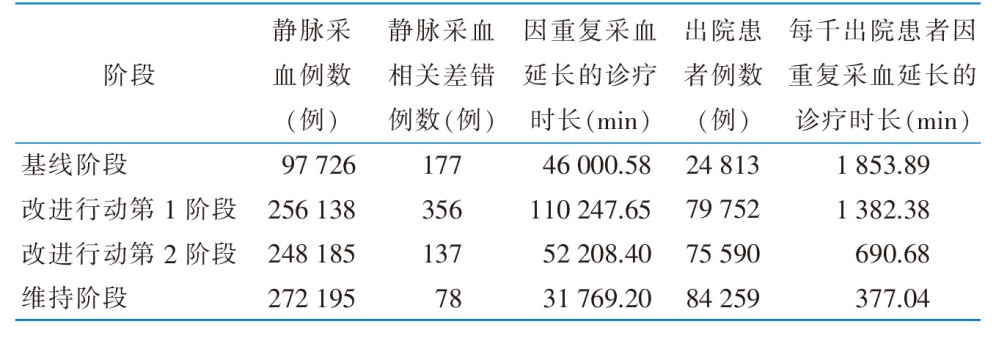 |
表5 静脉采血质量改进行动各阶段每千出院患者因重复采血延长的诊疗时长
Table 5 Prolonged diagnostic and treatment duration per 1 000 discharged patients due to repeated venous blood sampling at each phase of the quality improvement action
| |
| [1] | 中华医学会检验医学分会. 不合格静脉血标本管理中国专家共识[J]. 中华检验医学杂志, 2020, 43(10):956-963. |
| Chinese Society of Laboratory Medicine,Chinese Medical Asso-ciation. Chinese expert consensus on the management of un-qualified venous blood specimens[J]. Chin J Lab Med, 2020, 43(10):956-963. | |
| [2] |
Cheng XL, Yu HM, Zhang L, et al. Evaluation of pre-analytical specimen rejection using Six Sigma metrics:a retrospective single-center study[J]. PLoS One, 2025, 20(6):e0324840.
DOI URL |
| [3] |
Mesganaw B, Misganaw K, Belayneh M. Trends and determi-nants of laboratory specimen rejection rates at Debre Markos comprehensive specialized hospital in Ethiopia[J]. Sci Rep, 2025, 15:25823.
DOI |
| [4] | Atay A, Demir L, Cuhadar S, et al. Clinical biochemistry labora-tory rejection rates due to various types of preanalytical errors[J]. Biochem Med(Zagreb), 2014, 24(3):376-382. |
| [5] |
Lippi G, von Meyer A, Cadamuro J, et al. Blood sample quality[J]. Diagnosis (Berl), 2019, 6(1):25-31.
DOI PMID |
| [6] | 国家卫生和计划生育委员会. 临床实验室质量指标:WS/T 496-2017[EB/OL].(2017-02-09)[2025-07-20]. https://www.nhc.gov.cn/wjw/s9492/201702/93f8eb60e0f34fc896af74f13ac53562.shtml. |
| National Health and Family Planning Commission. Clinical labo-ratory quality indicators:WS/T 496-2017[EB/OL].(2017-02-09)[2025-07-20]. https://www.nhc.gov.cn/wjw/s9492/201702/93f8eb60e0f34fc896af74f13ac53562.shtml. | |
| [7] | 北京市卫生健康委员会. 关于印发北京市各医疗质量控制和改进中心2020年度工作要点的通知[EB/OL].(2020-05-27)[2025-07-20]. https://wjw.beijing.gov.cn/zwgk_20040/ghjh1/202005/t2020-0527_1909725.html. |
| Beijing Municipal Health Commission. Notice on printing and distributing the 2020 annual work priorities of Beijing medical quality control and improvement centers[EB/OL].(2020-05-27)[2025-07-20]. https://wjw.beijing.gov.cn/zwgk_20040/ghjh1/202005/t2020-0527_1909725.html. | |
| [8] | 秦薇, 王文超, 姚文杰, 等. 多学科多阶段预防ICU患者呼吸机相关性肺炎的质量改进策略[J]. 中华急危重症护理杂志, 2024, 5(7):649-655. |
| Qin W, Wang WC, Yao WJ, et al. Quality improvement strate-gies for the prevention of ventilator-associated pneumonia in ICU patients[J]. Chin J Emerg Crit Care Nurs, 2024, 5(7):649-655. | |
| [9] |
Zacherl KM, Sterrett EC, Hughes BL, et al. Ensuring safe and equitable discharge:a quality improvement initiative for indivi-duals with hypertensive disorders of pregnancy[J]. BMJ Qual Saf, 2024, 33(6):396-405.
DOI URL |
| [10] | 柴剑丽, 吴春燕, 王文娟, 等. 糖尿病肾病患者血液透析中低血糖管理的持续质量改进[J]. 中华护理杂志, 2015, 50(2):170-174. |
| Chai JL, Wu CY, Wang WJ, et al. Continuous quality improve-ment of hypoglycemia management during hemodialysis in patients with diabetic kidney disease[J]. Chin J Nurs, 2015, 50(2):170-174. | |
| [11] | International Council of Nurses. International Nurses Day 2024 theme announced:our nurses. our future. The economic power of care[EB/OL].(2024-01-16)[2025-06-30]. https://www.icn.ch/news/international-nurses-day-2024-theme-announced-our-nur-ses-our-future-economic-power-care. |
| [12] | 孟庆悦, 刘国祥. 卫生经济学[M]. 2版. 北京: 人民卫生出版社, 2023. |
| Meng QY, Liu GX. Health economics[M]. 2nd ed. Beijing: People’s Medical Publishing House, 2023. | |
| [13] | Christoff P. Running PDSA cycles[J]. Curr Probl Pediatr Ado-lesc Health Care, 2018, 48(8):198-201. |
| [14] |
Yuzeng S, Hui L. Improving the wait time to triage at the emergency department[J]. BMJ Open Qual, 2020, 9(1):e000708.
DOI URL |
| [15] |
Sondh RS, Mankotia R. Reducing prolonged fasting for abdo-minal ultrasound scans[J]. BMJ Open Qual, 2023, 12(3):e002396.
DOI URL |
| [16] |
Jaekel C, Becker DP, Voss Y. Use of PDSA cycles to increase aspiration risk and swallow screening documentation in the hospitalized general medical patient care population[J]. J Nurs Care Qual, 2023, 38(1):89-95.
DOI PMID |
| [17] | 国家卫生健康委员会. 静脉血液标本采集指南:WS/T661—2020[EB/OL].(2020-04-15)[2025-07-20]. https://www.nhc.gov.cn/wjw/s9492/202004/c09a4128e8194e40baad2498fd8a1f26.shtml. |
| National Health Commission. Guide for venous blood speci-men collection:WS/T 661—2020[EB/OL].(2020-04-15)[2025-07-20]. https://www.nhc.gov.cn/wjw/s9492/202004/c09a4128e8194e40baad2498fd8a1f26.shtml. | |
| [18] | Kaplan RS, Anderson SR. Time-driven activity-based costing[J]. Harv Bus Rev, 2004, 82(11):131-138,150. |
| [19] |
Gupta P, Thomas M, Sbetan N, et al. A quality improvement initiative to reduce rejected laboratory samples and enhance specimen acceptability[J]. Jt Comm J Qual Patient Saf, 2021, 47(8):519-525.
DOI PMID |
| [20] | 张杰, 骆金铠, 毛文平, 等. 基于患者全息视图的静脉血标本检验前质量管理路径的构建与应用[J]. 中国护理管理, 2023, 23(12):1894-1898. |
| Zhang J, Luo JK, Mao WP, et al. Construction and application of a quality management pathway for venous blood specimens before the test based on the holographic view system of patients[J]. Chin Nurs Manag, 2023, 23(12):1894-1898. | |
| [21] |
朱力, 史冬雷, 王军, 等. 信息化采血登记平台的构建及应用[J]. 中华护理杂志, 2020, 55(3):383-386.
DOI |
|
Zhu L, Shi DL, Wang J, et al. Construction and application of an informationized platform of blood collection[J]. Chin J Nurs, 2020, 55(3):383-386.
DOI |
|
| [22] | 李有, 周芸, 尉志刚, 等. 基于多学科协作的PDSA循环在静脉血栓栓塞症防治中的应用[J]. 护理研究, 2024, 38(11):2063-2068. |
| Li Y, Zhou Y, Wei ZG, et al. Application of PDSA circulation based on multidisciplinary collaboration in the prevention and treatment of venous thromboembolism[J]. Chin Nurs Res, 2024, 38(11):2063-2068. | |
| [23] | Bugnitz C, Sandberg KC. Creating effective PDSA cycles[J]. Curr Probl Pediatr Adolesc Health Care, 2025, 55(4):101759. |
| [24] |
王凯蓉, 周英凤, 张晓菊, 等. 两种中心静脉输液技术的成本效果分析[J]. 中华护理杂志, 2021, 56(4):574-581.
DOI |
|
Wang KR, Zhou YF, Zhang XJ, et al. A cost-effectiveness analysis of peripherally inserted central catheter versus totally implanted venous port[J]. Chin J Nurs, 2021, 56(4):574-581.
DOI |
|
| [25] | 国家中医药局, 国家卫生健康委. 关于开展全面提升医疗质量行动(2023-2025年)的通知[EB/OL].(2023-05-26)[2025-07-20]. https://www.gov.cn/zhengce/zhengceku/202305/content_688-3704.htm. |
| National Administration of Traditional Chinese Medicine,Na-tional Health Commission. Notice on launching the action for comprehensive improvement of medical quality(2023-2025)[EB/OL].(2023-05-26)[2025-07-20]. https://www.gov.cn/zhengce/zhengceku/202305/content_688-3704.htm. |
| [1] | 梁和静, 许鹊, 史云霞, 祖金美, 黄文静, 杨春旭, 郭明华, 王磊. 颈动脉内膜剥脱术围手术期护理质量评价指标的构建[J]. 中华护理杂志, 2026, 61(9): 1237-1244. |
| [2] | 王丹丹, 吕会力, 李付华, 李慧, 张侠, 史小艳, 张苇. 三级医院硕士学历护士工作重塑的影响因素及路径分析[J]. 中华护理杂志, 2026, 61(7): 973-978. |
| [3] | 中华护理学会人文护理专业委员会, 中华护理学会急诊护理专业委员会, (执笔:刘义兰, 汪唯, 甘秀妮, 朱陈萍, 杨霞, 熊莉娟, 朱丽辉, 徐翠荣, 郭舒婕, 张洁, 金晓燕, 李君, 李丽, 黄素芳, 王晓洁, 周晨曦, 李映兰. 对急诊科护士的人文关怀策略专家共识[J]. 中华护理杂志, 2026, 61(5): 612-615. |
| [4] | 关锐, 赵亚莎, 张士变, 李巧丽, 郭清洁, 李亚楠, 韩箫笛. 姿势调节训练在ICU肌肉骨骼损伤护士中的应用研究[J]. 中华护理杂志, 2026, 61(4): 543-548. |
| [5] | 盛旭, 丛胜楠, 张娟, 凌秀凤, 朱珠, 陈声容, 赵静. 辅助生殖专科护理质量评价指标体系的构建及验证[J]. 中华护理杂志, 2026, 61(3): 293-301. |
| [6] | 陈元元, 刘扣英, 汤婷, 屈明叶, 杨澜, 蔡昊, 王晨, 汪璐璐, 李祥硕. 国内提升患者就医体验相关政策的文本分析及护理启示[J]. 中华护理杂志, 2026, 61(3): 385-393. |
| [7] | 连蕊, 郑福雪, 田君叶, 谭艳芬, 宋亚静, 韩宁, 李妍, 蒙景雯, 曾镇罡. 供应-加工-配送模式下低值医用耗材智能管理的研究[J]. 中华护理杂志, 2026, 61(3): 394-400. |
| [8] | 曾晗月, 彭寅森, 陈腾霞, 李韵, 朱守淋, 黄乐娇, 王彩莲, 毛世芳. 《成人有创机械通气气道内吸引技术操作》团体标准临床实践现状及影响因素分析[J]. 中华护理杂志, 2026, 61(2): 198-204. |
| [9] | 兰星, 刘婷, 李勍, 柯稳, 李鑫, 张转运, 翟洁, 刘佳佳. 700所医疗机构麻醉科专科护士工作及管理现状的调查研究[J]. 中华护理杂志, 2026, 61(2): 237-243. |
| [10] | 陈霞, 李雨欣, 张新月, 吴钰, 邹振亚, 刘霞. 分级护理无感巡视系统的研发及应用研究[J]. 中华护理杂志, 2026, 61(19): 2597-2603. |
| [11] | 张东芳, 底瑞青, 赵玉霞, 王秀丽, 乔盼盼, 蔡立柏, 葛晓伟, 易景娜, 孙智慧. 多源数据融合的纤维支气管镜清洗消毒管理系统的应用及效果评价[J]. 中华护理杂志, 2026, 61(19): 2604-2611. |
| [12] | 赵子涵, 徐朝俊, 李明天, 周怡, 李川, 刘艳玲. 人工智能在手术室护理质量与安全管理中的应用进展[J]. 中华护理杂志, 2026, 61(19): 2626-2631. |
| [13] | 曹俊华, 钱维明, 陈盈, 邱青苗, 郑琼娜, 赵金凤, 黄红燕, 陈玲玲, 叶莹, 李群. 肺癌日间手术患者全流程护理管理的效果评价[J]. 中华护理杂志, 2026, 61(17): 2411-2419. |
| [14] | 曾颖, 林淑洁, 徐文明, 谢金懿, 温丽静, 王梦, 饶宜迅, 乔文博, 卢芳燕. 日间手术跨科收治患者就医体验的纵向质性研究[J]. 中华护理杂志, 2026, 61(16): 2239-2244. |
| [15] | 魏巧, 孙翠翠, 宋海燕, 朱佳佳, 蒋丽, 诸纪华. 儿科护士护理安全态度的影响因素及路径分析[J]. 中华护理杂志, 2026, 61(14): 1970-1977. |
| 阅读次数 | ||||||
|
全文 |
|
|||||
|
摘要 |
|
|||||
