

中华护理杂志 ›› 2026, Vol. 61 ›› Issue (15): 2147-2154.DOI: 10.3761/j.issn.0254-1769.2026.15.018
刘敬怡( ), 孙铭谣, 罗欢欢, 李紫嫣, 王志稳*()
收稿日期:2025-12-11
出版日期:2026-08-10
发布日期:2026-08-04
*通讯作者:
王志稳,E-mail:wzwjing@sina.com作者简介:刘敬怡:女,本科(硕士在读),E-mail:2411210141@stu.pku.edu.cn刘敬怡:选题设计、资料收集与分析、论文撰写与修改;孙铭谣:选题设计、资料收集与分析;罗欢欢、李紫嫣:资料收集与分析;王志稳:选题设计、研究指导、基金支持、论文审阅和修改
基金资助:
LIU Jingyi(), SUN Mingyao, LUO Huanhuan, LI Ziyan, WANG Zhiwen*()
Received:2025-12-11
Online:2026-08-10
Published:2026-08-04
* Corresponding author:
WANG Zhiwen,E-mail:wzwjing@sina.comFunding program:摘要:
目的 探讨数智化背景下老年人独立生活能力的概念内涵,为开展相关护理研究提供参考。方法 采用 Schwartz-Barcott和Kim提出的混合概念分析法进行分析,2025年8—10月进行理论阶段分析,2025年12月进行田野阶段分析,2026年1月开展分析,对理论阶段与田野阶段的研究结果进行比较与整合,以明确该概念的内涵、属性、前置因素及后置影响。结果 老年人独立生活能力被重新界定为数智化背景下的多维复杂概念,其核心属性涵盖功能独立、心理社会独立、技术适应与利用、经济与财务独立4个方面。前置因素包括个体(人口社会学、生理、心理、个体行为)、环境和技术因素,其后置影响则体现在改善老年人身体功能,提升心理社会价值及生活质量,增强自主性与自由感,并有效优化家庭关系及减轻照护负担。结论 老年人独立生活能力是一个由多种因素共同作用形成的复杂概念,与个体功能状态、生活环境及技术支持密切相关。
刘敬怡, 孙铭谣, 罗欢欢, 李紫嫣, 王志稳. 数智化背景下老年人独立生活能力的混合概念分析[J]. 中华护理杂志, 2026, 61(15): 2147-2154.
LIU Jingyi, SUN Mingyao, LUO Huanhuan, LI Ziyan, WANG Zhiwen. Independent living ability among older adults in the context of digitalization:a hybrid concept analysis[J]. Chinese Journal of Nursing, 2026, 61(15): 2147-2154.
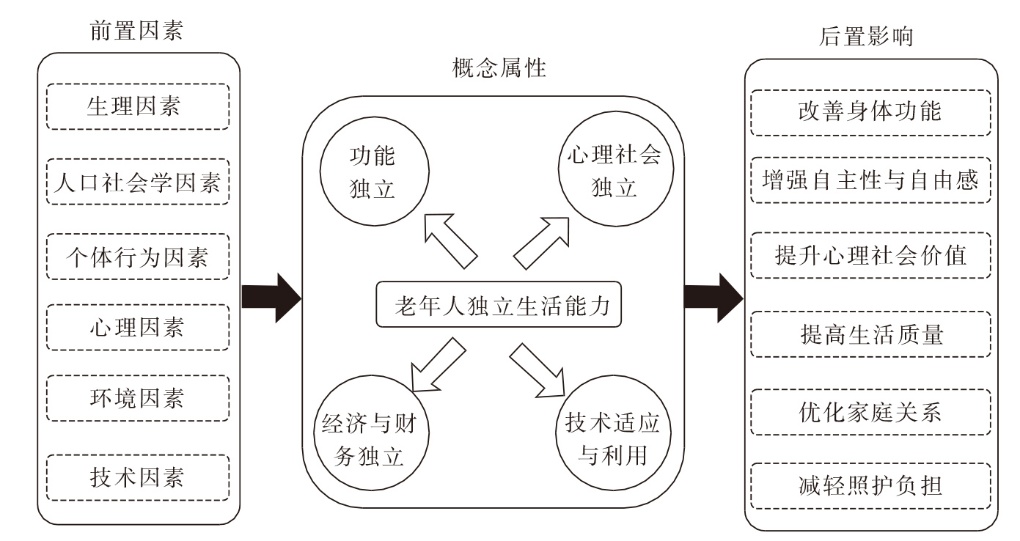
图1 数智化背景下老年人独立生活能力概念框架
Figure 1 Conceptual framework of independent living ability for older adults in the context of digitalization
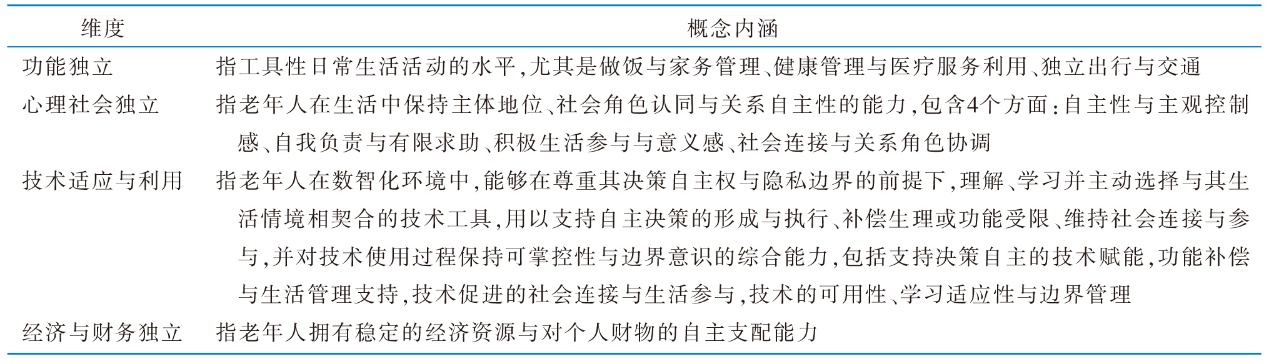 |
表1 整合阶段数智化背景下老年人独立生活能力的概念属性
Table 1 Conceptual attributes of independent living ability for older adults in the context of digitalization during the integration phase
| |
| [1] | Timon CM, Heffernan E, Kilcullen S, et al. Developing indepen-dent living support for older adults using internet of things and AI-based systems:co-design study[J]. JMIR Aging, 2024, 7:e54210. |
| [2] | Chang CH, Wang F, Yang KL, et al. Age-related differences in activities of daily living among older Chinese adults[J]. Sci Rep, 2025, 15(1):34604. |
| [3] | Pedersen AK, Ernstsen L. Instrumental activities of daily living and self-rated health in community-dwelling older adults:cross-sectional findings from the HUNT study(HUNT4 Trondheim 70+)[J]. BMC Geriatr, 2025, 25(1):334. |
| [4] | Kvæl LAH. Ageing in place or stuck in place:a critical qua-litative study on older adults’ independence across six municipalities in Norway[J]. Soc Sci Med, 2025, 375:118098. |
| [5] | Xia XQ, Zhu MB. The impact of digital literacy on older adu-lts’ utilization of community-based home care services:a cross-sectional study[J]. BMC Health Serv Res, 2025, 25(1):1367. |
| [6] | GBD 2021 Diseases and Injuries Collaborators. Global incide-nce,prevalence,years lived with disability(YLDs),disability-adjusted life-years(DALYs),and healthy life expectancy(HALE) for 371 diseases and injuries in 204 countries and territories and 811 subnational locations,1990-2021:a systematic analysis for the Global Burden of Disease Study 2021[J]. Lancet,2024, 403(10440):2133-2161. |
| [7] | Wang YL, Sun HB, Xu SX, et al. Smart home technologies for enhancing independence of living and reducing care depen-dence in older adults:a systematic review[J]. J Adv Nurs, 2025, 81(6):2885-2912. |
| [8] | Li SJ, Ouyang YY, Hu MZ. Ten-year trends of the digital divides and its effect on healthy aging among older adults in China from 2011 to 2020[J]. NPJ Digit Med, 2025, 8(1):710. |
| [9] | Mohammadipour F, Atashzadeh-Shoorideh F, Parvizy S, et al. Concept development of “nursing presence”:application of Schwartz-barcott and kim’s hybrid model[J]. Asian Nurs Res, 2017, 11(1):19-29. |
| [10] | Braun V, Clarke V. Using thematic analysis in psychology[J]. Qual Res Psychol, 2006, 3(2):77-101. |
| [11] | Plath D. Independence in old age:the route to social exclu-sion?[J]. Br J Soc Work, 2008, 38(7):1353-1369. |
| [12] | Schwanen T, Banister D, Bowling A. Independence and mobi-lity in later life[J]. Geoforum, 2012, 43(6):1313-1322. |
| [13] | van Andel S, Holkenborg A. From the perspective of people with dementia:using creative qualitative measures to assess the values and opinions on freedom and safety among people living with dementia[J]. Healthcare, 2024, 12(14):1412. |
| [14] | Ludlow K, Churruca K, Mumford V, et al. Aged care residents’ prioritization of care:a mixed-methods study[J]. Health Expect, 2021, 24(2):525-536. |
| [15] | 由淑萍, 张雪莲, 杨菲, 等. 基于结构方程模型的农村老年人自我养老能力影响因素路径分析[J]. 职业与健康, 2022, 38(9):1218-1222,1226. |
| You SP, Zhang XL, Yang F, et al. Path analysis on influencing factors of self-supporting ability in rural elderly people based on structural equation model[J]. Occup Health, 2022, 38(9):1218-1222,1226. | |
| [16] | Notley N, Worthy P, Peters ME, et al. Encountering technolo-gy:a qualitative exploration of the technology experiences of people living with dementia and their care partners to inform knowledge,practice and technology design[J]. Int Rev Psychia-try,2025:1-14. |
| [17] | Löbe C, Petersen N. Between empowerment, patronization,and surveillance. A semi-structured interview study with persons with dementia and family caregivers on the empowering opportuni-ties and perils of intelligent assistive technologies[J]. BMC Med Ethics, 2025, 26(1):44. |
| [18] | Turjamaa R, Pehkonen A, Kangasniemi M. How smart homes are used to support older people:an integrative review[J]. Int J Older People Nurs, 2019, 14(4):e12260. |
| [19] | Aldenhoven CM, Milton M, D’Ambrosio L, et al. An accessible multifunctional system to support safe and independent aging in place:iterative development and qualitative analysis[J]. JMIR Aging, 2025, 8:e72579. |
| [20] | André M, Enez J, Charras K, et al. Autonomy,independence,and participation of nursing home habitants addressed by assistive technology:a scoping review[J]. Disabil Rehabil Assist Technol, 2025, 20(1):150-162. |
| [21] | Baker MW. Creation of a model of independence for com-munity-dwelling elders in the United States[J]. Nurs Res, 2005, 54(5):288-295. |
| [22] | 王博闻. 城市社区老人自立生活能力及影响因素研究[D]. 沈阳: 中国医科大学, 2017. |
| Wang BW. Research on independent living ability and influencing factors among older adults in urban communities[D]. Shenyang: China Medical University, 2017. | |
| [23] | 奥登苏日塔, 孙炜. 老年人自立生活能力及其影响因素[J]. 实用预防医学, 2014, 21(6):767-768,封3. |
| Aodeng Surita, Sun W. The ability of older people to live independently and its influencing factors[J]. Pract Prev Med, 2014, 21(6):767-768,F003. | |
| [24] | 曹胡月, 余林. 完整生活环境下的老年人自主性及影响因素[J]. 心理学进展, 2022, 12(3):660-669. |
| Cao HY, Yu L. Autonomy and influencing factors of older adults in complete life environment[J]. Adv Psychol, 2022, 12(3):660-669. | |
| [25] | Reyes-Farias D, Finucane E, Watson A, et al. “You need to keep it going,mind,body,and spirit”:older adults’ perspecti-ves on aging in place in subsidized housing[J]. J Health Care Poor Underserved, 2024, 35(1):159-185. |
| [26] | Pin S, Guilley E, Spini D, et al. The impact of social rela-tionships on the maintenance of independence in advanced old age:findings of a Swiss longitudinal study[J]. Z Gerontol Geriatr, 2005, 38(3):203-209. |
| [27] | Dahler AM, Rasmussen DM, Andersen PT. Meanings and expe-riences of assistive technologies in everyday lives of older citizens:a meta-interpretive review[J]. Disabil Rehabil Assist Technol, 2016, 11(8):619-629. |
| [28] | Wang YJ, Kerr N, Macaden L. Reframing ageing in place:perspectives from Chinese older people[J]. BMC Geriatr, 2025, 26(1):97. |
| [29] | Albarqi MN. Exploring the effectiveness of technology-assisted interventions for promoting independence in elderly patients:a systematic review[J]. Healthcare, 2024, 12(21):2105. |
| [30] | Yan WJ, Wang LN, Li C, et al. Bidirectional association bet-ween ADL disability and depressive symptoms among older adults:longitudinal evidence from CHARLS[J]. Sci Rep, 2025, 15(1):7125. |
| [31] | Md Sharif S, Jawahir S, Fun WH, et al. Predictors of transition from independence to limitations in activities of daily living(ADL) among independent community-dwelling older adults:longitudinal evidence from the Malaysia ageing and retirement survey(MARS)[J]. BMC Geriatr, 2025, 25(1):447. |
| [32] | Garcia Reyes EP, Kelly R, Buchanan G, et al. Understanding older adults’ experiences with technologies for health self-management:interview study[J]. JMIR Aging, 2023, 6:e43197. |
| [33] | Hao YR, Koh LT, Peh CH, et al. Older adults’ attitudes towards using technologies for communication,entertainment,health and productivity:a cross-sectional study[J]. BMC Public Health, 2025, 25(1):3800. |
| [34] | Balcı E, Aslan GK. Older adults’ experiences and perceptions of using digital technology for health purposes:a qualitative study[J]. Geriatr Nurs, 2025, 65:103490. |
| [35] | 中华护理学会老年护理专业委员会, 北京医院国家老年医学中心, 中国医学科学院老年医学研究院, 北京大学护理学院. 老年人内在能力评估与维护指南[J]. 中华护理杂志, 2025, 60(3):261-265. |
| Chinese Nursing Association Geriatric Nursing Committee, Beijing Hospital,National Center of Gerontology, Institute of Geriatric Medicine, Chinese Academy of Medical Sciences;School of Nursing,Peking University. Guideline for assessment and maintenance of intrinsic capacity in older adults[J]. Chin J Nurs, 2025, 60(3):261-265. | |
| [36] | 陈申, 崔焱, 郑静, 等. 养老机构与居家失能老年人日常生活活动需求未满足状况的差异性研究[J]. 中华护理杂志, 2019, 54(3):434-438. |
| Chen S, Cui Y, Zheng J, et al. The differences in unmet needs of activities of daily living between disabled elderly people living in nursing homes and in families[J]. Chin J Nurs, 2019, 54(3):434-438. | |
| [37] | 张嘉丽, 陈虹秀, 王艺霖, 等. 49个长期护理保险制度试点城市评估失能等级和长期照护需求的现状[J]. 中华护理杂志, 2025, 60(19):2384-2390. |
| Zhang JL, Chen HX, Wang YL, et al. A comparative study on the current status of disability assessment and long-term care needs assessment in 49 pilot cities of the long-term care insurance system[J]. Chin J Nurs, 2025, 60(19):2384-2390. |
| [1] | 陈晨, 顾肖, 郭凡, 王敏, 倪兴梅, 黄琴, 程念开. 3种衰弱评估工具对急诊老年创伤患者不良结局的预测价值[J]. 中华护理杂志, 2026, 61(9): 1200-1207. |
| [2] | 杨明霞, 安冉, 臧金凤, 李春梅. 老年慢性病共病患者及照护者老老照护能力与自我忽视的相关性分析[J]. 中华护理杂志, 2026, 61(9): 1230-1236. |
| [3] | 韩媛媛, 石玉竹, 尚文涵, 么莉. 870所三级甲等医院老年住院患者跌倒伤害发生现状与影响因素分析[J]. 中华护理杂志, 2026, 61(9): 1245-1252. |
| [4] | 李琰, 许翠萍. 聊天机器人在降低老年人社会疏离感中的应用进展及护理启示[J]. 中华护理杂志, 2026, 61(9): 1291-1296. |
| [5] | 李英, 闵玉娣, 罗葳, 高轩, 赵晟楠. 老年牙列缺损患者结构化健康教育方案的构建及应用研究[J]. 中华护理杂志, 2026, 61(8): 1043-1050. |
| [6] | 李珊, 邵梦琪, 邱晨, 苏清清, 高远. 4 907例老年髋部骨折患者术后并发症发生现状及影响因素研究[J]. 中华护理杂志, 2026, 61(8): 1059-1065. |
| [7] | 王秀丽, 代春豪, 许梓婷, 李昊远, 冷敏敏, 张海博, 李晴, 杨丽娟. 运动干预在老年肌少性肥胖患者中应用的范围综述[J]. 中华护理杂志, 2026, 61(7): 995-1001. |
| [8] | 张莹, 杜若飞, 杨惠敏, 徐晓霞, 李黎明, 杜亚婷. 初诊血液肿瘤老年患者的衰弱现状及影响因素研究[J]. 中华护理杂志, 2026, 61(6): 749-756. |
| [9] | 覃文婷, 杨连招, 龙秀红, 陈玲, 高慧, 桑树林. 老年HIV感染者心理社会适应的潜在剖面分析及影响因素研究[J]. 中华护理杂志, 2026, 61(6): 797-805. |
| [10] | 韩朝颖, 赵雅宁, 刘瑶, 李雪梅, 常学优, 李建民. 社区慢性病老年人内在能力与社会衰弱的相关性研究[J]. 中华护理杂志, 2026, 61(6): 829-835. |
| [11] | 杨嘉琪, 王怡童, 李洁, 王丽娜. 老年维持性血液透析患者碎片化运动干预方案的构建及初步应用[J]. 中华护理杂志, 2026, 61(5): 581-589. |
| [12] | 刘宁宁, 万玉峰, 田小红, 王英, 刘文君, 高丽莹. 老年慢性阻塞性肺疾病患者稳定期晨间症状的网络分析[J]. 中华护理杂志, 2026, 61(5): 646-652. |
| [13] | 崔一凡, 张明名, 张晓雪, 郑煜琳, 王文爽, 王欣然. 老年腹部大手术患者肌肉状况及影响因素的纵向研究[J]. 中华护理杂志, 2026, 61(5): 667-673. |
| [14] | 金冠珍, 刘延锦, 金波, 王彦艳, 张玲, 刘芳芳. 老年原发性青光眼患者跌倒警觉度现状及影响因素研究[J]. 中华护理杂志, 2026, 61(4): 506-512. |
| [15] | 黄春艳, 沈晓星, 朱海琼, 陈运, 欧阳文慧, 杨晨, 欧阳晓俊. 老年患者口腔功能锻炼方案的构建及应用效果评价[J]. 中华护理杂志, 2026, 61(3): 326-331. |
| 阅读次数 | ||||||
|
全文 |
|
|||||
|
摘要 |
|
|||||
