

中华护理杂志 ›› 2025, Vol. 60 ›› Issue (4): 432-438.DOI: 10.3761/j.issn.0254-1769.2025.04.007
韩娜菲( ), 贺红(), 袁华娣, 兰美娟, 吴小燕, 曹俊华, 高丽燕, 辛鼎杰
收稿日期:2024-02-21
出版日期:2025-02-20
发布日期:2025-02-26
*通讯作者:
贺红,E-mail:zrhh@zju.edu.cn作者简介:韩娜菲:女,本科,副主任护师,E-mail:2505117@zju.edu.cn
基金资助:
HAN Nafei(), HE Hong(), YUAN Huadi, LAN Meijuan, WU Xiaoyan, CAO Junhua, GAO Liyan, XIN Dingjie
Received:2024-02-21
Online:2025-02-20
Published:2025-02-26
摘要:
目的 通过因子分析法探讨日间肺癌手术患者出院后症状的纵向变化,提出护理对策,以提高患者的生活质量。 方法 采用便利抽样法,选取2023年10月至2024年1月在浙江省某三级甲等综合医院胸外科接受日间手术治疗的患者作为调查对象。在患者出院后第1、3、14、30天,采用一般资料调查表和肺癌患者术后症状量表进行调查,通过探索性因子分析提取症状群。 结果 共随访患者227例,脱落19例,剔除2例,最终纳入206例。日间肺癌手术患者出院后9大症状呈动态变化,出院后第1天症状占比最高的是疼痛197例(95.63%);出院第30天症状占比最高的是咳嗽129例(62.62%)。探索性因子分析结果显示,除第30天的Bartlett’s球形检验P=0.874,KMO=0.495外,出院后第1、3、14天均P<0.001、KMO>0.500,出院后第1天分别是消化道症状群、呼吸道症状群;出院后第3天分别是呼吸道症状群、消化道症状群、疲劳症状群;出院后第14天分别是疲劳症状群、呼吸道症状群。 结论 日间肺癌手术患者出院后的单一症状及症状群在不同时间点呈现动态变化,临床护士应针对日间肺癌手术出院患者不同时期的症状群特点,采取针对性的干预策略,实施精准地症状管理,减轻患者症状负担。
韩娜菲, 贺红, 袁华娣, 兰美娟, 吴小燕, 曹俊华, 高丽燕, 辛鼎杰. 日间肺癌手术患者出院后症状纵向变化及护理对策研究[J]. 中华护理杂志, 2025, 60(4): 432-438.
HAN Nafei, HE Hong, YUAN Huadi, LAN Meijuan, WU Xiaoyan, CAO Junhua, GAO Liyan, XIN Dingjie. Longitudinal changes of symptoms and nursing strategies of patients under daytime lung cancer surgery after discharge[J]. Chinese Journal of Nursing, 2025, 60(4): 432-438.
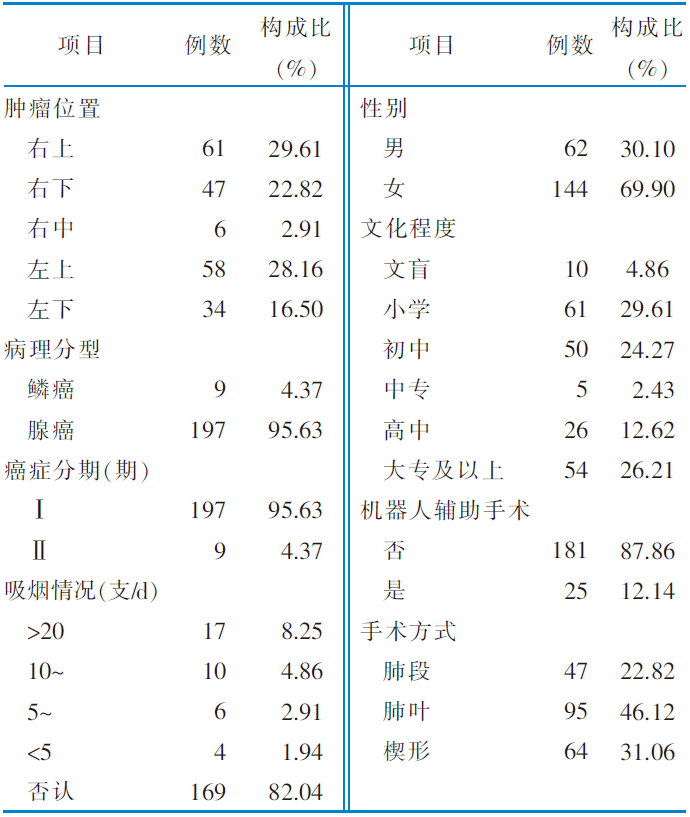 |
表1 调查对象的一般资料(n=206)
Table 1 General information of respondents(n=206)
| |
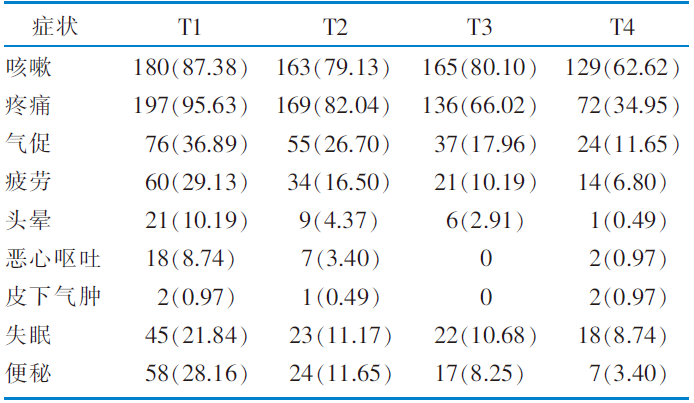 |
表2 不同时间点日间肺癌手术患者症状发生率[n=206,例(百分率,%)]
Table 2 Symptom incidence at different time points of patients with daytime lung cancer surgery [n=206,case(percentage,%)]
| |
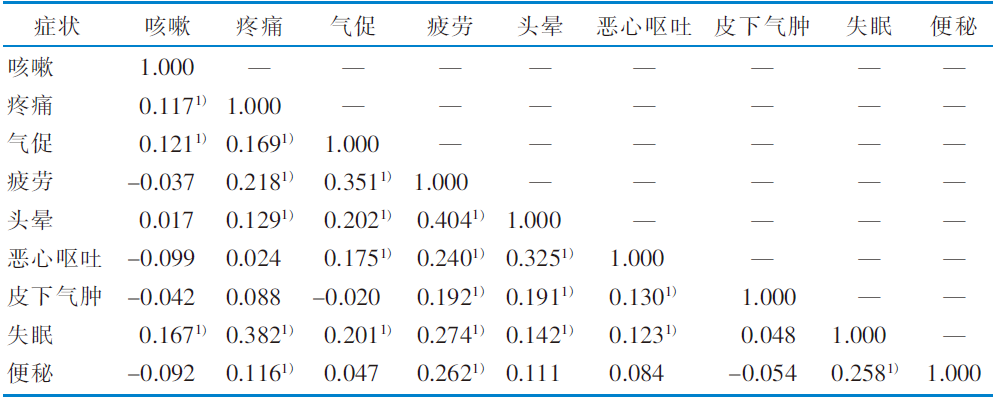 |
表3 出院后第1天症状相关系数矩阵结果(n=206)
Table 3 Results of correlation coefficient matrix for systoms on day 1 after discharge(n=206)
| |
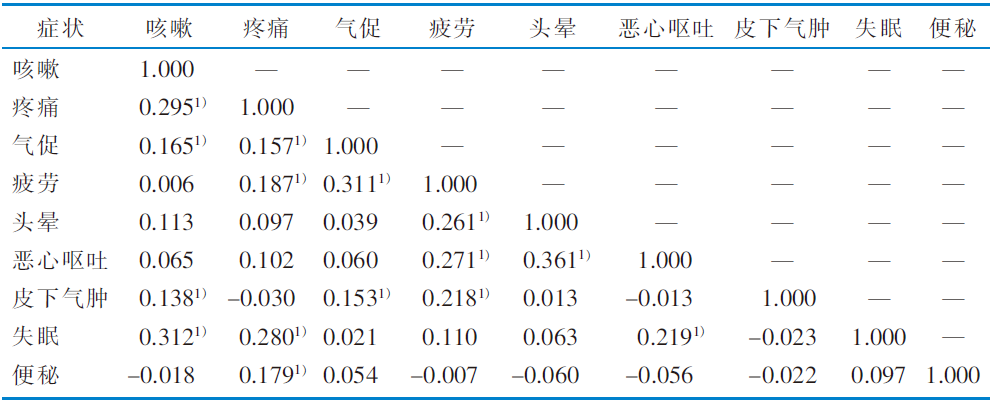 |
表4 出院后第3天症状相关系数矩阵结果(n=206)
Table 4 Results of correlation coefficient matrix for systoms on day 3 after discharge(n=206)
| |
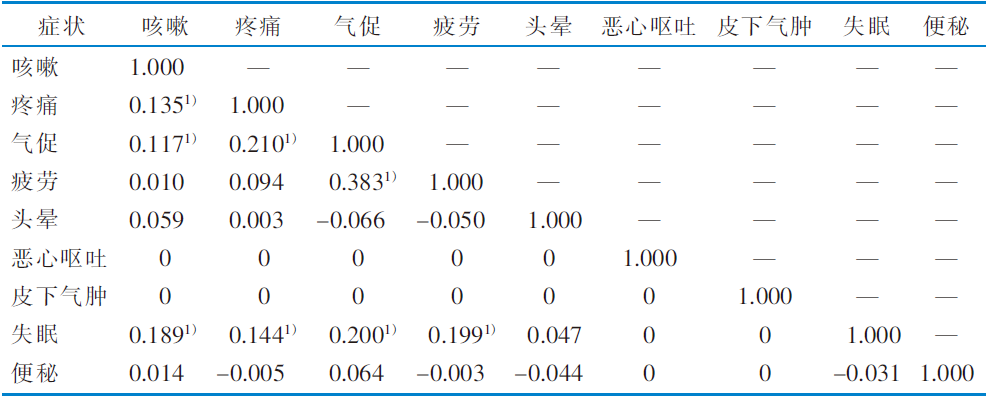 |
表5 出院后第14天症状相关系数矩阵结果(n=206)
Table 5 Results of correlation coefficient matrix for systoms on day 14 after discharge(n=206)
| |
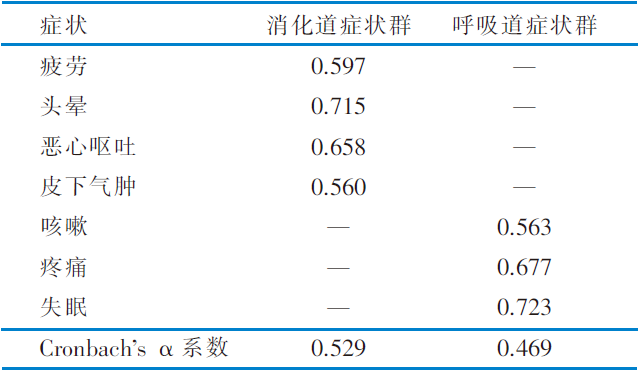 |
表6 出院后第1天症状的因子载荷矩阵(n=206)
Table 6 Factorial loadings matrix of symptoms on day 1 after discharge(n=206)
| |
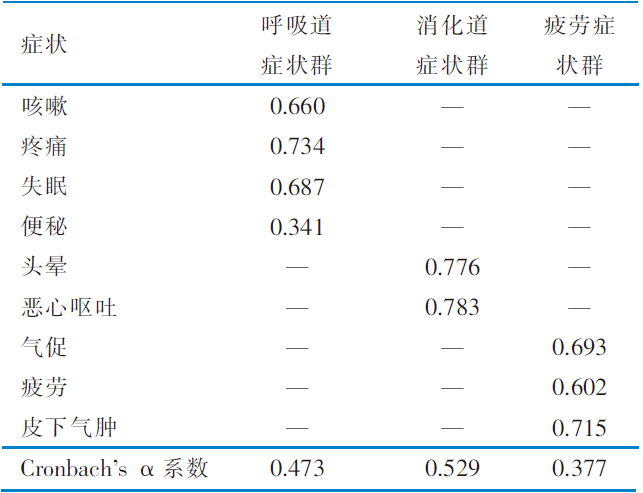 |
表7 出院后第3天症状的因子载荷矩阵(n=206)
Table 7 Factorial loadings matrix of symptoms on day 3 after discharge(n=206)
| |
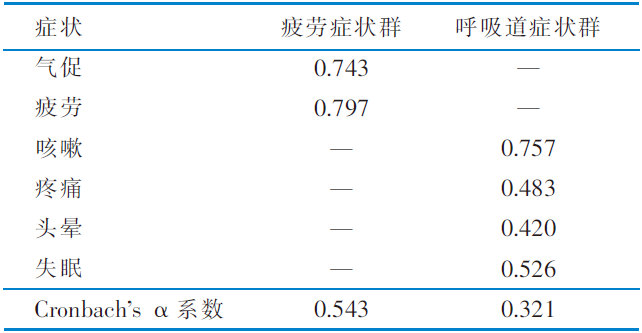 |
表8 出院后第14天症状的因子载荷矩阵(n=206)
Table 8 Factorial loadings matrix of symptoms on day 14 after discharge(n=206)
| |
| [1] | WHO. Cancer[EB/OL]. (2022-02-03)[2024-01-25]. https://www.who.int/news-room/fact-sheets/detail/cancer. |
| [2] | Lee HW, Lee CH, Park YS. Location of stage Ⅰ-Ⅲ non-small cell lung cancer and survival rate:systematic review and meta-analysis[J]. Thorac Cancer, 2018, 9(12):1614-1622. |
| [3] | 支修益, 师建国, 田艳涛, 等. 《2022年中国肺癌患者生存质量白皮书》要点解读[J]. 中国胸心血管外科临床杂志, 2023, 30(8):1083-1088. |
| Zhi XY, Shi JG, Tian YT, et al. Interpretation of the key points of the 2022 white paper on the quality of life of Chinese lung cancer patients[J]. Chin J Clin Thorac Cardiovasc Surg, 2023, 30(8):1083-1088. | |
| [4] | 湘雅国家老年疾病临床医学研究中心. 机器人胸外科日间手术临床实践专家共识[J]. 中国内镜杂志, 2021, 27(8):10-20. |
| National Clinical Research Center for Geriatric Disorders(Xiangya). Expert consensus on the clinical practice of robotic-assisted thoracic day surgery[J]. China J Endosc, 2021, 27(8):10-20. | |
| [5] | 国务院办公厅关于加强三级公立医院绩效考核工作的意见[EB/OL]. (2019-01-16)[2024-05-04]. https://www.gov.cn/gongbao/content/2019/content_5366476.htm. |
| Opinions of the General Office of the State Council on strengthening the performance appraisal of tertiary public hospitals[EB/OL]. (2019-01-16)[2024-05-04]. https://www.gov.cn/gongbao/content/2019/content_5366476.htm. | |
| [6] | Tang L, Yu HF, Dai W, et al. Symptom trajectories informing patient care after lung cancer surgery:a longitudinal patient-reported outcome study[J]. Ann Surg Oncol, 2023, 30(5):2607-2617. |
| [7] | James H, Jamie O. Overview of approach to lung cancer survivors[EB/OL]. (2023-08-17)[2024-05-04]. http://112.2.34.14:9095/contents/zh-Hans/overview-of-approach-to-lung-cancer-survivors?search=%E8%82%BA%E7%99%8C%E7%94%9F%E5%AD%98%E8%80%85&source=search_result&selectedTitle=1%7E23&usage_type=default&display_rank=1. |
| [8] | Molassiotis A, Wengström Y, Kearney N. Symptom cluster patterns during the first year after diagnosis with cancer[J]. J Pain Symptom Manage, 2010, 39(5):847-858. |
| [9] |
Liao J, Wang YQ, Dai W, et al. Profiling symptom burden and its influencing factors at discharge for patients undergoing lung cancer surgery:a cross-sectional analysis[J]. J Cardiothorac Surg, 2022, 17(1):229.
DOI PMID |
| [10] | Li JJ, Li JR, Wu JM, et al. Change in symptom clusters perioperatively in patients with lung cancer[J]. Eur J Oncol Nurs, 2021,55:102046. |
| [11] |
李京京, 吕晓晴, 刘杉杉, 等. 围手术期肺癌患者症状群与生活质量相关性的纵向研究[J]. 中华护理杂志, 2020, 55(11):1635-1641.
DOI URL |
| Li JJ, Lü XQ, Liu SS, et al. A longitudinal study on the correlations between symptom clusters and quality of life in patients with lung cancer during perioperation[J]. Chin J Nurs, 2020, 55(11):1635-1641. | |
| [12] |
汪燃, 黄菲. 中老年肺癌患者胸部放疗期间症状群的调查及护理对策[J]. 中华护理杂志, 2023, 58(13):1596-1602.
DOI URL |
|
Wang R, Huang F. Longitudinal study on symptom groups of middle-aged and elderly lung cancer patients during chest radiotherapy[J]. Chin J Nurs, 2023, 58(13):1596-1602.
DOI URL |
|
| [13] | 周坤, 车国卫. 肺癌患者术后症状量表的建立和评价[J]. 中国循证医学杂志, 2020, 20(10):1157-1163. |
| Zhou K, Che GW. Establishment and evaluation of postoperative symptom inventory for patients with lung cancer[J]. Chin J Evid Based Med, 2020, 20(10):1157-1163. | |
| [14] | 葛玲, 刘晓芯, 居馨星, 等. 肺癌患者日间手术病房模式与传统住院模式的对比研究[J]. 中华现代护理杂志, 2023, 29(25):3375-3380. |
| Ge L, Liu XX, Ju XX, et al. Comparison of day surgical ward mode and traditional hospitalization mode for lung cancer patients[J]. Chin J Mod Nurs, 2023, 29(25):3375-3380. | |
| [15] | 姚丽, 郑娥, 杨梅, 等. 基于患者报告结局的胸腔镜肺癌切除术后患者症状调查[J]. 中国胸心血管外科临床杂志, 2023, 30(1):84-88. |
| Yao L, Zheng E, Yang M, et al. A survey of symptoms after thoracoscopic lung cancer resection based on patient-reported outcomes[J]. Chin J Clin Thorac Cardiovasc Surg, 2023, 30(1):84-88. | |
| [16] | Gao YF, Abulimiti A, He D, et al. Comparison of single-and triple-port VATS for lung cancer:a meta-analysis[J]. Open Med, 2021, 16(1):1228-1239. |
| [17] |
Chen ZZ, Dong QL, Liang LX. Effect of different thoracic anesthesia on postoperative cough[J]. J Thorac Dis, 2018, 10(6):3539-3547.
DOI PMID |
| [18] | 邵茜茜, 刘东英. 肺癌患者肺叶切除术后症状群调查研究[J]. 护理学报, 2018, 25(18):1-4. |
| Shao XX, Liu DY. Symptom cluster of lung cancer patients after lobectomy[J]. J Nurs (China), 2018, 25(18):1-4. | |
| [19] |
周海英, 张玉侠, 陈潇, 等. 肝癌患者术后恶心呕吐发生现况及影响因素研究[J]. 中华护理杂志, 2022, 57(2):182-187.
DOI URL |
|
Zhou HY, Zhang YX, Chen X, et al. The incidence and risk factors of postoperative nausea and vomiting in liver cancer[J]. Chin J Nurs, 2022, 57(2):182-187.
DOI URL |
|
| [20] | 贺红, 庹汪阳, 袁华娣, 等. 肺癌患者日间手术后延迟出院的危险因素研究[J]. 中华急危重症护理杂志, 2022, 3(3):203-207. |
| He H, Tuo WY, Yuan HD, et al. Analysis of risk factors of delayed discharge among lung cancer patients after day surgery[J]. Chin J Emerg Crit Care Nurs, 2022, 3(3):203-207. | |
| [21] | Schlesinger T, Weibel S, Kranke P. Postoperative/postdischarge nausea and vomiting:evidence-based prevention and treatment[J]. Curr Opin Anaesthesiol, 2023, 36(1):109-116. |
| [22] |
Dziadzko M, Aubrun F. Management of postdischarge nausea and vomiting[J]. Best Pract Res Clin Anaesthesiol, 2020, 34(4):771-778.
DOI PMID |
| [23] |
陈潇, 张玉侠, 周海英, 等. 术后恶心呕吐非药物管理的最佳证据总结[J]. 中华护理杂志, 2021, 56(11):1721-1727.
DOI URL |
|
Chen X, Zhang YX, Zhou HY, et al. Best evidence summary for non-pharmacological management of postoperative nausea and vomiting[J]. Chin J Nurs, 2021, 56(11):1721-1727.
DOI URL |
|
| [24] | 刘子嘉, 张路, 刘洪生, 等. 基于加速术后康复的胸外科手术预康复管理专家共识(2022)[J]. 协和医学杂志, 2022, 13(3):387-401. |
| Liu ZJ, Zhang L, Liu HS, et al. Expert consensus on preha-bilitation management for enhanced recovery in patients undergoing thoracic surgery(2022)[J]. Med J Peking Union Med Coll Hosp, 2022, 13(3):387-401. | |
| [25] | Hugoy T, Lerdal A, Rustoen T, et al. Predicting postoperative fatigue in surgically treated lung cancer patients in Norway:a longitudinal 5-month follow-up study[J]. BMJ Open, 2019, 9(9):e028192. |
| [26] |
韩娜菲, 冯华丽, 贺红, 等. 肺癌合并慢性阻塞性肺疾病患者术后肺康复管理的证据总结[J]. 中华护理杂志, 2024, 59(1):42-50.
DOI URL |
|
Han NF, Feng HL, He H, et al. Best evidence summary of postoperative pulmonary rehabilitation management in patients with lung cancer complicated with chronic obstructive pulmonary disease[J]. Chin J Nurs, 2024, 59(1):42-50.
DOI URL |
|
| [27] | Wang J, Dong YX, Su JH, et al. Postoperative exercise training improves the quality of life in patients receiving pulmonary resection:a systematic review and meta-analysis based on randomized controlled trials[J]. Respir Med, 2022,192:106721. |
| [28] |
Hou WQ, Zhai LW, Yang YJ, et al. Is physical activity effective against cancer-related fatigue in lung cancer patients? An umbrella review of systematic reviews and meta-analyses[J]. Support Care Cancer, 2023, 31(3):161.
DOI PMID |
| [29] | Kurnat-Thoma EL, Graves LY, Billones RR. A concept development for the symptom science model 2.0[J]. Nurs Res, 2022, 71(6):E48-E60. |
| [30] | Harrison SL, Watson P, Milburn C, et al. Perceptions of early discharge following lung surgery:I’m a patient “get me out of here”[J]. J Hosp Manag Health Policy, 2019,3:15. |
| [31] | 王喜梅, 翁莹琪. 机器人辅助日间肺癌手术的麻醉[J]. 机器人外科学杂志(中英文), 2022, 3(2):93-99. |
| Wang XM, Weng YQ. Anesthesia in robot-assisted day surgery for lung cancer[J]. Chin J Rob Surg, 2022, 3(2):93-99. | |
| [32] | Harle A, Molassiotis A, Buffin O, et al. A cross sectional study to determine the prevalence of cough and its impact in pa-tients with lung cancer:a patient unmet need[J]. BMC Cancer, 2020, 20(1):9. |
| [33] | Molassiotis A, Bailey C, Caress A, et al. Interventions for cough in cancer[J]. Cochrane Database Syst Rev, 2015, 5(5):CD007881. |
| [34] | Charles V. Palliative care:overview of cough,stridor,and hemoptysis in adults[EB/OL]. (2024-01-16)[2024-05-08]. https://www.uptodate.com/contents/palliative-care-overview-of-cough-stridor-and-hemoptysis-in-adults. |
| [1] | 中华护理学会静脉输液治疗专业委员会, 北京护理学会, (执笔:李佳, 李旭英, 覃惠英, 陈利芬, 吴珍明, 胡泽吟, 罗梦娜, 范育英, 吴嘉慧, 林宇萍, 王蕾, 孙文彦, 冯毕龙, 高伟, 李亚南, 侯罗娅, 李春燕. 中心静脉通路装置拔除护理专家共识[J]. 中华护理杂志, 2026, 61(9): 1157-1162. |
| [2] | 周霞, 马艳艳, 师正坤, 于海霞, 周艳, 胡红玲, 李莜, 陈思思, 张京慧. 隧道式经股静脉PICC置入术在困难静脉通路婴幼儿中的应用研究[J]. 中华护理杂志, 2026, 61(9): 1163-1170. |
| [3] | 黄萍, 李黎, 郭骊莉, 徐莹, 叶赟, 江淑芳. 与无针输液接头相关的导管相关性血流感染风险评估工具的构建与初步应用[J]. 中华护理杂志, 2026, 61(9): 1171-1179. |
| [4] | 李佳, 张玉玲, 邢乐, 张利峰, 牛秀峰, 许莉. 早产儿经上肢置入PICC尖端继发性异位风险预测模型的建立与验证[J]. 中华护理杂志, 2026, 61(9): 1180-1186. |
| [5] | 何娟, 赵蕾蕾, 叶冠军, 余艳芬, 傅晓君, 周琴. 1例双侧无名静脉及上腔静脉人工血管置换术后患者经上肢置入PICC的护理[J]. 中华护理杂志, 2026, 61(9): 1187-1191. |
| [6] | 梁江淑渊, 曾妃, 何鹏, 谢梦珊, 江悦, 蒋宗恒, 王建茗. 静脉-静脉体外膜肺氧合患者早期活动风险等级评估系统的构建及应用研究[J]. 中华护理杂志, 2026, 61(9): 1192-1199. |
| [7] | 陈晨, 顾肖, 郭凡, 王敏, 倪兴梅, 黄琴, 程念开. 3种衰弱评估工具对急诊老年创伤患者不良结局的预测价值[J]. 中华护理杂志, 2026, 61(9): 1200-1207. |
| [8] | 郑煜琳, 刘晋宁, 张静, 郭会敏, 谷艳梅, 张莉莉. 酒精性肝病患者肝移植术后再饮酒现状及其影响因素分析[J]. 中华护理杂志, 2026, 61(9): 1208-1214. |
| [9] | 叶俊霜, 沈丽佳, 孟霞靓, 张玉姣, 蔡根莲, 邵碧云, 周亚辉, 张柳倩, 应金萍. 维持性血液透析患者对口腔衰弱认知和体验的质性研究[J]. 中华护理杂志, 2026, 61(9): 1215-1220. |
| [10] | 王芸姣, 杨玉金, 郑春艳, 彭菲津, 王淑贞, 蒋喜露, 周为民, 王薇, 张娜. 糖尿病下肢动脉硬化闭塞症患者介入术后康复护理方案的构建及应用研究[J]. 中华护理杂志, 2026, 61(9): 1221-1229. |
| [11] | 杨明霞, 安冉, 臧金凤, 李春梅. 老年慢性病共病患者及照护者老老照护能力与自我忽视的相关性分析[J]. 中华护理杂志, 2026, 61(9): 1230-1236. |
| [12] | 梁和静, 许鹊, 史云霞, 祖金美, 黄文静, 杨春旭, 郭明华, 王磊. 颈动脉内膜剥脱术围手术期护理质量评价指标的构建[J]. 中华护理杂志, 2026, 61(9): 1237-1244. |
| [13] | 韩媛媛, 石玉竹, 尚文涵, 么莉. 870所三级甲等医院老年住院患者跌倒伤害发生现状与影响因素分析[J]. 中华护理杂志, 2026, 61(9): 1245-1252. |
| [14] | 夏云芳, 王洪, 崔岱, 付真真, 朱敏. 1例弥漫性毒性甲状腺肿合并超敏反应综合征青少年患者的护理[J]. 中华护理杂志, 2026, 61(9): 1253-1256. |
| [15] | 周益飞, 王海苹, 胡益环, 应莉, 罗松娜. 1例氢氟酸中毒并发呼吸心搏骤停患者的急救护理[J]. 中华护理杂志, 2026, 61(9): 1257-1260. |
| 阅读次数 | ||||||
|
全文 |
|
|||||
|
摘要 |
|
|||||
