

中华护理杂志 ›› 2026, Vol. 61 ›› Issue (19): 2653-2660.DOI: 10.3761/j.issn.0254-1769.2026.19.009
徐海莉1( ), 王龙君2,*(), 王丹2, 崔伊宁2, 沈燕3
收稿日期:2025-11-23
出版日期:2026-10-10
发布日期:2026-09-28
*通讯作者:
王龙君,E-mail:103837528@qq.com作者简介:徐海莉:女,硕士,主任护师,护理部副主任,E-mail:xhl050609@163.com徐海莉:研究设计、方案构建、撰写论文;王龙君:研究指导、论文审阅与修改、基金支持;王丹、崔伊宁:研究实施、资料收集与整理;沈燕:论文审阅与修改
基金资助:
XU Haili1(), WANG Longjun2,*(), WANG Dan2, CUI Yining2, SHEN Yan3
Received:2025-11-23
Online:2026-10-10
Published:2026-09-28
* Corresponding author:
WANG Longjun,E-mail:103837528@qq.comFunding program:摘要:
目的 构建儿童重症监护病房(pediatric intensive care unit,PICU)终末期患儿开放性探视方案,探讨其对患儿及其家长的实施效果,为国内PICU开展开放性探视提供参考。方法 采用便利抽样法,选取2024年7月—2025年6月入住河南省某三级甲等医院PICU的终末期患儿及其家长作为研究对象。将2025年1—6月入住PICU的患儿及其家长作为试验组,实施开放性探视;2024年7—12月入住的患儿及其家长作为对照组,实行科室常规限制性探视。比较干预前后两组家长的悲伤程度、生存质量、满意度及患儿的医院感染发生率。结果 最终试验组26对、对照组28对完成该研究。干预后,试验组家长的悲伤程度得分低于对照组(P<0.001),生存质量得分和满意度得分均高于对照组(均P<0.05);两组患儿的医院感染发生率比较,差异无统计学意义(P=0.986)。结论 该研究构建的PICU终末期患儿开放性探视方案不但能有效降低患儿家长的悲伤程度、提高生存质量和满意度,且未增加患儿的医院感染发生率,可为优化PICU探视制度提供借鉴。
徐海莉, 王龙君, 王丹, 崔伊宁, 沈燕. 开放性探视在儿童重症监护病房终末期患儿及其家长中的应用研究[J]. 中华护理杂志, 2026, 61(19): 2653-2660.
XU Haili, WANG Longjun, WANG Dan, CUI Yining, SHEN Yan. Application of open visitation for terminally ill children and their families in the pediatric intensive care unit[J]. Chinese Journal of Nursing, 2026, 61(19): 2653-2660.
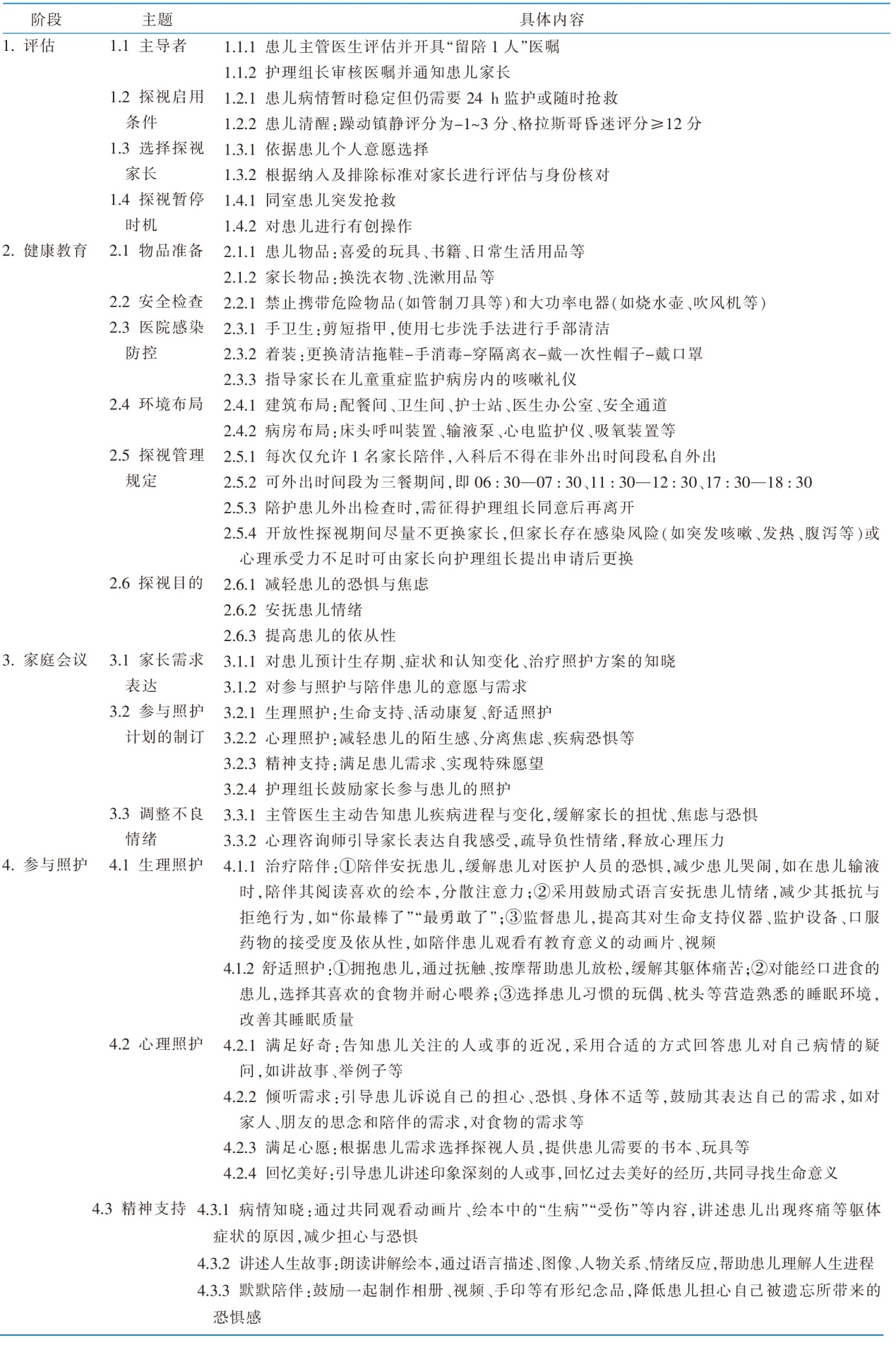 |
表1 儿童重症监护病房终末期患儿开放性探视方案
Table 1 Open visitation plan for terminally ill children in pediatric intensive care unit
| |
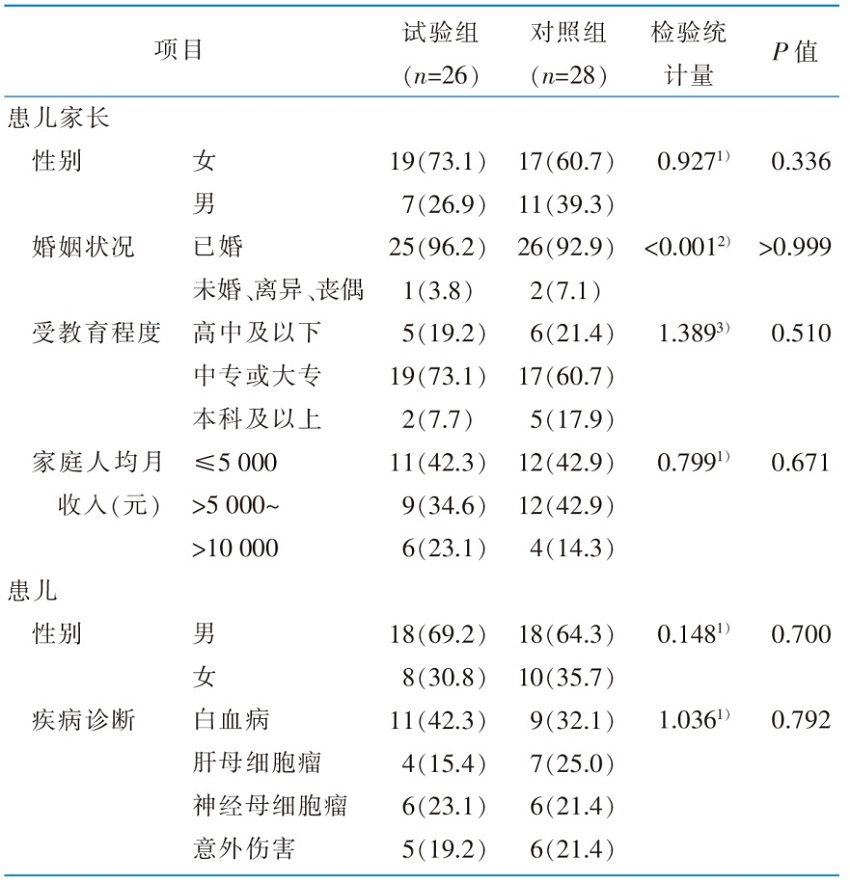 |
表2 两组一般资料的比较[例(百分比,%)]
Table 2 Comparison of general information between 2 groups[case(percentage,%)]
| |
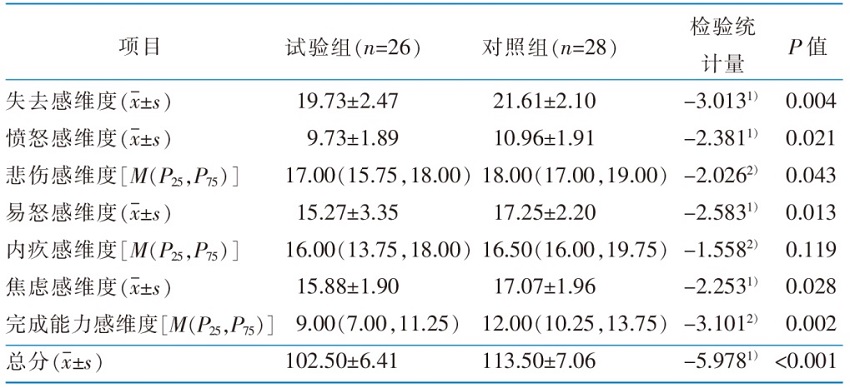 |
表3 两组患儿家长预感性悲伤量表得分的比较(分)
Table 3 Comparison of Expected Grief Scale scores of the parents in 2 groups(score)
| |
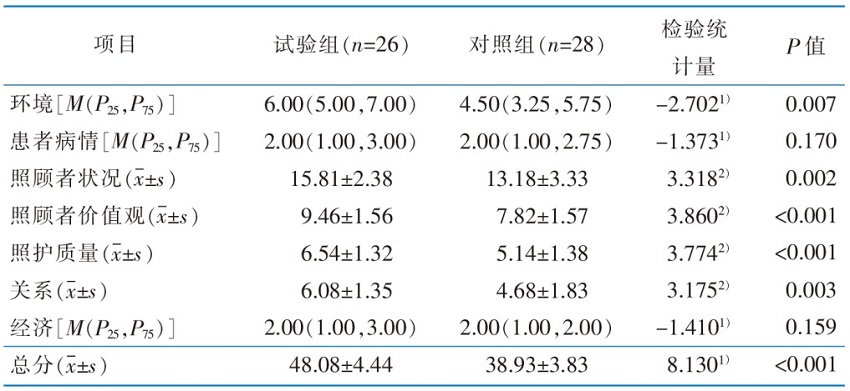 |
表4 两组患儿家长生命威胁性疾病家庭照顾者生存质量量表得分的比较(分)
Table 4 Comparison of the scores of the Quality of Life Scale for Family Caregivers of Children with Life-Threatening Diseases among the parents in 2 groups(score)
| |
| [1] | 黄婕, 蔡思雨. 儿童安宁疗护营养管理专家建议[J]. 中国小儿血液与肿瘤杂志, 2023, 28(4):209-216. |
| Huang J, Cai SY. Expert recommendations on nutritional management in pediatric end-of-life care[J]. J China Pediatr Blood Cancer, 2023, 28(4):209-216. | |
| [2] | 姜倩楠, 郑虹, 叶飞亚, 等. 儿科重症监护室患儿安宁疗护的研究进展[J]. 护理学杂志, 2022, 37(22):102-106. |
| Jiang QN, Zheng H, Ye FY, et al. Research progress on hospice care in pediatric intensive care unit[J]. J Nurs Sci, 2022, 37(22):102-106. | |
| [3] | 韩遵海, 刘博, 张强, 等. 93家医院149个ICU家属探视的调查分析[J]. 当代护士(上旬刊), 2019, 26(10):24-28. |
| Han ZH, Liu B, Zhang Q, et al. Investigation and analysis of family visits in 149 ICU in 93 hospitals[J]. Mod Nurse, 2019, 26(10):24-28. | |
| [4] | 徐萍, 马玉梅. 视频探视联合半开放式探视在重症监护病房清醒患者中的应用效果[J]. 医学临床研究, 2021, 38(7):1106-1109. |
| Xu P, Ma YM. Application effect of video interview combined with semi-open interview in conscious patients in intensive care unit[J]. J Clin Res, 2021, 38(7):1106-1109. | |
| [5] | 易永红, 吴双敏, 王成爽, 等. 患儿家属ICU后综合征影响因素及干预措施的研究进展[J]. 护理学杂志, 2022, 37(17):110-112. |
| Yi YH, Wu SM, Wang CS, et al. Progress of research on factors influencing post intensive care syndrome-family and interventions for families of children hospitalized in pediatric ICU[J]. J Nurs Sci, 2022, 37(17):110-112. | |
| [6] | 邹东奇. 脑肿瘤患儿主要照顾者的预期性悲伤与生活质量的相关性研究[J]. 全科护理, 2021, 19(7):890-893. |
| Zou DQ. Correlation between expected sadness and quality of life of primary caregivers of children with brain tumor[J]. Chin Gen Pract Nurs, 2021, 19(7):890-893. | |
| [7] |
Davidson JE, Aslakson RA, Long AC, et al. Guidelines for family-centered care in the neonatal,pediatric,and adult ICU[J]. Crit Care Med, 2017, 45(1):103-128.
PMID |
| [8] | 熊小妹, 段玉波, 郑志琴. “云探视”在ICU患者探视管理中的应用[J]. 医疗装备, 2023, 36(13):115-117. |
| Xiong XM, Duan YB, Zheng ZQ. Application of “cloud visitation” in ICU patient visitation management[J]. Med Equip, 2023, 36(13):115-117. | |
| [9] | 吴淑芬, 徐静, 戈丹艳, 等. 人文关怀联合微信视频探视对呼吸重症监护病房清醒患者的影响[J]. 护理实践与研究, 2025, 22(1):46-51. |
| Wu SF, Xu J, Ge DY, et al. Effect of humanistic care combined with WeChat video visits on awake patients in respiratory intensive care unit[J]. Nurs Pract Res, 2025, 22(1):46-51. | |
| [10] | 黄凡, 闵小彦, 王密芳, 等. 灵活性预约式探视在重症监护病房中的应用研究[J]. 中国中西医结合急救杂志, 2020, 27(6):720-724. |
| Huang F, Min XY, Wang MF, et al. Application research of flexible appointment visit in intensive care unit[J]. Chin J Integr Tradit West Med Intensive Crit Care, 2020, 27(6):720-724. | |
| [11] | 马媚媚, 刘珍叶, 贺芬萍, 等. NICU患儿家长探视需求及护理对策分析[J]. 护理实践与研究, 2013, 10(9):148-149. |
| Ma MM, Liu ZY, He FP, et al. Analysis of parents’ visiting needs and nursing countermeasures of NICU children[J]. Nurs Pract Res, 2013, 10(9):148-149. | |
| [12] | 倪平, 陈京立, 刘娜. 护理研究中量性研究的样本量估计[J]. 中华护理杂志, 2010, 45(4):378-380. |
| Ni P, Chen Jl, Liu N. Estimation of sample size for quantitative research in nursing research[J]. Chin J Nurs, 2010, 45(4):378-380. | |
| [13] | 辛大君. 晚期癌症患者及其家属悲伤反应研究[D]. 泸州: 西南医科大学, 2016. |
| Xin DJ. Study on grief of advanced cancer patients and their families[D]. Luzhou: Southwest Medical University, 2016. | |
| [14] | Rosa RG, Falavigna M, Robinson CC, et al. Study protocol to assess the effectiveness and safety of a flexible family visitation model for delirium prevention in adult intensive care units:a cluster-randomised,crossover trial(the ICU visits study)[J]. BMJ Open, 2018, 8(4):e021193. |
| [15] |
Rosa RG, Santos Pellegrini JA, Moraes RB, et al. Mechanism of a flexible ICU visiting policy for anxiety symptoms among family members in Brazil:a path mediation analysis in a cluster-randomized clinical trial[J]. Crit Care Med, 2021, 49(9):1504-1512.
DOI URL |
| [16] |
Jacob M, Horton C, Rance-Ashley S, et al. Needs of patients’ family members in an intensive care unit with continuous visitation[J]. Am J Crit Care, 2016, 25(2):118-125.
DOI PMID |
| [17] | 牟成华, 陈珺, 张正馨, 等. 弹性探视制度在ICU中应用的可行性分析[J]. 中华危重症医学杂志(电子版), 2021, 14(1):80-82. |
| Mou CH, Chen J, Zhang ZX, et al. Feasibility analysis of application of flexible visiting system in ICU[J]. Chin J Crit Care Med Electron Ed, 2021, 14(1):80-82. | |
| [18] | 周喜良, 胡阳. 家属探视时间对危重患者康复效果的影响研究[J]. 中国预防医学杂志, 2020, 21(9):1011-1013. |
| Zhou XL, Hu Y. The impact of family visiting duration on the recovery of critical ill patients[J]. China Prev Med, 2020, 21(9):1011-1013. | |
| [19] | 阮美娜, 闵小彦, 黄凡, 等. 以患者家庭为中心的探视模式在温州市某三甲医院成人重症监护室的应用研究[J]. 医学与社会, 2019, 32(11):112-115. |
| Ruan MN, Min XY, Huang F, et al. Application and effect of family-centered visitation model in ICU in a grade A tertiary hospital in Wenzhou[J]. Med Soc, 2019, 32(11):112-115. | |
| [20] | 徐雯, 谢超, 孙红果, 等. ICU探视行为管理的研究与效果观察[J]. 中国医学创新, 2016, 13(18):89-92. |
| Xu W, Xie C, Sun HG, et al. Research and effect observation of ICU visiting behavior management[J]. Med Innov China, 2016, 13(18):89-92. | |
| [21] |
Section on Hospice and Palliative Medicine and Committee on Hospital Care, Feudtner C, Friebert S, et al. Pediatric palliative care and hospice care commitments,guidelines,and recommendations[J]. Pediatrics, 2013, 132(5):966-972.
DOI URL |
| [22] | Madden K, Wolfe J, Collura C. Pediatric palliative care in the intensive care unit[J]. Crit Care Nurs Clin North Am, 2015, 27(3):341-354. |
| [23] |
Metaxa V, Anagnostou D, Vlachos S, et al. Palliative care interventions in intensive care unit patients[J]. Intensive Care Med, 2021, 47(12):1415-1425.
DOI PMID |
| [24] |
王文超, 胡静, 顾莺, 等. 危重症患儿临终关怀模式的构建[J]. 中华护理杂志, 2019, 54(10):1519-1523.
DOI URL |
|
Wang WC, Hu J, Gu Y, et al. Construction of hospice care model for critical pediatric patients[J]. Chin J Nurs, 2019, 54(10):1519-1523.
DOI URL |
|
| [25] | 张灵慧, 王怡航, 傅丽丽. 儿童临终过程中不同哀伤主体的情绪表达及干预实践[J]. 中国医学伦理学, 2020, 33(2):227-230. |
| Zhang LH, Wang YH, Fu LL. Emotional express of different grief subjects and intervention practice during the dying process of children[J]. Chin Med Ethics, 2020, 33(2):227-230. | |
| [26] | 傅丽丽, 张灵慧, 汪庭娟, 等. 儿童安宁疗护服务路径整合实践探讨:以复旦大学附属儿科医院为例[J]. 医学与哲学, 2021, 42(19):55-59. |
| Fu LL, Zhang LH, Wang TJ, et al. Analysis on the integrated path of pediatric hospice care:based on children’s hospital of Fudan University[J]. Med Philos, 2021, 42(19):55-59. | |
| [27] |
Theut SK, Jordan L, Ross LA, et al. Caregiver’s anticipatory grief in dementia:a pilot study[J]. Int J Aging Hum Dev, 1991, 33(2):113-118.
PMID |
| [28] |
Cohen R, Leis AM, Kuhl D, et al. QOLLTI-F:measuring family carer quality of life[J]. Palliat Med, 2006, 20(8):755-767.
DOI URL |
| [29] | 肖惠敏, 郑建伟, 兰秀燕, 等. 晚期癌症患者生存质量对家庭照顾者生存质量的影响[J]. 中华护理杂志, 2015, 50(4):415-419. |
| Xiao HM, Zheng JW, Lan XY, et al. The impact of advanced cancer patients’ quality of life on family caregivers’ quality of life[J]. Chin J Nurs, 2015, 50(4):415-419. | |
| [30] | 刘义婷, 宋艳, 黄瑞兵, 等. 儿童重症监护病房和新生儿重症监护病房死亡患儿父母心理干预研究进展[J]. 解放军护理杂志, 2020, 37(3):61-64. |
| Liu YT, Song Y, Huang RB, et al. Psychological intervention for parents of children dead in PICU and NICU:a review[J]. Nurs J Chin PLA, 2020, 37(3):61-64. | |
| [31] |
Luo QY, Liu FL, Jiang ZY, et al. The chain mediating effect of spiritual well-being and anticipatory grief between benefit finding and meaning in life of patients with advanced lung cancer:empirical research quantitative[J]. Nurs Open, 2024, 11(7):e2179.
DOI URL |
| [32] |
Curtis JR, Treece PD, Nielsen EL, et al. Randomized trial of communication facilitators to reduce family distress and intensity of end-of-life care[J]. Am J Respir Crit Care Med, 2016, 193(2):154-162.
DOI URL |
| [33] | 沈婷, 冯世萍, 曹清, 等. 极低出生体重儿开放式探视的可行性研究[J]. 中华护理杂志, 2017, 52(10):1163-1167. |
| Shen T, Feng SP, Cao Q, et al. Evaluation of effects of open visiting in very-low-birth-weight infants[J]. Chin J Nurs, 2017, 52(10):1163-1167. |
| [1] | 周霞, 马艳艳, 师正坤, 于海霞, 周艳, 胡红玲, 李莜, 陈思思, 张京慧. 隧道式经股静脉PICC置入术在困难静脉通路婴幼儿中的应用研究[J]. 中华护理杂志, 2026, 61(9): 1163-1170. |
| [2] | 李佳, 张玉玲, 邢乐, 张利峰, 牛秀峰, 许莉. 早产儿经上肢置入PICC尖端继发性异位风险预测模型的建立与验证[J]. 中华护理杂志, 2026, 61(9): 1180-1186. |
| [3] | 舒适, 朱杉, 余艮珍, 张萍, 周晨曦, 彭维, 王珍. 特发性中枢性性早熟患儿患病体验与需求的质性研究[J]. 中华护理杂志, 2026, 61(8): 1074-1079. |
| [4] | 刘素玲, 蒋伟红, 李晓艳, 唐晓敏. 1例完全型Shone综合征合并重度肺动脉高压患儿的康复护理[J]. 中华护理杂志, 2026, 61(8): 1107-1111. |
| [5] | 范娜, 张璇, 杜华娟, 胡嘉清, 杨燕飞. 先天性心脏病患儿围手术期游戏化护理方案的构建与效果评价[J]. 中华护理杂志, 2026, 61(7): 909-916. |
| [6] | 管颖慧, 谢鑑辉, 欧阳雅琦, 徐乐, 田佳琦, 王琼. 1型糖尿病青少年向成人医疗过渡体验的Meta整合[J]. 中华护理杂志, 2026, 61(7): 979-985. |
| [7] | 周敏, 王林娟, 黄雀兰, 付勤, 李贾贾, 付坤会, 董琪, 孟令雨. 15所三级医院儿科ICU护士对外周动脉导管管理的知信行现状调查[J]. 中华护理杂志, 2026, 61(5): 682-688. |
| [8] | 黄静文, 叶桂连, 杨红, 钟美华, 周华青. 1例保留自主呼吸非气管插管麻醉下行心肺联合移植术患儿的早期康复护理[J]. 中华护理杂志, 2026, 61(5): 697-701. |
| [9] | 卢露, 朱林, 周晓, 李哲, 卢芳燕. 1例行双心室辅助装置植入术患者的围手术期护理[J]. 中华护理杂志, 2026, 61(5): 702-706. |
| [10] | 何小琼, 刘轶, 乐莉, 刘瑜. 腹腔镜阑尾切除术后患儿快速康复游戏运动棋盘的设计与应用研究[J]. 中华护理杂志, 2026, 61(4): 483-489. |
| [11] | 秦雨霜, 俞丽丽, 程丽历, 黄娟, 奚鑫, 王丽雁, 田恩, 林利容, 范尧, 杨聚荣, 周明芳. 多学科管理下终末期肾病患者妊娠体验的质性研究[J]. 中华护理杂志, 2026, 61(4): 530-535. |
| [12] | 刘艳翠, 刘宇, 沈琴, 宇丽. 医护人员视角下危重症患儿早期活动影响因素的质性研究[J]. 中华护理杂志, 2026, 61(4): 536-542. |
| [13] | 周壹文, 余卓文, 徐晓凤, 黄雨滟. 1例极早发型炎症性肠病患儿行脐血干细胞移植期间的营养管理[J]. 中华护理杂志, 2026, 61(4): 561-565. |
| [14] | 蒋伟红, 唐晓敏, 周军, 朱佳佳, 金泓丞, 陈梦怡, 诸纪华. 4例心脏移植患儿的运动康复护理[J]. 中华护理杂志, 2026, 61(2): 249-253. |
| [15] | 马琬玥, 陈彤彤, 张莹莹, 张玲玲, 季翠玲, 陈璐. 家庭照顾者对儿童突发牙外伤事件应对体验的质性研究[J]. 中华护理杂志, 2026, 61(16): 2217-2224. |
| 阅读次数 | ||||||
|
全文 |
|
|||||
|
摘要 |
|
|||||
