

中华护理杂志 ›› 2026, Vol. 61 ›› Issue (8): 1066-1073.DOI: 10.3761/j.issn.0254-1769.2026.08.008
谢海燕1( ), 曹淼1, 闫睿1, 刘思第1, 薛荣娜2, 谢丹1,*()
收稿日期:2025-10-23
出版日期:2026-04-20
发布日期:2026-04-22
*通讯作者:
谢丹,E-mail:xiedan@pumch.cn作者简介:谢海燕:女,本科,主管护师,E-mail:xiehaiyan@pumch.cn谢海燕:研究设计、统计分析、论文撰写;曹淼、闫睿:数据收集;刘思第、薛荣娜:数据整理;谢丹:研究指导、论文审阅与修改
基金资助:
XIE Haiyan1(), CAO Miao1, YAN Rui1, LIU Sidi1, XUE Rongna2, XIE Dan1,*()
Received:2025-10-23
Online:2026-04-20
Published:2026-04-22
* Corresponding author:
XIE Dan,Email:xiedan@pumch.cnFunding program:摘要:
目的 调查白塞病患者生活质量现状及影响因素,为临床护理干预策略的制订提供依据。 方法 采用平行式混合研究设计,2024年4—5月便利选取白塞联盟患友微信群中的257例白塞病患者作为研究对象。量性研究采用一般资料调查表、白塞病生命质量量表、白塞病近期活动评分量表、广泛性焦虑障碍量表、患者健康问卷抑郁量表、匹兹堡睡眠质量指数进行调查,采用多元线性回归分析生活质量的影响因素。质性研究采用现象学研究,对20例白塞病患者进行半结构式访谈,运用Colaizzi 7步分析法对访谈资料进行整理分析。 结果 量性研究结果:回收有效问卷255份,白塞病生命质量量表总分为(14.10±8.31)分;多元线性回归分析显示,居住在农村、眼部症状突出、焦虑程度高、抑郁程度高是白塞病患者生活质量的影响因素(P<0.05)。质性研究提炼3个主题:躯体受限与生理痛苦、焦虑抑郁与自我否定、社交回避与社会角色受阻。混合研究验证:眼部症状通过生理与心理路径双重影响生活质量、焦虑抑郁与自我否定形成恶性循环、农村地区医疗及社会支持不足加剧生活质量下降。 结论 白塞病患者生活质量受生理、心理、社会多种因素影响,临床护理需加强以眼部症状为核心的多维管理,常规开展焦虑抑郁筛查及心理干预,同时完善农村地区医疗资源与社会支持,以改善白塞病患者的生活质量。
谢海燕, 曹淼, 闫睿, 刘思第, 薛荣娜, 谢丹. 白塞病患者生活质量影响因素的混合研究[J]. 中华护理杂志, 2026, 61(8): 1066-1073.
XIE Haiyan, CAO Miao, YAN Rui, LIU Sidi, XUE Rongna, XIE Dan. A mixed-method study of factors influencing quality of life in patients with Behçet’s Disease[J]. Chinese Journal of Nursing, 2026, 61(8): 1066-1073.
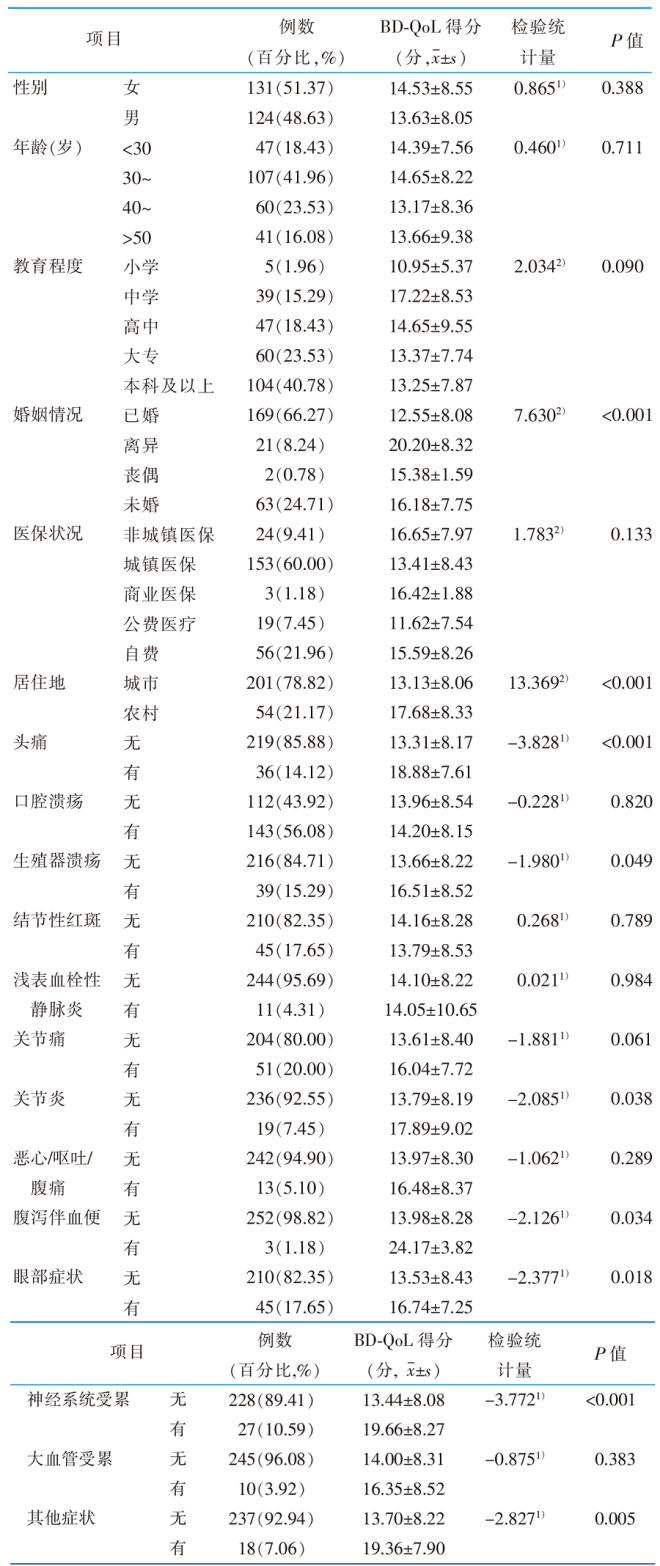 |
表1 研究对象的一般资料及生活质量的单因素分析结果(n=255)
Table 1 Results of univariate analysis of general information and quality of life of respondents(n=255)
| |
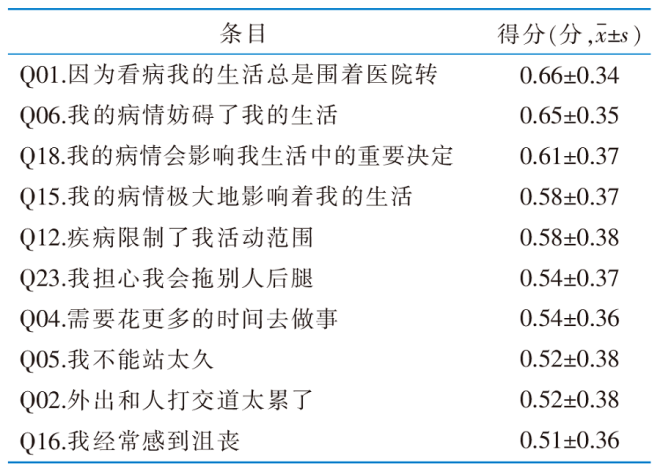 |
表2 白塞病生存质量量表得分平均分>0.5分的10个条目(n=255)
Table 2 10 items with average score>0.5 on the BD-QoL(n=255)
| |
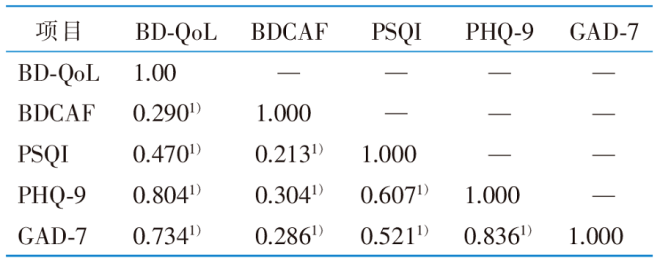 |
表3 白塞病生命质量量表得分与白塞病近期活动评分量表、匹兹堡睡眠质量指数、患者健康问卷抑郁量表、广泛性焦虑障碍量表得分的相关性分析(r值,n=255)
Table 3 Correlation analysis of BD-QoL,BDCAF, CPSQI,PHQ-9,GAD-7(r value, n=255)
| |
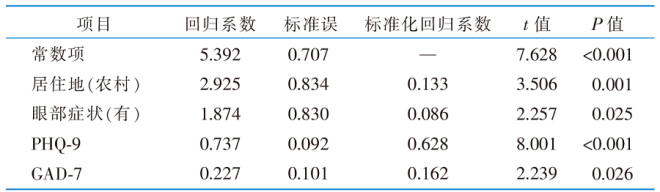 |
表4 白塞病患者生活质量影响因素的多元线性回归分析(n=255)
Table 4 Multivariate linear regression analysis of factors affecting quality of life in patients with Behcet’s disease(n=255)
| |
| [1] | Criteria for diagnosis of Behçet’s disease. International Study Group for Behçet’s Disease[J]. Lancet, 1990, 335(8697):1078-1080. |
| [2] | 国家卫生健康委办公厅. 国家卫生健康委办公厅关于印发软骨发育不全等86个罕见病病种诊疗指南(2025年版)的通知[EB/OL]. (2025-06-17)[2025-11-01]. https://www.gov.cn/zhengce/zhengceku/202507/content_7031426.htm#:-:text=.html. |
| General Office of the National Health Commission. Notice on issuing the diagnosis and treatment guidelines for 86 rare diseases(2025 Edition) including Achondroplasia[EB/OL]. (2025-05-17)[2025-10-01]. https://www.gov.cn/zhengce/zhengceku/202507/content_7031426.htm#:-:text=.html. | |
| [3] |
Emmi G, Bettiol A, Hatemi G, et al. Behçet’s syndrome[J]. Lancet, 2024, 403(10431):1093-1108.
DOI URL |
| [4] | 卫生健康委员会. 关于公布第二批罕见病目录的通知[EB/OL]. (2023-09-18)[2025-11-01]. https://www.nhc.gov.cn/wjw/c100375/202309/8d3e73289a6b4882996dbd1ed66780aa.shtml.html. |
| National Health Commission. Notice on announcing the second batch of rare disease catalog[EB/OL]. (2023-09-18)[2025-11-01]. https://www.nhc.gov.cn/wjw/c100375/202309/8d3e73289a6b4882996dbd1ed66780aa.shtml.html. | |
| [5] |
Mastrolia MV, Marinello D, Di Cianni F, et al. Assessing quality of life in behçet’s disease:a systematic review[J]. Clin Exp Rheumatol, 2022, 40(8):1560-1566.
DOI PMID |
| [6] |
Masoumi M, Sharifi A, Rezaei S, et al. Global systematic review and meta-analysis of health-related quality of life in Behçet’s patients[J]. Caspian J Intern Med, 2022, 13(3):447-457.
DOI PMID |
| [7] |
胡雁, 荆凤. 护理领域混合方法研究的设计要点及典型问题分析[J]. 中华护理杂志, 2024, 59(3):261-266.
DOI URL |
| Hu Y, Jing F. Analysis of design type,data integration and common problems of mixed method research in nursing studies[J]. Chin J Nurs, 2024, 59(3):261-266. | |
| [8] | 郑文洁, 张娜, 朱小春, 等. 白塞综合征诊疗规范[J]. 中华内科杂志, 2021, 60(10):860-867. |
|
Zheng WJ, Zhang N, Zhu XC, et al. Recommendations for the diagnosis and treatment of Behçet’s syndrome in China[J]. Chin J Intern Med, 2021, 60(10):860-867
DOI PMID |
|
| [9] | 孙玉静, 宇虹, 张静, 等. 基于获益-风险感知的精神分裂症患者用药体验影响因素的混合研究[J]. 中华护理杂志, 2024, 59(14):1739-1745. |
| Sun YJ, Yu H, Zhang J, et al. A mixed study of factors influencing medication experience in patients with schizophrenia based on benefit-risk perception[J]. Chin J Nurs, 2024, 59(14):1739-1745. | |
| [10] |
祝红娟, 王倩, 王淑君, 等. 老年糖尿病足小截肢患者生活质量影响因素的混合研究[J]. 中华护理杂志, 2025, 60(1):83-89.
DOI URL |
|
Zhu HJ, Wang Q, Wang SJ, et al. A mixed study of factors influencing quality of life in elderly patients with minor amputations of the diabetic foot[J]. Chin J Nurs, 2025, 60(1):83-89.
DOI URL |
|
| [11] |
Gilworth G, Anne Chamberlain M, Bhakta B, et al. Development of the BD-QoL:a quality of life measure specific to behçet’s disease[J]. J Rheumatol, 2004, 31(5):931-937.
PMID |
| [12] |
Yi SW, Kim JH, Lim KY, et al. The Behcet’s Disease Quality of Life:reliability and validity of the Korean version[J]. Yonsei Med J, 2008, 49(5):698-704.
DOI URL |
| [13] |
Touma Z, Ghandour L, Sibai A, et al. Cross-cultural adaptation and validation of Behçet’s Disease Quality of Life questionnaire[J]. BMC Med Res Methodol, 2011, 11:52.
DOI PMID |
| [14] |
Vojdanian M, Faezi ST, Tennant A, et al. Validity and reliability of the Persian version of Behçet’s Disease Quality-of-Life(BD-QoL)questionnaire:a cross-cultural adaptation[J]. Rheumatol Int, 2015, 35(4):677-684.
DOI PMID |
| [15] | 谢海燕, 刘思第, 曹淼, 等. 白塞病生命质量量表的汉化及信效度初步评价[J]. 中国实用护理杂志, 2026, 42(7):543-548. |
| Xie HY, Liu SD, Cao M, et al. Preliminary test of the reliability and validity of Chinese version of the Behçet’s Disease Quality of Life[J]. Chin J Prac Nurs, 2026, 42(7):543-548. | |
| [16] | International Society for Behçet’s disease. Behçet Disease Current Activity Form 2006[EB/OL]. (2006-03-06)[2024-02-01]http://www.Behçet’s,ws/BehçetwsData/Uploads/files/BehçetsDiseaseActivityForm.pdf. |
| [17] | 廖秋菊, 赵义, 李霞. 实质性神经白塞综合征临床特征分析[J]. 中国卒中杂志, 2021, 16(12):1204-1209. |
|
Liao QJ, Zhao Y, Li X. Clinical characteristics of parenchymal neuro-behçet syndrome[J]. Chin J Stroke, 2021, 16(12):1204-1209.
DOI |
|
| [18] | 何筱衍, 李春波, 钱洁, 等. 广泛性焦虑量表在综合性医院的信度和效度研究[J]. 上海精神医学, 2010, 22(4):200-203. |
| He XY, Li CB, Qian J, et al. Reliability and validity of a Generalized Anxiety Disorder Scale in general hospital outpatients[J]. Shanghai Arch Psychiatry, 2010, 22(4):200-203. | |
| [19] | 曾庆枝, 何燕玲, 刘寒, 等. 广泛性焦虑量表中文版在中医内科门诊人群应用的信度和效度[J]. 中国心理卫生杂志, 2013, 27(3):163-168. |
| Zeng QZ, He YL, Liu H, et al. Reliability and validity of Chinese version of the Generalized Anxiety Disorder 7-item(GAD-7) scale in screening anxiety disorders in outpatients from traditional Chinese internal department[J]. Chin Ment Health J, 2013, 27(3):163-168. | |
| [20] |
Chen SL, Fang Y, Chiu H, et al. Validation of the Nine-Item Patient Health Questionnaire to screen for major depression in a Chinese primary care population[J]. Asia Pac Psychiatry, 2013, 5(2):61-68.
DOI URL |
| [21] |
Tsai PS, Wang SY, Wang MY, et al. Psychometric evaluation of the Chinese version of the Pittsburgh Sleep Quality Index (CPSQI) in primary insomnia and control subjects[J]. Qual Life Res, 2005, 14(8):1943-1952.
DOI URL |
| [22] |
吴丽萍, 肖丽娜, 赖菡青, 等. 老年类风湿关节炎患者对跌倒警觉体验的质性研究[J]. 中华护理杂志, 2025, 60(7):836-841.
DOI URL |
|
Wu LP, Xiao LN, Lai HQ, et al. Qualitative study on the experience of fall alertness in elderly patients with rheumatoid arthritis[J]. Chin J Nurs, 2025, 60(7):836-841.
DOI URL |
|
| [23] |
Can Sandikci S, Colak S, Omma A, et al. An evaluation of de-pression,anxiety and fatigue in patients with Behçet’s disease[J]. Int J Rheum Dis, 2019, 22(6):974-979.
DOI PMID |
| [24] |
Sibley C, Yazici Y, Tascilar K, et al. Behçet syndrome manifestations and activity in the United States versus Turkey:a cross-sectional cohort comparison[J]. J Rheumatol, 2014, 41(7):1379-1384.
DOI URL |
| [25] | Aflaki E, Farahangiz S, Salehi A. Quality of life assessment in patients with behçet’s disease using the Persian version of the Leeds BD-QoL questionnaire[J]. Iran J Med Sci, 2020, 45(5):352-358. |
| [26] | 陈瑜佳, 管剑龙. 白塞病患者抑郁焦虑现况调查及相关因素分析[J]. 中华风湿病学杂志, 2020, 24(12):793-798. |
| Chen YJ, Guan JL. Depression and anxiety and the related factors in patients with Behçet’s disease[J]. Chin J Rheumatol, 2020, 24(12):793-798. | |
| [27] |
Fabiani C, Vitale A, Orlando I, et al. Quality of life impairment in Behçet’s disease and relationship with disease activity:a prospective study[J]. Intern Emerg Med, 2017, 12(7):947-955.
DOI URL |
| [28] |
Atay IM, Erturan I. The impact of coping strategies in behcet’s disease:a case-control study[J]. Niger J Clin Pract, 2020, 23(5):680-685.
DOI PMID |
| [29] | 詹思延, 张抒扬. 以数智化驱动为导向的中国罕见病多重保障机制建设现状与挑战[J]. 罕见病研究, 2025, 4(1):1-6. |
|
Zhan SY, Zhang SY. Current status and challenges of the development on rare disease multi-security mechanisms driven by data intelligence in China[J]. J Rare Dis, 2025, 4(1):1-6.
DOI |
|
| [30] |
徐园, 王阳阳, 王钰, 等. 血友病性关节炎患者自我管理困境的质性研究[J]. 中华护理杂志, 2021, 56(4):534-539.
DOI URL |
| Xu Y, Wang YY, Wang Y, et al. Self-management dilemma in patients with hemophilic arthropathy:a qualitative study[J]. Chin J Nurs, 2021, 56(4):534-539. |
| [1] | 冯丽, 郭沛然, 程蓉, 熊楚琴, 张志霞. 基于时机理论的运动康复方案在慢性阻塞性肺疾病患者中的应用效果评价[J]. 中华护理杂志, 2026, 61(8): 1013-1020. |
| [2] | 刘幸, 范文祥, 周庭戌, 商临萍. 慢性阻塞性肺疾病患者戒烟行为促进与障碍因素的质性研究[J]. 中华护理杂志, 2026, 61(8): 1021-1027. |
| [3] | 孙雪英, 李君, 李玉峰, 崔学芬, 李东盼, 程兆晶, 李响, 孙秀杰. 慢性阻塞性肺疾病患者健康管理旅程地图的研究[J]. 中华护理杂志, 2026, 61(8): 1028-1035. |
| [4] | 于云龙, 李双, 罗瑶, 张遂乐, 彭粤铭. 慢性阻塞性肺疾病急性加重期患者症状负担与疾病感知的相关性研究[J]. 中华护理杂志, 2026, 61(8): 1036-1042. |
| [5] | 李英, 闵玉娣, 罗葳, 高轩, 赵晟楠. 老年牙列缺损患者结构化健康教育方案的构建及应用研究[J]. 中华护理杂志, 2026, 61(8): 1043-1050. |
| [6] | 张莹, 杜若飞, 杨惠敏, 杜亚婷. 非霍奇金淋巴瘤患者化疗期衰弱轨迹的潜在类别及影响因素研究[J]. 中华护理杂志, 2026, 61(8): 1051-1058. |
| [7] | 李珊, 邵梦琪, 邱晨, 苏清清, 高远. 4 907例老年髋部骨折患者术后并发症发生现状及影响因素研究[J]. 中华护理杂志, 2026, 61(8): 1059-1065. |
| [8] | 舒适, 朱杉, 余艮珍, 张萍, 周晨曦, 彭维, 王珍. 特发性中枢性性早熟患儿患病体验与需求的质性研究[J]. 中华护理杂志, 2026, 61(8): 1074-1079. |
| [9] | 杜倩, 胡恒瑜, 李珍, 曹静文, 刘星歌, 刘林莉. 作业疗法联合职业康复对结直肠癌患者术后重返工作岗位的效果研究[J]. 中华护理杂志, 2026, 61(8): 1080-1087. |
| [10] | 谭远俏, 刘伟宸, 王露秀, 张乐, 衡清漪, 凌瑛. 肺癌患者化疗前后社会支持变化对身体活动的影响研究[J]. 中华护理杂志, 2026, 61(8): 1088-1094. |
| [11] | 杜依娟, 曹严菲, 许倩, 程志润, 陈田, 张凤. 生育文化对孕妇孕期体力活动决策的影响研究及护理启示[J]. 中华护理杂志, 2026, 61(8): 1095-1100. |
| [12] | 许国萍, 胡欢婷, 李丽, 金静芬, 蒋佳奖, 任英. 膝关节假体周围感染患者就医决策历程的质性研究[J]. 中华护理杂志, 2026, 61(8): 1101-1106. |
| [13] | 刘素玲, 蒋伟红, 李晓艳, 唐晓敏. 1例完全型Shone综合征合并重度肺动脉高压患儿的康复护理[J]. 中华护理杂志, 2026, 61(8): 1107-1111. |
| [14] | 陈建芬, 朱慧娣. 1例胃癌根治术后患者发生复杂肠瘘的护理[J]. 中华护理杂志, 2026, 61(8): 1112-1116. |
| [15] | 黄璇, 郭书萍, カルデナス暁東, 谢云影, 王瀚敏, 张玉美, 刘焘丽, 李莉. 银屑病患者自我报告结局评估工具测量学属性的评价及护理启示[J]. 中华护理杂志, 2026, 61(8): 1117-1124. |
| 阅读次数 | ||||||
|
全文 |
|
|||||
|
摘要 |
|
|||||
