

Chinese Journal of Nursing ›› 2026, Vol. 61 ›› Issue (13): 1754-1761.DOI: 10.3761/j.issn.0254-1769.2026.13.004
• Special Planning—Nursing Informatization • Previous Articles Next Articles
CHU Yanxiang1( ), XIONG Huan2,*(), DENG Yan2, LUO Shuiyu2
Received:2025-12-01
Online:2026-07-10
Published:2026-07-01
* Corresponding author:
XIONG Huan,E-mail:765066837@qq.comFunding program:
褚彦香1(), 熊欢2,*(), 邓妍2, 罗水余2
通讯作者:
熊欢,E-mail:765066837@qq.com作者简介:褚彦香:女,硕士,副主任护师,E-mail:121933247@qq.com褚彦香:研究设计、方案构建、论文撰写、基金支持;熊欢:研究指导、论文审阅与修改;邓妍:文献查询、研究实施;罗水余:资料收集与整理、统计学分析
基金资助:CHU Yanxiang, XIONG Huan, DENG Yan, LUO Shuiyu. Construction and application of an intelligent management platform for continuous nursing care of breast cancer patients[J]. Chinese Journal of Nursing, 2026, 61(13): 1754-1761.
褚彦香, 熊欢, 邓妍, 罗水余. 乳腺癌患者延续性护理智慧化管理平台的构建与应用研究[J]. 中华护理杂志, 2026, 61(13): 1754-1761.
Add to citation manager EndNote|Ris|BibTeX
URL: https://zh.zhhlzzs.com/EN/10.3761/j.issn.0254-1769.2026.13.004
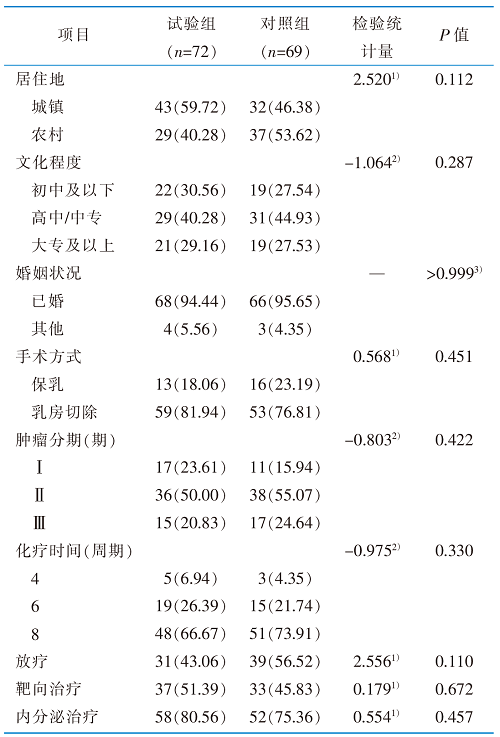 |
Table 1 Comparison of general information between the 2 groups [case(percentage,%)]
|
 |
Table 2 Evaluation scores of patients and nurses on the usability of the intelligent management platform(scores,$\bar{x}±s$)
| |
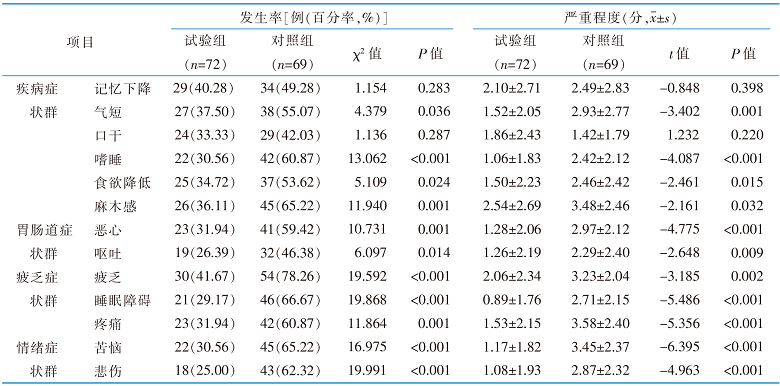 |
Table 3 Comparison of symptom incidence and severity between the 2 groups after intervention
| |
| [1] | Zhao Y, Liang Y, Pang M, et al. Influence of continuous nursing model based on network on the postoperative mental status and quality of life of breast cancer patients[J]. Eur J Gynaecol Oncol, 2024, 45(6):95-101. |
| [2] |
Hong CG, Wang LP, Wang SJ, et al. Multi-stage optimization strategy based on contextual analysis to create M-health components for case management model in breast cancer transitional care:the CMBM study as an example[J]. BMC Nurs, 2024, 23(1):385.
DOI |
| [3] | 胡明玥, 翟雨辰, 邹东霖, 等. 移动医疗应用程序在乳腺癌病人自我管理中的研究进展[J]. 全科护理, 2026, 24(2):256-259. |
| Hu MY, Zhai YC, Zou DL, et al. Research progress of mobile medical application in self-management of breast cancer patients[J]. Chin Gen Pract Nurs, 2026, 24(2):256-259. | |
| [4] | 李帆, 陶春花, 方利, 等. 移动互联网技术在乳腺癌病人延续护理中的应用进展[J]. 护理研究, 2019, 33(5):806-810. |
| Li F, Tao CH, Fang L, et al. Application progress on mobile Internet technology in continuity care of breast cancer patients[J]. Chin Nurs Res, 2019, 33(5):806-810. | |
| [5] | 国家卫生健康委员会. 关于印发《全国护理事业发展规划(2021—2025年)》的通知[EB/OL]. (2022-04-29)[2024-05-04]. https://www.gov.cn/zhengce/zhengceku/2022-05/09/content_568-9354.htm. |
| National Health Commission. Issuance of the “National Nursing Development Plan(2021-2025)”[EB/OL]. (2022-04-29)[2025-09-04]. https://www.gov.cn/zhengce/zhengceku/2022-05/09/content_5689354.htm. | |
| [6] | 郭辉, 沙丽艳, 蒲丛珊, 等. “互联网+”应用于术后患者延续性护理的研究进展[J]. 中国护理管理, 2019, 19(7):1045-1049. |
| Guo H, Sha LY, Pu CS, et al. Application of ‘Internet+’ to continuous nursing of patients after surgery:a literature review[J]. Chin Nurs Manag, 2019, 19(7):1045-1049. | |
| [7] |
中国抗癌协会乳腺癌专业委员会, 中华医学会肿瘤学分会乳腺肿瘤学组. 中国抗癌协会乳腺癌诊治指南与规范(2024年版)[J]. 中国癌症杂志, 2023, 33(12):1092-1186.
DOI |
| Chinese Anti-Cancer Association Breast Cancer Professional Committee, Breast Tumor Oncology Group of the Chinese Medical Association Tumor Oncology Branch. Guidelines for breast cancer diagnosis and treatment by China Anti-cancer Association(2024 edition)[J]. China Oncol, 2023, 33(12):1092-1186. | |
| [8] | 邹杨, 童冬彤, 杨文娟, 等. 乳腺癌患者健康信息需求研究的范围综述[J]. 中华护理教育, 2024, 21(5):627-633. |
| Zou Y, Tong DT, Yang WJ, et al. A scoping review of research on the health information needs of breast cancer patients[J]. Chin J Nurs Educ, 2024, 21(5):627-633. | |
| [9] | 夏侯欣琴, 卜秀梅, 孔令琼, 等. 乳腺癌幸存者未满足需求的研究进展[J]. 中国临床护理, 2024, 16(10):651-655. |
|
Xia HXQ, Bu XM, Kong LQ, et al. Research progress on unmet needs of breast cancer survivors[J]. Chin Clin Nurs, 2024, 16(10):651-655.
DOI |
|
| [10] | 徐玉美, 顾月, 陈方园, 等. 基于接纳与承诺疗法的延续性护理在乳腺癌术后化疗患者中的应用效果[J]. 中国民康医学, 2024, 36(20):173-175,179. |
| Xu YM, Gu Y, Chen FY, et al. Application effects of continuous nursing based on acceptance and commitment therapy in postoperative chemotherapy patients with breast cancer[J]. Med J Chin People’s Health, 2024, 36(20):173-175,179. | |
| [11] | 耿朝辉. 基于乳腺癌患者化疗期体力活动规律的移动医疗干预研究[D]. 上海: 中国人民解放军海军军医大学, 2018. |
| Geng ZH. Study on mobile health intervention based on pattern of physical activity of breast cancer patients during chemotherapy[D]. Shanghai: Naval Medical University, 2018. | |
| [12] | 莫兰, 朱晓丹, 毛雷音, 等. 基于Benner理论专科护士等级测评管理系统的构建与应用[J]. 护理学杂志, 2023, 38(12):102-105. |
| Mo L, Zhu XD, Mao LY, et al. Design and implementation of specialized nurse grading management system based on Benner’s Novice to Expert Model[J]. J Nurs Sci, 2023, 38(12):102-105. | |
| [13] |
Wang XS, Wang Y, Guo H, et al. Chinese version of the M. D. Anderson Symptom Inventory:validation and application of symptom measurement in cancer patients[J]. Cancer, 2004, 101(8):1890-1901.
DOI URL |
| [14] |
铁万琴, 张曦, 王永琦, 等. 乳腺癌患者化疗前后症状特征的潜在转变分析及护理对策[J]. 中华护理杂志, 2025, 60(2):193-200.
DOI |
|
Tie WQ, Zhang X, Wang YQ, et al. Analysis of potential changes in symptom characteristics of breast cancer patients before and after chemotherapy and nursing countermeasures[J]. Chin J Nurs, 2025, 60(2):193-200.
DOI |
|
| [15] |
Wang HH, Laffrey SC. Preliminary development and testing of instruments to measure self-care agency and social support of women in Taiwan[J]. Kaohsiung J Med Sci, 2000, 16(9):459-467.
PMID |
| [16] | 李帆, 黄莹, 李元群, 等. 耳鼻咽喉头颈外科多模式健康管理平台的构建及应用[J]. 护理研究, 2021, 35(20):3721-3724. |
| Li F, Huang Y, Li YQ, et al. Construction and application of a multi mode health management platform for otolaryngology head and neck surgery[J]. Chin Nurs Res, 2021, 35(20):3721-3724. | |
| [17] |
潘宸, 杨林宁, 杨艳. 乳腺癌患者健康信息需求的研究进展[J]. 中华护理杂志, 2022, 57(20):2547-2554.
DOI |
|
Pan C, Yang LN, Yang Y. Research progress on health information needs of breast cancer patients[J]. Chin J Nurs, 2022, 57(20):2547-2554.
DOI |
|
| [18] | 李帆, 黄莹, 袁伟, 等. 延续护理信息平台对乳腺癌化疗患者自我管理能力和生存质量的影响研究[J]. 解放军护理杂志, 2022, 39(4):22-25,84. |
| Li F, Huang Y, Yuan W, et al. Effect of continuous care platform on self-management ability and quality of life of breast cancer patients undergoing chemotherapy[J]. Nurs J Chin PLA, 2022, 39(4):22-25,84. | |
| [19] |
吴国凤, 李芯睿, 钟美容, 等. 基于云平台的延续护理对乳腺癌患者阈下抑郁影响的研究[J]. 中华护理杂志, 2024, 59(2):142-148.
DOI |
|
Wu GF, Li XR, Zhong MR, et al. The effect of a mobile health intervention model based on self-determination theory on subthreshold depression in breast cancer patients[J]. Chin J Nurs, 2024, 59(2):142-148.
DOI |
|
| [20] | 何丽, 胡露红, 王倩云, 等. 乳腺癌化疗患者症状负担现状及影响因素分析[J]. 当代护士(中旬刊), 2025, 32(8):126-133. |
| He L, Hu LH, Wang QY, et al. Analysis of the status quo and influencing factors of symptom burden of breast cancer patients undergoing chemotherapy[J]. Mod Nurse, 2025, 32(8):126-133. |
| [1] | ZHANG Shiyang, LIU Qiaoyu, LIN Xiaoling, AI Xingxing, CHEN Ciduan, HUANG Jiewei. Application progress of the symptom science model in symptom management of patients with type 2 diabetes mellitus [J]. Chinese Journal of Nursing, 2026, 61(9): 1284-1290. |
| [2] | SHI Jinrui, ZHAN Tingting, HAO Wenjie, TU Wenjie, ZHU Yihang, ZHANG Xingxing. Symptom network analysis of patients with Wilson’s disease and its nursing implications [J]. Chinese Journal of Nursing, 2026, 61(7): 956-963. |
| [3] | JING Feng, JIANG Lingyun, CAO Yuling, TIAN Maoting, QIU Jiajia, TANG Lichen, HU Yan. Development and preliminary validation of a risk prediction model for musculoskeletal symptoms among breast cancer patients with endocrine therapy [J]. Chinese Journal of Nursing, 2026, 61(4): 498-505. |
| [4] | KONG Juan, LIU Xueyan, YUAN Xiaodong, CAO Yingjuan. A study on the symptom management journey map of adult patients with generalized myasthenia gravis [J]. Chinese Journal of Nursing, 2026, 61(4): 513-520. |
| [5] | LIU Huan, LI Miaomiao, WANG Ying, LIU Xiaofeng, LI Shiyun, WEI Tingting, TIAN Weishuang, QIANG Wanmin, LI Xia. Construction and usability evaluation of an intelligent question-answering system for breast cancer patients’ health information [J]. Chinese Journal of Nursing, 2026, 61(12): 1674-1680. |
| [6] | LIU Jing-hui, LIU Fangli, LI Siyuan, XU Wenqi, ZHANG Luwen, TIAN Qingmi, DU Libaihe, ZHANG Mingyang. Symptom network analysis and nursing implications in patients with polycystic ovary syndrome [J]. Chinese Journal of Nursing, 2026, 61(11): 1512-1519. |
| [7] | YANG Wenwen, WANG Jiayu, LI Sufang, DU Yifei, ZHAO Rui, CHEN Mengran, LI Yuanyuan, XU Xiaoxia. Dynamic evolution of symptom networks in head and neck cancer patients undergoing chemoradiotherapy and nursing implications [J]. Chinese Journal of Nursing, 2026, 61(10): 1371-1378. |
| [8] | PENG Yuan, YANG Zhengwei, HE Chuan, CHEN Yuqin. Effectiveness of lower limb compression therapy in preventing chemotherapy-induced peripheral neuropathy in breast cancer patients [J]. Chinese Journal of Nursing, 2026, 61(1): 78-84. |
| [9] | TANG Ruijin, HAN Jing, LI Xiaoxu, WANG Dan. A qualitative study on family fusion experience of breast cancer patients and inspiration for nursing care [J]. Chinese Journal of Nursing, 2025, 60(8): 940-946. |
| [10] | LEI Dan, BIAN Wei, WANG Zonghua, SU Jun, WAN Junli, WANG Lu. Construction and application of precision symptom management based on Internet plus in patients with corneal ulcer [J]. Chinese Journal of Nursing, 2025, 60(6): 688-695. |
| [11] | Writing Committee:WANG Yingxin, LIU Fei, WU Peipei, ZHANG Lijuan, YANG Funa, YE Li. Expert consensus on home exercise for prevention and rehabilitation of breast cancer related lymphedema/Cancer Rehabilitation Integrated Nursing Committee of Chinese Anti-Cancer Association [J]. Chinese Journal of Nursing, 2025, 60(5): 558-560. |
| [12] | TIE Wanqin, ZHANG Xi, WANG Yongqi, XU Yang, CHEN Xuefeng, PAN Lu, CHEN Siyu. Analysis of potential changes in symptom characteristics of breast cancer patients before and after chemotherapy and nursing countermeasures [J]. Chinese Journal of Nursing, 2025, 60(2): 193-200. |
| [13] | ZHAO Xin, WU Yu, ZHU Hui, LI Zuhong, ZHU Lina, WANG Yueqi, FENG Qianqian, LI Hui. Construction and application research of a discharge preparation plan for patients with head and neck cancer undergoing tracheotomy [J]. Chinese Journal of Nursing, 2025, 60(15): 1829-1836. |
| [14] | SUN Chengxin, WANG Yuying, YANG Qinghong, XUE Fan, LIN Ke. Dynamic network analysis of postoperative core symptoms in hepatocellular carcinoma patients and nursing insights [J]. Chinese Journal of Nursing, 2025, 60(15): 1857-1863. |
| [15] | WEN Jiaqi, HU Zhenjing, LIU Yu, ZHANG Liting, ZHONG Chenchen, TIAN Yicheng. Development and reliability and validity test of a Self-Report Scale of Symptoms for Post Intensive Care Syndrome-Family [J]. Chinese Journal of Nursing, 2025, 60(14): 1723-1729. |
| Viewed | ||||||
|
Full text |
|
|||||
|
Abstract |
|
|||||
