

中华护理杂志 ›› 2026, Vol. 61 ›› Issue (3): 368-376.DOI: 10.3761/j.issn.0254-1769.2026.03.011
田凤美1( ), 李惠玲1,*(), 安清1, 王金悦2, 谭丽萍2, 赵丽爽2
收稿日期:2025-09-24
出版日期:2026-02-10
发布日期:2026-02-03
*通讯作者:
李惠玲,E-mail:lhl8543@126.com作者简介:田凤美:女,硕士(博士在读),副主任护师,E-mail:tfm0102@sina.com
基金资助:
TIAN Fengmei1(), LI Huiling1,*(), AN Qing1, WANG Jinyue2, TAN Liping2, ZHAO Lishuang2
Received:2025-09-24
Online:2026-02-10
Published:2026-02-03
* Corresponding author:
LI Huiling,E-mail:lhl8543@126.comFunding program:摘要:
目的 探讨中晚期结直肠癌患者在接受抗肿瘤药物治疗期间症状负担的异质性及其影响因素,为优化临床症状管理方案提供参考。方法 采用便利抽样法,选取2024年5—9月苏州市某三级甲等医院肿瘤科收治的225例中晚期结直肠癌患者作为调查对象,使用一般资料调查表、一般自我效能感量表、希望水平量表和中文版记忆症状评估量表对其进行调查。通过潜在剖面分析探究中晚期结直肠癌患者症状负担的异质性,并采用无序多分类Logistic回归和决策树分析其影响因素。结果 回收有效问卷216份,有效问卷回收率为96.00%。患者的症状负担得分为0.54(0.27,0.79)分,分为低症状负担组(43.98%)、高神经-皮肤症状负担组(25.93%)、高症状负担组(30.09%)3个潜在剖面。无序多分类Logistic回归分析结果显示,性别、有无造口、是否接受免疫治疗、靶向药物种类是中晚期结直肠癌患者症状负担异质性的影响因素;决策树分析结果显示,是否接受免疫治疗、靶向药物种类、BMI分级和性别是其影响因素。结论 中晚期结直肠癌患者在接受抗肿瘤药物治疗期间的症状负担存在明显异质性,医护人员应根据相关影响因素,早期识别症状负担较重的患者,制订并实施精准的症状管理方案,以提升患者的生活质量。
田凤美, 李惠玲, 安清, 王金悦, 谭丽萍, 赵丽爽. 中晚期结直肠癌患者症状负担的潜在剖面及影响因素研究[J]. 中华护理杂志, 2026, 61(3): 368-376.
TIAN Fengmei, LI Huiling, AN Qing, WANG Jinyue, TAN Liping, ZHAO Lishuang. Latent profile analysis and influencing factors of symptom burden in patients with mid to late-stage colorectal cancer[J]. Chinese Journal of Nursing, 2026, 61(3): 368-376.
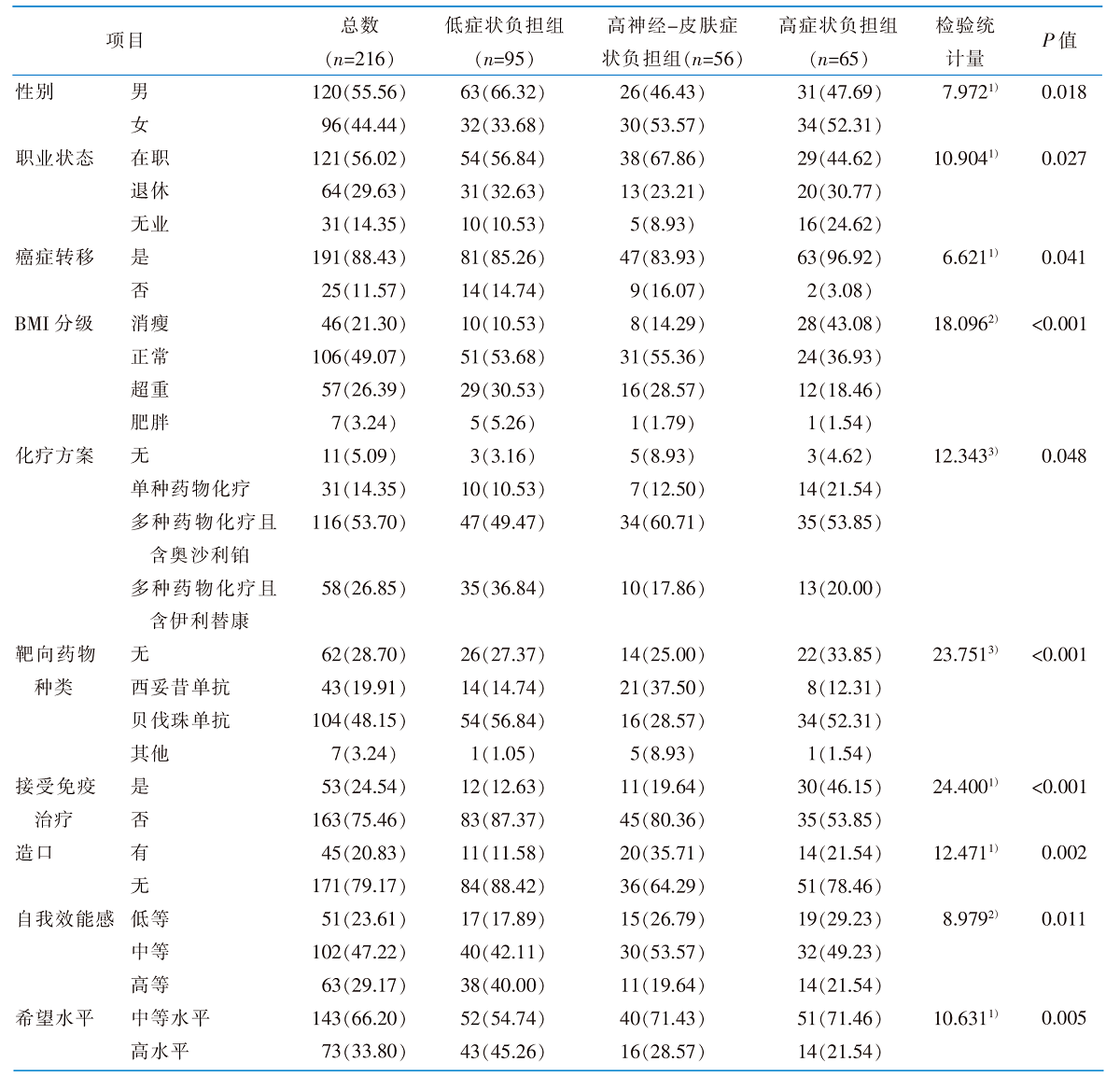 |
表1 中晚期结直肠癌患者的一般资料及症状负担潜在剖面的单因素分析结果[例(百分比,%)]
Table 1 Univariate analysis results of general data and symptom burden latent profiles in patients with mid to late-stage colorectal cancer[cases(percentage,%)]
| |
 |
表2 中晚期结直肠癌患者症状负担潜在剖面模型的拟合结果(n=216)
Table 2 Potential profile model of symptom burden in patients with mid to late-stage colorectal cancer(n=216)
| |
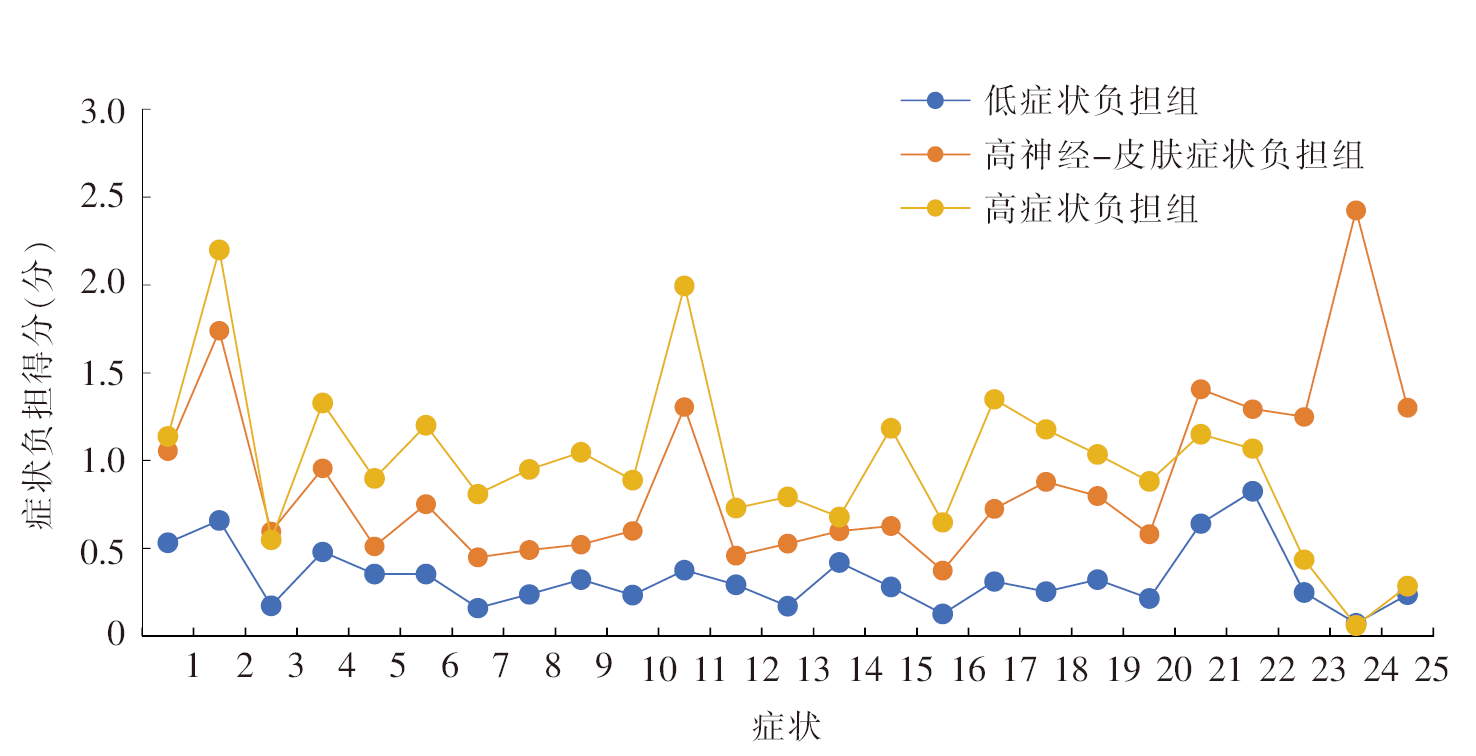
图1 中晚期结直肠癌患者症状负担潜在剖面的特征分布 注:1为疼痛,2为乏力,3为咳嗽,4为口干,5为昏昏欲睡,6为性功能障碍,7为眩晕,8为体重下降,9为脱发,10为恶心,11为没有食欲,12为腹胀,13为腹泻,14为便秘,15为出汗,16为注意力分散,17为焦虑不安,18为悲伤,19为急躁易怒,20为精神紧张,21为难以入睡,22为手脚麻木,23为皮肤改变,24为皮肤干燥,25为皮肤瘙痒。
Figure 1 Characteristic distribution of potential profile of symptom burden in patients with mid to late-stage colorectal cancer
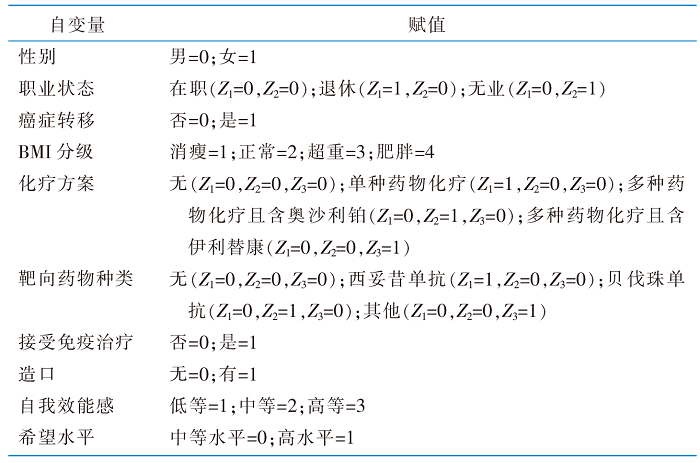 |
表3 自变量赋值方式
Table 3 Assignment methods for independent variables
| |
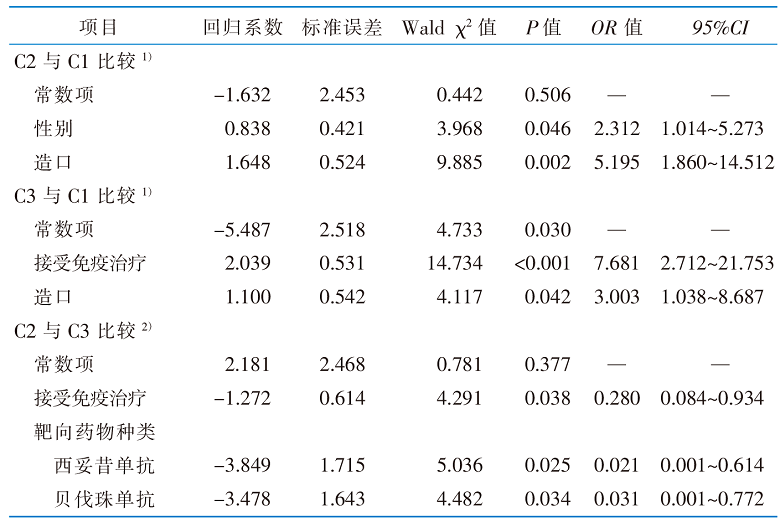 |
表4 中晚期结直肠癌患者症状负担潜在剖面影响因素的无序多分类Logistic回归分析结果(n=216)
Table 4 Logistic regression analysis of potential profile influencing factors on symptom burden in patients with mid to late-stage colorectal cancer(n=216)
| |
| [1] | Bray F, Laversanne M, Sung H, et al. Global cancer statistics 2022:GLOBOCAN estimates of incidence and mortality world-wide for 36 cancers in 185 countries[J]. CA Cancer J Clin, 2024, 74(3):229-263. |
| [2] |
Shen L, Li Q, Wang W, et al. Treatment patterns and direct medical costs of metastatic colorectal cancer patients:a retros-pective study of electronic medical records from urban China[J]. J Med Econ, 2020, 23(5):456-463.
DOI PMID |
| [3] | 丁中航, 王晓辉, 顾晓芬, 等. 中晚期结直肠癌患者生活质量及健康相关影响因素分析[J]. 中华肿瘤防治杂志, 2024, 31(19):1209-1215. |
| Ding ZH, Wang XH, Gu XF, et al. Analysis of quality of life and health-related factors in patients with advanced colorectal cancer[J]. Chin J Cancer Prev Treat, 2024, 31(19):1209-1215. | |
| [4] | 段双霞, 王婉愉, 曹河璐, 等. 中晚期结直肠癌患者健康相关生活质量影响因素分析[J]. 临床心身疾病杂志, 2023, 29(4):103-108. |
| Duan SX, Wang WY, Cao HL, et al. Influencing factors of health-related quality of life in patients with intermediate and late colorectal cancer[J]. J Clin Psychosom Dis, 2023, 29(4):103-108. | |
| [5] | Armstrong TS. Symptoms experience:a concept analysis[J]. On-col Nurs Forum, 2003, 30(4):601-606. |
| [6] | 李苗, 李红梅, 张俊, 等. 中青年乳腺癌术后患者积极度及影响因素分析[J]. 护理学杂志, 2024, 39(1):52-55. |
| Li M, Li HM, Zhang J, et al. Determinants of patient activation in young and middle-aged breast cancer survivors after surgery[J]. J Nurs Sci, 2024, 39(1):52-55. | |
| [7] | 李晓爽, 姜华, 徐晓芳, 等. 希望特质与头颈癌患者症状体验的相关性研究[J]. 解放军护理杂志, 2020, 37(11):13-16,66. |
| Li XS, Jiang H, Xu XF, et al. Correlation between hope trait and symptom experience in patients with head and neck cancer[J]. Nurs J Chin PLA, 2020, 37(11):13-16,66. | |
| [8] |
Weiser MR. AJCC 8th edition:colorectal cancer[J]. Ann Surg Oncol, 2018, 25(6):1454-1455.
DOI |
| [9] | 倪平, 陈京立, 刘娜. 护理研究中量性研究的样本量估计[J]. 中华护理杂志, 2010, 45(4):378-380. |
| Ni P, Chen JL, Liu N. The sample size estimation in quanti-tative nursing research[J]. Chin J Nurs, 2010, 45(4):378-380. | |
| [10] | Schwarzer R, Bäβler J, Kwiatek P, et al. The assessment of optimistic self-beliefs:comparison of the German,Spanish,and Chinese versions of the General Self-Efficacy Scale[J]. Appl Psychol, 1997, 46(1):69-88. |
| [11] | 王才康, 胡中锋, 刘勇. 一般自我效能感量表的信度和效度研究[J]. 应用心理学, 2001, 7(1):37-40. |
| Wang CK, Hu ZF, Liu Y. Evidences for reliability and validity of the Chinese version of General Self-Efficacy Scale[J]. Chin J Appl Psychol, 2001, 7(1):37-40. | |
| [12] |
Herth K. Abbreviated instrument to measure hope:develop-ment and psychometric evaluation[J]. J Adv Nurs, 1992, 17(10):1251-1259.
DOI PMID |
| [13] | 赵海平, 王健. 血液透析患者的社会支持和希望[J]. 中华护理杂志, 2000, 35(5):306-308. |
| Zhao HP, Wang J. Social support and hope of hemodialysis patients[J]. Chin J Nurs, 2000, 35(5):306-308. | |
| [14] | 王艳华. 中文版Herth希望量表用于癌症病人的可行性研究[J]. 护理研究, 2010, 24(1):20-21. |
| Wang YH. Study on feasibility of Chinese version of Herth Hope Index for cancer patients[J]. Chin Nurs Res, 2010, 24(1):20-21. | |
| [15] | Desbiens NA, Mueller-Rizner N, Connors AF, et al. The sym-ptom burden of seriously ill hospitalized patients[J]. J Pain Sym-ptom Manag, 1999, 17(4):248-255. |
| [16] |
Cheng KKF, Wong EMC, Ling WM, et al. Measuring the symp-tom experience of Chinese cancer patients:a validation of the Chinese version of the Memorial Symptom Assessment Scale[J]. J Pain Symptom Manage, 2009, 37(1):44-57.
DOI URL |
| [17] |
Portenoy RK, Thaler HT, Kornblith AB, et al. The Memorial Symptom Assessment Scale:an instrument for the evaluation of symptom prevalence,characteristics and distress[J]. Eur J Cancer, 1994, 30(9):1326-1336.
DOI URL |
| [18] | 杜若飞, 陈长英, 周会月, 等. 癌症病人靶向治疗致皮肤不良反应的研究进展[J]. 护理研究, 2021, 35(9):1610-1615. |
| Du RF, Chen CY, Zhou HY, et al. Research progress on skin adverse events induced by targeted therapy in cancer patients[J]. Chin Nurs Res, 2021, 35(9):1610-1615. | |
| [19] | 刘慧, 丁彩艳, 孙志琴, 等. 结直肠癌生存扩展期患者未满足健康需求调查分析[J]. 护理学杂志, 2023, 38(9):18-21. |
| Liu H, Ding CY, Sun ZQ, et al. Unmet needs of colorectal cancer patients during extended survivorship[J]. J Nurs Sci, 2023, 38(9):18-21. | |
| [20] |
叶艳欣, 秦岚, 骆佳慧, 等. 肺癌患者化疗相关症状群的发生现状及影响因素分析[J]. 中华护理杂志, 2023, 58(18):2230-2238.
DOI URL |
|
Ye YX, Qin L, Luo JH, et al. Study on status and influencing factors of chemotherapy related symptom cluster among lung cancer patients[J]. Chin J Nurs, 2023, 58(18):2230-2238.
DOI URL |
|
| [21] | 徐悦洋, 卫莉, 杨长永. 癌症患者自我感受负担现状的研究进展[J]. 中国实用护理杂志, 2018, 34(13):1032-1035. |
| Xu YY, Wei L, Yang CY. Research on the status of self-perceived burden of cancer patients[J]. Chin J Pract Nurs, 2018, 34(13):1032-1035. | |
| [22] |
Dirksen SR, Belyea MJ, Wong W, et al. Transitions in symp-tom cluster subgroups among men undergoing prostate cancer radiation therapy[J]. Cancer Nurs, 2016, 39(1):3-11.
DOI URL |
| [23] |
陈晓薇, 江一越, 张颖, 等. 医用臭氧油防治索拉非尼所致手足皮肤反应:91例随机对照临床试验[J]. 南方医科大学学报, 2020, 40(10):1488-1492.
DOI |
| Chen XW, Jiang YY, Zhang Y, et al. Effect of ozone oil for prevention and treatment of sorafenib-induced hand-foot skin reactions:a randomized controlled trial[J]. J South Med Univ, 2020, 40(10):1488-1492. | |
| [24] |
Lee OH, Park YM, Ko SH, et al. Synergistic association between underweight and type 2 diabetes on the development of laryngeal cancer:a national population-based retrospective co-hort study[J]. BMC Cancer, 2022, 22(1):345.
DOI |
| [25] |
Rzepecki AK, Cheng HY, McLellan BN. Cutaneous toxicity as a predictive biomarker for clinical outcome in patients recei-ving anticancer therapy[J]. J Am Acad Dermatol, 2018, 79(3):545-555.
DOI URL |
| [26] |
Gumusay O, Callan J, Rugo HS. Immunotherapy toxicity:identi-fication and management[J]. Breast Cancer Res Treat, 2022, 192(1):1-17.
DOI |
| [27] | 魏才杰, 屠文英, 李云霞, 等. 转移性结直肠癌靶向治疗和免疫治疗的研究进展[J]. 中国肿瘤临床, 2025, 52(8):420-426. |
| Wei CJ, Tu WY, Li YX, et al. Research progress in targeted therapy and immunotherapy of metastatic colorectal cancer[J]. Chin J Clin Oncol, 2025, 52(8):420-426. | |
| [28] | 杨洁, 黄定凤, 冯丽娟, 等. 中晚期低位直肠癌造口患者自我厌恶现状及影响因素分析[J]. 护理学杂志, 2024, 39(17):40-44. |
| Yang J, Huang DF, Feng LJ, et al. Level and factors asso-ciated with self-disgust in clinical stage Ⅱ or Ⅲ low-rectal cancer patients with a stoma[J]. J Nurs Sci, 2024, 39(17):40-44. |
| [1] | 中华护理学会静脉输液治疗专业委员会, 北京护理学会, (执笔:李佳, 李旭英, 覃惠英, 陈利芬, 吴珍明, 胡泽吟, 罗梦娜, 范育英, 吴嘉慧, 林宇萍, 王蕾, 孙文彦, 冯毕龙, 高伟, 李亚南, 侯罗娅, 李春燕. 中心静脉通路装置拔除护理专家共识[J]. 中华护理杂志, 2026, 61(9): 1157-1162. |
| [2] | 周霞, 马艳艳, 师正坤, 于海霞, 周艳, 胡红玲, 李莜, 陈思思, 张京慧. 隧道式经股静脉PICC置入术在困难静脉通路婴幼儿中的应用研究[J]. 中华护理杂志, 2026, 61(9): 1163-1170. |
| [3] | 黄萍, 李黎, 郭骊莉, 徐莹, 叶赟, 江淑芳. 与无针输液接头相关的导管相关性血流感染风险评估工具的构建与初步应用[J]. 中华护理杂志, 2026, 61(9): 1171-1179. |
| [4] | 李佳, 张玉玲, 邢乐, 张利峰, 牛秀峰, 许莉. 早产儿经上肢置入PICC尖端继发性异位风险预测模型的建立与验证[J]. 中华护理杂志, 2026, 61(9): 1180-1186. |
| [5] | 何娟, 赵蕾蕾, 叶冠军, 余艳芬, 傅晓君, 周琴. 1例双侧无名静脉及上腔静脉人工血管置换术后患者经上肢置入PICC的护理[J]. 中华护理杂志, 2026, 61(9): 1187-1191. |
| [6] | 梁江淑渊, 曾妃, 何鹏, 谢梦珊, 江悦, 蒋宗恒, 王建茗. 静脉-静脉体外膜肺氧合患者早期活动风险等级评估系统的构建及应用研究[J]. 中华护理杂志, 2026, 61(9): 1192-1199. |
| [7] | 陈晨, 顾肖, 郭凡, 王敏, 倪兴梅, 黄琴, 程念开. 3种衰弱评估工具对急诊老年创伤患者不良结局的预测价值[J]. 中华护理杂志, 2026, 61(9): 1200-1207. |
| [8] | 郑煜琳, 刘晋宁, 张静, 郭会敏, 谷艳梅, 张莉莉. 酒精性肝病患者肝移植术后再饮酒现状及其影响因素分析[J]. 中华护理杂志, 2026, 61(9): 1208-1214. |
| [9] | 叶俊霜, 沈丽佳, 孟霞靓, 张玉姣, 蔡根莲, 邵碧云, 周亚辉, 张柳倩, 应金萍. 维持性血液透析患者对口腔衰弱认知和体验的质性研究[J]. 中华护理杂志, 2026, 61(9): 1215-1220. |
| [10] | 王芸姣, 杨玉金, 郑春艳, 彭菲津, 王淑贞, 蒋喜露, 周为民, 王薇, 张娜. 糖尿病下肢动脉硬化闭塞症患者介入术后康复护理方案的构建及应用研究[J]. 中华护理杂志, 2026, 61(9): 1221-1229. |
| [11] | 杨明霞, 安冉, 臧金凤, 李春梅. 老年慢性病共病患者及照护者老老照护能力与自我忽视的相关性分析[J]. 中华护理杂志, 2026, 61(9): 1230-1236. |
| [12] | 梁和静, 许鹊, 史云霞, 祖金美, 黄文静, 杨春旭, 郭明华, 王磊. 颈动脉内膜剥脱术围手术期护理质量评价指标的构建[J]. 中华护理杂志, 2026, 61(9): 1237-1244. |
| [13] | 韩媛媛, 石玉竹, 尚文涵, 么莉. 870所三级甲等医院老年住院患者跌倒伤害发生现状与影响因素分析[J]. 中华护理杂志, 2026, 61(9): 1245-1252. |
| [14] | 夏云芳, 王洪, 崔岱, 付真真, 朱敏. 1例弥漫性毒性甲状腺肿合并超敏反应综合征青少年患者的护理[J]. 中华护理杂志, 2026, 61(9): 1253-1256. |
| [15] | 周益飞, 王海苹, 胡益环, 应莉, 罗松娜. 1例氢氟酸中毒并发呼吸心搏骤停患者的急救护理[J]. 中华护理杂志, 2026, 61(9): 1257-1260. |
| 阅读次数 | ||||||
|
全文 |
|
|||||
|
摘要 |
|
|||||
