

中华护理杂志 ›› 2026, Vol. 61 ›› Issue (21): 2915-2922.DOI: 10.3761/j.issn.0254-1769.2026.21.005
杜娟1( ), 毛文娟1, 祝红梅2, 江明珠1, 郭俊艳2,*()
收稿日期:2026-03-03
出版日期:2026-11-10
发布日期:2026-11-13
*通讯作者:
郭俊艳,E-mail:guojunyan@pkuih.edu.cn作者简介:杜娟:女,本科,主管护师,E-mail:dujuan@pkuih.edu.cn杜娟:研究方案设计与实施、论文撰写;毛文娟:研究方案审阅与指导;祝红梅:研究方案实施与质量把控、论文修改;江明珠:文献检索、数据收集与整理;郭俊艳:选题构思、研究方案设计、论文审阅与指导、基金支持
基金资助:
DU Juan1(), MAO Wenjuan1, ZHU Hongmei2, JIANG Mingzhu1, GUO Junyan2,*()
Received:2026-03-03
Online:2026-11-10
Published:2026-11-13
* Corresponding author:
GUO Junyan,E-mail:guojunyan@pkuih.edu.cnFunding program:摘要:
目的 构建适配全院床位共享模式的护理绩效分配方案,并评价其应用效果,为推进全院床位共享模式的实施提供参考。方法 依据以资源为基础的相对价值量表,以工作量为核心,构建护理绩效分配方案,实行院、科两级核算管理,其中院级护理绩效分配方案包括工作量、成本控制、综合评价3个部分。采用回顾性前后对照研究,在北京市某三级综合医院应用该方案,比较方案应用后(2024年5—12月)与应用前(2023年5—12月)的全院床位运营指标、护理质量及安全指标、患者及护士满意度。结果 方案应用后,住院患者平均住院日少于方案应用前,床位周转率高于方案应用前,差异均具有统计学意义(P<0.001)。方案应用后护理质量、护理不良事件的发生情况与方案应用前比较,差异无统计学意义(P>0.05)。方案应用后患者的总体满意度高于方案应用前,差异具有统计学意义(P<0.001)。方案应用前后护士满意度比较,差异无统计学意义(P>0.05)。结论 应用该护理绩效分配方案有助于改善全院床位运营指标、保障护理质量及安全、提升患者满意度,推进全院床位共享模式的实施。
杜娟, 毛文娟, 祝红梅, 江明珠, 郭俊艳. 全院床位共享模式下护理绩效分配方案的构建及应用研究[J]. 中华护理杂志, 2026, 61(21): 2915-2922.
DU Juan, MAO Wenjuan, ZHU Hongmei, JIANG Mingzhu, GUO Junyan. Application research on a nursing performance allocation scheme under the hospital-wide bed sharing model[J]. Chinese Journal of Nursing, 2026, 61(21): 2915-2922.
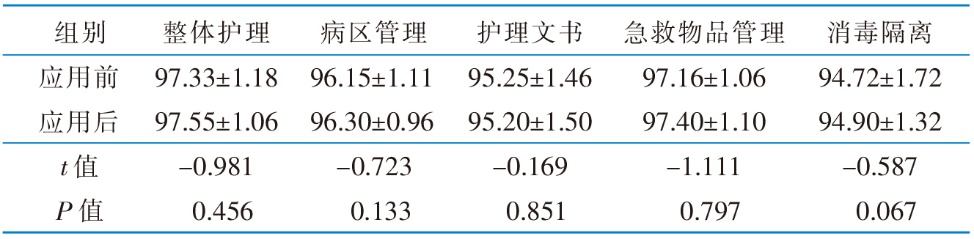 |
表1 方案应用前后护理质量比较(分,$\stackrel{-}{\mathit{x}}\pm \mathit{s}$)
Table 1 Comparison of nursing quality indicators before and after the implementation of the performance scheme(score,$\stackrel{-}{\mathit{x}}\pm \mathit{s}$)
| |
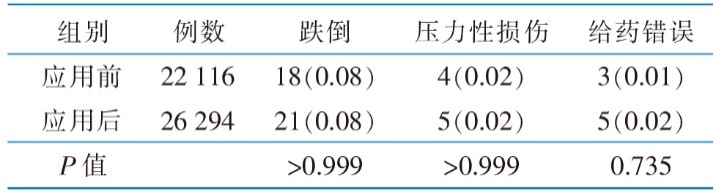 |
表2 方案应用前后护理不良事件发生情况比较[例(百分比,%)]
Table 2 Comparison of the occurrence of adverse nursing events before and after the application of the scheme[cases(percentage,%)]
| |
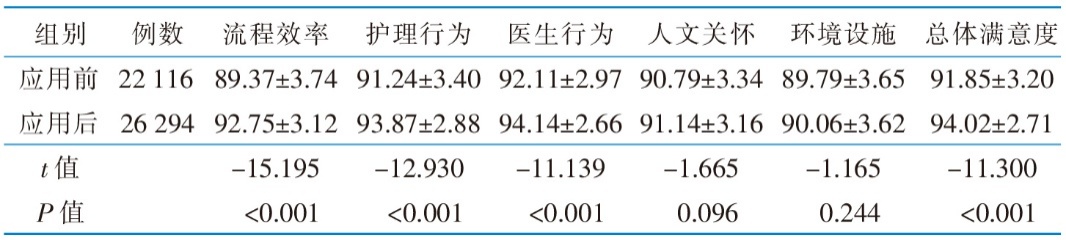 |
表3 方案应用前后患者满意度比较(分,$\stackrel{-}{\mathit{x}}\pm \mathit{s}$)
Table 3 Comparison of nurses' satisfaction before and after the application of the program(score,$\stackrel{-}{\mathit{x}}\pm \mathit{s}$)
| |
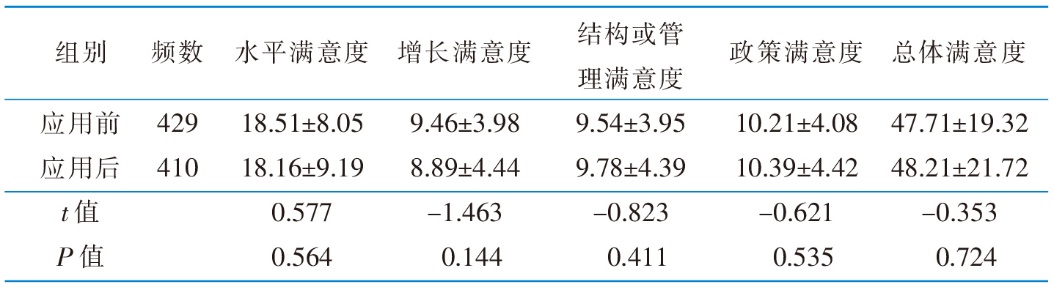 |
表4 方案应用前后护士满意度比较(分,$\stackrel{-}{\mathit{x}}\pm \mathit{s}$)
Table 4 Comparison of nurses' satisfaction before and after the application of the program(score,$\stackrel{-}{\mathit{x}}\pm \mathit{s}$)
| |
| [1] | 国家卫生健康委, 国家中医药局. 关于开展改善就医感受、提升患者体验主题活动的通知[EB/OL]. (2023-05-23)[2025-09-12]. https://www.gov.cn/zhengce/zhengceku/202305/content_6883385.htm. |
| National Health Commission of the People's Republic of China, National Administration of Traditional Chinese Medicine. Notice on carrying out the theme activity of improving medical treatment experience and enhancing patient experience[EB/OL]. (2023-05-23)[2025-09-12]. https://www.gov.cn/zhengce/zhengceku/202305/content_6883385.htm. | |
| [2] | 陈力苗. 基于“全院一张床”的公立医院绩效管理模式研究[J]. 经济研究导刊, 2024(7):135-138. |
| Chen LM. Research on performance management model of public hospitals based on “one bed in the whole hospital”[J]. Econ Res Guide, 2024(7):135-138. | |
| [3] | 吴一女, 冯洁惠, 殷钰, 等. 全院床位集中管理模式下临床护士在职培训管理体系的构建与实践[J]. 中华护理教育, 2026, 23(2):208-214. |
| Wu YN, Feng JH, Yin Y, et al. Construction and practice of an on-the-job training management system for clinical nurses under the “hospital-wide bed-sharing” mode[J]. Chin J Nurs Educ, 2026, 23(2):208-214. | |
| [4] |
冯洁惠, 殷钰, 吴一女, 等. 专科护士主导的跨学科协作照护模式的构建与实践研究[J]. 中华护理杂志, 2025, 60(23):2821-2828.
DOI |
|
Feng JH, Yin Y, Wu YN, et al. Development and implementation of an interdisciplinary collaborative care model led by specialty nurses[J]. Chin J Nurs, 2025, 60(23):2821-2828.
DOI |
|
| [5] | 文锋华, 毛金娥, 艾华. 病房分类、分级在护士绩效分配中的应用[J]. 中华现代护理杂志, 2014, 20(20):2461-2462. |
| Wen FH, Mao JE, Ai H. Application of ward classification and grading in nurse performance distribution[J]. Chin J Mod Nurs, 2014, 20(20):2461-2462. | |
| [6] | 张欢, 彭睿, 谢铄, 等. 全院床位调配下跨科护理实施影响因素的质性研究[J]. 护理学杂志, 2020, 35(8):57-60. |
| Zhang H, Peng R, Xie S, et al. A qualitative research on influencing factors of the implementation of trans-department nursing care under intra-hospital bed allocation policies[J]. J Nurs Sci, 2020, 35(8):57-60. | |
| [7] | 兰静, 刁国锋, 张惠琴. “全院一张床” 提高床位效率和效益的管理措施[J]. 中国卫生标准管理, 2021, 12(14):34-37. |
| Lan J, Diao GF, Zhang HQ. “One bed in the whole hospital” management measures to improve the efficiency and effectiveness of beds[J]. China Health Stand Manag, 2021, 12(14):34-37. | |
| [8] |
汤磊雯, 杨丽黎, 陈香萍, 等. 三级医院护理垂直管理模式架构与实践策略集的构建[J]. 中华护理杂志, 2020, 55(11):1673-1679.
DOI |
|
Tang LW, Yang LL, Chen XP, et al. Development of a vertical nursing administration model and practice strategies in tertiary hospitals[J]. Chin J Nurs, 2020, 55(11):1673-1679.
DOI |
|
| [9] | 祝红梅, 陆宏, 杨燕君, 等. 某大型综合医院病床资源配置与护理绩效管理工具的应用与实践[J]. 中国医院, 2026, 30(3):98-101. |
| Zhu HM, Lu H, Yang YJ, et al. Research on the application and practice of bed resource allocation and nursing performance management tools in a large general hospital[J]. Chin Hosp, 2026, 30(3):98-101. | |
| [10] | 严娟, 赵啸宇, 陈亮, 等. 绩效监测背景下某三级甲等医院外科医疗资源集约化配置实践探索[J]. 中国医院管理, 2026, 46(3):60-63. |
| Yan J, Zhao XY, Chen L, et al. Exploration of the intensive allocation of medical resources in the surgery department of a tertiary grade a hospital under the background of performance monitoring[J]. Chin Hosp Manag, 2026, 46(3):60-63. | |
| [11] | 袁玉仙, 祝鸣兰, 杨媛, 等. 基于风险管理的全院床位资源共享跨科收治的探索与实践[J]. 中国卫生标准管理, 2023, 14(1):91-96. |
| Yuan YX, Zhu ML, Yang Y, et al. Exploration and practice of cross disciplinary admission based on risk management and sharing of bed resources in the whole hospital[J]. China Health Stand Manag, 2023, 14(1):91-96. | |
| [12] | 郭静, 吴艳, 何娟, 等. DRG+RBRVS视角下护理精细化绩效管理方案的探索[J]. 护理研究, 2022, 36(21):3775-3780. |
| Guo J, Wu Y, He J, et al. Exploration on nursing fine performance management scheme from perspective of DRG and RBRVS[J]. Chin Nurs Res, 2022, 36(21):3775-3780. | |
| [13] | 朱玲玲, 徐小飞, 杨红梅. 军队医院基于RBRVS护理绩效分配模式的实践研究[J]. 护理管理杂志, 2021, 21(2):141-143,152. |
| Zhu LL, Xu XF, Yang HM. Practice research of the nursing performance distribution model based on RBRVS in military hospitals[J]. J Nurs Adm, 2021, 21(2):141-143,152. | |
| [14] | 北京市发展和改革委员会, 北京市卫生和计划生育委员会, 北京市人力资源和社会保障局. 关于规范调整床位费等医疗服务价格项目的通知[EB/OL]. (2017-03-16)[2025-09-12]. https://ybj.beijing.gov.cn/tzgg2022/202002/t20200217_2798450.html. |
| Beijing Municipal Commission of Development and Reform, Beijing Municipal Health and Family Planning Commission, Beijing Municipal Human Resources and Social Security Bureau. Notice on the standardization and adjustment of medical service pricing items including bed charges[EB/OL]. (2017-03-16)[2025-09-12]. https://ybj.beijing.gov.cn/tzgg2022/202002/t20200217_2798450.html. | |
| [15] | 北京市人民政府. 北京市人民政府关于印发《医药分开综合改革实施方案》的通知[EB/OL]. (2017-03-22)[2025-09-12]. https://www.beijing.gov.cn/zhengce/zfwj/zfwj2016/szfwj/201905/t20190522_60088.html. |
| Beijing Municipal People's Government. Notice of the people's government of Beijing municipality on issuing the implementation plan for the comprehensive reform of separating drug sales from medical services[EB/OL]. (2017-03-22)[2025-09-12]. https://www.beijing.gov.cn/zhengce/zfwj/zfwj2016/szfwj/201905/t20190522_60088.html. | |
| [16] | 毛丽洁, 余儒, 贺彩芳, 等. 以工作量为基础的护理绩效核算方案构建[J]. 中华护理杂志, 2014, 49(12):1487-1491. |
| Mao LJ, Yu R, He CF, et al. A model of nursing performance management based on workload estimation[J]. Chin J Nurs, 2014, 49(12):1487-1491. | |
| [17] | 张洁. 急诊科护士情绪管理、绩效薪酬满意度与离职意愿的相关性研究[D]. 青岛: 青岛大学, 2018. |
| Zhang J. A study on the relationship among emotion management,performance pay satisfaction and turnover intention of nurses in emergency departments[D]. Qingdao: Qingdao University, 2018. | |
| [18] | 郑智, 刘心菊, 赵丽, 等. DRG背景下RBRVS结合QOF护理绩效体系的构建[J]. 中国医院, 2023, 27(8):73-75. |
| Zheng Z, Liu XJ, Zhao L, et al. Construction of RBRVS combined with QOF nursing performance system in the context of DRG[J]. Chin Hosp, 2023, 27(8):73-75. | |
| [19] | 徐南, 于晓燕, 杨朝霞, 等. 公立医院整体性同质化病区平台化管理模式的构建与实施[J]. 中国医院, 2023, 27(1):85-88. |
| Xu N, Yu XY, Yang CX, et al. Construction and implementation of integrated and homogenous ward platform management in public hospitals[J]. Chin Hosp, 2023, 27(1):85-88. | |
| [20] | 黄浩, 朱纯良, 石耀罡. “全院一张床”管理模式的实践与效果评价[J]. 中国卫生质量管理, 2024, 31(12):36-39. |
| Huang H, Zhu CL, Shi YG. The practice and effect evaluation of “one bed in the whole hospital” management mode[J]. Chin Health Qual Manag, 2024, 31(12):36-39. | |
| [21] | 田华, 张海宇, 李燕. 临床护士工作绩效水平、绩效考核公平感及精神薪酬满意度现况调查[J]. 现代医药卫生, 2023, 39(14):2482-2485. |
| Tian H, Zhang HY, Li Y. Investigation on the current situation of clinical nurses' job performance level,sense of fairness in performance appraisal and satisfaction with mental salary[J]. J Mod Med Health, 2023, 39(14):2482-2485. | |
| [22] | 弓玉红, 袁丽荣, 孟效红, 等. 基于风险管理的全院“一张床”管理模式的构建与应用[J]. 护理研究, 2024, 38(12):2230-2232. |
| Gong YH, Yuan LR, Meng XH, et al. Construction and application of “one bed” management model based on risk management[J]. Chin Nurs Res, 2024, 38(12):2230-2232. | |
| [23] | 方贵蓉, 刘阳, 干珍霁, 等. 基于RBRVS和DRGs的护理单元分层绩效考核模型的应用研究[J]. 护理管理杂志, 2023, 23(3):210-214. |
| Fang GR, Liu Y, Gan ZJ, et al. Application research on the hierarchical performance appraisal model of nursing units based on RBRVS and DRGs[J]. J Nurs Adm, 2023, 23(3):210-214. |
| [1] | 梁和静, 许鹊, 史云霞, 祖金美, 黄文静, 杨春旭, 郭明华, 王磊. 颈动脉内膜剥脱术围手术期护理质量评价指标的构建[J]. 中华护理杂志, 2026, 61(9): 1237-1244. |
| [2] | 王丹丹, 吕会力, 李付华, 李慧, 张侠, 史小艳, 张苇. 三级医院硕士学历护士工作重塑的影响因素及路径分析[J]. 中华护理杂志, 2026, 61(7): 973-978. |
| [3] | 中华护理学会人文护理专业委员会, 中华护理学会急诊护理专业委员会, (执笔:刘义兰, 汪唯, 甘秀妮, 朱陈萍, 杨霞, 熊莉娟, 朱丽辉, 徐翠荣, 郭舒婕, 张洁, 金晓燕, 李君, 李丽, 黄素芳, 王晓洁, 周晨曦, 李映兰. 对急诊科护士的人文关怀策略专家共识[J]. 中华护理杂志, 2026, 61(5): 612-615. |
| [4] | 关锐, 赵亚莎, 张士变, 李巧丽, 郭清洁, 李亚楠, 韩箫笛. 姿势调节训练在ICU肌肉骨骼损伤护士中的应用研究[J]. 中华护理杂志, 2026, 61(4): 543-548. |
| [5] | 盛旭, 丛胜楠, 张娟, 凌秀凤, 朱珠, 陈声容, 赵静. 辅助生殖专科护理质量评价指标体系的构建及验证[J]. 中华护理杂志, 2026, 61(3): 293-301. |
| [6] | 陈元元, 刘扣英, 汤婷, 屈明叶, 杨澜, 蔡昊, 王晨, 汪璐璐, 李祥硕. 国内提升患者就医体验相关政策的文本分析及护理启示[J]. 中华护理杂志, 2026, 61(3): 385-393. |
| [7] | 连蕊, 郑福雪, 田君叶, 谭艳芬, 宋亚静, 韩宁, 李妍, 蒙景雯, 曾镇罡. 供应-加工-配送模式下低值医用耗材智能管理的研究[J]. 中华护理杂志, 2026, 61(3): 394-400. |
| [8] | 冯洁惠, 殷钰, 吴一女, 戴珍, 陈韶华. 专科护士临床能力进阶培养方案的构建及应用研究[J]. 中华护理杂志, 2026, 61(21): 2885-2892. |
| [9] | 张杰, 张旭, 贾志浩, 李谷维, 易祖玲. 多模态数据驱动的护理操作考核系统研发及应用研究[J]. 中华护理杂志, 2026, 61(21): 2893-2899. |
| [10] | 钟智鹏, 吴诗蓉, 黄秋萍, 凌传仁, 毛振辉, 房海辉, 王二岭, 李荣满, 张维, 黄燕梅, 邓秋迎. 分级培训在基层护士急救技能培训中的实施效果评价[J]. 中华护理杂志, 2026, 61(21): 2900-2906. |
| [11] | 曾晗月, 彭寅森, 陈腾霞, 李韵, 朱守淋, 黄乐娇, 王彩莲, 毛世芳. 《成人有创机械通气气道内吸引技术操作》团体标准临床实践现状及影响因素分析[J]. 中华护理杂志, 2026, 61(2): 198-204. |
| [12] | 兰星, 刘婷, 李勍, 柯稳, 李鑫, 张转运, 翟洁, 刘佳佳. 700所医疗机构麻醉科专科护士工作及管理现状的调查研究[J]. 中华护理杂志, 2026, 61(2): 237-243. |
| [13] | 陈霞, 李雨欣, 张新月, 吴钰, 邹振亚, 刘霞. 分级护理无感巡视系统的研发及应用研究[J]. 中华护理杂志, 2026, 61(19): 2597-2603. |
| [14] | 张东芳, 底瑞青, 赵玉霞, 王秀丽, 乔盼盼, 蔡立柏, 葛晓伟, 易景娜, 孙智慧. 多源数据融合的纤维支气管镜清洗消毒管理系统的应用及效果评价[J]. 中华护理杂志, 2026, 61(19): 2604-2611. |
| [15] | 赵子涵, 徐朝俊, 李明天, 周怡, 李川, 刘艳玲. 人工智能在手术室护理质量与安全管理中的应用进展[J]. 中华护理杂志, 2026, 61(19): 2626-2631. |
| 阅读次数 | ||||||
|
全文 |
|
|||||
|
摘要 |
|
|||||
