

中华护理杂志 ›› 2026, Vol. 61 ›› Issue (16): 2297-2304.DOI: 10.3761/j.issn.0254-1769.2026.16.020
• 综述 • 上一篇
王云花( ), 谢彩琴, 冯晓伟, 段浩然, 郝芳芳, 张颖, 封秀琴*()
收稿日期:2026-03-06
出版日期:2026-08-20
发布日期:2026-08-14
*通讯作者:
封秀琴,E-mail:fengxiuqin@zju.edu.cn作者简介:王云花:女,本科(硕士在读),主管护师,E-mail:yunhuazwxxmm@zju.edu.cn王云花:选题设计、文献检索、文献分析、论文撰写与修改、基金支持;谢彩琴:研究指导、论文审阅及修改;冯晓伟、段浩然:文献整理及分析;郝芳芳、张颖:文献筛选、资料提取;封秀琴:选题与研究指导、论文审阅与修改
基金资助:
WANG Yunhua(), XIE Caiqin, FENG Xiaowei, DUAN Haoran, HAO Fangfang, ZHANG Ying, FENG Xiuqin*()
Received:2026-03-06
Online:2026-08-20
Published:2026-08-14
* Corresponding author:
FENG Xiuqin,E-mail:fengxiuqin@zju.edu.cnFunding program:摘要:
目的 对中枢神经系统淋巴瘤(central nervous system lymphoma,CNSL)化疗患者症状群及核心症状的纵向研究进行范围综述,为未来相关研究的开展、临床护士进行症状管理提供参考。 方法 以范围综述报告规范为指导,系统检索国内外数据库及相关指南网站,检索时限为建库至2026年1月20日。由2名研究者独立对检索结果进行筛选,提取相关资料并分析。 结果 共纳入10篇文献,提取出18个症状群、7个核心症状。纳入文献的高频评估时机为第1、3、6次化疗后;采用的评估工具共12种,包括8种症状评估工具、2种生活质量评估工具和2种癌症治疗功能评估工具。按照文献中症状群出现的频次,前3个症状群依次为消化道反应或胃肠道症状群、疲乏相关副作用症状群和心理相关症状群;化疗期间稳定存在的核心症状为疲乏、睡眠障碍、麻木或刺痛。 结论 CNSL化疗患者症状群及核心症状的纵向研究尚处于起步阶段,评估时机多集中在诱导化疗期且多采用普适性评估工具,症状群、核心症状的种类及变化轨迹存在明显差异。未来研究应优化评估工具、延长随访时间、深入探索CNSL化疗患者症状群及核心症状间的相互作用机制,以指导临床护士开展精准的症状管理。
王云花, 谢彩琴, 冯晓伟, 段浩然, 郝芳芳, 张颖, 封秀琴. 中枢神经系统淋巴瘤化疗患者症状群及核心症状纵向研究的范围综述[J]. 中华护理杂志, 2026, 61(16): 2297-2304.
WANG Yunhua, XIE Caiqin, FENG Xiaowei, DUAN Haoran, HAO Fangfang, ZHANG Ying, FENG Xiuqin. A scoping review of longitudinal studies on symptom clusters and core symptoms in chemotherapy patients with central nervous system lymphoma[J]. Chinese Journal of Nursing, 2026, 61(16): 2297-2304.
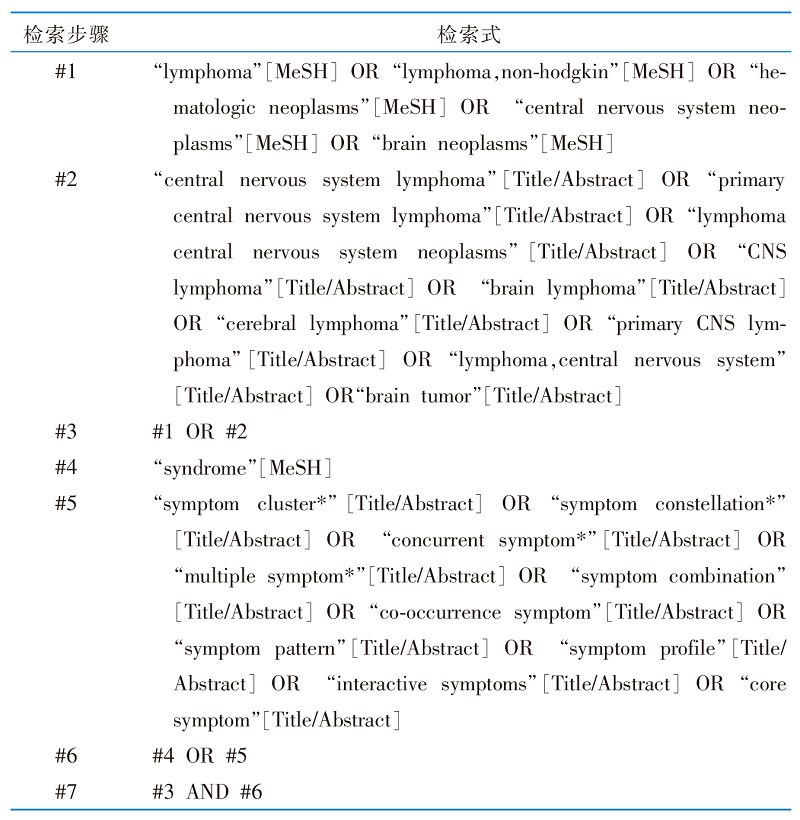 |
表1 PubMed检索策略
Table 1 Search strategies of PubMed database
| |
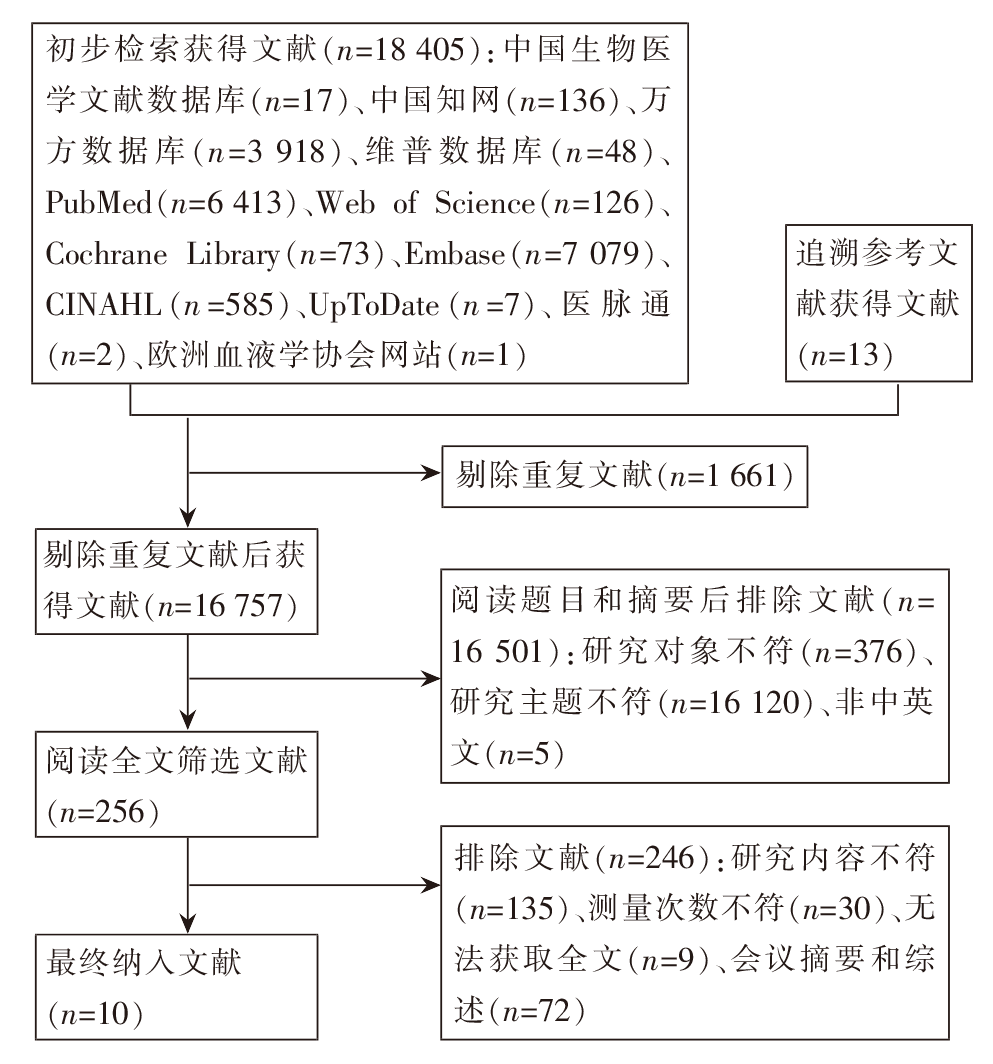
图1 文献筛选流程
Figure 1 Flow diagram of literature screening
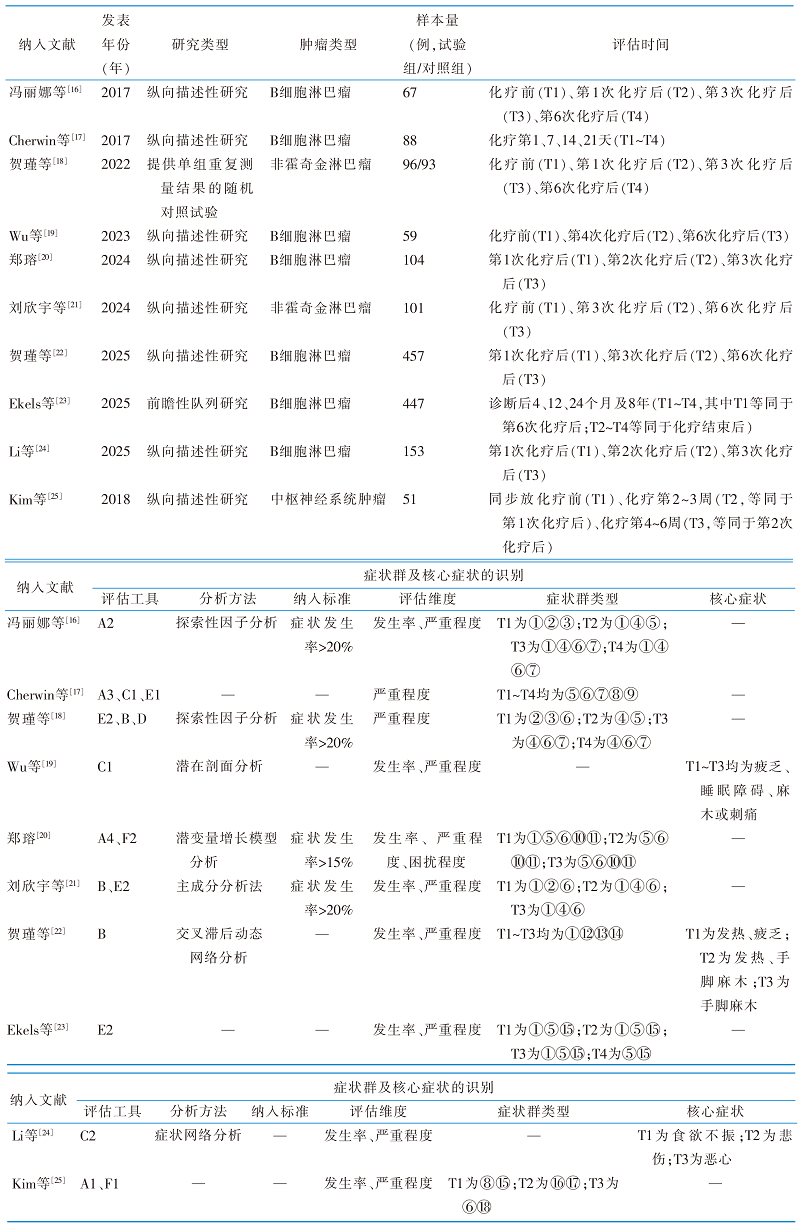 |
表2 纳入文献的基本特征(n=10)
Table 2 General information of the included studies(n=10)
| |
| [1] | 林松, 朱军, 李文斌. 中枢神经系统淋巴瘤[M]. 北京: 人民卫生出版社, 2023. |
| Lin S, Zhu J, Li WB. Central nervous system lymphoma[M]. Beijing: People’s Medical Publishing House, 2023. | |
| [2] | Batchelor TT. Primary central nervous system lymphoma:a cu-rable disease[J]. Hematol Oncol, 2019, 37(S1):15-18. |
| [3] | 中华医学会血液学分会淋巴细胞疾病学组, 中国临床肿瘤学会(CSCO)淋巴瘤专家委员会. 原发性中枢神经系统淋巴瘤诊断及治疗专家共识(2024年版)[J]. 白血病·淋巴瘤, 2024, 33(3):129-137. |
| Lymphocyte Disease Group of the Hematology Branch of the Chinese Medical Association, Expert Committee on Lymphoma,Lymphoma Expert Committee of the Chinese Society of Cli-nical Oncology(CSCO). Expert consensus on diagnosis and treatment of primary central nervous system lymphoma(2024 edition)[J]. J Leuk Lymphoma, 2024, 33(3):129-137. | |
| [4] |
Ferreri AJM, Calimeri T, Cwynarski K, et al. Primary central nervous system lymphoma[J]. Nat Rev Dis Primers, 2023, 9:29.
DOI PMID |
| [5] | 中国抗癌协会神经肿瘤专业委员会. CACA原发性中枢神经系统淋巴瘤整合诊治指南(精简版)[J]. 癌症, 2023, 42(1):49-57. |
| Professional Committee of Neuro-Oncology of the China Anti-Cancer Association. Guidelines for integrated diagnosis and treatment of CACA primary central nervous system lymphoma (simplified version)[J]. Chin J Cancer, 2023, 42(1):49-57. | |
| [6] |
David K, Davis ME. Primary central nervous system lymphoma:treatment and nursing management of immunocompetent patients[J]. Clin J Oncol Nurs, 2021, 25(4):439-448.
DOI PMID |
| [7] |
Tabudlo JB. A proposed theory of symptom cluster management[J]. Belitung Nurs J, 2021, 7(2):78-87.
DOI URL |
| [8] |
Skerman HM, Yates PM, Battistutta D. Cancer-related symptom clusters for symptom management in outpatients after com-mencing adjuvant chemotherapy,at 6 months,and 12 months[J]. Support Care Cancer, 2012, 20(1):95-105.
DOI PMID |
| [9] |
Al Qadire M, Shamieh O, Abdullah S, et al. Symptom clusters’ content,stability and correlation with the quality of life in a heterogeneous group of cancer patients:a large-scale longitu-dinal study[J]. Clin Nurs Res, 2020, 29(8):561-570.
DOI URL |
| [10] | Howell D, Pond GR, Bryant-Lukosius D, et al. Feasibility and effectiveness of self-management education and coaching on patient activation for managing cancer treatment toxicities[J]. J Natl Compr Cancer Netw, 2023, 21(3):247-256.e8. |
| [11] | 张新蕊, 孙鹏, Nyalali AM, 等. 初诊脑肿瘤病人肿瘤相关症状群构成差异研究[J]. 循证护理, 2024, 10(9):1611-1616. |
| Zhang XR, Sun P, Nyalali AM, et al. Study on the differences in the composition of tumor-related symptom clusters among first-diagnosed brain tumor patients[J]. Chin Evid Based Nurs, 2024, 10(9):1611-1616. | |
| [12] |
Arksey H, O’Malley L. Scoping studies:towards a methodologi-cal framework[J]. Int J Soc Res Methodol, 2005, 8(1):19-32.
DOI URL |
| [13] |
Tricco AC, Lillie E, Zarin W, et al. PRISMA extension for scoping reviews(PRISMA-ScR):checklist and explanation[J]. Ann Intern Med, 2018, 169(7):467-473.
DOI URL |
| [14] |
Peters MDJ, Marnie C, Tricco AC, et al. Updated methodolo-gical guidance for the conduct of scoping reviews[J]. JBI Evid Implement, 2021, 19(1):3-10.
DOI PMID |
| [15] |
袁潇逸, 邢唯杰. 纵向混合研究在护理领域中的应用进展[J]. 中华护理杂志, 2024, 59(2):244-249.
DOI |
|
Yuan XY, Xing WJ. Longitudinal mixed methods and its application progress in nursing[J]. Chin J Nurs, 2024, 59(2):244-249.
DOI |
|
| [16] | 冯丽娜, 冯莉霞, 孟丽. 中青年淋巴瘤化疗患者症状群的研究[J]. 中华护理杂志, 2017, 52(12):1459-1463. |
| Feng LN, Feng LX, Meng L. Symptom clusters in young and middle-aged lymphoma patients receiving chemotherapy[J]. Chin J Nurs, 2017, 52(12):1459-1463. | |
| [17] |
Cherwin CH, Perkhounkova Y. Distress-based gastrointestinal symptom clusters and impact on symptom interference and quality of life in patients with a hematologic malignancy recei-ving chemotherapy[J]. J Pain Symptom Manag, 2017, 53(4):751-758.
DOI URL |
| [18] | 贺瑾, 冯丽娜, 朱晓萌, 等. 症状管理动态模型在淋巴瘤化疗患者全程管理中的应用研究[J]. 中国护理管理, 2022, 22(1):111-117. |
| He J, Feng LN, Zhu XM, et al. Application of symptom mana-gement dynamic model in the whole-course management of lym-phoma patients with chemotherapy[J]. Chin Nurs Manag, 2022, 22(1):111-117. | |
| [19] | Wu CJ, Bai LY, Chen YC, et al. Symptom clusters in lympho-ma survivors before,during,and after chemotherapy:a pros-pective study?[J]. Oncol Nurs Forum, 2023, 50(3):361-371. |
| [20] | 郑瑢. 非霍奇金淋巴瘤患者化疗期症状群及其与生活质量相关性的纵向研究[D]. 合肥: 安徽医科大学, 2024. |
| Zheng R. A longitudinal study on symptom groups and their correlation with quality of life in patients with non-Hodgkin’s lymphoma during chemotherapy[D]. Hefei: Anhui Medical Uni-versity, 2024. | |
| [21] | 刘欣宇, 贺瑾, 冯丽娜. 淋巴瘤患者化疗期间症状群与生活质量相关性的纵向研究[J]. 天津护理, 2024, 32(1):32-37. |
| Liu XY, He J, Feng LN. A longitudinal study on the cor-relations between symptom clusters and quality of life in patients with lymphoma during chemotherapy[J]. Tianjin J Nurs, 2024, 32(1):32-37. | |
| [22] |
贺瑾, 冯丽娜, 田金丽, 等. 淋巴瘤患者化疗期核心症状的纵向研究及护理对策[J]. 中华护理杂志, 2025, 60(20):2492-2498.
DOI |
| He J, Feng LN, Tian JL, et al. The changes of core symptoms and nursing implications for lymphoma patients with chemo-therapy[J]. Chin J Nurs, 2025, 60(20):2492-2498. | |
| [23] |
Ekels A, Oerlemans S, Schagen SB, et al. The course of self-perceived cognitive functioning among patients with lympho-ma and the co-occurrence with fatigue and psychological distress[J]. J Cancer Surviv, 2025, 19(1):183-196.
DOI |
| [24] |
Li QL, Yang L, Wang N, et al. Home-based symptom manage-ment for patients with malignant lymphoma undergoing inter-mittent chemotherapy:a prospective observational study using network analysis[J]. Asia Pac J Oncol Nurs, 2025, 12:100683.
DOI URL |
| [25] | Kim SH, Byun Y. Trajectories of symptom clusters,performa-nce status,and quality of life during concurrent chemoradio-therapy in patients with high-grade brain cancers[J]. Cancer Nurs, 2018, 41(1):E38-E47. |
| [26] | 中国医疗保健国际交流促进会肿瘤内科学分会, 中国抗癌协会淋巴瘤专业委员会, 中国医师协会肿瘤医师分会. 中国淋巴瘤诊疗指南(2026版)[J]. 中华肿瘤杂志, 2026, 48(3):263-309. |
| China Healthcare International Exchange and Promotion Association Oncology Internal Medicine Branch, Chinese Anti-Cancer Association Lymphoma Professional Committee, China Medical Doctor Association Oncology Physician Branch. China lymphoma diagnosis and treatment guideline(2026 edition)[J]. Chin J Oncol, 2026, 48(3):263-309. | |
| [27] | 刘丽琼, 吴舒, 姜雪宁, 等. 基于Web of Science对近5年肿瘤症状群护理前沿的可视化分析[J]. 循证护理, 2023, 9(1):83-89. |
| Liu LQ, Wu S, Jiang XN, et al. Nursing frontiers and inspi-rations for cancer symptom cluster in recent five years based on Web of Science:a visual analysis[J]. Chin Evid Based Nurs, 2023, 9(1):83-89. | |
| [28] |
Weller M, Le Rhun E, Van den Bent M, et al. Diagnosis and management of complications from the treatment of primary central nervous system tumors in adults[J]. Neuro Oncol, 2023, 25(7):1200-1224.
DOI URL |
| [29] |
Armstrong TS, Mendoza T, Gning I, et al. Validation of the M.D. Anderson Symptom Inventory Brain Tumor Module(MDASI-BT)[J]. J Neuro Oncol, 2006, 80(1):27-35.
DOI URL |
| [30] | 潘华英, 罗玲玲, 任佳丽, 等. 原发性脑肿瘤病人症状群现状及其影响因素[J]. 循证护理, 2024, 10(8):1401-1408. |
| Pan HY, Luo LL, Ren JL, et al. Current situation and influen-cing factors of symptom cluster in patients with primary brain tumor[J]. Chin Evid Based Nurs, 2024, 10(8):1401-1408. | |
| [31] |
Kim SR, Shin YS, Kim JH, et al. Differences in type compo-sition of symptom clusters as predictors of quality of life in patients with meningioma and glioma[J]. World Neurosurg, 2017, 98:50-59.
DOI URL |
| [32] |
Folstein MF, Folstein SE, Mchugh PR. “Mini-mental state”:a pra-ctical method for grading the cognitive state of patients for the clinician[J]. J Psychiatr Res, 1975, 12(3):189-198.
DOI PMID |
| [33] |
陈淑萍, 谢宝缘, 陈绵绵, 等. 淋巴瘤患者化疗随访方案的构建及应用研究[J]. 中华护理杂志, 2026, 61(6):725-733.
DOI |
| Chen SP, Xie BY, Chen MM, et al. Development and applica-tion of a follow-up protocol for lymphoma patients undergoing chemotherapy[J]. Chin J Nurs, 2026, 61(6):725-733. | |
| [34] |
Song L, Quan XY, Su L, et al. Inflammation and behavioral symptoms in preoperational glioma patients:is depression,an-xiety,and cognitive impairment related to markers of systemic inflammation?[J]. Brain Behav, 2020, 10(9):e01771.
DOI URL |
| [35] |
So WKW, Law BMH, Ng MSN, et al. Symptom clusters expe-rienced by breast cancer patients at various treatment stages:a systematic review[J]. Cancer Med, 2021, 10(8):2531-2565.
DOI URL |
| [36] |
Kim Y, Kwon IG. Symptom clusters in patients with non-Ho-dgkin’s lymphoma receiving chemotherapy[J]. Asian Oncol Nurs, 2022, 22(2):93-103.
DOI URL |
| [37] |
Flospergher E, Marino F, Calimeri T, et al. Primary central ner-vous system marginal zone lymphoma[J]. Br J Haematol, 2024, 204(1):31-44.
DOI URL |
| [1] | 中华护理学会静脉输液治疗专业委员会, 北京护理学会, (执笔:李佳, 李旭英, 覃惠英, 陈利芬, 吴珍明, 胡泽吟, 罗梦娜, 范育英, 吴嘉慧, 林宇萍, 王蕾, 孙文彦, 冯毕龙, 高伟, 李亚南, 侯罗娅, 李春燕. 中心静脉通路装置拔除护理专家共识[J]. 中华护理杂志, 2026, 61(9): 1157-1162. |
| [2] | 周霞, 马艳艳, 师正坤, 于海霞, 周艳, 胡红玲, 李莜, 陈思思, 张京慧. 隧道式经股静脉PICC置入术在困难静脉通路婴幼儿中的应用研究[J]. 中华护理杂志, 2026, 61(9): 1163-1170. |
| [3] | 黄萍, 李黎, 郭骊莉, 徐莹, 叶赟, 江淑芳. 与无针输液接头相关的导管相关性血流感染风险评估工具的构建与初步应用[J]. 中华护理杂志, 2026, 61(9): 1171-1179. |
| [4] | 李佳, 张玉玲, 邢乐, 张利峰, 牛秀峰, 许莉. 早产儿经上肢置入PICC尖端继发性异位风险预测模型的建立与验证[J]. 中华护理杂志, 2026, 61(9): 1180-1186. |
| [5] | 何娟, 赵蕾蕾, 叶冠军, 余艳芬, 傅晓君, 周琴. 1例双侧无名静脉及上腔静脉人工血管置换术后患者经上肢置入PICC的护理[J]. 中华护理杂志, 2026, 61(9): 1187-1191. |
| [6] | 梁江淑渊, 曾妃, 何鹏, 谢梦珊, 江悦, 蒋宗恒, 王建茗. 静脉-静脉体外膜肺氧合患者早期活动风险等级评估系统的构建及应用研究[J]. 中华护理杂志, 2026, 61(9): 1192-1199. |
| [7] | 陈晨, 顾肖, 郭凡, 王敏, 倪兴梅, 黄琴, 程念开. 3种衰弱评估工具对急诊老年创伤患者不良结局的预测价值[J]. 中华护理杂志, 2026, 61(9): 1200-1207. |
| [8] | 郑煜琳, 刘晋宁, 张静, 郭会敏, 谷艳梅, 张莉莉. 酒精性肝病患者肝移植术后再饮酒现状及其影响因素分析[J]. 中华护理杂志, 2026, 61(9): 1208-1214. |
| [9] | 叶俊霜, 沈丽佳, 孟霞靓, 张玉姣, 蔡根莲, 邵碧云, 周亚辉, 张柳倩, 应金萍. 维持性血液透析患者对口腔衰弱认知和体验的质性研究[J]. 中华护理杂志, 2026, 61(9): 1215-1220. |
| [10] | 王芸姣, 杨玉金, 郑春艳, 彭菲津, 王淑贞, 蒋喜露, 周为民, 王薇, 张娜. 糖尿病下肢动脉硬化闭塞症患者介入术后康复护理方案的构建及应用研究[J]. 中华护理杂志, 2026, 61(9): 1221-1229. |
| [11] | 杨明霞, 安冉, 臧金凤, 李春梅. 老年慢性病共病患者及照护者老老照护能力与自我忽视的相关性分析[J]. 中华护理杂志, 2026, 61(9): 1230-1236. |
| [12] | 梁和静, 许鹊, 史云霞, 祖金美, 黄文静, 杨春旭, 郭明华, 王磊. 颈动脉内膜剥脱术围手术期护理质量评价指标的构建[J]. 中华护理杂志, 2026, 61(9): 1237-1244. |
| [13] | 韩媛媛, 石玉竹, 尚文涵, 么莉. 870所三级甲等医院老年住院患者跌倒伤害发生现状与影响因素分析[J]. 中华护理杂志, 2026, 61(9): 1245-1252. |
| [14] | 夏云芳, 王洪, 崔岱, 付真真, 朱敏. 1例弥漫性毒性甲状腺肿合并超敏反应综合征青少年患者的护理[J]. 中华护理杂志, 2026, 61(9): 1253-1256. |
| [15] | 周益飞, 王海苹, 胡益环, 应莉, 罗松娜. 1例氢氟酸中毒并发呼吸心搏骤停患者的急救护理[J]. 中华护理杂志, 2026, 61(9): 1257-1260. |
| 阅读次数 | ||||||
|
全文 |
|
|||||
|
摘要 |
|
|||||
