

中华护理杂志 ›› 2026, Vol. 61 ›› Issue (11): 1512-1519.DOI: 10.3761/j.issn.0254-1769.2026.11.010
刘京辉1( ), 刘芳丽2, 李思媛1, 徐文琪1, 张露文2, 田清蜜2, 杜李百合1, 章明阳1()
收稿日期:2025-07-03
出版日期:2026-06-10
发布日期:2026-06-10
*通讯作者:
章明阳,E-mail:jdzmy2010@163.com作者简介:刘京辉:女,本科(硕士在读),E-mail:15637394798@163.com刘京辉:研究设计、问卷调查/数据收集、数据整理、统计学分析、论文撰写;刘芳丽:研究指导;李思媛、徐文琪:数据收集;张露文、田清蜜、杜李百合:数据整理;章明阳:研究设计、研究指导、论文审阅与修改
LIU Jing-hui1(), LIU Fangli2, LI Siyuan1, XU Wenqi1, ZHANG Luwen2, TIAN Qingmi2, DU Libaihe1, ZHANG Mingyang1()
Received:2025-07-03
Online:2026-06-10
Published:2026-06-10
* Corresponding author:
ZHANG Mingyang,E-mail:jdzmy2010@163.com摘要:
目的 调查多囊卵巢综合征(polycystic ovary syndrome,PCOS)患者的症状发生状况,构建同期症状网络,识别症状群和核心症状,旨在为制订针对性的症状管理策略提供依据。 方法 采用便利抽样法,于2024年11月—2025年5月,选取来自国内不同地区的400例PCOS患者作为调查对象,使用自行编制的一般资料调查表和PCOS患者常见症状问卷进行调查。通过探索性因子分析提取症状群并应用R软件构建网络模型,计算中心性指标,确定核心症状及桥梁症状。 结果 最终纳入378例PCOS患者。共提取高雄激素性皮肤表现症状群、排卵及月经异常症状群、代谢紊乱症状群、情绪障碍伴疲劳症状群、经前期综合征症状群5个症状群,累计方差贡献率为56.1%;月经周期异常(97.9%)是PCOS患者最常见的症状。在症状网络中,感到痛苦(rS=8.19)和感到悲伤(rS=8.16)是最核心的症状;易激惹(rbs=4.78)是桥梁强度最大的症状。 结论 PCOS患者常表现多种症状及症状群。医护人员可基于网络分析识别出的核心症状,制订精准、有效的干预措施,从而改善患者治疗期间的生活质量。
刘京辉, 刘芳丽, 李思媛, 徐文琪, 张露文, 田清蜜, 杜李百合, 章明阳. 多囊卵巢综合征患者症状网络分析及护理启示[J]. 中华护理杂志, 2026, 61(11): 1512-1519.
LIU Jing-hui, LIU Fangli, LI Siyuan, XU Wenqi, ZHANG Luwen, TIAN Qingmi, DU Libaihe, ZHANG Mingyang. Symptom network analysis and nursing implications in patients with polycystic ovary syndrome[J]. Chinese Journal of Nursing, 2026, 61(11): 1512-1519.
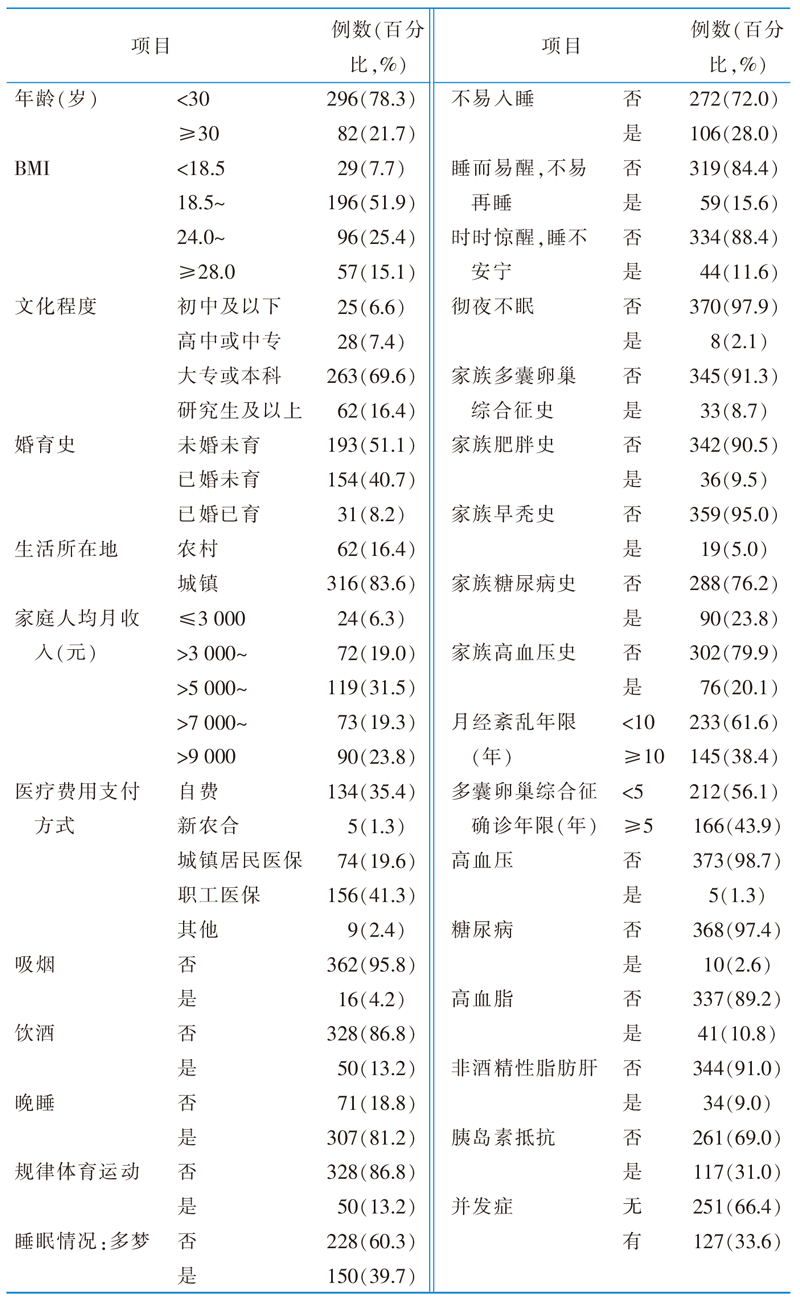 |
表1 调查对象的一般资料(n=378)
Table 1 Participant characteristics(n=378)
| |
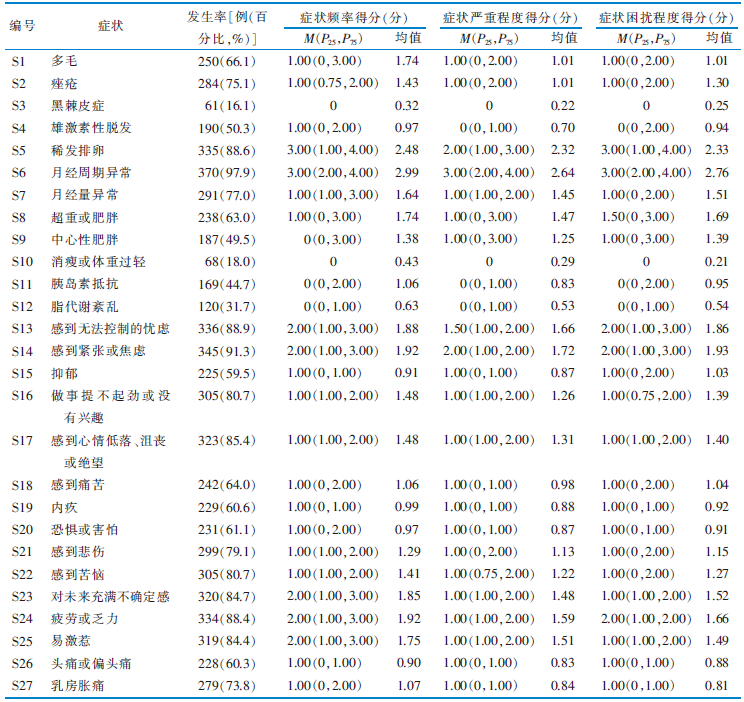 |
表2 多囊卵巢综合征患者症状发生频率、严重程度和困扰程度评分(n=378)
Table 2 Frequency, severity, and distress of symptoms in patients with polycystic ovary syndrome(n=378)
| |
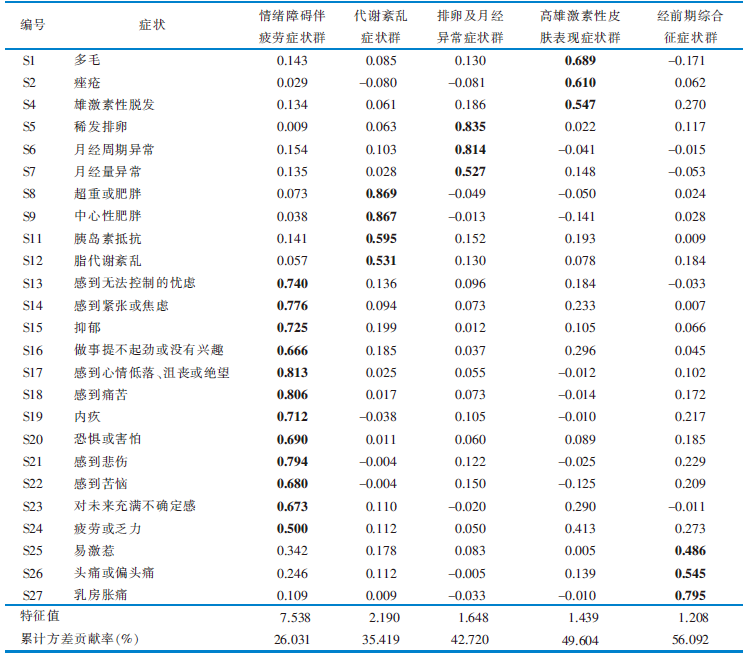 |
表3 多囊卵巢综合征患者症状群的探索性因子分析结果(n=378)
Table 3 Exploratory factor analysis of symptom clusters in patients with polycystic ovary syndrome(n=378)
| |
| [1] | Kulkarni S, Gupta K, Ratre P, et al. Polycystic ovary syndrome:current scenario and future insights[J]. Drug Discov Today, 2023, 28(12):103821. |
| [2] | Wu Q, Gao J, Bai DX, et al. The prevalence of polycystic ova-rian syndrome in Chinese women:a meta-analysis[J]. Ann Pal-liat Med, 2021, 10(1):74-87. |
| [3] | 中国医疗保健国际交流促进会围产与营养代谢学分会. 多囊卵巢综合征患者孕前、孕期及产后管理中国专家共识(2023年版)[J]. 中国实用妇科与产科杂志, 2023, 39(11):1106-1113. |
| Peripartum and Nutritional Metabolism Society of China Inter-national Exchange and Promotive Association for Medical and Health Care. Chinese expert consensus on the management of patients with polycystic ovary syndrome before and during pregnancy and after delivery(2023 edition)[J]. Chin J Pract Gynecol Obstet, 2023, 39(11):1106-1113. | |
| [4] | Teede HJ, Tay CT, Laven JJE, et al. Recommendations from the 2023 international evidence-based guideline for the assessment and management of polycystic ovary syndrome[J]. Eur J Endo-crinol, 2023, 189(2):G43-G64. |
| [5] | 中国中西医结合学会妇产科专业委员会. 多囊卵巢综合征中西医结合诊治指南[J]. 中国中西医结合杂志, 2024, 44(1):5-18. |
| Chinese Society of Integrated Traditional and Western Medi-cine Gynecology Professional Committee. Diagnosis and treat-ment of polycystic ovary syndrome by integrative medicine[J]. Chin J Integr Tradit West Med, 2024, 44(1):5-18. | |
| [6] | Dybciak P, Humeniuk E, Raczkiewicz D, et al. Anxiety and de-pression in women with polycystic ovary syndrome[J]. Medicina(Kaunas), 2022, 58(7):942. |
| [7] | Alur-Gupta S, Dokras A, Cooney LG. Management of polycystic ovary syndrome must include assessment and treatment of mental health symptoms[J]. Fertil Steril, 2024, 121(3):384-399. |
| [8] | 杨丛品, 李爱民, 李静, 等. 多学科健康管理对多囊卵巢综合征患者体外受精-胚胎移植结局的影响[J]. 护理学杂志, 2025, 40(14):35-38. |
| Yang CP, Li AM, Li J, et al. Effectiveness of multidisciplinary health management on in vitro fertilization and embryo tran-sfer outcomes in women with polycystic ovary syndrome[J]. J Nurs Sci, 2025, 40(14):35-38. | |
| [9] | Diakosavvas M, Oyebode O, Bhide P. Weight management stra-tegies to reduce metabolic morbidity in women with polycystic ovary syndrome[J]. Curr Obes Rep, 2025, 14(1):22. |
| [10] | 朱政, 胡天天, 金依霖, 等. 症状网络的基本概念及其在症状管理中的应用[J]. 护士进修杂志, 2023, 38(24):2214-2218, 2224. |
| Zhu Z, Hu TT, Jin YL, et al. Basic concepts of symptom net-works and its implementation in symptom management[J]. J Nu-rses Train, 2023, 38(24):2214-2218,2224. | |
| [11] | Rotterdam ESHRE/ASRM-Sponsored PCOS consensus workshop group. Revised 2003 consensus on diagnostic criteria and long-term health risks related to polycystic ovary syndrome(PCOS)[J]. Hum Reprod, 2004, 19(1):41-47. |
| [12] | Epskamp S, Borsboom D, Fried EI. Estimating psychological net-works and their accuracy:a tutorial paper[J]. Behav Res Me-thods, 2018, 50(1):195-212. |
| [13] | Papachristou N, Barnaghi P, Cooper B, et al. Network analysis of the multidimensional symptom experience of oncology[J]. Sci Rep, 2019, 9(1):2258. |
| [14] | 石丹, 李铮, 杨坚, 等. 老年脑卒中病人症状负担与生活质量相关性研究[J]. 护理研究, 2019, 33(6):925-929. |
| Shi D, Li Z, Yang J, et al. Relationship research on symptom burden and quality of life elderly stroke patients[J]. Chin Nurs Res, 2019, 33(6):925-929. | |
| [15] | 刘美子, 安然, 吴子童, 等. 头颈部肿瘤患者核心症状及症状群的网络分析与护理对策[J]. 中华护理杂志, 2024, 59(7):828-834. |
| Liu MZ, An R, Wu ZT, et al. A network analysis and nursing implications of core symptoms and symptom clusters in head and neck cancer patients[J]. Chin J Nurs, 2024, 59(7):828-834. | |
| [16] | 余骏雯, 朱政, 胡天天, 等. 症状网络的特异性指标[J]. 护士进修杂志, 2023, 38(24):2229-2234,2245. |
| Yu JW, Zhu Z, Hu TT, et al. Specificity indices of symptom network[J]. J Nurses Train, 2023, 38(24):2229-2234,2245. | |
| [17] | 孙诚鑫, 王钰莹, 杨庆红, 等. 肝癌患者术后核心症状的动态网络分析及护理启示[J]. 中华护理杂志, 2025, 60(15):1857-1863. |
| Sun CX, Wang YY, Yang QH, et al. Dynamic network analysis of postoperative core symptoms in hepatocellular carcinoma patients and nursing insights[J]. Chin J Nurs, 2025, 60(15):1857-1863. | |
| [18] | 傅若金, 顾卓伟, 路瑶, 等. 不同月经模式多囊卵巢综合征患者性激素及代谢水平差异的研究[J]. 实用妇产科杂志, 2020, 36(1):48-52. |
| Fu RJ, Gu ZW, Lu Y, et al. Differences in sexual hormones and levels of metabolism in polycystic ovary syndrome patients with different menstrual patterns[J]. J Pract Obstet Gynecol, 2020, 36(1):48-52. | |
| [19] | 中华预防医学会生育力保护分会生殖内分泌生育保护学组. 多囊卵巢综合征合并胰岛素抵抗诊治专家共识[J]. 生殖医学杂志, 2024, 33(9):1133-1140. |
| Reproductive Endocrinology & Fertility Preservation Section of Chinese Society on Fertility Preservation under Chinese Preventive Medicine Association. Consensus on the diagnosis and management of polycystic ovary syndrome with insulin resistance[J]. J Reprod Med, 2024, 33(9):1133-1140. | |
| [20] | 童一希. 多囊卵巢综合征患者月经周期异常与糖脂代谢及胰岛功能相关性[J]. 中国计划生育学杂志, 2021, 29(9):1902-1906. |
| Tong YX. Correlation between different menstrual cycles of patients with polycystic ovary syndrome and their glucose and lipid metabolism and islet function[J]. Chin J Fam Plan, 2021, 29(9):1902-1906. | |
| [21] | Niu JL, Lu MY, Liu B. Association between insulin resistance and abnormal menstrual cycle in Chinese patients with polycystic ovary syndrome[J]. J Ovarian Res, 2023, 16(1):45. |
| [22] | 周惠芳, 洪艳丽, 刁飞扬, 等. 多囊卵巢综合征中西医结合诊疗指南(2024年版)[J]. 中医杂志, 2025, 66(6):649-656. |
| Zhou HF, Hong YL, Diao FY, et al. Guidelines for the dia-gnosis and treatment of polycystic ovary syndrome with inte-grated traditional Chinese and western medicine(2024 edition)[J]. J Tradit Chin Med, 2025, 66(6):649-656. | |
| [23] | 高征, 李梦元, 李博, 等. 中药复方干预肥胖型多囊卵巢综合征糖脂代谢异常的Meta分析[J]. 国际生殖健康/计划生育杂志, 2024, 43(5):368-377,394. |
| Gao Z, Li MY, Li B, et al. Efficacy of Chinese medicine com-pound on abnormal glucose and lipid metabolism in patients with obese polycystic ovary syndrome:a Meta analysis[J]. J Int Reprod Health/Family Plan, 2024, 43(5):368-377,394. | |
| [24] | 李慧敏, 毛东伟, 胡桂华, 等. 中药周期疗法联合促排卵方案治疗多囊卵巢综合征不孕症Meta分析[J]. 新中医, 2024, 56(22):181-188. |
| Li HM, Mao DW, Hu GH, et al. Meta analysis of Chinese medicine periodic therapy combined with ovulation induction protocol for treatment of infertility caused by polycystic ovary syndrome[J]. New Chin Med, 2024, 56(22):181-188. | |
| [25] | Hofmann K, Decrinis C, Bitterlich N, et al. Body image and mental health in women with polycystic ovary syndrome:a cross-sectional study[J]. Arch Gynecol Obstet, 2025, 312(1):177-190. |
| [26] | 宋丹妮, 胡双, 蒲丛珊, 等. 辅助生殖技术受孕孕妇心理症状群变化轨迹的影响因素分析及护理启示[J]. 中华护理杂志, 2025, 60(10):1209-1216. |
| Song DN, Hu S, Pu CS, et al. Analysis of influencing factors on the trajectories of psychological symptom clusters in pregnant women with assisted reproductive technology and nursing revelation[J]. Chin J Nurs, 2025, 60(10):1209-1216. | |
| [27] | 仇茜, 施金凤, 冒文盈, 等. 不孕症女性生育压力与病耻感、归因方式调查及相关性分析[J]. 中国计划生育学杂志, 2023, 31(12):2788-2792,2798. |
| Qiu Q, Shi JF, Mao WY, et al. Investigation of fertility stress,stigma,and attribution style of infertile women and their correlation analysis[J]. Chin J Fam Plan, 2023, 31(12):2788-2792,2798. | |
| [28] | 王凡, 张正红, 肖开转, 等. 下丘脑-垂体-肾上腺轴和下丘脑-垂体-卵巢轴在多囊卵巢综合征神经内分泌功能紊乱中的作用[J]. 中国医学科学院学报, 2017, 39(5):699-704. |
| Wang F, Zhang ZH, Xiao KZ, et al. Roles of hypothalamic-pituitary-adrenal axis and hypothalamus-pituitary-ovary axis in the abnormal endocrine functions in patients with polycystic ovary syndrome[J]. Acta Acad Med Sin, 2017, 39(5):699-704. | |
| [29] | 郑存风, 王峥, 刘海静, 等. 结直肠癌术后化疗患者核心症状的纵向研究及护理对策[J]. 中华护理杂志, 2025, 60(11):1309-1315. |
| Zheng CF, Wang Z, Liu HJ, et al. Longitudinal study on core symptoms and nursing strategies for patients with colorectal cancer undergoing postoperative chemotherapy[J]. Chin J Nurs, 2025, 60(11):1309-1315. | |
| [30] | Ethirajulu A, Alkasabera A, Onyali CB, et al. Insulin resis-tance,hyperandrogenism,and its associated symptoms are the precipitating factors for depression in women with polycystic ovarian syndrome[J]. Cureus, 2021, 13(9):e18013. |
| [31] | 孙梦圆, 唐彬密, 曾琪雅, 等. 多囊卵巢综合征患者体像烦恼的研究现状[J]. 中国护理管理, 2022, 22(5):778-782. |
| Sun MY, Tang BM, Zeng QY, et al. Research status of body image distress in patients with polycystic ovary syndrome[J]. Chin Nurs Manag, 2022, 22(5):778-782. |
| [1] | 中华护理学会静脉输液治疗专业委员会, 北京护理学会, (执笔:李佳, 李旭英, 覃惠英, 陈利芬, 吴珍明, 胡泽吟, 罗梦娜, 范育英, 吴嘉慧, 林宇萍, 王蕾, 孙文彦, 冯毕龙, 高伟, 李亚南, 侯罗娅, 李春燕. 中心静脉通路装置拔除护理专家共识[J]. 中华护理杂志, 2026, 61(9): 1157-1162. |
| [2] | 周霞, 马艳艳, 师正坤, 于海霞, 周艳, 胡红玲, 李莜, 陈思思, 张京慧. 隧道式经股静脉PICC置入术在困难静脉通路婴幼儿中的应用研究[J]. 中华护理杂志, 2026, 61(9): 1163-1170. |
| [3] | 黄萍, 李黎, 郭骊莉, 徐莹, 叶赟, 江淑芳. 与无针输液接头相关的导管相关性血流感染风险评估工具的构建与初步应用[J]. 中华护理杂志, 2026, 61(9): 1171-1179. |
| [4] | 李佳, 张玉玲, 邢乐, 张利峰, 牛秀峰, 许莉. 早产儿经上肢置入PICC尖端继发性异位风险预测模型的建立与验证[J]. 中华护理杂志, 2026, 61(9): 1180-1186. |
| [5] | 何娟, 赵蕾蕾, 叶冠军, 余艳芬, 傅晓君, 周琴. 1例双侧无名静脉及上腔静脉人工血管置换术后患者经上肢置入PICC的护理[J]. 中华护理杂志, 2026, 61(9): 1187-1191. |
| [6] | 梁江淑渊, 曾妃, 何鹏, 谢梦珊, 江悦, 蒋宗恒, 王建茗. 静脉-静脉体外膜肺氧合患者早期活动风险等级评估系统的构建及应用研究[J]. 中华护理杂志, 2026, 61(9): 1192-1199. |
| [7] | 陈晨, 顾肖, 郭凡, 王敏, 倪兴梅, 黄琴, 程念开. 3种衰弱评估工具对急诊老年创伤患者不良结局的预测价值[J]. 中华护理杂志, 2026, 61(9): 1200-1207. |
| [8] | 郑煜琳, 刘晋宁, 张静, 郭会敏, 谷艳梅, 张莉莉. 酒精性肝病患者肝移植术后再饮酒现状及其影响因素分析[J]. 中华护理杂志, 2026, 61(9): 1208-1214. |
| [9] | 叶俊霜, 沈丽佳, 孟霞靓, 张玉姣, 蔡根莲, 邵碧云, 周亚辉, 张柳倩, 应金萍. 维持性血液透析患者对口腔衰弱认知和体验的质性研究[J]. 中华护理杂志, 2026, 61(9): 1215-1220. |
| [10] | 王芸姣, 杨玉金, 郑春艳, 彭菲津, 王淑贞, 蒋喜露, 周为民, 王薇, 张娜. 糖尿病下肢动脉硬化闭塞症患者介入术后康复护理方案的构建及应用研究[J]. 中华护理杂志, 2026, 61(9): 1221-1229. |
| [11] | 杨明霞, 安冉, 臧金凤, 李春梅. 老年慢性病共病患者及照护者老老照护能力与自我忽视的相关性分析[J]. 中华护理杂志, 2026, 61(9): 1230-1236. |
| [12] | 梁和静, 许鹊, 史云霞, 祖金美, 黄文静, 杨春旭, 郭明华, 王磊. 颈动脉内膜剥脱术围手术期护理质量评价指标的构建[J]. 中华护理杂志, 2026, 61(9): 1237-1244. |
| [13] | 韩媛媛, 石玉竹, 尚文涵, 么莉. 870所三级甲等医院老年住院患者跌倒伤害发生现状与影响因素分析[J]. 中华护理杂志, 2026, 61(9): 1245-1252. |
| [14] | 夏云芳, 王洪, 崔岱, 付真真, 朱敏. 1例弥漫性毒性甲状腺肿合并超敏反应综合征青少年患者的护理[J]. 中华护理杂志, 2026, 61(9): 1253-1256. |
| [15] | 周益飞, 王海苹, 胡益环, 应莉, 罗松娜. 1例氢氟酸中毒并发呼吸心搏骤停患者的急救护理[J]. 中华护理杂志, 2026, 61(9): 1257-1260. |
| 阅读次数 | ||||||
|
全文 |
|
|||||
|
摘要 |
|
|||||
