

中华护理杂志 ›› 2026, Vol. 61 ›› Issue (12): 1604-1611.DOI: 10.3761/j.issn.0254-1769.2026.12.003
冯蒙友( ), 张明媚*()
收稿日期:2025-10-14
出版日期:2026-06-20
发布日期:2026-06-12
*通讯作者:
张明媚,E-mail:zhangmingmei1987@163.com作者简介:冯蒙友:女,本科,主管护师,E-mail:iqah98@163.com冯蒙友:资料收集与分析、论文撰写;张明媚:研究指导、论文审阅与修改
FENG Mengyou(), ZHANG Mingmei*()
Received:2025-10-14
Online:2026-06-20
Published:2026-06-12
* Corresponding author:
ZHANG Mingmei,E-mail:zhangmingmei1987@163.com摘要:
目的 探讨老年经皮椎体后凸成形术(percutaneous kyphoplasty,PKP)术后邻近椎体再骨折患者和配偶家庭复原力与疾病复发恐惧间的纵向相互作用,为降低双方复发恐惧提供理论依据。方法 采用便利抽样法,选取2023年3月—2024年6月苏州市某三级甲等医院收治的225例老年PKP术后邻近椎体再骨折患者和配偶作为调查对象,采用家庭复原力评估量表、恐惧疾病进展简化量表分别于术后(T1)、出院前(T2)、出院后1个月(T3)进行调查。采用等价性检验、主客体互倚模型的交叉滞后分析进行统计分析。结果 回收有效问卷217份,有效问卷回收率为97.31%。PKP术后邻近椎体再骨折患者和配偶家庭复原力与疾病复发恐惧行为相互作用的主体效应具有显著性,即患者(T1→T2:β=-0.09,T2→T3:β=-0.08,均P<0.01)和配偶(T1→T2:β=-0.08,T2→T3:β=0.07,均P<0.01)的家庭复原力可以负向预测下一阶段自身的疾病复发恐惧;患者(T1→T2:β=-0.13,T2→T3:β=-0.11,均P<0.001)和配偶(T1→T2:β=-0.10,P<0.001,T2→T3:β=0.08,P<0.01)的疾病复发恐惧可以负向预测一下阶段患者的家庭复原力。疾病复发恐惧的客体效应具有显著性,即患者(T1→T2:β=0.11,T2→T3:β=0.10,均P<0.001)和配偶(T1→T2:β=0.08,T2→T3:β=0.08,均P<0.01)的疾病复发恐惧可以正向预测下一阶段对方的疾病复发恐惧。结论 PKP术后邻近椎体再骨折患者和配偶家庭复原力及疾病复发恐惧存在纵向相互作用,建议医护人员重视患者和配偶的评估和管理,合理利用其相互关系,尽可能降低患者和配偶的疾病复发恐惧水平。
冯蒙友, 张明媚. 经皮椎体后凸成形术后邻近椎体再骨折患者和配偶家庭复原力与疾病复发恐惧关系的研究[J]. 中华护理杂志, 2026, 61(12): 1604-1611.
FENG Mengyou, ZHANG Mingmei. A longitudinal study on family resilience and fear of disease recurrence in patients with adjacent vertebral re-fracture after percutaneous kyphoplasty and their spouses[J]. Chinese Journal of Nursing, 2026, 61(12): 1604-1611.
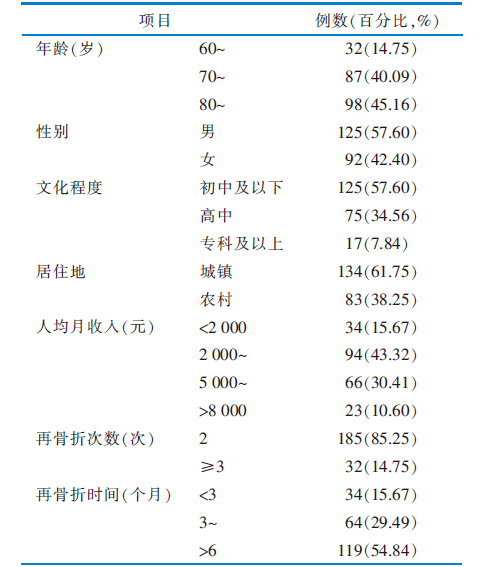 |
表1 经皮椎体后凸成形术后邻近椎体再骨折患者的一般资料(n=217)
Table 1 General information of patients with adjacent vertebral re-fracture after percutaneous kyphoplasty(n=217)
|
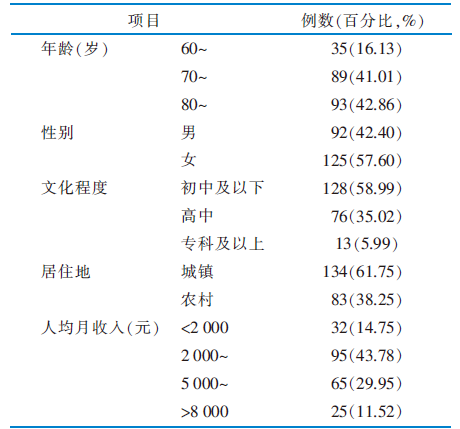 |
表2 经皮椎体后凸成形术后邻近椎体再骨折患者配偶的一般资料(n=217)
Table 2 General information of spouses of patients with adjacent vertebral re-fracture after percutaneous kyphoplasty(n=217)
|
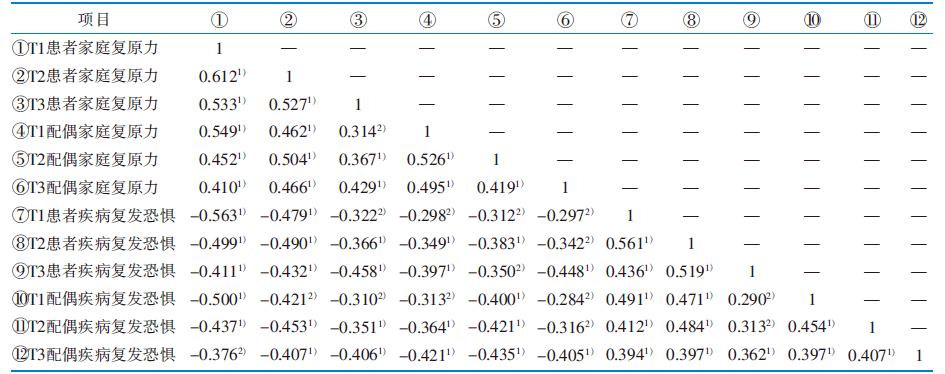 |
表3 经皮椎体后凸成形术后邻近椎体再骨折患者和配偶家庭复原力、疾病复发恐惧得分及相关分析(n=217,r值)
Table 3 The scores of resilience, fear of disease recurrence and related analyses of patients with adjacent vertebral refracture after PKP and their spouses(n=217,r value)
|
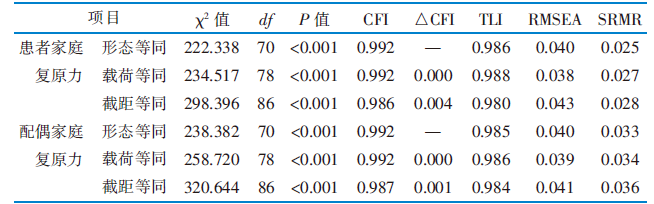 |
表4 经皮椎体后凸成形术后邻近椎体再骨折患者和配偶家庭复原力等价性模型拟合结果
Table 4 Fitting results of the equivalent model of resilience for patients with adjacent vertebral refractures after PKP and their spouses
|
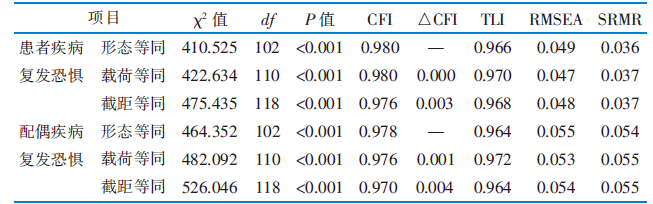 |
表5 经皮椎体后凸成形术后邻近椎体再骨折患者和配偶疾病复发恐惧等价性模型拟合结果
Table 5 Fitting results of the equivalent model of fear of disease recurrence in patients with adjacent vertebral refracture after PKP and their spouses
|
 |
表6 经皮椎体后凸成形术后邻近椎体再骨折患者和配偶家庭复原力、疾病复发恐惧主客体互倚模型限定后的拟合结果
Table 6 Fitting results of the actor-partner interdependent model of resilience and fear of disease recurrence in patients with adjacent vertebral refracture after PKP and their spouses
|
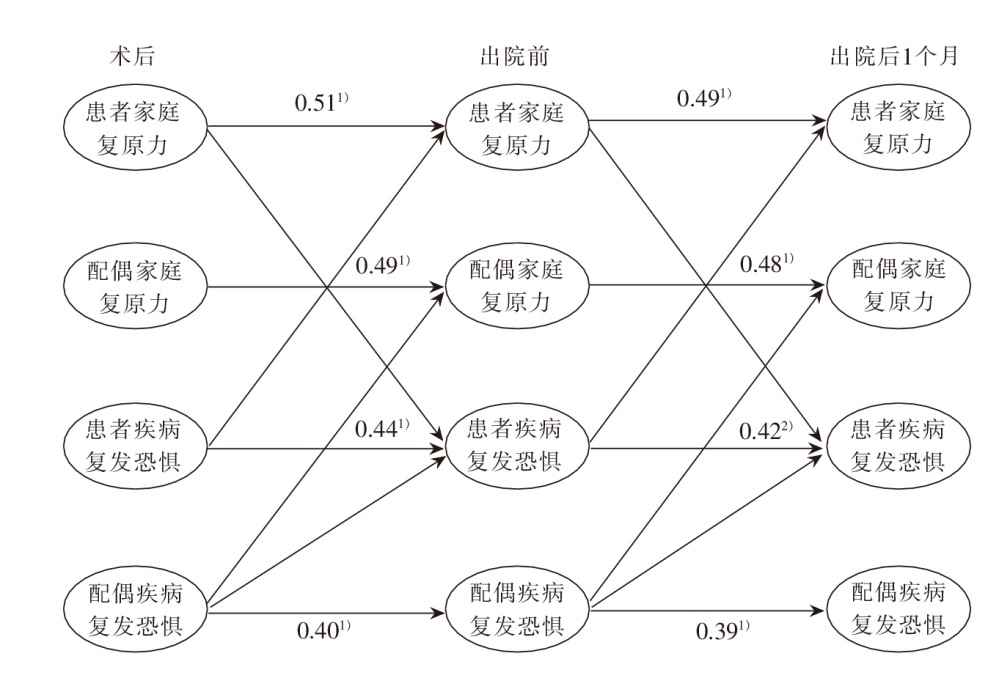
图1 经皮椎体后凸成形术后邻近椎体再骨折患者和配偶家庭复原力、疾病复发恐惧的交叉滞后主客体互倚模型图
Figure 1 A cross-lagging actor-partner interdependence model diagram of resilience and fear of disease recurrence in patients with adjacent vertebral refracture after PKP and their spouses 1)P<0.001。
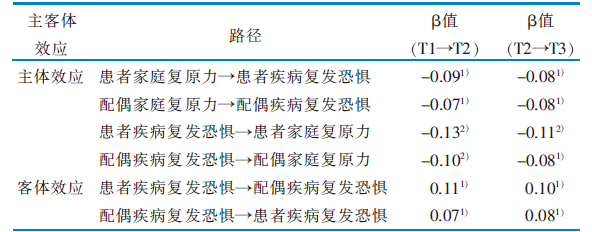 |
表7 经皮椎体后凸成形术后邻近椎体再骨折患者及其配偶家庭复原力、疾病复发恐惧的交叉滞后主客体互倚模型路径分析
Table 7 Path analysis of the cross-lag actor-partner interdependence model for the resilience and fear of disease recurrence of patients with adjacent vertebral refracture after PKP and their spouses
|
| [1] | Litin Y, Rastogi S, Agarwal A, et al. A prospective evaluation of percutaneous vertebroplasty in osteoporotic vertebral compression fracture patients[J]. Cureus, 2023, 15(6):e40255. |
| [2] |
Zhang AQ, Lin YC, Kong MX, et al. A nomogram for predicting the risk of new vertebral compression fracture after percutaneous kyphoplasty[J]. Eur J Med Res, 2023, 28(1):280.
DOI PMID |
| [3] |
Lu W, Teng ZW, Chen JY, et al. A pain that is easily overlooked:referred pain caused by OVCF[J]. J Pain Res, 2023, 16:961-971.
DOI URL |
| [4] |
Liang DW, Pei J, Pei RY, et al. Clinical efficacy of percutaneous vertebroplasty versus percutaneous kyphoplasty treating osteoporotic vertebral compression fractures with kyphosis[J]. Eur J Trauma Emerg Surg, 2024, 50(3):1043-1049.
DOI |
| [5] |
Wang W, Liu Y, Wan H, et al. Effectiveness and prognostic factors of different minimally invasive surgeries for vertebral compression fractures[J]. BMC Musculoskelet Disord, 2023, 24(1):11.
DOI |
| [6] |
Kuang Y, Wang M, Yu NX, et al. Family resilience of patients requiring long-term care:a meta-synthesis of qualitative studies[J]. J Clin Nurs, 2023, 32(13/14):4159-4175.
DOI URL |
| [7] |
Kenny DA, Ledermann T. Detecting,measuring,and testing dyadic patterns in the actor-partner interdependence model[J]. J Fam Psychol, 2010, 24(3):359-366.
DOI URL |
| [8] |
Yuliana S, Yu E, Rias YA, et al. Associations among disability,depression,anxiety,stress,and quality of life between stroke survivors and their family caregivers:an actor-partner interdependence model[J]. J Adv Nurs, 2023, 79(1):135-148.
DOI URL |
| [9] |
Lee H, Kang HS, De Gagne JC. Life satisfaction of multicultural married couples:actor-partner interdependence model analysis[J]. Health Care Women Int, 2023, 44(9):1106-1118.
DOI URL |
| [10] | 侯杰泰. 结构方程模型及其应用[M]. 北京: 教育科学出版社, 2004. |
| Hou JT. Structural equation model and its application[M]. Beijing: Educational Science Publishing House, 2004. | |
| [11] | 董超群, 高晨晨, 赵海峰. 家庭复原力评估量表汉化及用于慢性病患儿家庭的信效度分析[J]. 护理学杂志, 2018, 33(10):93-97. |
| Dong CQ, Gao CC, Zhao HF. Reliability and validation of Family Resilience Assessment Scale in the families raising children with chronic disease[J]. J Nurs Sci, 2018, 33(10):93-97. | |
| [12] | 吴奇云, 叶志霞, 李丽, 等. 癌症患者恐惧疾病进展简化量表的汉化及信效度分析[J]. 中华护理杂志, 2015, 50(12):1515-1519. |
| Wu QY, Ye ZX, Li L, et al. Reliability and validity of Chinese version of Fear of Progression Questionnaire-Short Form for Cancer Patients[J]. Chin J Nurs, 2015, 50(12):1515-1519. | |
| [13] | 汤丹丹, 温忠麟. 共同方法偏差检验:问题与建议[J]. 心理科学, 2020, 43(1):215-223. |
| Tang DD, Wen ZL. Statistical approaches for testing common method bias:problems and suggestions[J]. J Psychol Sci, 2020, 43(1):215-223. | |
| [14] | Gawulayo S, Erasmus CJ, Rhoda AJ. Family functioning and stroke:family members’ perspectives[J]. Afr J Disabil, 2021, 10:801. |
| [15] | Boukrab I, Venmans A, Kortman HGJ, et al. Vertebroplasty for chronic back pain due to osteoporotic vertebral compression fractures[J]. Ned Tijdschr Geneeskd, 2024, 168:D8172. |
| [16] | 向俊玲. 肺癌患者癌症复发恐惧与应对方式及创伤后成长的相关性分析[D]. 荆州: 长江大学, 2022. |
| Xiang JL. Correlation analysis of cancer recurrence fear,coping style and post-traumatic growth in lung cancer patients[D]. Jingzhou: Yangtze University, 2022. | |
| [17] |
Schapira L, Zheng Y, Gelber SI, et al. Trajectories of fear of cancer recurrence in young breast cancer survivors[J]. Cancer, 2022, 128(2):335-343.
DOI URL |
| [18] |
Chen FR, Ou MJ, Xiao ZR, et al. Trajectories of fear of cancer recurrence and its influence factors:a longitudinal study on Chinese newly diagnosed cancer patients[J]. Psychooncology, 2024, 33(1):e6271.
DOI URL |
| [19] |
李蕊, 宋红, 张春艳, 等. 老年邻近椎体再骨折患者家庭功能与锻炼依从性的相关性研究[J]. 中华护理杂志, 2025, 60(10):1164-1170.
DOI |
|
Li R, Song H, Zhang CY, et al. The effect of family functioning on exercise adherence in elderly patients with postoperative vertebral compression fractures and adjacent vertebral re-fractures[J]. Chin J Nurs, 2025, 60(10):1164-1170.
DOI |
|
| [20] |
Prime H, Wade M, Browne DT. Risk and resilience in family well-being during the COVID-19 pandemic[J]. Am Psychol, 2020, 75(5):631-643.
DOI PMID |
| [21] |
Samji H, Wu J, Ladak A, et al. Review:mental health impacts of the COVID-19 pandemic on children and youth:a systematic review[J]. Child Adolesc Ment Health, 2022, 27(2):173-189.
DOI URL |
| [22] |
Tso WWY, Wong RS, Tung KTS, et al. Vulnerability and resilience in children during the COVID-19 pandemic[J]. Eur Child Adolesc Psychiatry, 2022, 31(1):161-176.
DOI |
| [23] |
García-Rivas A, Martos-Cabrera MB, Membrive Jiménez MJ, et al. Anxiety in nursing students during the COVID-19 pandemic:systematic review and meta-analysis[J]. Healthcare, 2024, 12(16):1575.
DOI URL |
| [24] |
Cox MJ, Paley B. Families as systems[J]. Annu Rev Psychol, 1997, 48:243-267.
PMID |
| [25] | 覃惠云. 肺结核病人恐惧疾病复发水平及其与自我接纳、家庭韧性的相关性[J]. 护理研究, 2022, 36(23):4272-4276. |
| Qin HY. The level of fear of disease recurrence in pulmonary tuberculosis patients and its correlation with self-acceptance and family resilience[J]. Chin Nurs Res, 2022, 36(23):4272-4276. | |
| [26] |
Perry KJ, Penner F, Contreras HT, et al. A U.S. national study of family resilience during the COVID-19 pandemic[J]. J Child Fam Stud, 2023, 32(6):1627-1642.
DOI PMID |
| [1] | 中华护理学会静脉输液治疗专业委员会, 北京护理学会, (执笔:李佳, 李旭英, 覃惠英, 陈利芬, 吴珍明, 胡泽吟, 罗梦娜, 范育英, 吴嘉慧, 林宇萍, 王蕾, 孙文彦, 冯毕龙, 高伟, 李亚南, 侯罗娅, 李春燕. 中心静脉通路装置拔除护理专家共识[J]. 中华护理杂志, 2026, 61(9): 1157-1162. |
| [2] | 周霞, 马艳艳, 师正坤, 于海霞, 周艳, 胡红玲, 李莜, 陈思思, 张京慧. 隧道式经股静脉PICC置入术在困难静脉通路婴幼儿中的应用研究[J]. 中华护理杂志, 2026, 61(9): 1163-1170. |
| [3] | 黄萍, 李黎, 郭骊莉, 徐莹, 叶赟, 江淑芳. 与无针输液接头相关的导管相关性血流感染风险评估工具的构建与初步应用[J]. 中华护理杂志, 2026, 61(9): 1171-1179. |
| [4] | 李佳, 张玉玲, 邢乐, 张利峰, 牛秀峰, 许莉. 早产儿经上肢置入PICC尖端继发性异位风险预测模型的建立与验证[J]. 中华护理杂志, 2026, 61(9): 1180-1186. |
| [5] | 何娟, 赵蕾蕾, 叶冠军, 余艳芬, 傅晓君, 周琴. 1例双侧无名静脉及上腔静脉人工血管置换术后患者经上肢置入PICC的护理[J]. 中华护理杂志, 2026, 61(9): 1187-1191. |
| [6] | 梁江淑渊, 曾妃, 何鹏, 谢梦珊, 江悦, 蒋宗恒, 王建茗. 静脉-静脉体外膜肺氧合患者早期活动风险等级评估系统的构建及应用研究[J]. 中华护理杂志, 2026, 61(9): 1192-1199. |
| [7] | 陈晨, 顾肖, 郭凡, 王敏, 倪兴梅, 黄琴, 程念开. 3种衰弱评估工具对急诊老年创伤患者不良结局的预测价值[J]. 中华护理杂志, 2026, 61(9): 1200-1207. |
| [8] | 郑煜琳, 刘晋宁, 张静, 郭会敏, 谷艳梅, 张莉莉. 酒精性肝病患者肝移植术后再饮酒现状及其影响因素分析[J]. 中华护理杂志, 2026, 61(9): 1208-1214. |
| [9] | 叶俊霜, 沈丽佳, 孟霞靓, 张玉姣, 蔡根莲, 邵碧云, 周亚辉, 张柳倩, 应金萍. 维持性血液透析患者对口腔衰弱认知和体验的质性研究[J]. 中华护理杂志, 2026, 61(9): 1215-1220. |
| [10] | 王芸姣, 杨玉金, 郑春艳, 彭菲津, 王淑贞, 蒋喜露, 周为民, 王薇, 张娜. 糖尿病下肢动脉硬化闭塞症患者介入术后康复护理方案的构建及应用研究[J]. 中华护理杂志, 2026, 61(9): 1221-1229. |
| [11] | 杨明霞, 安冉, 臧金凤, 李春梅. 老年慢性病共病患者及照护者老老照护能力与自我忽视的相关性分析[J]. 中华护理杂志, 2026, 61(9): 1230-1236. |
| [12] | 梁和静, 许鹊, 史云霞, 祖金美, 黄文静, 杨春旭, 郭明华, 王磊. 颈动脉内膜剥脱术围手术期护理质量评价指标的构建[J]. 中华护理杂志, 2026, 61(9): 1237-1244. |
| [13] | 韩媛媛, 石玉竹, 尚文涵, 么莉. 870所三级甲等医院老年住院患者跌倒伤害发生现状与影响因素分析[J]. 中华护理杂志, 2026, 61(9): 1245-1252. |
| [14] | 夏云芳, 王洪, 崔岱, 付真真, 朱敏. 1例弥漫性毒性甲状腺肿合并超敏反应综合征青少年患者的护理[J]. 中华护理杂志, 2026, 61(9): 1253-1256. |
| [15] | 周益飞, 王海苹, 胡益环, 应莉, 罗松娜. 1例氢氟酸中毒并发呼吸心搏骤停患者的急救护理[J]. 中华护理杂志, 2026, 61(9): 1257-1260. |
| 阅读次数 | ||||||
|
全文 |
|
|||||
|
摘要 |
|
|||||
