

中华护理杂志 ›› 2025, Vol. 60 ›› Issue (24): 2964-2970.DOI: 10.3761/j.issn.0254-1769.2025.24.003
李蕊( ), 宋红(), 张春艳, 范晓娟, 王瑶, 耿黎明, 杜颖, 单小天
收稿日期:2025-03-13
出版日期:2025-12-20
发布日期:2025-12-19
*通讯作者:
宋红,E-mail:songhong197712@163.com作者简介:李蕊:女,硕士,主管护师,E-mail:vividlee2011@126.com
基金资助:
LI Rui(), SONG Hong(), ZHANG Chunyan, FAN Xiaojuan, WANG Yao, GENG Liming, DU Ying, SHAN Xiaotian
Received:2025-03-13
Online:2025-12-20
Published:2025-12-19
摘要:
目的 基于主客体互倚模型探讨恶性骨肿瘤患者和其配偶情绪调节困难与抑郁症状的纵向相互作用,为降低双方抑郁症状提供依据。 方法 采用便利抽样法,选择2021年10月—2024年9月徐州市某三级甲等医院骨科收治的188例恶性骨肿瘤患者和其配偶作为调查对象,采用情绪调节状态困难量表、9条目患者健康问卷分别于术后、术后1个月、术后3个月进行调查,采用主客体互倚模型的交叉滞后分析进行统计检验。 结果 回收有效问卷186份,有效问卷回收率为98.94%。恶性骨肿瘤患者和其配偶情绪调节困难对抑郁症状的主体效应具有显著性,即患者和其配偶的情绪调节困难可以正向预测下一阶段自身的抑郁症状。患者和其配偶抑郁症状对情绪调节困难的主体效应具有显著性,即患者和其配偶的抑郁症状可以正向预测一下阶段自身的情绪调节困难。抑郁症状的客体效应具有显著性,即患者和其配偶的抑郁症状可以正向预测下一阶段对方的抑郁症状。 结论 恶性骨肿瘤患者和其配偶情绪调节困难与抑郁症状相互作用,临床应同步干预双方情绪调节能力,阻断抑郁症状的相互影响。
李蕊, 宋红, 张春艳, 范晓娟, 王瑶, 耿黎明, 杜颖, 单小天. 恶性骨肿瘤患者和配偶情绪调节困难与抑郁症状的纵向交互作用及护理启示[J]. 中华护理杂志, 2025, 60(24): 2964-2970.
LI Rui, SONG Hong, ZHANG Chunyan, FAN Xiaojuan, WANG Yao, GENG Liming, DU Ying, SHAN Xiaotian. Longitudinal dyadic interactions between emotion dysregulation and depressive symptoms in patients with malignant bone tumors and their spouses[J]. Chinese Journal of Nursing, 2025, 60(24): 2964-2970.
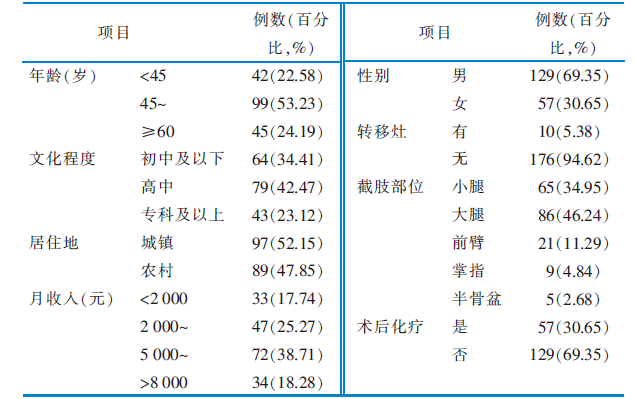 |
表1 恶性骨肿瘤患者一般资料(n=186)
Table 1 General information of patients with malignant bone tumors(n=186)
|
 |
表2 恶性骨肿瘤患者配偶的一般资料(n=186)
Table 2 General information of spouses of patients with malignant bone tumors(n=186)
|
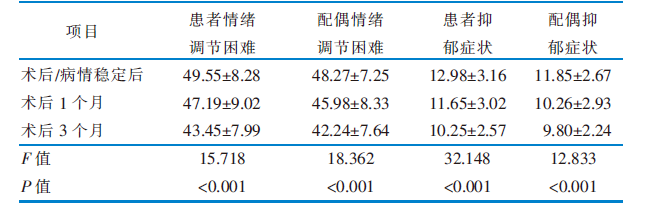 |
表3 恶性骨肿瘤患者和其配偶情绪调节困难、抑郁症状得分(n=186,分,$\bar{x}±s$)
Table 3 Scores of emotion dysregulation and depressive symptoms in patients with malignant bone tumors and their spouses(n=186,scores,$\bar{x}±s$)
|
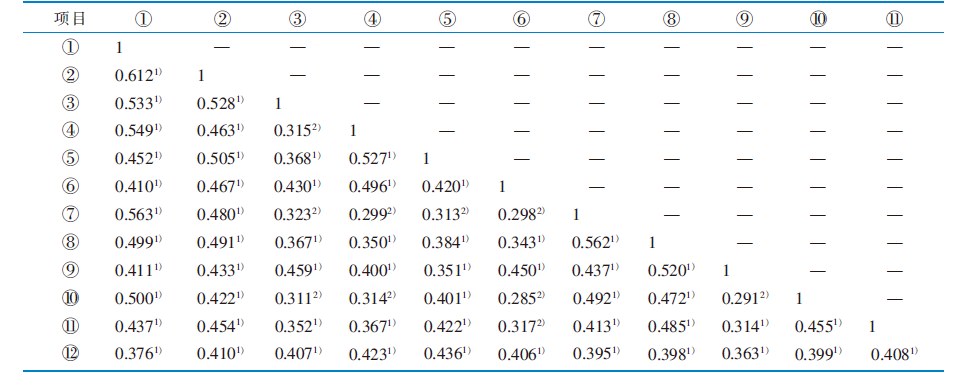 |
表4 恶性骨肿瘤患者和其配偶情绪调节困难、抑郁症状得分及相关分析(r值,n=186)
Table 4 Scores and bivariate correlations for emotion dysregulation and depressive symptoms in patients with malignant bone tumors and their spouses(r values,n=186)
|
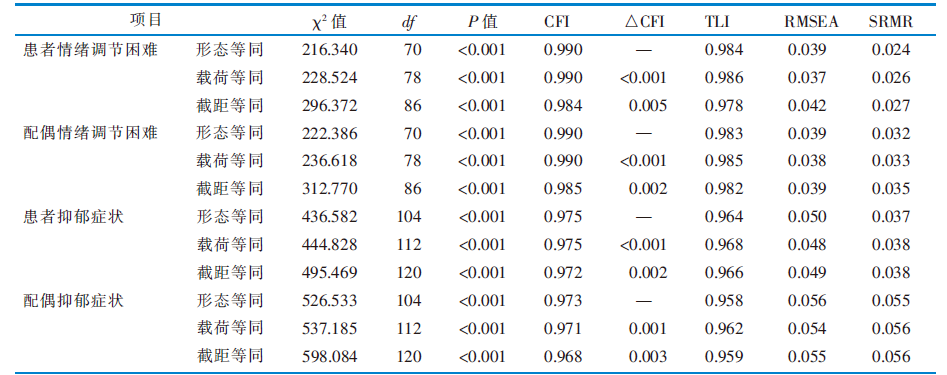 |
表5 恶性骨肿瘤患者和其配偶情绪调节困难及抑郁症状3次测量的等价性模型拟合结果
Table 5 Model fit indices for testing measurement invariance of emotion dysregulation and depressive symptoms across 3 time points in malignant bone tumor patients and their spouses
|
 |
表6 恶性骨肿瘤患者和其配偶情绪调节困难、抑郁症状主客体互倚模型限定后的拟合结果
Table 6 Goodness-of-fit indices for the constrained actor-partner interdependence model(APIM) of emotion dysregulation and depressive symptoms in malignant bone tumor patients and their spouses
|
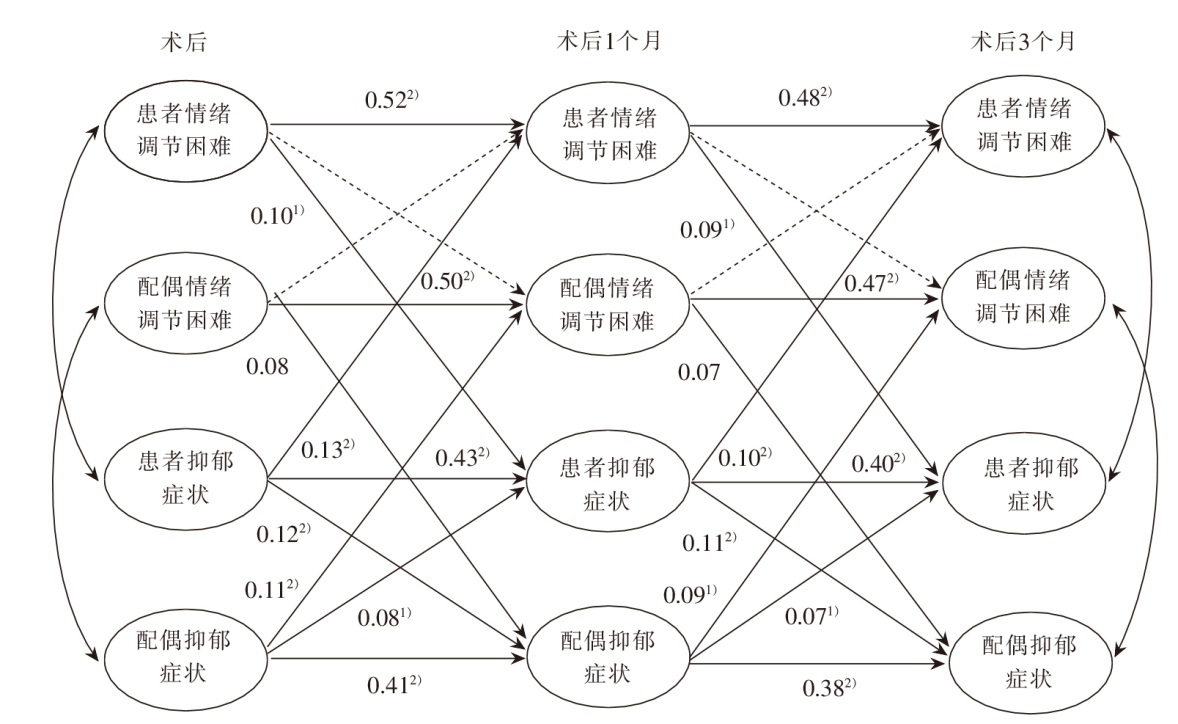
图1 恶性骨肿瘤患者和其配偶情绪调节困难、抑郁症状的交叉滞后主客体互倚模型图
Figure 1 Cross-lagged actor-partner interdependence model(APIM) of emotion dysregulation and depressive symptoms in patients with malignant bone tumors and their spouses 1)P<0.01,2)P<0.001。
| [1] |
Nacev BA, Sanchez-Vega F, Smith SA, et al. Clinical sequencing of soft tissue and bone sarcomas delineates diverse genomic landscapes and potential therapeutic targets[J]. Nat Commun, 2022, 13(1):3405.
DOI PMID |
| [2] |
Smolle MA, Kogler A, Andreou D, et al. Prognostic impact of pulmonary metastasectomy in bone sarcoma patients:a retrospective,single-centre study[J]. Cancers, 2023, 15(6):1733.
DOI URL |
| [3] |
Grassi L, Caruso R, Riba MB, et al. Anxiety and depression in adult cancer patients:ESMO clinical practice guideline[J]. ESMO Open, 2023, 8(2):101155.
DOI URL |
| [4] |
彭涛, 贺开麒, 雷一鹏, 等. 恶性骨肿瘤患者照护者真实照护体验的Meta整合[J]. 中华护理杂志, 2023, 58(22):2785-2791.
DOI URL |
| Peng T, He KQ, Lei YP, et al. Meta-integration of real care experiences of caregivers of patients with malignant bone tumors[J]. Chin J Nurs, 2023, 58(22):2785-2791. | |
| [5] |
Raposo CF, Pascoal PM, Faustino B, et al. The effect of emotional regulation difficulties on sexual and psychological distress using repetitive negative thinking as a mediator[J]. J Sex Med, 2023, 20(12):1466-1469.
DOI URL |
| [6] |
刘颖, 陈佳丽, 宁宁, 等. 骨肿瘤手术患者创伤后成长的调查研究[J]. 中华护理杂志, 2022, 57(10):1184-1190.
DOI URL |
| Liu Y, Chen JL, Ning N, et al. Investigation and research on post-traumatic growth in patients undergoing bone tumor surgery[J]. Chin J Nurs, 2022, 57(10):1184-1190. | |
| [7] |
Vizin G, Szekeres T, Juhász A, et al. The role of stigma and depression in the reduced adherence among young breast cancer patients in Hungary[J]. BMC Psychol, 2023, 11(1):319.
DOI PMID |
| [8] |
刘雪华, 王建虹, 杨丽红, 等. 血液肿瘤患者及其配偶二元应对与恐惧疾病进展的相关性分析[J]. 中华护理杂志, 2025, 60(6):717-722.
DOI URL |
|
Liu XH, Wang JH, Yang LH, et al. An analysis of correlation between dyadic coping in patients with hematological tumors and their spouses and fear of progression[J]. Chin J Nurs, 2025, 60(6):717-722.
DOI URL |
|
| [9] |
Kenny DA, Ledermann T. Detecting,measuring,and testing dyadic patterns in the actor-partner interdependence model[J]. J Fam Psychol, 2010, 24(3):359-366.
DOI URL |
| [10] | 费菲, 赵海, 曲莉莉. 我国骨肿瘤循证临床诊疗指南2015最新解读恶性骨肿瘤化疗等相关新药进展综述(下)[J]. 中国医药科学, 2016, 6(2):5-6. |
| Fei F, Zhao H, Qu LL. The latest interpretation of evidence-based clinical diagnosis and treatment guidelines for bone tumors in China in 2015(Ⅱ)[J]. China Med Pharm, 2016, 6(2):5-6. | |
| [11] | 王家良. 临床流行病学[M]. 上海: 上海科学技术出版社, 2014. |
| Wang JL. Clinical epidemiology[M]. Shanghai: Shanghai Science and Technology Press, 2014. | |
| [12] |
Gratz KL. Targeting emotion dysregulation in the treatment of self-injury[J]. J Clin Psychol, 2007, 63(11):1091-1103.
DOI PMID |
| [13] | 刘奇勤, 武厚, 刘明矾. 情绪调节状态困难量表的修订及信效度检验[J]. 中国学校卫生, 2017, 38(10):1571-1574. |
| Liu QQ, Wu H, Liu MF. Revision and reliability and validity test of Emotional Adjustment State Difficulty Scale[J]. Chin J Sch Health, 2017, 38(10):1571-1574. | |
| [14] |
Kroenke K, Spitzer RL, Williams JB. The PHQ-9:validity of a brief depression severity measure[J]. J Gen Intern Med, 2001, 16(9):606-613.
DOI PMID |
| [15] | 卞崔冬, 何筱衍, 钱洁, 等. 患者健康问卷抑郁症状群量表在综合性医院中的应用研究[J]. 同济大学学报(医学版), 2009, 30(5):136-140. |
| Bian CD, He XY, Qian J, et al. The reliability and validity of a modified Patient Health Questionnaire for Screening Depressive Syndrome in general hospital outpatients[J]. J Tongji Univ Med Sci, 2009, 30(5):136-140. | |
| [16] |
Roepke AM, Turner AP, Henderson AW, et al. A prospective longitudinal study of trajectories of depressive symptoms after dysvascular amputation[J]. Arch Phys Med Rehabil, 2019, 100(8):1426-1433.
DOI URL |
| [17] | 汤丹丹, 温忠麟. 共同方法偏差检验:问题与建议[J]. 心理科学, 2020, 43(1):215-223. |
| Tang DD, Wen ZL. Statistical approaches for testing common method bias:problems and suggestions[J]. J Psychol Sci, 2020, 43(1):215-223. | |
| [18] |
Lim DW, Retrouvey H, Kerrebijn I, et al. Longitudinal study of psychosocial outcomes following surgery in women with unilateral nonhereditary breast cancer[J]. Ann Surg Oncol, 2021, 28(11):5985-5998.
DOI PMID |
| [19] |
O’Brien AL, West JM, Gokun Y, et al. Longitudinal durability of patient-reported pain outcomes after targeted muscle reinnervation at the time of major limb amputation[J]. J Am Coll Surg, 2022, 234(5):883-889.
DOI URL |
| [20] |
Weissman S, Ghoneim S, Sanayei A, et al. New-onset depression after colorectal cancer diagnosis:a population-based longitudinal study[J]. Int J Colorectal Dis, 2021, 36(12):2599-2602.
DOI |
| [21] | 蓝慧玉, 农小莲, 黄仕环, 等. 癌症患者抑郁轨迹的研究进展[J]. 实用肿瘤学杂志, 2024, 38(4):262-267. |
| Lan HY, Nong XL, Huang SH, et al. Research progress of depression trajectory in cancer patients[J]. Pract Oncol J, 2024, 38(4):262-267. | |
| [22] |
杨阳, 刘美, 熊沫, 等. 中青年肠造口患者及其主要照护者护理依赖二元应对体验的质性研究[J]. 中华护理杂志, 2025, 60(4):389-395.
DOI URL |
| Yang Y, Liu M, Xiong M, et al. A qualitative study on the dual coping experience of nursing dependence in young and middle-aged enterostomy patients and their primary caregivers[J]. Chin J Nurs, 2025, 60(4):389-395. | |
| [23] |
Sullivan MJL, Adams H, Yamada K, et al. The relation between perceived injustice and symptom severity in individuals with major depression:a cross-lagged panel study[J]. J Affect Disord, 2020, 274:289-297.
DOI URL |
| [24] | 陈静, 施旭爱. 抑郁症患者自杀意念调查及其与家庭功能的关系:情绪调节自我效能感的中介作用[J]. 中国健康心理学杂志, 2024, 32(11):1647-1652. |
| Chen J, Shi XA. Investigation of suicidal ideation in patients with depression and its relationship with family function:the mediating role of emotional regulation self-efficacy[J]. China J Health Psychol, 2024, 32(11):1647-1652. | |
| [25] |
Greene T, West M, Somer E. Maladaptive daydreaming and emotional regulation difficulties:a network analysis[J]. Psychiatry Res, 2020, 285:112799.
DOI URL |
| [26] |
Cox MJ, Paley B. Families as systems[J]. Annu Rev Psychol, 1997, 48:243-267.
PMID |
| [27] |
Lo CZ, Su TW, Huang CC, et al. Randomization and resilience of brain functional networks as systems-level endophenotypes of schizophrenia[J]. Proc Natl Acad Sci USA, 2015, 112(29):9123-9128.
DOI URL |
| [28] | 刘博文, 王珊珊, 孙倩倩, 等. 脑卒中患者及其配偶二元心理资本的潜在剖面分析及护理对策[J]. 中华护理杂志, 2025, 60(3):332-339. |
| Liu BW, Wang SS, Sun QQ, et al. Latent profile analysis of dyadic psychological capital among stroke patients and their spouses and nursing countermeasures[J]. Chin J Nurs, 2025, 60(3):332-339. |
| [1] | 中华护理学会静脉输液治疗专业委员会, 北京护理学会, (执笔:李佳, 李旭英, 覃惠英, 陈利芬, 吴珍明, 胡泽吟, 罗梦娜, 范育英, 吴嘉慧, 林宇萍, 王蕾, 孙文彦, 冯毕龙, 高伟, 李亚南, 侯罗娅, 李春燕. 中心静脉通路装置拔除护理专家共识[J]. 中华护理杂志, 2026, 61(9): 1157-1162. |
| [2] | 周霞, 马艳艳, 师正坤, 于海霞, 周艳, 胡红玲, 李莜, 陈思思, 张京慧. 隧道式经股静脉PICC置入术在困难静脉通路婴幼儿中的应用研究[J]. 中华护理杂志, 2026, 61(9): 1163-1170. |
| [3] | 黄萍, 李黎, 郭骊莉, 徐莹, 叶赟, 江淑芳. 与无针输液接头相关的导管相关性血流感染风险评估工具的构建与初步应用[J]. 中华护理杂志, 2026, 61(9): 1171-1179. |
| [4] | 李佳, 张玉玲, 邢乐, 张利峰, 牛秀峰, 许莉. 早产儿经上肢置入PICC尖端继发性异位风险预测模型的建立与验证[J]. 中华护理杂志, 2026, 61(9): 1180-1186. |
| [5] | 何娟, 赵蕾蕾, 叶冠军, 余艳芬, 傅晓君, 周琴. 1例双侧无名静脉及上腔静脉人工血管置换术后患者经上肢置入PICC的护理[J]. 中华护理杂志, 2026, 61(9): 1187-1191. |
| [6] | 梁江淑渊, 曾妃, 何鹏, 谢梦珊, 江悦, 蒋宗恒, 王建茗. 静脉-静脉体外膜肺氧合患者早期活动风险等级评估系统的构建及应用研究[J]. 中华护理杂志, 2026, 61(9): 1192-1199. |
| [7] | 陈晨, 顾肖, 郭凡, 王敏, 倪兴梅, 黄琴, 程念开. 3种衰弱评估工具对急诊老年创伤患者不良结局的预测价值[J]. 中华护理杂志, 2026, 61(9): 1200-1207. |
| [8] | 郑煜琳, 刘晋宁, 张静, 郭会敏, 谷艳梅, 张莉莉. 酒精性肝病患者肝移植术后再饮酒现状及其影响因素分析[J]. 中华护理杂志, 2026, 61(9): 1208-1214. |
| [9] | 叶俊霜, 沈丽佳, 孟霞靓, 张玉姣, 蔡根莲, 邵碧云, 周亚辉, 张柳倩, 应金萍. 维持性血液透析患者对口腔衰弱认知和体验的质性研究[J]. 中华护理杂志, 2026, 61(9): 1215-1220. |
| [10] | 王芸姣, 杨玉金, 郑春艳, 彭菲津, 王淑贞, 蒋喜露, 周为民, 王薇, 张娜. 糖尿病下肢动脉硬化闭塞症患者介入术后康复护理方案的构建及应用研究[J]. 中华护理杂志, 2026, 61(9): 1221-1229. |
| [11] | 杨明霞, 安冉, 臧金凤, 李春梅. 老年慢性病共病患者及照护者老老照护能力与自我忽视的相关性分析[J]. 中华护理杂志, 2026, 61(9): 1230-1236. |
| [12] | 梁和静, 许鹊, 史云霞, 祖金美, 黄文静, 杨春旭, 郭明华, 王磊. 颈动脉内膜剥脱术围手术期护理质量评价指标的构建[J]. 中华护理杂志, 2026, 61(9): 1237-1244. |
| [13] | 韩媛媛, 石玉竹, 尚文涵, 么莉. 870所三级甲等医院老年住院患者跌倒伤害发生现状与影响因素分析[J]. 中华护理杂志, 2026, 61(9): 1245-1252. |
| [14] | 夏云芳, 王洪, 崔岱, 付真真, 朱敏. 1例弥漫性毒性甲状腺肿合并超敏反应综合征青少年患者的护理[J]. 中华护理杂志, 2026, 61(9): 1253-1256. |
| [15] | 周益飞, 王海苹, 胡益环, 应莉, 罗松娜. 1例氢氟酸中毒并发呼吸心搏骤停患者的急救护理[J]. 中华护理杂志, 2026, 61(9): 1257-1260. |
| 阅读次数 | ||||||
|
全文 |
|
|||||
|
摘要 |
|
|||||
