

中华护理杂志 ›› 2025, Vol. 60 ›› Issue (12): 1427-1433.DOI: 10.3761/j.issn.0254-1769.2025.12.003
侯燕丽( ), 陆镇涛, 郭敬, 林海青, 唐新宇, 周姣媚, 王坤, 陈扬()
收稿日期:2024-12-10
出版日期:2025-06-20
发布日期:2025-06-17
*通讯作者:
陈扬,E-mail:labaicaijiejie@126.com作者简介:侯燕丽:女,本科(硕士在读),主管护师,E-mail:hyl19860420@126.com
基金资助:
HOU Yanli(), LU Zhentao, GUO Jing, LIN Haiqing, TANG Xinyu, ZHOU Jiaomei, WANG Kun, CHEN Yang()
Received:2024-12-10
Online:2025-06-20
Published:2025-06-17
摘要: 目的 构建肺癌患者不同证型咳嗽耳穴贴压技术方案并探讨其应用效果。方法 2022年12月—2023年3月,利用专家函询法,形成针对肺癌患者不同证型咳嗽耳穴贴压技术方案。2023年7月—2024年1月,在北京市3所三级甲等中医医院肿瘤科住院患者中选取122例Ⅰ~Ⅱ期肺癌咳嗽患者,并随机分为试验组和对照组,各61例,试验组参照构建的耳穴贴压技术方案进行辨证取穴,对照组采用原耳穴贴压方案,连续干预7 d。比较两组干预前后咳嗽严重程度视觉模拟量表评分、安德森癌症症状评估量表-肺癌模块评分的差异。结果 构建的方案包括3个一级条目、12个二级条目、14个三级条目。2轮函询专家权威程度系数均为0.88,肯德尔和谐系数分别为0.170、0.130(P<0.001)。所有患者均完成研究。干预后,试验组咳嗽严重程度评分为3.0(2.0,3.0)分,低于对照组的3.0(3.0,4.0)分;试验组症状评估量表评分为17.0(9.5,31.5)分,低于对照组的28.0(15.5,47.5)分,差异均具有统计学意义(P<0.05)。结论 构建的耳穴贴压技术方案具有一定的科学性,可有效缓解Ⅰ~Ⅱ期肺癌患者的咳嗽严重程度,且症状群的严重程度得到改善,为中医护理干预肺癌患者咳嗽症状提供依据。
侯燕丽, 陆镇涛, 郭敬, 林海青, 唐新宇, 周姣媚, 王坤, 陈扬. 肺癌患者不同证型咳嗽耳穴贴压技术方案构建及效果研究[J]. 中华护理杂志, 2025, 60(12): 1427-1433.
HOU Yanli, LU Zhentao, GUO Jing, LIN Haiqing, TANG Xinyu, ZHOU Jiaomei, WANG Kun, CHEN Yang. Construction and effect of auricular acupressure in patients with cough with different syndrome types[J]. Chinese Journal of Nursing, 2025, 60(12): 1427-1433.
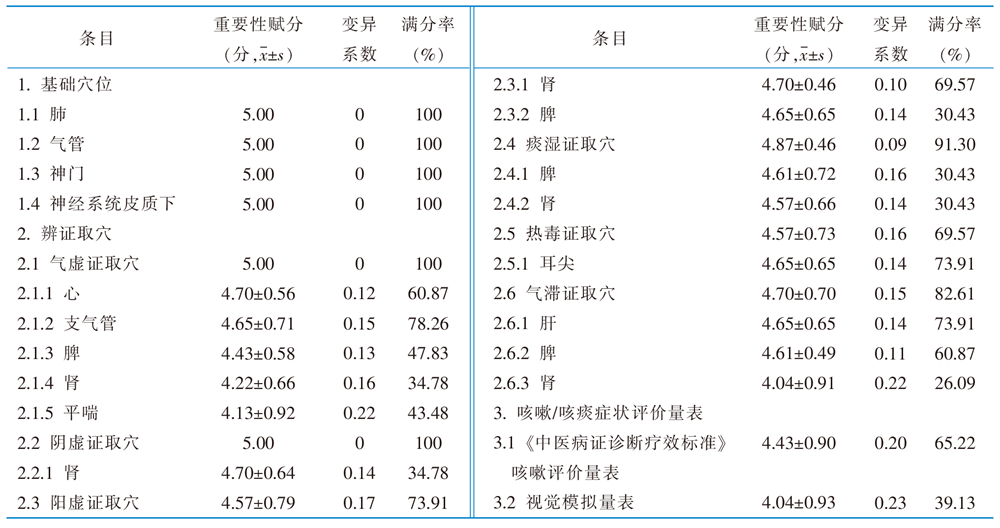 |
表1 肺癌患者不同证型咳嗽耳穴贴压技术方案
Table 1 Technical scheme for auricular acupressure in patients with cough from different types of lung cancer
| |
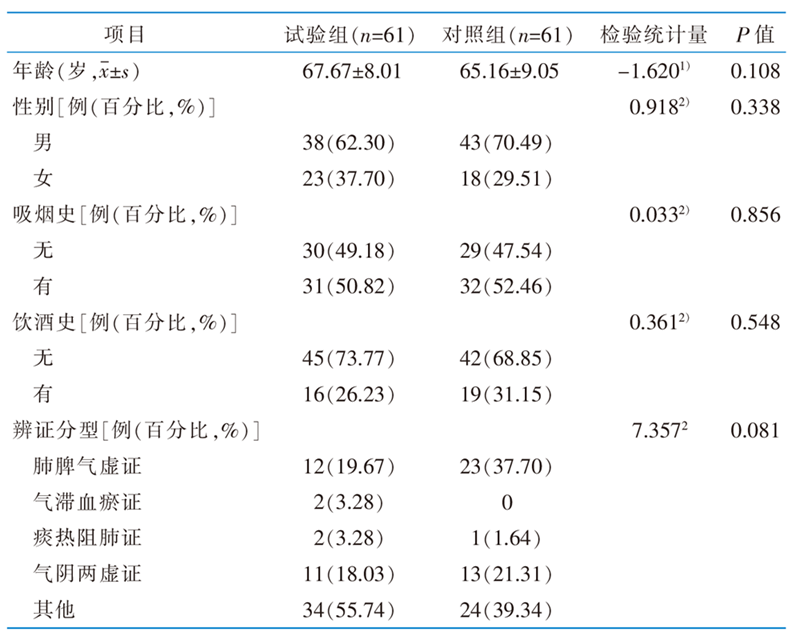 |
表2 两组一般资料的比较
Table 2 Comparison of the general data of the 2 groups
| |
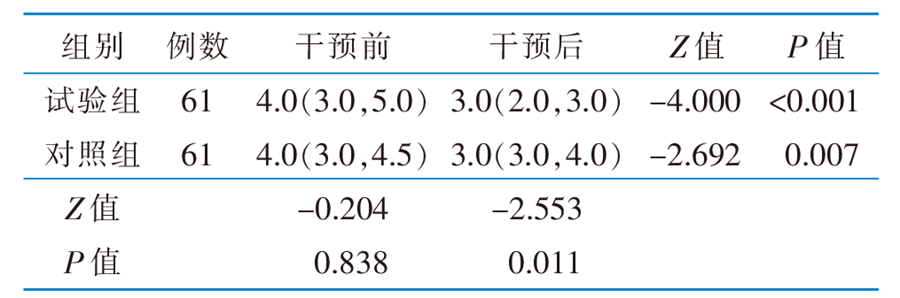 |
表3 两组干预前后咳嗽严重程度视觉模拟量表评分的比较 [分,M(P25,P75)]
Table 3 Visual Analogue Scale scores of cough severity before and after intervention in the 2 groups [scores,M(P25,P75)]
| |
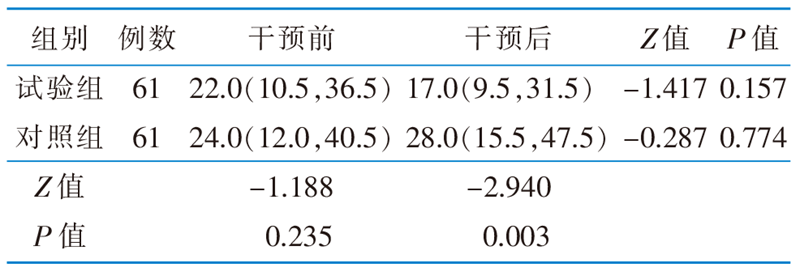 |
表4 两组干预前后安德森癌症症状评估量表-肺癌模块评分的比较[分,M(P25,P75)]
Table 4 Comparison of the total score of the Multiple Symptom Assessment Scale(MDASI-LC) between the 2 groups before and after intervention[scores,M(P25,P75)]
| |
| [1] | Bray F, Laversanne M, Sung H, et al. Global cancer statistics 2022:GLOBOCAN estimates of incidence and mortality worldwide for 36 cancers in 185 countries[J]. CA Cancer J Clin, 2024, 74(3):229-263. |
| [2] | 罗素霞, 赖国祥, 张力, 等. 中国肺癌患者咳嗽管理现状及医护人员观念和实践调研[J]. 中华医学杂志, 2021, 101(21):1583-1591. |
| Luo SX, Lai GX, Zhang L, et al. Investigation on status of lung cancer cough management and concept and practice of lung cancer cough management in Chinese medical providers[J]. Natl Med J China, 2021, 101(21):1583-1591. | |
| [3] | 中国抗癌协会癌症康复与姑息治疗专业委员会. 肺癌相关性咳嗽诊疗中国专家共识[J]. 中华医学杂志, 2021, 101(35):2751-2759. |
| Cancer Rehabilitation and Palliative Care Committee of Chinese Anti-Cancer Association. Chinese expert consensus on the diagnosis and treatment of lung cancer-related cough[J]. Natl Med J China, 2021, 101(35):2751-2759. | |
| [4] | 邓城庆, 朱晓雷, 耿国军. 胸腔镜肺叶切除术后咳嗽的研究进展[J]. 中国微创外科杂志, 2020, 20(4):354-357. |
| Deng CQ, Zhu XL, Geng GJ. Research progress of cough after thoracoscopic lobectomy[J]. Chin J Minim Invasive Surg, 2020, 20(4):354-357. | |
| [5] | 周琨, 王丽娟, 赵秋月, 等. 肺癌隆突切除术患者围手术期的呼吸道护理[J]. 中华护理杂志, 2003, 38(11):849-850. |
| Zhou K, Wang LJ, Zhao QY, et al. Perioperative respiratory nursing care of patients with pulmonary neoplasm under carinal resection[J]. Chin J Nurs, 2003, 38(11):849-850. | |
| [6] |
倪晓莎, 李帅妮, 倪依莎, 等. 肺癌患者咳嗽症状管理研究进展[J]. 护理学报, 2019, 26(4):20-23.
DOI |
| Ni XS, Li SN, Ni YS, et al. Research progress on cough symptom management of lung cancer patients[J]. J Nurs(China), 2019, 26(4):20-23. | |
| [7] |
Molassiotis A, Smith JA, Mazzone P, et al. Symptomatic treatment of cough among adult patients with lung cancer:chest guideline and expert panel report[J]. Chest, 2017, 151(4):861-874.
DOI PMID |
| [8] | 中华中医药学会. 中医内科常见病诊疗指南(西医疾病部分)[M]. 北京: 中国中医药出版社,2008:1-2. |
| Chinese Society of Traditional Chinese Medicine. Guidelines for diagnosis and treatment of common internal diseases in Chinese medicine(Diseases of modern medicine)[M]. Beijing: China Press of Traditional Chinese Medicine,2008:1-2. | |
| [9] | 慕腾, 姜冠潮, 李晓, 等. 胸腔镜肺切除术后持续咳嗽的多因素分析[J]. 中国微创外科杂志, 2017, 17(7):577-580. |
| Mu T, Jiang GC, Li X, et al. Multivariate analysis of cough after pulmonary resection by video-assisted thoracoscopic surgery[J]. Chin J Minim Invasive Surg, 2017, 17(7):577-580. | |
| [10] | 林梅香, 黄丽华, 黄冬梅, 等. 基于扶阳次第艾灸联合穴位贴敷治疗痰湿脾虚型肺癌咳嗽临床观察[J]. 光明中医, 2024, 39(21):4365-4368. |
| Lin MX, Huang LH, Huang DM, et al. Clinical observation on the treatment of lung cancer cough with phlegm-dampness and spleen deficiency based on Fuyang second moxibustion combined with acupoint application[J]. Guangming J Chin Med, 2024, 39(21):4365-4368. | |
| [11] | 国家中医药管理局. 关于印发中风等13个病种中医护理方案(试行)的通知[EB/OL]. (2013-05-16)[2024-12-14]. http://www.natcm.gov.cn/yizhengsi/gongzuodongtai/2018-03-24/2800.html. |
| State Administration of Traditional Chinese Medicine. Notice on the issuance of TCM nursing programs for 13 diseases such as stroke(for trial implementation)[EB/OL]. (2013-05-16)[2024-12-14]. http://www.natcm.gov.cn/yizhengsi/gongzuodongtai/2018-03-24/2800.html. | |
| [12] | 鲁锦胜, 刘晓伟, 周建仪, 等. 耳穴压豆治疗慢性咳嗽的疗效观察[J]. 中医外治杂志, 2021, 30(4):27-29. |
| Lu JS, Liu XW, Zhou JY, et al. Observation on therapeutic effect of auricular point pressing beans on chronic cough[J]. J Extern Ther Tradit Chin Med, 2021, 30(4):27-29. | |
| [13] | 余清萍, 谢珊, 唐颖丽. 埋针联合耳穴压豆治疗成年人咳嗽病痰浊阻肺临床分析[J]. 四川中医, 2021, 39(8):180-183. |
| Yu QP, Xie S, Tang YL. Clinical analysis of applying needle-embedding combined with auricular pressure in the treatment of adults with turbid phlegm obstructing lung type cough[J]. J Sichuan Tradit Chin Med, 2021, 39(8):180-183. | |
| [14] | 汪红飞. 耳穴压丸治疗肺癌咳嗽患者的效果观察[J]. 医药前沿, 2016, 6(30):331-332. |
| Wang HF. Observation of the effect of auricular pressure pills in the treatment of lung cancer cough patients[J]. J Front Med, 2016, 6(30):331-332. | |
| [15] | 石明杰, 王梁敏, 唐玲, 等. 穴位贴敷联合耳穴压丸治疗老年慢性咳嗽痰湿蕴肺证疗效观察[J]. 中西医结合护理(中英文), 2020, 6(7):61-64. |
| Shi MJ, Wang LM, Tang L, et al. Clinical observation on effect of acupoint application combined with auricular-point-pressing therapy in the treatment of senile chronic cough with phlegm-dampness accumulating lung syndrome[J]. Nurs Integr Tradit Chin West Med, 2020, 6(7):61-64. | |
| [16] | 刘通. 穴位贴敷联合耳穴压豆治疗肺癌久咳临床观察[J]. 中国保健营养, 2019, 29(31):2. |
| Liu T. Clinical observation on treating lung cancer with chronic cough by acupoint application combined with auricular point pressing bean[J]. China Health Care Nutr, 2019, 29(31):2. | |
| [17] | 汪淑琴, 陈一柳, 张成旭, 等. 小儿干咳方联合耳穴贴压治疗儿童慢性咳嗽风邪伤肺证疗效观察[J]. 中华中医药杂志, 2021, 36(12):7505-7508. |
| Wang SQ, Chen YL, Zhang CX, et al. Efficacy observation of Xiaoer Ganke Decoction combined with auricular points sticking on children with chronic cough of wind pathogenic attacking lung syndrome[J]. China J Tradit Chin Med Pharm 2021, 36(12):7505-7508. | |
| [18] | 王芳, 侯秋雨, 王世爱, 等. 关于肺癌术后慢性咳嗽中医证候特征及治疗方法的研究[J]. 中医临床研究, 2018, 10(12):98-100. |
| Wang F, Hou QY, Wang SA, et al. A study on characteristics of TCM syndrome and treatment of chronic cough after lung cancer operation[J]. Clin J Chin Med, 2018, 10(12):98-100. | |
| [19] | 周燕, 周佩如, 黄洁微, 等. 参与胰岛素泵调节的糖尿病专科护士核心能力指标体系的构建[J]. 中华护理杂志, 2020, 55(7):1055-1060. |
|
Zhou Y, Zhou PR, Huang JW, et al. Construction of a core competence index system for diabetes specialized nurses participating in insulin pump regulation[J]. Chin J Nurs, 2020, 55(7):1055-1060.
DOI URL |
|
| [20] | 邵静, 罗薇, 耿丽弟, 等. 精神科专科护理质量敏感性指标体系的构建[J]. 中国护理管理, 2021, 21(6):931-936. |
| Shao J, Luo W, Geng LD, et al. Construction of sensitive quality index system of psychiatric nursing[J]. Chin Nurs Manag, 2021, 21(6):931-936. | |
| [21] | 国家癌症中心, 国家肿瘤质控中心肺癌质控专家委员会. 中国原发性肺癌规范诊疗质量控制指标(2022版)[J]. 中华肿瘤杂志, 2022, 44(7):594-599. |
| National Cancer Center Expert Committee on Lung Cancer Quality Control of National Center for Oncology Quality Control. Quality control index for standardized diagnosis and treatment of lung cancer in China(2022 edition)[J]. Chin J Oncol, 2022, 44(7):594-599. | |
| [22] |
Yang L, Wang SD, Zhou YY, et al. Evaluation of the 7th and 8th editions of the AJCC/UICC TNM staging systems for lung cancer in a large North American cohort[J]. Oncotarget, 2017, 8(40):66784-66795.
DOI PMID |
| [23] | 中国中西医结合学会. T/CAIM 024-2021. 肺癌(非小细胞型)中西医结合诊疗专家共识[S/OL]. (2021-08-21)[2025-01-07]. http://www.caim.org.cn/info_content.jsp?id=8342. |
| Chinese Association of Integrative Medicine. T/CAIM 024-2021.Expert consensus on the diagnosis and treatment of lung cancer(non-small cell type)[S/OL]. (2021-08-21)[2025-01-07]. http://www.caim.org.cn/info_content.jsp?id=8342. | |
| [24] | 国家中医药管理局. 关于印发护理人员中医技术使用手册的通知[EB/OL]. (2015-12-23)[2024-12-16]. http://www.natcm.gov.cn/yizhengsi/gongzuodongtai/2018-03-24/2691.html. |
| State Administration of Traditional Chinese Medicine. Notice on the issuance of the handbook for the use of traditional Chinese medicine techniques for nursing staff[EB/OL]. (2015-12-23)[2024-12-16]. http://www.natcm.gov.cn/yizhengsi/gongzuodongtai/2018-03-24/2691.html. | |
| [25] | 中华医学会呼吸病学分会哮喘学组. 咳嗽的诊断与治疗指南(2021)[J]. 中华结核和呼吸杂志, 2022, 45(1):13-46. |
| Asthma Group, Chinese Society of Respiratory Diseases. Guidelines for the diagnosis and treatment of cough(2021)[J]. Chin J Tuberc Respir, 2022, 45(1):13-46. | |
| [26] |
李京京, 吕晓晴, 刘杉杉, 等. 围手术期肺癌患者症状群与生活质量相关性的纵向研究[J]. 中华护理杂志, 2020, 55(11):1635-1641.
DOI URL |
|
Li JJ, Lü XQ, Liu SS, et al. A longitudinal study on the correlations between symptom clusters and quality of life in patients with lung cancer during perioperation[J]. Chin J Nurs, 2020, 55(11):1635-1641.
DOI URL |
|
| [27] | 黄丽春. 耳穴治疗学[M]. 2版. 北京: 科学技术文献出版社, 2017. |
| Huang LC. Auricular point therapeutics[M]. 2nd ed. Beijing: Scientific and Technical Documents Publishing House, 2017. |
| [1] | 刘凤春, 孟茜, 宋晓萌, 穆东帅, 王艳, 王雪, 常红. 择时穴位贴敷对帕金森病患者夜间尿频的护理效果研究[J]. 中华护理杂志, 2026, 61(3): 347-352. |
| [2] | 杨婷, 魏慧, 柳妙妙, 吴旻昊, 童芳芳, 蒋璐亚, 杨红燕. 五音配五色音乐疗法在脑卒中后阈下抑郁患者中的应用研究[J]. 中华护理杂志, 2025, 60(21): 2648-2653. |
| [3] | 谢睿, 章启秀, 陈丽丽, 李颖, 宁丽. 择时芳香疗法联合平衡火罐对围绝经期失眠患者的干预效果研究[J]. 中华护理杂志, 2025, 60(21): 2654-2661. |
| [4] | 邵雪英, 裴晓丹, 李艳娟, 董玉红, 常立阳, 金静芬. 基于脑-肠轴理论的足部推拿在脾肾阳虚型血液透析失眠患者中的应用研究[J]. 中华护理杂志, 2025, 60(18): 2203-2209. |
| [5] | 肖婷婷, 许丽春, 郑卉, 黄美玲, 张曼, 张铭琦. 肺癌术后患者肺康复行为促进与障碍因素的Meta整合[J]. 中华护理杂志, 2025, 60(18): 2279-2286. |
| [6] | 杜云红, 荣文丽, 孙莉莉, 王玉, 王淑君, 王莉. 结直肠癌患者“互联网+中医护理服务”选择偏好的研究[J]. 中华护理杂志, 2025, 60(12): 1413-1419. |
| [7] | 姚斌莲, 徐敏, 毛小培, 彭敏, 祝瑞, 张晓兰, 叶梦华, 杨丹华. 砭石中药热熨在造血干细胞移植患者预处理期胃肠道反应中的应用研究[J]. 中华护理杂志, 2025, 60(12): 1420-1426. |
| [8] | 艾丽娟, 陆姝姝, 施剑剑, 石吉芬, 叶静. 耳部刮痧在慢性肾衰竭伴恶心呕吐患者中的应用研究[J]. 中华护理杂志, 2025, 60(12): 1434-1439. |
| [9] | 姚斌莲, 徐敏, 叶梦华, 陈晓洁, 叶富英, 汪永坚, 林娟英, 倪斐琳, 张晓兰. 浙江省“互联网+中医护理服务”人才培养模式的构建与应用[J]. 中华护理杂志, 2024, 59(8): 980-986. |
| [10] | 王璇, 胡景贤, 韩舒羽, 王颖, 吴璇, 赵艳超, 刘雪娇. 中医五音疗法在肝郁脾虚型自身免疫性肝病患者中的应用研究[J]. 中华护理杂志, 2024, 59(7): 789-795. |
| [11] | 王成龙, 金宁宁, 裴立松, 田媛, 王丽伟, 张仪, 李清萍, 张翠轻, 王彩虹, 韩洋, 郭菊兰, 刘香弟. 7所三级中医院血液透析患者中医健康知识掌握现状及对策[J]. 中华护理杂志, 2024, 59(7): 796-801. |
| [12] | 张媛媛, 龙秀红, 吕婵, 李鲜, 王艺, 黄兰英, 涂惠琼, 覃惠娟. 1例药液外渗致慢性难愈性创面形成患者的中西医结合护理[J]. 中华护理杂志, 2024, 59(7): 808-811. |
| [13] | 黄奕敏, 黄丽君, 翁丹婷, 庄平, 谭益冰. 脑卒中肢体功能障碍患者恢复期中医康复护理的最佳证据总结[J]. 中华护理杂志, 2024, 59(7): 812-819. |
| [14] | 张菁, 张琛, 姜梦媛, 葛燕, 张馨悦, 徐家华. 艾灸改善肿瘤患者血液高凝状态的效果研究[J]. 中华护理杂志, 2024, 59(23): 2873-2877. |
| [15] | 魏佳佳, 冉真榕, 石奥利, 陈丛琳, 杨雪, 杨光静, 李飞丽, 杨婵娟. 省市级中医护理学重点专科建设评估指标的构建及验证[J]. 中华护理杂志, 2024, 59(23): 2878-2886. |
| 阅读次数 | ||||||
|
全文 |
|
|||||
|
摘要 |
|
|||||
