

中华护理杂志 ›› 2026, Vol. 61 ›› Issue (22): 3100-3108.DOI: 10.3761/j.issn.0254-1769.2026.22.011
王杉珊1( ), 王锦毓2, 张晓小1, 付欢英1, 吴婉英3,*()
收稿日期:2026-06-24
出版日期:2026-11-20
发布日期:2026-11-16
*通讯作者:
吴婉英,E-mail:764286275@qq.com作者简介:王杉珊:女,硕士,主管护师,E-mail:1638803359@qq.com王杉珊:设计框架、撰写论文与修改;吴婉英、付欢英:确定选题、质量控制;王锦毓:数据整理、统计学分析;张晓小:收集资料
基金资助:
WANG Shanshan1(), WANG Jinyu2, ZHANG Xiaoxiao1, FU Huanying1, WU Wanying3,*()
Received:2026-06-24
Online:2026-11-20
Published:2026-11-16
* Corresponding author:
WU Wanying,E-mail:764286275@qq.comFunding program:摘要:
目的 识别胃癌患者术后症状群及前哨症状并分析其影响因素,为症状群早期干预和加速康复提供科学依据。 方法 采用便利抽样法,选取2025年10月—2026年2月在浙江省某三级甲等医院胃外科行胃癌根治术的患者作为调查对象。术后第1、3、7天,采用一般资料调查问卷、安德森症状评估量表-胃肠道肿瘤特异性模块量表、症状首次出现记录表进行调查。通过主成分分析法提取胃癌患者术后症状群,采用Apriori算法结合症状首发时间识别前哨症状,采用分位数回归法分析其影响因素。 结果 共发放问卷220份,回收有效问卷216份,有效问卷回收率为98.18%。提取出4个症状群,疼痛、瞌睡、悲伤分别是手术相关症状群、能量缺乏症状群、心理情绪症状群的前哨症状,消化道症状群未识别出明确前哨症状。不同前哨症状的严重程度在性别、年龄、文化程度、手术方式、肿瘤临床分期、基础疾病上呈现出特异性。 结论 疼痛、瞌睡、悲伤分别是手术相关症状群、能量缺乏症状群、心理情绪症状群的前哨症状,受多种因素影响,提示临床上应尽早识别上述前哨症状,对其影响因素采取预见性干预,以提高症状管理的前瞻性与精准性。
王杉珊, 王锦毓, 张晓小, 付欢英, 吴婉英. 胃癌患者术后症状群及前哨症状的识别与影响因素分析[J]. 中华护理杂志, 2026, 61(22): 3100-3108.
WANG Shanshan, WANG Jinyu, ZHANG Xiaoxiao, FU Huanying, WU Wanying. Analysis of postoperative symptom clusters and sentinel symptoms in gastric cancer patients and their influencing factors[J]. Chinese Journal of Nursing, 2026, 61(22): 3100-3108.
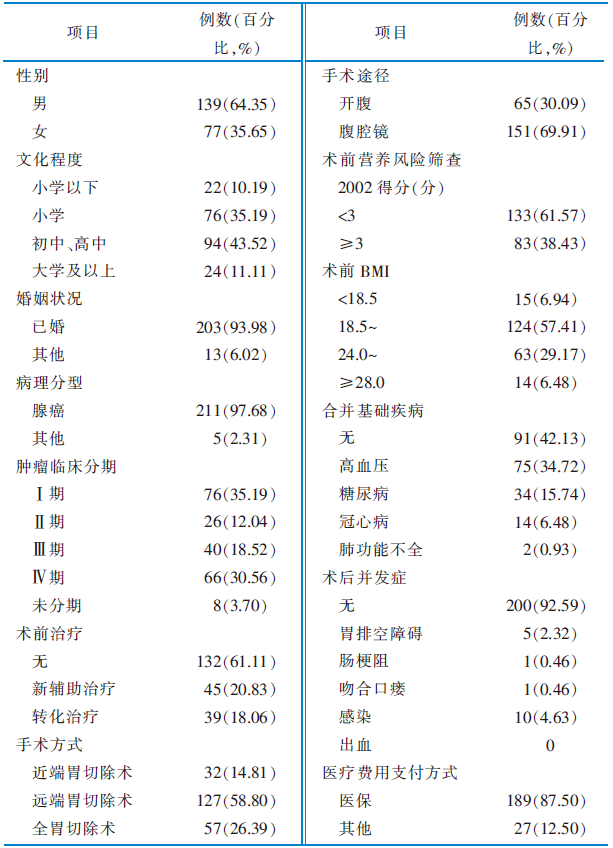 |
表1 调查对象的一般资料(n=216)
Table 1 Analysis of basic data of respondents(n=216)
| |
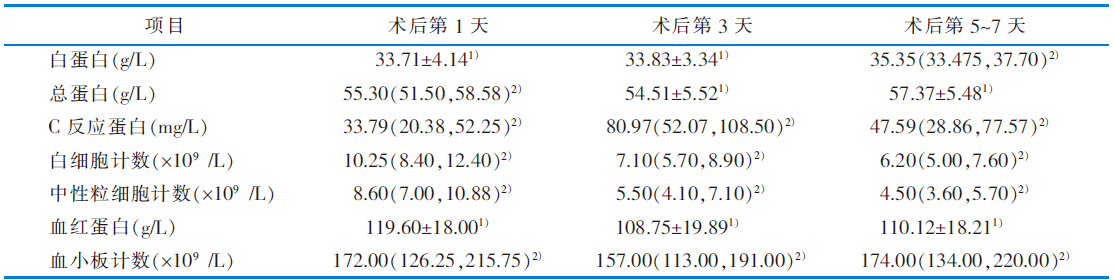 |
表2 调查对象的实验室检查结果(n=216)
Table 2 Laboratory test results of gastric cancer patients(n=216)
| |
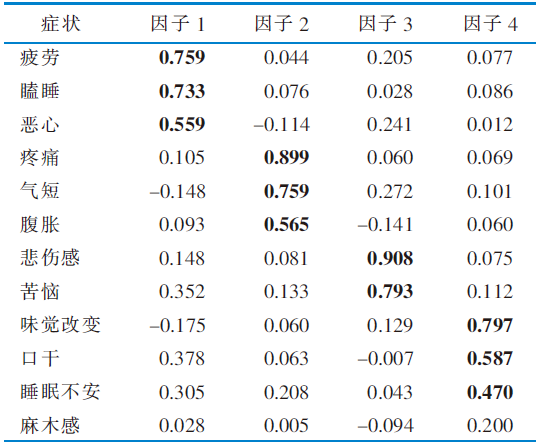 |
表3 胃癌患者术后症状群的因子旋转成分矩阵(n=216)
Table 3 Rotated component matrix of symptom clusters in post-gastrectomy patients(n=216)
| |
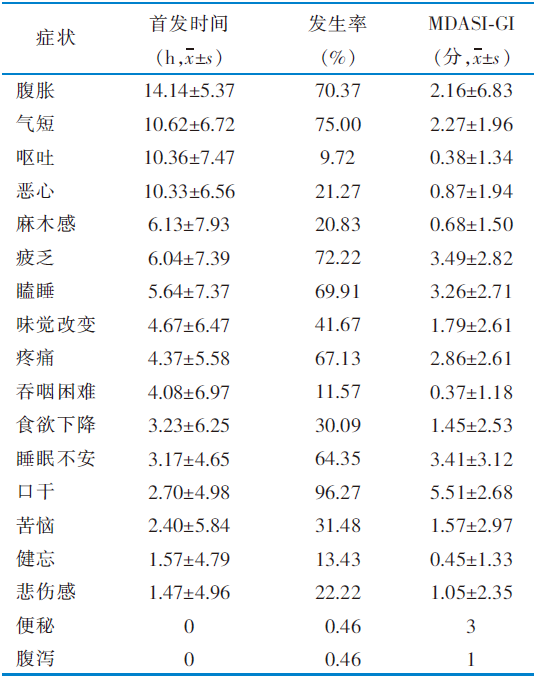 |
表4 胃癌患者术后各症状首次发生时间、发生率和MDASI-GI得分情况(n=216)
Table 4 First occurrence time, incidence rate, and MDASI-GI scores of each symptom in patients after gastric cancer surgery(n=216)
| |
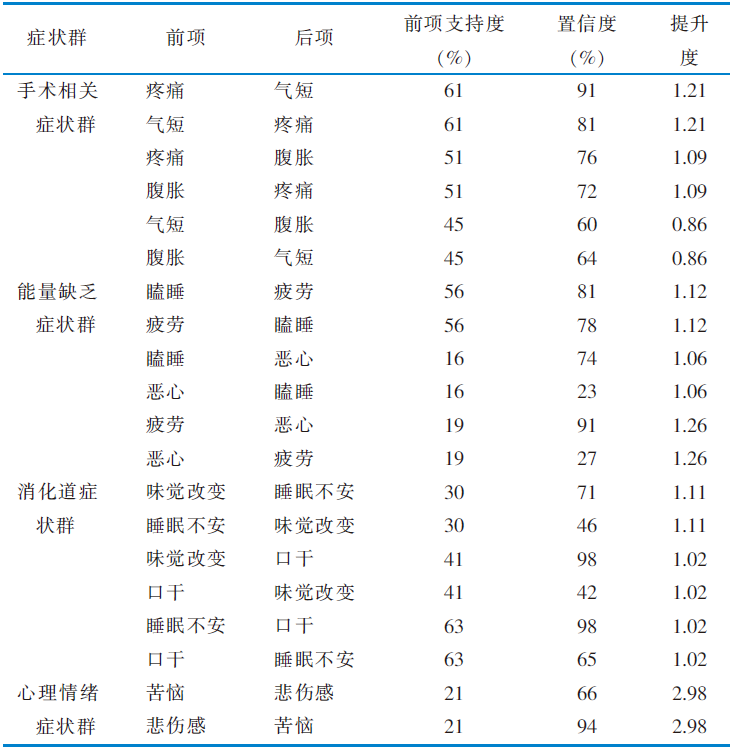 |
表5 胃癌患者术后各症状群的前哨症状及症状群内症状Apriori算法结果(n=216)
Table 5 Apriori algorithm results for sentinel symptoms and symptoms within each symptom cluster in patients after gastric cancer surgery(n=216)
| |
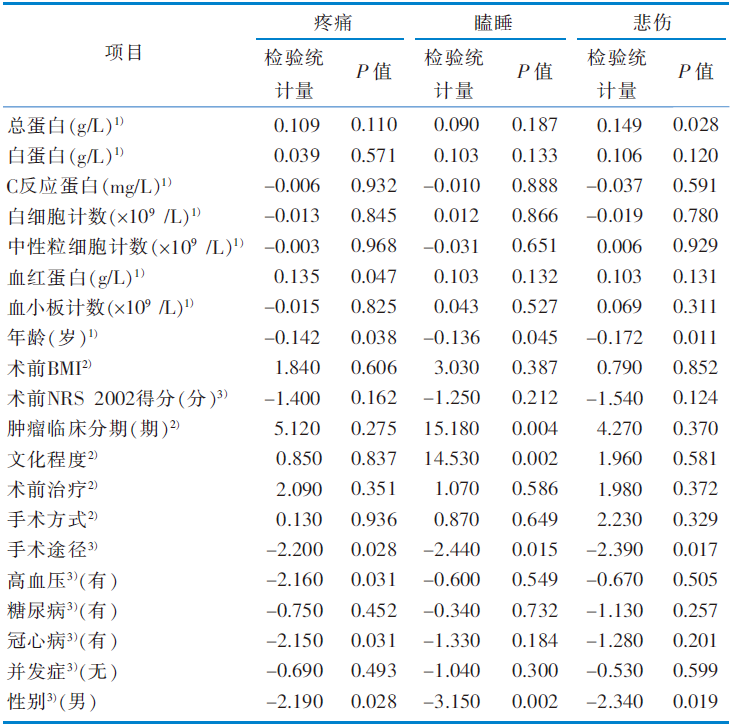 |
表6 胃癌患者术后症状群内前哨症状的单因素分析结果(n=216)
Table 6 Univariate analysis results of sentinel symptoms in post-gastric cancer surgery patients(n=216)
| |
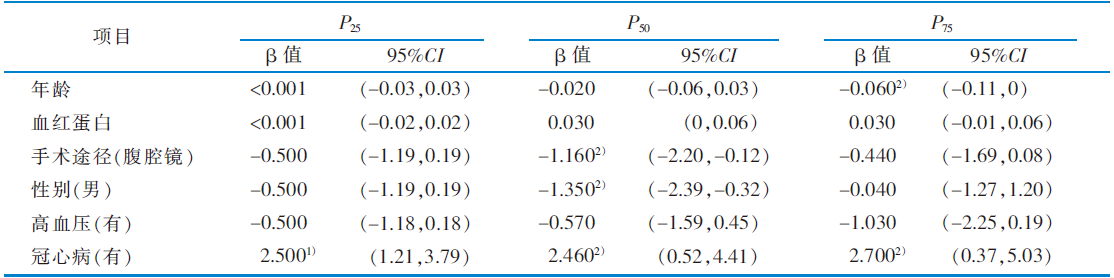 |
表7 胃癌患者术后疼痛症状的多因素分位数回归分析结果(n=216)
Table 7 Multivariate quantile regression analysis results of postoperative pain in gastric cancer patients(n=216)
| |
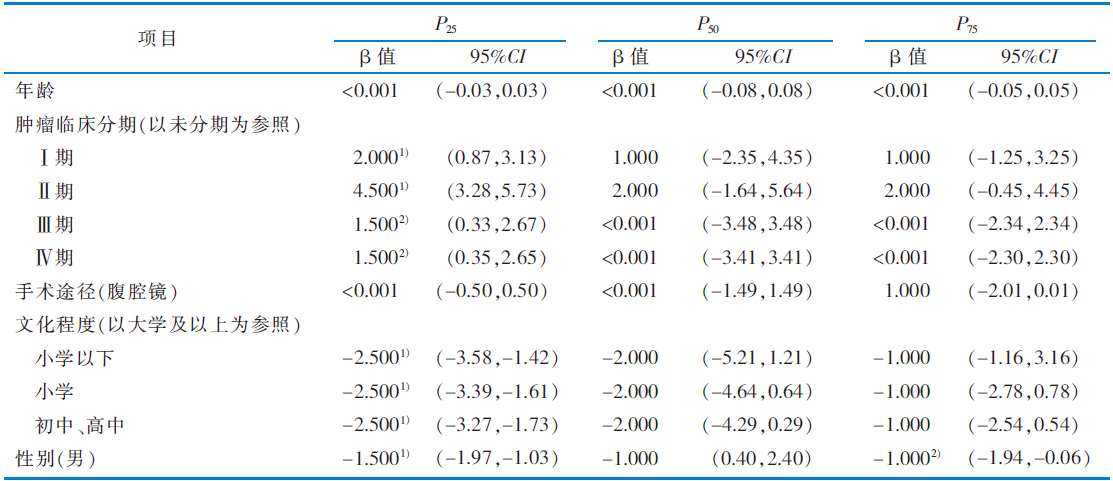 |
表8 胃癌患者术后瞌睡症状的多因素分位数回归分析结果(n=216)
Table 8 Multivariate quantile regression analysis results of postoperative drowsiness in gastric cancer patients(n=216)
| |
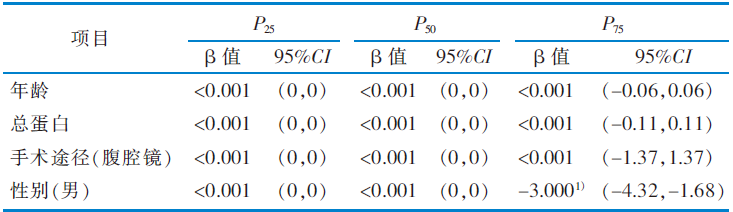 |
表9 胃癌患者术后悲伤症状的多因素分位数回归分析结果(n=216)
Table 9 Multivariate quantile regression analysis results of postoperative grief in gastric cancer patients(n=216)
| |
| [1] | 孙可欣, 李荔, 王少明, 等. 2024年中国分地区恶性肿瘤流行情况分析[J]. 中华肿瘤杂志, 2026, 48(3):400-412. |
| Sun KX, Li L, Wang SM, et al. Cancer incidence and mortality across diverse geographical regions in China,2024[J]. Chin J Oncol, 2026, 48(3):400-412. | |
| [2] |
Dodd MJ, Miaskowski C, Paul SM. Symptom clusters and their effect on the functional status of patients with cancer[J]. Oncol Nurs Forum, 2001, 28(3):465-470.
PMID |
| [3] | Brown JK, Cooley ME, Chernecky C, et al. A symptom cluster and sentinel symptom experienced by women with lung cancer[J]. Oncol Nurs Forum, 2011, 38(6):E425-E435. |
| [4] | 宋伟霞, 张秀真, 牛卫丽, 等. 基于症状群理论的胃癌化疗患者前哨症状调查[J]. 中华现代护理杂志, 2025, 31(7):946-950. |
| Song WX, Zhang XZ, Niu WL, et al. Sentinel symptoms survey in gastric cancer chemotherapy patients based on symptom clu-ster theory[J]. Chin J Mod Nurs, 2025, 31(7):946-950. | |
| [5] | 吴政, 罗海霞, 陈叶飞, 等. 前哨症状在症状群研究中的范围综述[J]. 护士进修杂志, 2026, 41(10):1079-1086. |
| Wu Z, Luo HX, Chen YF, et al. A scoping review of sentinel symptoms in symptom cluster studies[J]. J Nurses Train, 2026, 41(10):1079-1086. | |
| [6] |
马景双, 王爱平, 王艳杰, 等. 基于前哨症状的肺癌术后化疗患者护理干预方案的构建及应用[J]. 中华护理杂志, 2024, 59(2):133-141.
DOI |
|
Ma JS, Wang AP, Wang YJ, et al. Intervention study of lung cancer patients undergoing postoperative chemotherapy based on sentinel symptoms[J]. Chin J Nurs, 2024, 59(2):133-141.
DOI |
|
| [7] |
王杉珊, 吴婉英, 梁冠冕, 等. 胃癌患者术后抗阻运动方案的构建与应用研究[J]. 中华护理杂志, 2025, 60(13):1573-1580.
DOI |
| Wang SS, Wu WY, Liang GM, et al. Construction and applica-tion of a postoperative resistance exercise program for gastric cancer patients[J]. Chin J Nurs, 2025, 60(13):1573-1580. | |
| [8] |
汪芳莹, 陈雪峰, 贾燕, 等. 鼻咽癌患者围放疗期症状负担类别的潜在转变及影响因素分析[J]. 中华护理杂志, 2026, 61(4):490-497.
DOI |
| Wang FY, Chen XF, Jia Y, et al. Subgroups and transition pat-terns of symptom burden among nasopharyngeal carcinoma patients during the peri-radiotherapy period:a latent transition analysis[J]. Chin J Nurs, 2026, 61(4):490-497. | |
| [9] |
Wang XS, Williams LA, Eng C, et al. Validation and applica-tion of a module of the M.D. Anderson Symptom Inventory for measuring multiple symptoms in patients with gastrointestinal cancer(the MDASI-GI)[J]. Cancer, 2010, 116(8):2053-2063.
DOI URL |
| [10] | 陈仁旺. MDASI-GI中文版的信效度检验及临床应用研究[D]. 武汉: 华中科技大学, 2019. |
| Chen RW. Validation and application of the Chinese version of the MD Anderson Symptom Inventory-Gastrointestinal Can-cer Module(MDASI-GI-C)[D]. Wuhan: Huazhong University of Science and Technology, 2019. | |
| [11] |
陈鑫容, 常承婷, 杨婕, 等. 胃癌患者围术期症状群的研究进展[J]. 护理学报, 2023, 30(1):33-36.
DOI |
| Chen XR, Chang CT, Yang J, et al. Research progress of perio-perative symptom groups in patients with gastric cancer[J]. J Nurs(China), 2023, 30(1):33-36. | |
| [12] | 中华医学会麻醉学分会疼痛学组《成人术后疼痛管理临床实践指南(版)》工作组. 成人术后疼痛管理临床实践指南(2024版)[J]. 中华麻醉学杂志, 2025, 45(9):1045-1079. |
| Task force on “clinical practice guidelines for postoperative pain management in adults(2024 edition)”,Pain Group of the Chinese Society of Anesthesiology. Clinical practice guidelines for postoperative pain management in adults(2024 edition)[J]. Chin J Anesthesiol, 2025, 45(9):1045-1079. | |
| [13] | 王小波, 王慧虹, 侯礼佳, 等. 基于网络分析肺癌围术期核心症状的调查性研究[J]. 护士进修杂志, 2023, 38(24):2333-2339. |
| Wang XB, Wang HH, Hou LJ, et al. An investigative study on perioperative core symptoms of lung cancer based on network analysis[J]. J Nurses Train, 2023, 38(24):2333-2339. | |
| [14] | 费超男, 段培蓓, 杨玲, 等. 基于前哨症状的耳穴贴压预防胃癌化疗患者症状群的效果[J]. 护理学杂志, 2023, 38(17):65-69. |
| Fei CN, Duan PB, Yang L, et al. Effects of auricular point acu-pressure based on sentinel symptoms on preventing symptom clusters in patients with gastric cancer undergoing chemothe-rapy[J]. J Nurs Sci, 2023, 38(17):65-69. | |
| [15] |
Lu XM, Geng WH, Liu FX, et al. Symptom clusters and senti-nel symptoms in breast cancer survivors based on self-repor-ted outcomes:a cross-sectional survey[J]. J Clin Nurs, 2025, 34(3):1072-1080.
DOI URL |
| [16] | 中国抗癌协会癌症康复与姑息治疗专业委员会, 中国临床肿瘤学会肿瘤支持与康复治疗专家委员会. 癌症相关性疲乏诊断与治疗中国专家共识[J]. 中华医学杂志, 2022, 102(3):180-189. |
| Committee of Rehabilitation and Palliative Care of Chinese Anti-Cancer Association,Expert Committee on Supportive and Rehabilitative Therapy of Chinese Society of Clinical Onco-logy. China expert consensus on diagnosis and treatment of cancer-related fatigue[J]. Natl Med J China, 2022, 102(3):180-189. | |
| [17] | 中华医学会麻醉学分会《术后恶心呕吐诊疗指南(2025版)》工作组. 术后恶心呕吐诊疗指南(2025版)[J]. 中华麻醉学杂志, 2025, 45(9):1080-1103. |
| Working group on “clinical practice guidelines for postoperative nausea and vomiting(2025 edition)”,Chinese Society of Anesthesiology. Clinical practice guidelines for prevention and management of postoperative nausea and vomiting(2025 edition)[J]. Chin J Anesthesiol, 2025, 45(9):1080-1103. | |
| [18] |
孙诚鑫, 王钰莹, 杨庆红, 等. 肝癌患者术后核心症状的动态网络分析及护理启示[J]. 中华护理杂志, 2025, 60(15):1857-1863.
DOI |
|
Sun CX, Wang YY, Yang QH, et al. Dynamic network analysis of postoperative core symptoms in hepatocellular carcinoma patients and nursing insights[J]. Chin J Nurs, 2025, 60(15):1857-1863.
DOI |
|
| [19] | Luo YY, Mao DM, Zhang L, et al. Identification of symptom clusters and sentinel symptoms during the first cycle of chemotherapy in patients with lung cancer[J]. Support Care Can-cer, 2024, 32(6):385. |
| [20] |
Ma JS, Xu H, Liu S, et al. An investigation of symptom clusters and sentinel symptoms during the first 2 cycles of postope-rative chemotherapy in patients with lung cancer[J]. Cancer Nurs, 2022, 45(6):488-496.
DOI URL |
| [21] | 李京连, 仲丽芸, 陆朋玮, 等. 开颅术后胶质瘤患者症状群及前哨症状的研究[J]. 护士进修杂志, 2023, 38(24):2303-2307. |
| Li JL, Zhong LY, Lu PW, et al. Study on the symptom clu-sters and sentinel symptoms in patients with glioma after craniotomy[J]. J Nurses Train, 2023, 38(24):2303-2307. | |
| [22] |
豆丽园, 蒋秋玲, 申文佳, 等. 晚期肺癌患者疼痛危象发生现状及影响因素研究[J]. 中华护理杂志, 2024, 59(11):1353-1359.
DOI |
|
Dou LY, Jiang QL, Shen WJ, et al. Status quo and influencing factors of pain crisis in advanced lung cancer patients[J]. Chin J Nurs, 2024, 59(11):1353-1359.
DOI |
|
| [23] | 肺癌围术期疼痛管理专家共识编写组, 国家呼吸医学中心(广州), 全国疼痛诊疗研究中心, 等. 肺癌围术期疼痛管理专家共识(2026版)[J]. 中国胸心血管外科临床杂志, 2026, 33(5):659-673. |
| Expert Consensus Group on Perioperative Pain Management for Lung Cancer,National Center for Respiratory Medicine (Guangzhou), National Research Center for Pain Diagnosis and Treatment, et al. Expert consensus on perioperative pain management for lung cancer(2026 edition)[J]. Chin J Clin Tho-rac Cardiovasc Surg, 2026, 33(5):659-673. | |
| [24] | 中国抗癌协会整合护理工作委员会, 刘燕, 于洪霞, 等. 《中国癌症症状管理实践指南》更新:睡眠障碍[J]. 护士进修杂志, 2026, 41(13):1353-1361. |
| Integrative Nursing Committee, Chinese Anti-Cancer Associa-tion, Liu Y, Yu HX, et al. Update on the Chinese clinical practice guidelines for cancer symptom management:sleep disturbance[J]. J Nurses Train, 2026, 41(13):1353-1361. |
| [1] | 中华护理学会静脉输液治疗专业委员会, 北京护理学会, (执笔:李佳, 李旭英, 覃惠英, 陈利芬, 吴珍明, 胡泽吟, 罗梦娜, 范育英, 吴嘉慧, 林宇萍, 王蕾, 孙文彦, 冯毕龙, 高伟, 李亚南, 侯罗娅, 李春燕. 中心静脉通路装置拔除护理专家共识[J]. 中华护理杂志, 2026, 61(9): 1157-1162. |
| [2] | 周霞, 马艳艳, 师正坤, 于海霞, 周艳, 胡红玲, 李莜, 陈思思, 张京慧. 隧道式经股静脉PICC置入术在困难静脉通路婴幼儿中的应用研究[J]. 中华护理杂志, 2026, 61(9): 1163-1170. |
| [3] | 黄萍, 李黎, 郭骊莉, 徐莹, 叶赟, 江淑芳. 与无针输液接头相关的导管相关性血流感染风险评估工具的构建与初步应用[J]. 中华护理杂志, 2026, 61(9): 1171-1179. |
| [4] | 李佳, 张玉玲, 邢乐, 张利峰, 牛秀峰, 许莉. 早产儿经上肢置入PICC尖端继发性异位风险预测模型的建立与验证[J]. 中华护理杂志, 2026, 61(9): 1180-1186. |
| [5] | 何娟, 赵蕾蕾, 叶冠军, 余艳芬, 傅晓君, 周琴. 1例双侧无名静脉及上腔静脉人工血管置换术后患者经上肢置入PICC的护理[J]. 中华护理杂志, 2026, 61(9): 1187-1191. |
| [6] | 梁江淑渊, 曾妃, 何鹏, 谢梦珊, 江悦, 蒋宗恒, 王建茗. 静脉-静脉体外膜肺氧合患者早期活动风险等级评估系统的构建及应用研究[J]. 中华护理杂志, 2026, 61(9): 1192-1199. |
| [7] | 陈晨, 顾肖, 郭凡, 王敏, 倪兴梅, 黄琴, 程念开. 3种衰弱评估工具对急诊老年创伤患者不良结局的预测价值[J]. 中华护理杂志, 2026, 61(9): 1200-1207. |
| [8] | 郑煜琳, 刘晋宁, 张静, 郭会敏, 谷艳梅, 张莉莉. 酒精性肝病患者肝移植术后再饮酒现状及其影响因素分析[J]. 中华护理杂志, 2026, 61(9): 1208-1214. |
| [9] | 叶俊霜, 沈丽佳, 孟霞靓, 张玉姣, 蔡根莲, 邵碧云, 周亚辉, 张柳倩, 应金萍. 维持性血液透析患者对口腔衰弱认知和体验的质性研究[J]. 中华护理杂志, 2026, 61(9): 1215-1220. |
| [10] | 王芸姣, 杨玉金, 郑春艳, 彭菲津, 王淑贞, 蒋喜露, 周为民, 王薇, 张娜. 糖尿病下肢动脉硬化闭塞症患者介入术后康复护理方案的构建及应用研究[J]. 中华护理杂志, 2026, 61(9): 1221-1229. |
| [11] | 杨明霞, 安冉, 臧金凤, 李春梅. 老年慢性病共病患者及照护者老老照护能力与自我忽视的相关性分析[J]. 中华护理杂志, 2026, 61(9): 1230-1236. |
| [12] | 梁和静, 许鹊, 史云霞, 祖金美, 黄文静, 杨春旭, 郭明华, 王磊. 颈动脉内膜剥脱术围手术期护理质量评价指标的构建[J]. 中华护理杂志, 2026, 61(9): 1237-1244. |
| [13] | 韩媛媛, 石玉竹, 尚文涵, 么莉. 870所三级甲等医院老年住院患者跌倒伤害发生现状与影响因素分析[J]. 中华护理杂志, 2026, 61(9): 1245-1252. |
| [14] | 夏云芳, 王洪, 崔岱, 付真真, 朱敏. 1例弥漫性毒性甲状腺肿合并超敏反应综合征青少年患者的护理[J]. 中华护理杂志, 2026, 61(9): 1253-1256. |
| [15] | 周益飞, 王海苹, 胡益环, 应莉, 罗松娜. 1例氢氟酸中毒并发呼吸心搏骤停患者的急救护理[J]. 中华护理杂志, 2026, 61(9): 1257-1260. |
| 阅读次数 | ||||||
|
全文 |
|
|||||
|
摘要 |
|
|||||
