

Chinese Journal of Nursing ›› 2026, Vol. 61 ›› Issue (7): 956-963.DOI: 10.3761/j.issn.0254-1769.2026.07.013
• Multidisciplinary Collaborative Nursing Research • Previous Articles Next Articles
SHI Jinrui1( ), ZHAN Tingting2,*(), HAO Wenjie2, TU Wenjie1, ZHU Yihang1, ZHANG Xingxing1
Received:2025-12-27
Online:2026-04-10
Published:2026-04-02
* Corresponding author:
ZHAN Tingting,E-mail:joygoal1116ting@163.comFunding program:
史金瑞1(), 占婷婷2,*(), 郝文杰2, 屠文洁1, 朱艺航1, 张杏杏1
通讯作者:
占婷婷,E-mail:joygoal1116ting@163.com作者简介:史金瑞,女,本科(硕士在读),护师,E-mail:903347845@qq.com
基金资助:SHI Jinrui, ZHAN Tingting, HAO Wenjie, TU Wenjie, ZHU Yihang, ZHANG Xingxing. Symptom network analysis of patients with Wilson’s disease and its nursing implications[J]. Chinese Journal of Nursing, 2026, 61(7): 956-963.
史金瑞, 占婷婷, 郝文杰, 屠文洁, 朱艺航, 张杏杏. 肝豆状核变性患者的症状网络分析及护理启示[J]. 中华护理杂志, 2026, 61(7): 956-963.
Add to citation manager EndNote|Ris|BibTeX
URL: https://zh.zhhlzzs.com/EN/10.3761/j.issn.0254-1769.2026.07.013
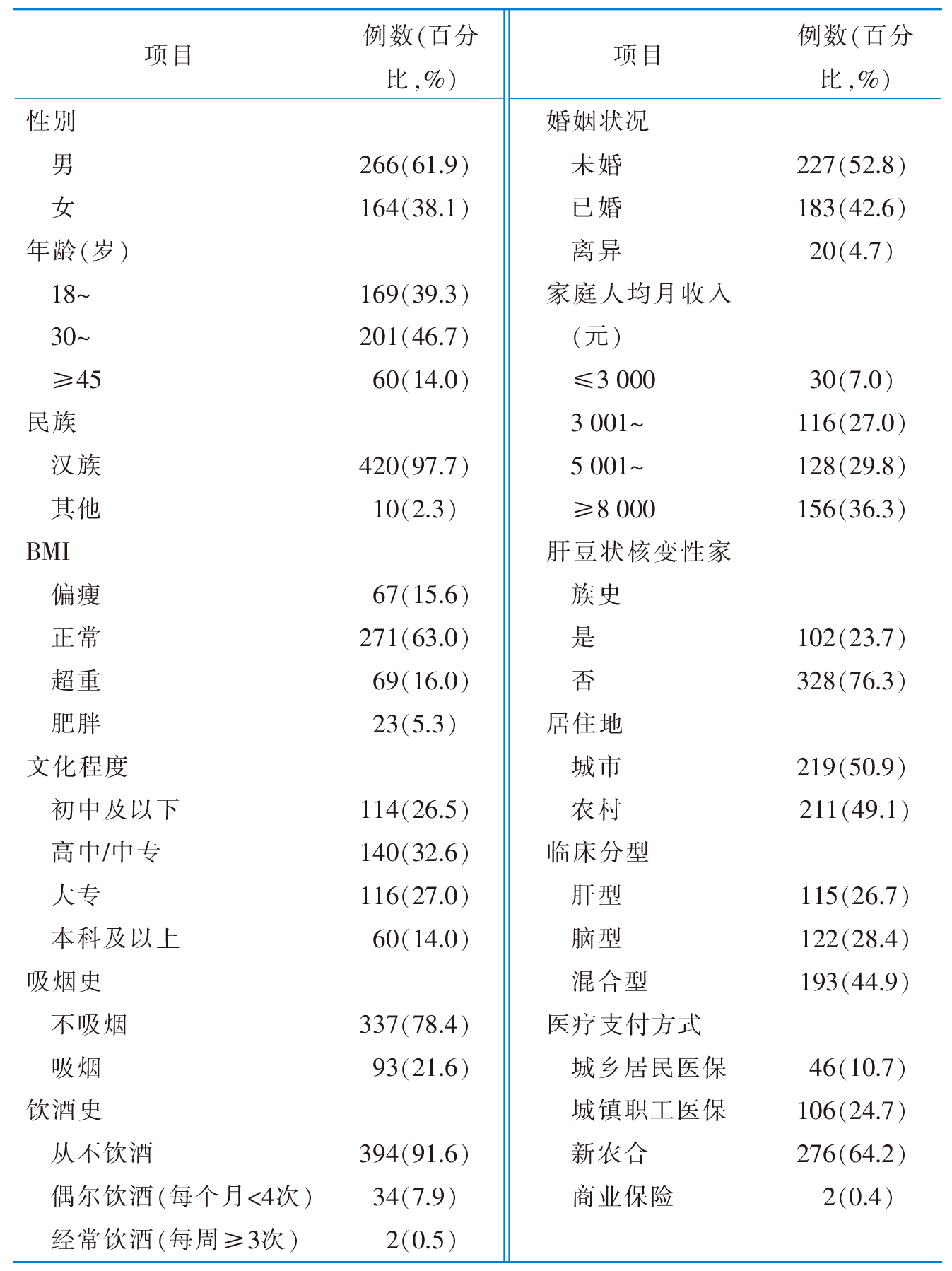 |
Table 1 Demographic characteristics of study participants(n=430)
| |
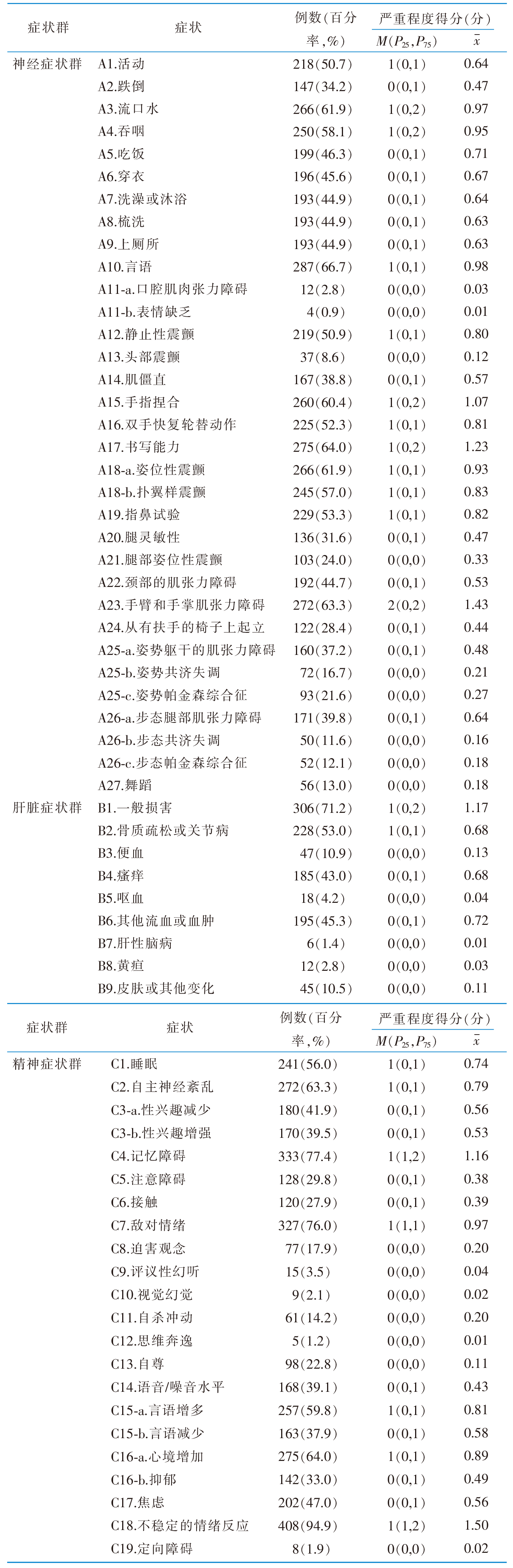 |
Table 2 Symptom occurrence and severity in patients with Wilson’s Disease (n=430)
|
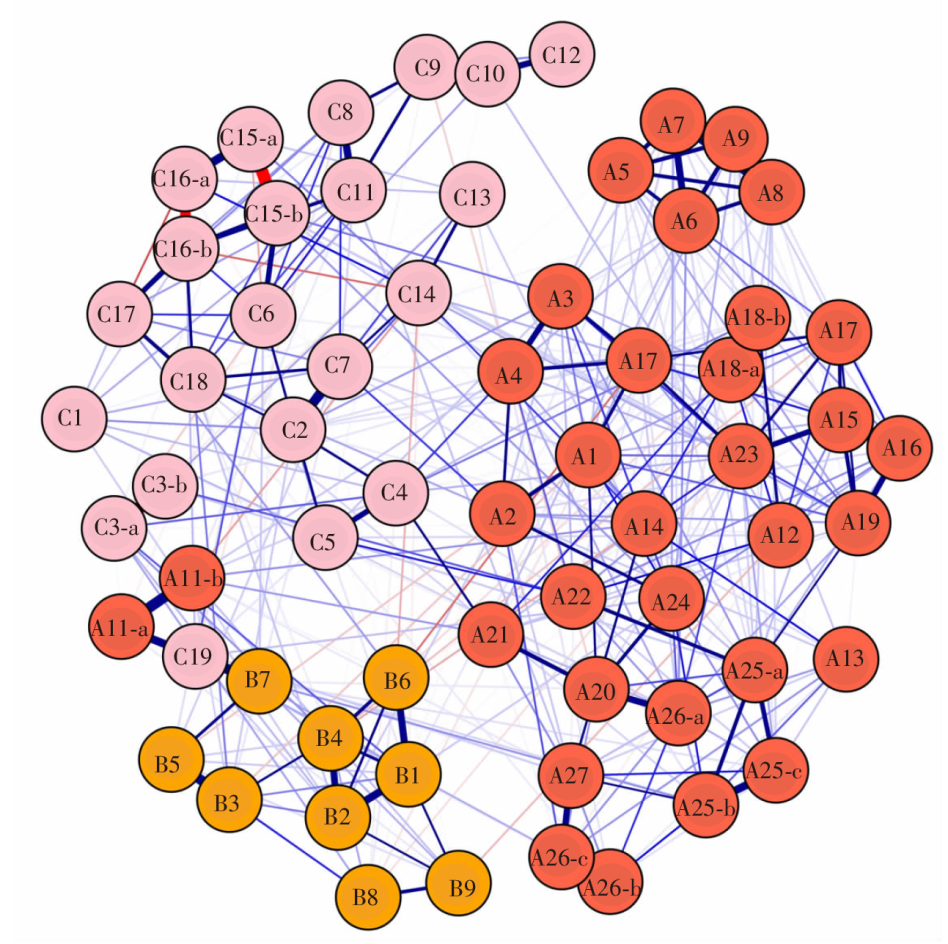
Figure 1 Symptom network of patients with Wilson disease
| [1] |
Socha P, Jańczyk W, Zanetto A, et al. EASL-ERN clinical prac-tice guidelines on Wilson’s disease[J]. J Hepatol, 2025, 82(4):690-728.
DOI URL |
| [2] |
Cheng N, Wang K, Hu WB, et al. Wilson disease in the South Chinese Han population[J]. Can J Neurol Sci, 2014, 41(3):363-367.
PMID |
| [3] |
Schilsky ML, Roberts EA, Bronstein JM, et al. A multidisci-pli-nary approach to the diagnosis and management of Wilson disease:executive summary of the 2022 practice guidance on Wilson disease from the American Association for the study of liver diseases[J]. Hepatology, 2023, 77(4):1428-1455.
DOI URL |
| [4] | 王训, 韩咏竹, 杨任民. 肝豆状核变性的中西医药物治疗概况[J]. 内科理论与实践, 2021, 16(5):294-298. |
| Wang X, Han YZ, Yang RM. Overview of traditional Chinese and western medicine treatments on hepatolenticular degenera-tion[J]. J Intern Med Concepts Pract, 2021, 16(5):294-298. | |
| [5] | 王玮琦, 魏涛华, 钱南南, 等. Wilson病肝硬化并发肌肉减少症的危险因素及其对临床结局的影响[J]. 临床肝胆病杂志, 2025, 41(10):2075-2081. |
| Wang WQ, Wei TH, Qian NN, et al. Risk factors for sarcopenia in patients with Wilson’s disease-related liver cirrhosis and their impact on clinical outcomes[J]. J Clin Hepatol, 2025, 41(10):2075-2081. | |
| [6] |
许嘉乐, 汪秋伊, 张智霖, 等. 网络分析在老年慢性病患者健康管理研究中的应用进展[J]. 中华护理杂志, 2025, 60(15):1824-1829.
DOI URL |
|
Xu JL, Wang QY, Zhang ZL, et al. Application progress of network analysis in health management of elderly patients with chronic diseases[J]. Chin J Nurs, 2025, 60(15):1824-1829.
DOI URL |
|
| [7] | 朱政, 胡天天, 金依霖, 等. 症状网络的基本概念及其在症状管理中的应用[J]. 护士进修杂志, 2023, 38(24):2214-2218,2224. |
| Zhu Z, Hu TT, Jin YL, et al. Basic concepts of symptom net-works and its implementation in symptom management[J]. J Nurs Train, 2023, 38(24):2214-2218,2224. | |
| [8] | 胡雁. 症状科学的发展及研究趋势[J]. 护士进修杂志, 2023, 38(24):2209-2213. |
| Hu Y. Development and research trends of symptom science[J]. J Nurses Train, 2023, 38(24):2209-2213. | |
| [9] | 中华医学会肝病学分会遗传代谢性肝病协作组. 肝豆状核变性诊疗指南(2022年版)[J]. 中华肝脏病杂志, 2022, 30(1):9-20. |
| Inherited Metabolic Liver Disease Collaboration Group,Chinese Society of Hepatology,Chinese Medical Association. Guidelines for the diagnosis and treatment of hepatolenticular degenera-tion(2022 edition)[J]. Chin J Hepatol, 2022, 30(1):9-20. | |
| [10] |
Sidhu TK, Mahajan R. Decoding the magic number:everyone can do it![J]. Int J Appl Basic Med Res, 2022, 12(2):71-75.
DOI URL |
| [11] | 韩永升, 王训, 韩咏竹, 等. 中文版统一肝豆状核变性评分量表的信度和效度的研究[J]. 临床神经病学杂志, 2013, 26(4):241-243. |
| Han YS, Wang X, Han YZ, et al. Study of reliability and validity of Chinese version of united Wilson’s Disease Rating Scale[J]. J Clin Neurol, 2013, 26(4):241-243. | |
| [12] |
Członkowska A, Tarnacka B, Möller JC, et al. Unified Wilson’s Disease Rating Scale:a proposal for the neurological scoring of Wilson’s disease patients[J]. Neurol Neurochir Pol, 2007, 41(1):1-12.
PMID |
| [13] |
Epskamp S, Fried EI. A tutorial on regularized partial corre-lation networks[J]. Psychol Methods, 2018, 23(4):617-634.
DOI PMID |
| [14] |
Jones PJ, Ma RF, McNally RJ. Bridge centrality:a network ap-proach to understanding comorbidity[J]. Multivariate Behav Res, 2021, 56(2):353-367.
DOI URL |
| [15] |
侯佳雨, 杨丽, 李佳, 等. 首发脑卒中患者创伤后应激障碍症状的网络分析及护理对策[J]. 中华护理杂志, 2024, 59(8):953-959.
DOI URL |
|
Hou JY, Yang L, Li J, et al. Network analysis and nursing implications of post-traumatic stress disorder symptoms in first stroke patients[J]. Chin J Nurs, 2024, 59(8):953-959.
DOI URL |
|
| [16] |
Borsboom D, Cramer AOJ. Network analysis:an integrative ap-proach to the structure of psychopathology[J]. Annu Rev Clin Psychol, 2013, 9:91-121.
DOI URL |
| [17] | 武元, 张婷, 朱颖, 等. 儿童肝豆状核变性回顾性多系统症状分析[J]. 中华实用儿科临床杂志, 2019, 34(14):1077-1080. |
| Wu Y, Zhang T, Zhu Y, et al. Retrospective study of multi-system involvement in childrens Wilson disease[J]. J Appl Clin Pediatr, 2019, 34(14):1077-1080. | |
| [18] |
Chakraborty AP, Mukherjee A, Sinharoy U, et al. Motor and non-motor neurologic symptoms of Wilson’s disease:exploring the associations[J]. Ann Indian Acad Neurol, 2025, 28(1):66-71.
DOI URL |
| [19] |
Wang GQ, Jin P, Ma XF, et al. Cognitive and gait in Wilson’s disease:a cognitive and motor dual-task study[J]. Front Neurol, 2023, 14:1243122.
DOI URL |
| [20] |
Sumedha KR, Rayirala A, Bipeta R. Psychosis in Wilson’s di-sease:a rare case presentation[J]. Arch Ment Health, 2021, 22(2):165-167.
DOI URL |
| [21] | 龙文成, 彭介入, 蔡琳, 等. 有驱铜治疗史肝豆状核变性患者疾病严重程度及其影响因素分析[J]. 现代预防医学, 2024, 51(22):4219-4224. |
| Long WC, Peng JR, Cai L, et al. Disease severity and in-fluencing factors in patients with Wilson’s disease who had previously undergone copper removal therapy[J]. Mod Prev Med, 2024, 51(22):4219-4224. | |
| [22] | 白雪, 王共强. Wilson病患者的震颤特征及其影响因素[J]. 重庆医科大学学报, 2025, 50(12):1644-1648. |
| Bai X, Wang GQ. Features of tremor in patients with Wilson’s disease and related influencing factors[J]. J Chongqing Med Univ, 2025, 50(12):1644-1648. | |
| [23] |
Yang RM, Feng T, Cai W, et al. Chinese multidisciplinary ex-pert consensus on orphan/anticopper drugs and other non-drug management of hepatolenticular degeneration[J]. Curr Neuropharmacol, 2025, 23(13):1683-1708.
DOI URL |
| [24] |
成李, 邹玉娇, 胡天天, 等. 维持性血液透析患者多维症状网络分析及影响因素研究[J]. 中华护理杂志, 2025, 60(19):2321-2327.
DOI URL |
| Cheng L, Zou YJ, Hu TT, et al. Research on the current status and influencing factors of the multidimensional sym-ptom network in maintenance hemodialysis patients[J]. Chin J Nurs, 2025, 60(19):2321-2327. | |
| [25] |
卢露, 卢芳燕, 张婉莹, 等. 1例肝豆状核变性并发肾功能衰竭患儿行肝移植术的护理[J]. 中华护理杂志, 2022, 57(2):208-211.
DOI URL |
|
Lu L, Lu FY, Zhang WY, et al. Nursing care of a child with hepatolenticular degeneration complicated with renal failure undergoing liver transplantation[J]. Chin J Nurs, 2022, 57(2):208-211.
DOI URL |
|
| [26] | 吴素红, 武红利, 王弈, 等. 肝豆状核变性患者默认模式网络变化及模型构建[J]. 放射学实践, 2024, 39(4):441-448. |
| Wu SH, Wu HL, Wang Y, et al. Alterations in the default mode network and model construction in patients with Wilson’s disease[J]. Radiol Pract, 2024, 39(4):441-448. | |
| [27] |
Tenderenda M, Buczkowski B, Oleksy P, et al. Liver disease and central nervous system dysfunction:linking the two-a narrative review[J]. J Educ Health Sport, 2024, 75:56180.
DOI URL |
| [28] |
Wang A, Dong T, Wei T, et al. Large-scale networks changes in Wilson’s disease associated with neuropsychiatric impair-ments:a resting-state functional magnetic resonance imaging study[J]. BMC Psychiatry, 2023, 23(1):805.
DOI |
| [1] | WANG Jing, SHI Huan, LI Yunmeng. Construction and validation of a prediction model for the risk of aspiration in ICU patients receiving enteral nutrition support [J]. Chinese Journal of Nursing, 2026, 61(7): 877-883. |
| [2] | LÜ Hongwei, ZHAO Mingxi, HUANG Li, SUN Xiangyu, LI Zunzhu, JING Jie, WANG Xi, LI Moyan, LUO Hongbo. Application of a coagulation management system for patients on extracorporeal membrane oxygenation [J]. Chinese Journal of Nursing, 2026, 61(7): 884-891. |
| [3] | CHEN Huijing, LI Wenqi, TAN Yujiao, LI Siqi, CHANG Minmin, CHEN Xiuli, LI Tao, LIU Weijuan. Nursing management of a patient with severe juvenile dermatomyositis complicated by hemophagocytic syndrome:a case report [J]. Chinese Journal of Nursing, 2026, 61(7): 892-896. |
| [4] | LIANG Shuang, CAO Xiaobai, WANG Pengju, GAO Lan, WANG Yujiao. Nursing care of a patient with massive cerebral infarction complicated by paradoxical herniation after decompressive craniectomy [J]. Chinese Journal of Nursing, 2026, 61(7): 897-900. |
| [5] | ZHU Kai, YAN Mengmeng, ZHANG Huijun, SONG Hong. Current status and potential profile analysis of interoception in diabetic patients with impaired awareness of hypoglycemia [J]. Chinese Journal of Nursing, 2026, 61(7): 932-938. |
| [6] | WANG Yangyang, YANG Minfei, HUANG Keer, YAO Xiaoyue, ZHAO Yanxiang, LI Jiaqi, YIN Na, HUANG Ling, ZHANG Ju. Facilitating and hindering factors for early exercise rehabilitation care of elderly patients with traumatic brain injury and frail:a qualitative study [J]. Chinese Journal of Nursing, 2026, 61(7): 939-946. |
| [7] | WANG Weina, QIAO Xiaofei, WU Lisheng, WANG Qianqian, JIANG Yan. The construction and application of a postoperative weight management program for bariatric surgery patients [J]. Chinese Journal of Nursing, 2026, 61(7): 947-955. |
| [8] | HE Jingting, YING Yanping, LU Qiufang, ZHAO Huihan, LIU Liying, MA Hanzhang, ZHANG Cheng. Scoping review on the application of multimodal data in the nursing field [J]. Chinese Journal of Nursing, 2026, 61(7): 1002-1008. |
| [9] | LI Zunzhu, CHANG Xiaowei, SUN Jianhua, CHEN Juntong, ZHOU Runshi, ZHAO Mingxi, LUO Hongbo, JING Jie, WANG Jiaxin, LAN Yuanmei, WU Xinjuan. Development and feasibility evaluation of a risk screening and graded early warning tool for postoperative pulmonary complications in ICU patients [J]. Chinese Journal of Nursing, 2026, 61(7): 869-876. |
| [10] | LI Chunxiu, XIU Hong, LIU Min, ZOU Xiaojun, WANG Qing, DING Shufan, ZHAO Zhiping, LI Xiaojuan. Development and validation of a malnutrition risk prediction model in patients with hematologic neoplasms [J]. Chinese Journal of Nursing, 2026, 61(6): 733-740. |
| [11] | ZHANG Ying, DU Ruofei, YANG Huimin, XU Xiaoxia, LI Liming, DU Yating. Study on current status and influencing factors of frailty in elderly patients with newly diagnosed hematologic neoplasm [J]. Chinese Journal of Nursing, 2026, 61(6): 749-756. |
| [12] | SUN Danping, HUANG Ying, TANG Danting, SHAO Lifang. Nursing care for a case of HIV infection complicated by thrombotic thrombocytopenic purpura [J]. Chinese Journal of Nursing, 2026, 61(6): 757-760. |
| [13] | ZHENG Yan, ZENG Yongke, CHEN Jing, LUO Xiaoqin, XIA Liangxiang, ZHENG Silin. Application research of postoperative cardiac delirium patients risk prediction models [J]. Chinese Journal of Nursing, 2026, 61(6): 768-774. |
| [14] | ZHAO Hao, ZHAO Ying, YANG Yanzhen. A study on creating and implementing a caregiving skills program for family caregivers of chronic heart failure patients [J]. Chinese Journal of Nursing, 2026, 61(6): 775-782. |
| [15] | FU Haiwei, ZHU Xiaoju, BI Jianjing, LI Meixian, ZHANG Xiaodi, WANG Zonghua. A study on the correlation between core symptoms of cancer-related cognitive impairment and quality of life in lung cancer patients [J]. Chinese Journal of Nursing, 2026, 61(6): 783-789. |
| Viewed | ||||||
|
Full text |
|
|||||
|
Abstract |
|
|||||
