
Chinese Journal of Nursing ›› 2025, Vol. 60 ›› Issue (15): 1837-1842.DOI: 10.3761/j.issn.0254-1769.2025.15.007
• Specialist Nursing Practice and Research • Previous Articles Next Articles
GUO Peiran( ), ZHANG Zhixia(), YE Jiao, CHENG Rong, QIAO Linru, CHEN Qiuxia, JIANG Fang, LIU Yaping
Received:2025-03-12
Online:2025-08-10
Published:2025-08-05
Contact:
ZHANG Zhixia
郭沛然(), 张志霞(), 叶椒, 程蓉, 乔林茹, 陈秋霞, 姜芳, 刘亚萍
通讯作者:
张志霞
作者简介:郭沛然:女,本科(硕士在读),护士,E-mail:gpr0424@163.com
基金资助:GUO Peiran, ZHANG Zhixia, YE Jiao, CHENG Rong, QIAO Linru, CHEN Qiuxia, JIANG Fang, LIU Yaping. A study on the correlation between symptom networks structure and rehabilitation confidence in middle-aged patients during the recovery period of stroke[J]. Chinese Journal of Nursing, 2025, 60(15): 1837-1842.
郭沛然, 张志霞, 叶椒, 程蓉, 乔林茹, 陈秋霞, 姜芳, 刘亚萍. 中年脑卒中恢复期患者症状网络结构与康复信心的相关性研究[J]. 中华护理杂志, 2025, 60(15): 1837-1842.
Add to citation manager EndNote|Ris|BibTeX
URL: https://zh.zhhlzzs.com/EN/10.3761/j.issn.0254-1769.2025.15.007
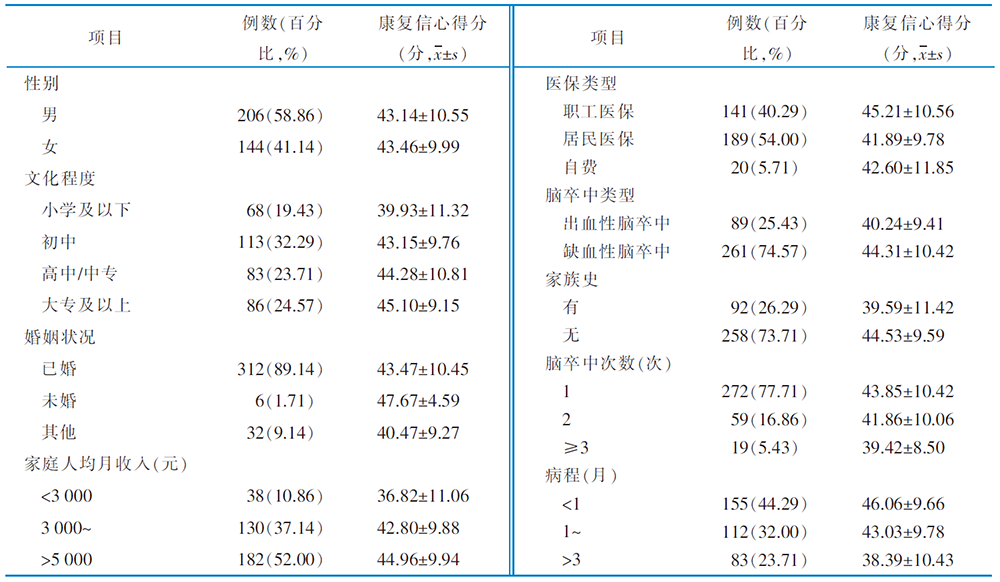 |
Table 1 General information of participants(n=350)
| |
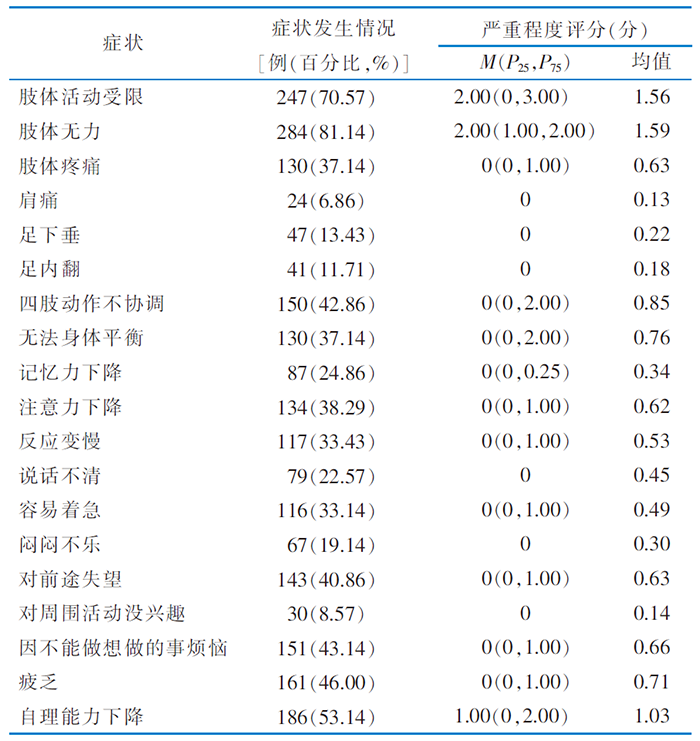 |
Table 2 Symptom occurrence of middle-aged patients in the recovery period of stroke(n=350)
| |
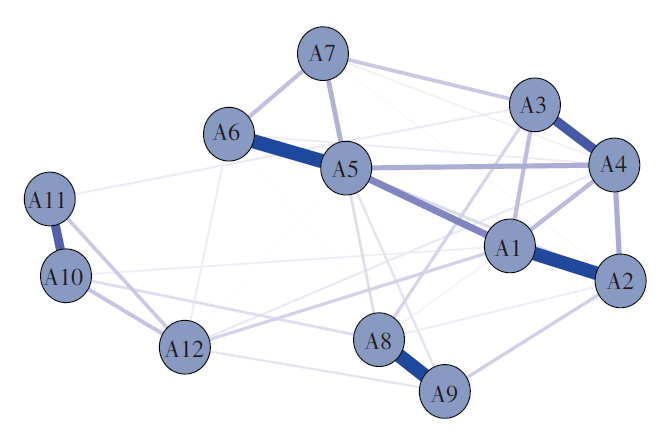
Figure 1 The network structure of symptoms of middle-aged patients in the recovery period of stroke
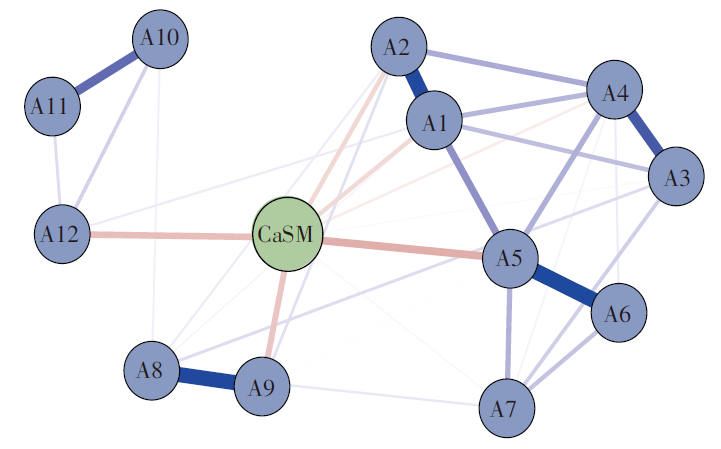
Figure 2 Network structure of symptom-rehabilitation confidence of middle-aged patients in the recovery period of stroke
| [15] | 石丹, 李铮, 杨坚, 等. 脑卒中症状体验量表的编制及信效度检验[J]. 中华物理医学与康复杂志, 2019, 41(2):96-100. |
| Shi D, Li Z, Yang J, et al. Developing and testing a Symptom Experience Scale for Stroke Survivors[J]. Chin J Phys Med Rehabil, 2019, 41(2):96-100. | |
| [16] | 扈娜, 孟令弟, 刘堃. 脑卒中后康复信心测量问卷中文版信效度研究[J]. 中华行为医学与脑科学杂志, 2018(3):277-280. |
| Hu N, Meng LD, Liu K. Reliability and validity of Chinese version of the Confidence after Stroke Measure questionnaire[J]. Chin J Behav Med Brain Sci, 2018(3):277-280. | |
| [17] | 黄瑞, 单芳, 席礼艳, 等. 识别脑卒中恢复期患者症状群及核心症状——一项同期症状网络分析[J]. 护士进修杂志, 2024, 39(14):1468-1475. |
| Huang R, Shan F, Xi LY, et al. Identification of symptom clusters and core symptom in patients with convalescent stroke:a contemporaneous symptom network analysis[J]. J Nurs Train, 2024, 39(14):1468-1475. | |
| [18] | Opsahl T, Agneessens F, Skvoretz J. Node centrality in weighted networks:generalizing degree and shortest paths[J]. Soc Netw, 2010, 32(3):245-251. |
| [19] | Huang Y, Cao SM, Li T, et al. Exploring core and bridge symptoms in patients recovering from stroke:a network analysis[J]. Front Neurol, 2024,15:1434303. |
| [20] |
伍嫦珠, 陈龙. 脑梗死致同侧肢体无力8例临床和影像分析[J]. 中风与神经疾病杂志, 2022, 39(5):405-408.
DOI |
| Wu CZ, Chen L. Clinical and imaging analysis of 8 cases with ipsilateral hemiparesis in ischemic stroke[J]. J Apoplexy Nerv Dis, 2022, 39(5):405-408. | |
| [21] | 吴蔚然, 陆惠慧, 王彩芳, 等. 急性脑卒中病人经验性回避现状及影响因素[J]. 护理研究, 2022, 36(19):3540-3544. |
| Wu WR, Lu HH, Wang CF, et al. Status quo and influencing factors of experiential avoidance in acute stroke patients[J]. Chin Nurs Res, 2022, 36(19):3540-3544. | |
| [22] |
林蓓蕾, 郭云飞, 张振香, 等. 脑卒中患者疾病体验及其复发风险感知的质性研究[J]. 中华护理杂志, 2021, 56(1):80-85.
DOI |
|
Lin BL, Guo YF, Zhang ZX, et al. A qualitative study on disease experience and recurrence risk perception of stroke survivors[J]. Chin J Nurs, 2021, 56(1):80-85.
DOI |
|
| [23] | Zhu Z, Sun YL, Kuang Y, et al. Contemporaneous symptom networks of multidimensional symptom experiences in cancer survivors:a network analysis[J]. Cancer Med, 2023, 12(1):663-673. |
| [24] | Mao QY, Liang HT, Yuan XL, et al. Impact of dual sensory impairment on cognition in older Chinese adults:a moderated chain-mediated effect[J]. Front Public Health, 2025,13:1542789. |
| [25] | 林嘉莉, 张舒阳, 林嘉滢, 等. 脑卒中后上肢运动功能与注意力的相关性:一项多中心横断面研究[J]. 中国全科医学, 2025, 28(2):208-213. |
| Lin JL, Zhang SY, Lin JY, et al. Correlation between upper limb motor function and attention after stroke:a multicenter cross-sectional study[J]. Chin Gen Pract, 2025, 28(2):208-213. | |
| [26] | Yang BB, Huang YH, Li ZY, et al. Management of post-stroke depression(PSD) by electroencephalography for effective rehabilitation[J]. Eng Regen, 2023, 4(1):44-54. |
| [27] |
刘志薇, 梅永霞, 张振香, 等. 脑卒中患者夫妻疾病沟通体验的质性研究[J]. 中华护理杂志, 2024, 59(5):576-581.
DOI |
|
Liu ZW, Mei YX, Zhang ZX, et al. A qualitative study of disease communication experiences in couples with stroke[J]. Chin J Nurs, 2024, 59(5):576-581.
DOI |
|
| [28] | Sweetman J, Stirland LE, Kanaan M, et al. The relationship between anxiety,depression and cognitive functioning in older adults:an exploratory cross-sectional analysis of wave 1 lothian birth cohort 1936 data[J]. Int J Geriatr Psychiatry, 2024, 39(9):e6151. |
| [1] | Collaborators G2DAI. Global incidence,prevalence,years lived with disability(YLDs),disability-adjusted life-years(DALYs),and healthy life expectancy(HALE) for 371 diseases and injuries in 204 countries and territories and 811 subnational locations,1990-2021:a systematic analysis for the global burden of disease study 2021[J]. Lancet, 2024, 403(10440):2133-2161. |
| [2] | 《中国脑卒中防治报告2021》编写组. 《中国脑卒中防治报告2021》概要[J]. 中国脑血管病杂志, 2023, 20(11):783-793. |
| Report on Stroke Prevention and Treatment in China Writing Group. Brief report on stroke prevention and treatment in China,2021[J]. Chin J Cerebrovasc Dis, 2023, 20(11):783-793. | |
| [3] |
黄奕敏, 黄丽君, 翁丹婷, 等. 脑卒中肢体功能障碍患者恢复期中医康复护理的最佳证据总结[J]. 中华护理杂志, 2024, 59(7):812-819.
DOI |
|
Huang YM, Huang LJ, Weng DT, et al. Evidence summary of Traditional Chinese Medicine rehabilitation nursing during recovery in patients with stroke limb dysfunction[J]. Chin J Nurs, 2024, 59(7):812-819.
DOI |
|
| [4] | Karisik A, Moelgg K, Buergi L, et al. Dysphagia increases the risk of post-stroke fatigue[J]. Eur J Neurol, 2025, 32(1):e16570. |
| [5] | Shi D, Li Z, Yang J, et al. Symptom experience and symptom burden of patients following first-ever stroke within 1 year:a cross-sectional study[J]. Neural Regen Res, 2018, 13(11):1907-1912. |
| [6] |
Horne JC, Lincoln NB, Logan PA. Measurement of confidence:the development and psychometric evaluation of a stroke-specific,measure of confidence[J]. Clin Rehabil, 2017, 31(11):1529-1537.
DOI PMID |
| [7] | Saunders C, Bawa H, Aslanyan D, et al. Treatment outcomes in the inpatient management of severe functional neurological disorder:a retrospective cohort study[J]. BMJ Neurol Open, 2024, 6(2):e000675. |
| [8] | Chen MX, Wang MD, Qiao MT, et al. Determinants influencing health-promoting behaviors in individuals at high risks of stroke:a cross-sectional study[J]. Front Public Health, 2024,12:1323277. |
| [9] | Yang C, Zhao F, Xie CQ, et al. Community-based group rehabilitation program for stroke patients with dysphagia on quality of life,depression symptoms,and swallowing function:a randomized controlled trial[J]. BMC Geriatr, 2023, 23(1):876. |
| [10] |
邱雪斌, 繆小红, 夏敏棋, 等. 脑卒中患者疲劳轨迹的潜在类别及影响因素分析[J]. 中华护理杂志, 2024, 59(19):2375-2381.
DOI |
|
Qiu XB, Miao XH, Xia MQ, et al. Potential categories and influencing factors of fatigue trajectories in stroke patients[J]. Chin J Nurs, 2024, 59(19):2375-2381.
DOI |
|
| [11] |
Hofmann SG, Curtiss J, McNally RJ. A complex network perspective on clinical science[J]. Perspect Psychol Sci, 2016, 11(5):597-605.
PMID |
| [12] | 中华医学会神经病学分会, 中华医学会神经病学分会脑血管病学组. 中国各类主要脑血管病诊断要点2019[J]. 中华神经科杂志, 2019, 52(9):710-715. |
| Neurology Branch of Chinese Medical Association, Cerebrova-scular Disease Group of Neurology Branch of Chinese Medical Association. Diagnostic criteria of cerebrovascular diseases in China(version 2019)[J]. Chin J Neurol, 2019, 52(9):710-715. | |
| [13] | 张通, 赵军, 李雪萍, 等. 中国脑血管病临床管理指南(第2版)(节选):第8章脑血管病康复管理[J]. 中国卒中杂志, 2023, 18(9):1036-1048. |
| Zhang T, Zhao J, Li XP, et al. Chinese stroke association guidelines for clinical management of cerebrovascular diseases(second edition)(excerpt):chapter eight cerebrovascular disease rehabilitation management[J]. Chin J Stroke, 2023, 18(9):1036-1048. | |
| [14] |
Epskamp S, Borsboom D, Fried EI. Estimating psychological networks and their accuracy:a tutorial paper[J]. Behav Res Methods, 2018, 50(1):195-212.
DOI PMID |
| [1] | YAN Yinzhi, WEN Fang, WANG Min, ZHOU Xuemei, MA Jinling, WU Huifang, YAO Wenying. Construction and application of a graded nursing program for exercise rehabilitation in children with hematopoietic stem cell transplantation [J]. Chinese Journal of Nursing, 2025, 60(9): 1036-1042. |
| [2] | CAO Yun, SUN Guozhen, CHEN Feng, JI Xueli, YAN Mengwan, JING Lei, QIAN Kun. A study of modified ankle pump exercise in stroke patients [J]. Chinese Journal of Nursing, 2025, 60(9): 1068-1074. |
| [3] | YAN Xueqin, CAO Songmei, ZHOU Fangfang, ZHU Liqun, CHEN Cheng, ZHU Mengxue, ZHANG Yanhong, LIANG Yiqing, BAI Suping. Summary of best evidence for early rehabilitation management of hand function in patients with hand burns [J]. Chinese Journal of Nursing, 2025, 60(8): 998-1004. |
| [4] | TAN Yuting, ZHANG Zhixia, XU Mengli, GUO Peiran, XIAO Qin, QIAO Linru, SONG Feiyun, YU Qiaojun. Relationship between autonomous rehabilitation behavior and related symptoms of middle-aged stroke patients [J]. Chinese Journal of Nursing, 2025, 60(7): 773-778. |
| [5] | ZHOU Chenxi, LIN Beilei, ZHANG Jie, REN Hui, WANG Hui, ZHANG Zhenxiang. Dose-response relationship between disease risk perception and objective risk of stroke and nursing strategies [J]. Chinese Journal of Nursing, 2025, 60(7): 779-784. |
| [6] | SU Xuan, CHENG Qiaomei, LI Xiaowan, WANG Kexin, WANG Peixi, XIAO Mengwei, WANG Yu, LI Nannan, XIE Danying. Study on the latent classes of post-stroke depression in patients with acute stroke and nursing insights [J]. Chinese Journal of Nursing, 2025, 60(7): 785-791. |
| [7] | ZHOU Kebing, HUANG Xiaojiao, YAN Fengxia. Network analysis of symptom burden and its influencing factors in first-ever subacute stroke patients [J]. Chinese Journal of Nursing, 2025, 60(7): 792-798. |
| [8] | FENG Weiqing, CHEN Yanbo, CAI Huan, RUAN Jiahui, HE Xiuxian, LI Kun. A scoping review of the longitudinal studies on post stroke fatigue [J]. Chinese Journal of Nursing, 2025, 60(7): 799-805. |
| [9] | CHEN Lan, MA Huimin, FANG Yuan, ZHANG Huan, REN Jingnan, LU Liyun, WU Xiangliang, LIU Chang, JIN Dingping, FENG Xiuqin. Construction and application of an early in-hospital temperature management protocol for patients with heat stroke [J]. Chinese Journal of Nursing, 2025, 60(5): 561-568. |
| [10] | LIU Bowen, WANG Shanshan, SUN Qianqian, MEI Yongxia, LIN Beilei, LIU Lamei, ZHANG Zhenxiang. Latent profile analysis of dyadic psychological capital among stroke patients and their spouses and nursing countermeasures [J]. Chinese Journal of Nursing, 2025, 60(3): 332-339. |
| [11] | KUANG Jiaqian, CHEN Chun, ZHANG Qian. A scoping review of functional prognosis prediction models for stroke patients [J]. Chinese Journal of Nursing, 2025, 60(3): 364-372. |
| [12] | ZHANG Hao, XU Guanxue, WANG Man, JIA Yuyang, LEI Fang, YANG Ming. Advances in digital health technology in home-based cardiac rehabilitation for patients with acute myocardial infarction [J]. Chinese Journal of Nursing, 2025, 60(3): 373-378. |
| [13] | ZHAI Zhongchang, YANG Linjie, WANG Huihua, ZENG Zhu, HU Yuting, WANG Jing, YANG Sai. Experiences of home-based rehabilitation of individuals with fully magnetically levitated left ventricular assist device:a qualitative study [J]. Chinese Journal of Nursing, 2025, 60(2): 149-153. |
| [14] | LU Keying, QIN Caiping, QIAN Huilizhu, SONG Yuexia. Rehabilitation nursing of a patient with scrotal hematoma caused by emergency treatment of coronary vasospasm after cardiac radiofrequency ablation [J]. Chinese Journal of Nursing, 2025, 60(2): 158-161. |
| [15] | FAN Yingying, LÜ Pengpeng, CHEN Xueang, ZHANG Junmei, ZHAO Rui, ZHANG Shibian. Application of fragmented resistance exercise in exercise rehabilitation of elderly patients with chronic obstructive pulmonary disease [J]. Chinese Journal of Nursing, 2025, 60(15): 1797-1803. |
| Viewed | ||||||
|
Full text |
|
|||||
|
Abstract |
|
|||||
